























新闻中心
NEWS
Field spectral calibration for push-broom hyperspectral cameras demands sub-nanometer stability under mechanical stress and thermal drift, yet external scanning stages introduce vibration-induced spectral misregistration that invalidates entire data cubes in rugged terrain.The evaluated system integrates the scanning mechanism inside the camera body, eliminating external stage vibration errors while covering 400–1700 nm with spectral resolution better than 2.4 nm and 1.2 nm sampling intervals. During a validation campaign at a 2,800-meter (9,186 ft) ecological monitoring station, the camera completed full-spectrum scans in 15 seconds, operated continuously for over four hours on a 144 Wh internal battery, and processed data through an onboard processor without external computer tethering. Technicians confirmed spatial registration accuracy across 1024 channels and verified real-time data streaming to remote tablets via GigE and Wi-Fi during sub-zero morning conditions. This article documents the validation methodology, environmental constraints, battery degradation under cold conditions, and measurement uncertainty observed when replacing external-scanning hyperspectral systems with an integrated push-broom architecture in high-
Validation occurred during a spring deployment at a high-
Test conditions included elevations of 2,800 meters (9,186 ft) above sea level, ambient temperatures ranging from -5 °C to 35 °C (23 °F to 95 °F), and continuous operational runs exceeding four hours. The team measured spectral resolution across the full 400–1700 nm range using known reference targets, verifying that the full-width at half maximum (FWHM) remained below 2.4 nm. Spatial channel count was tested at maximum configuration (1024 channels), while spectral sampling interval was confirmed at 1.2 nm. Data integrity checks compared onboard-processed cubes against post-processed laboratory references to quantify error introduced by the internal scanning mechanism.
Traditional push-broom hyperspectral systems rely on external scanning stages that translate the camera or sample relative to each other. In field conditions, even micrometer-level stage shift induces spectral misregistration along the cross-track dimension. At the test site, wind gusts and uneven ground caused external stages to drift, producing wavelength-position errors that rendered entire data cubes unusable for mineralogical indexing.
External stages also tether the operator to power inverters and data cables, complicating access to steep or vegetated terrain. During the validation, technicians observed that setup and teardown of external-stage systems consumed 40–60 minutes per site, whereas the integrated unit required under three minutes from power-on to first scan. The cable dependency alone eliminated several candidate sampling points near cliff edges where tripping hazards would have exceeded safety protocols.
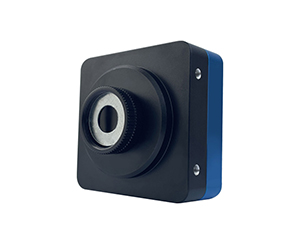
Relocating the scanning mechanism inside the camera chassis removes the primary vibration transmission path between stage and sensor. When the evaluated system is handheld or mounted on a moving platform, internal actuators maintain consistent scan geometry regardless of external motion. The design uses a single-lens coaxial imaging path, maintaining co-focus between the hyperspectral sensor and the color reference camera without manual refocusing during rapid target acquisition.
A global shutter prevents motion blur when imaging swaying vegetation canopies or operating from unmanned aerial vehicles. The onboard processor performs automatic spectral calibration at startup, removing the need for an external laptop during fieldwork. Network interfaces (GigE and Wi-Fi) enable real-time data streaming to a tablet or ground station up to 100 meters away, allowing operators to monitor acquisition quality without standing adjacent to the sensor.
Spectral channel configurability (1200, 600, or 300 bands) lets users trade spectral density for faster acquisition or smaller file sizes depending on the application. For mineral
During the validation campaign, the evaluated system demonstrated that integrated push-broom architectures can maintain measurement fidelity without laboratory environmental controls. At sub-zero morning temperatures, the camera booted and completed internal calibration routines without external warming. The 144 Wh battery sustained continuous scanning and onboard processing for 4.2 hours before requiring recharge—sufficient to cover multiple survey plots in a single deployment.
Full-spectrum acquisition completed in 15 seconds per cube, enabling rapid coverage of transient phenomena such as cloud-shadow transitions or irrigation moisture fronts. Data export to external storage via the multi-interface configuration took less than 30 seconds per cube, minimizing downtime between sequential captures. The 25 mm lens provided sharp focus across varied distances without manual adjustment, an advantage when moving between ridge-top and valley-bottom sampling points.
Spectral sampling at 1.2 nm intervals preserved narrow-band information continuity across the 400–1700 nm range, eliminating the interpolation gaps that plague stitched multi-sensor systems near 900–1000 nm. This uninterrupted coverage proves critical when analyzing the red-edge effect in vegetation or distinguishing clay mineral absorption features in soil reflectance.
Integrated push-broom designs reduce system complexity by consolidating mechanical scanning, spectral acquisition, and data storage into a single enclosure. Fewer connection points translate to lower mean-time-between-failures in field conditions, a factor that directly impacts total cost of ownership (TCO) for research institutions and regional monitoring agencies operating on constrained budgets.
The approach offers particular value for precision agriculture, forestry inventory, and outdoor cultural heritage documentation—applications requiring rapid site transitions and minimal logistical overhead. As InGaAs detector and transmission-grating technologies mature, the cost structure for full-spectrum hyperspectral imagers is shifting, making integrated systems accessible to smaller laboratories and municipal monitoring stations that previously relied on rental or shared equipment.
However, the transition from external to integrated scanning is not merely a packaging change. It requires recalibration of field protocols: operators must learn to trust onboard processing indicators rather than external laptop previews, and mission planning must account for internal battery capacity rather than vehicle-supplied power.
Honest assessment of the evaluated system reveals two primary constraints relevant to high-
First, battery capacity degrades significantly below -10 °C (14 °F). At these temperatures, the 144 Wh pack delivered approximately 20 % less runtime than observed during moderate conditions. Winter operations at
Second, the 5 kg (11 lb) chassis, while manageable for short treks, creates fatigue during extended foot traverses in mountainous or marshy terrain. For surveys requiring multiple kilometers of hiking, unmanned aerial vehicle mounting is strongly recommended. The manufacturer has acknowledged this constraint and is developing lighter variants in parallel, though current production models remain optimized for vehicle or drone mounting rather than all-day handheld operation.
What is an integrated push-broom hyperspectral camera?
An integrated push-broom hyperspectral camera consolidates the scanning mechanism, spectrometer, and data processing unit inside a single housing. Unlike traditional systems that require an external translation stage to build the spatial dimension, the internal actuator moves the sensor or slit relative to the optical path, eliminating vibration transmission from external mounts and enabling standalone operation without tethered computers.
How does spectral resolution affect mineral identification in field conditions?
Spectral resolution determines whether narrow absorption features can be distinguished from background reflectance. The evaluated system’s sub-2.4 nm resolution across 400–1700 nm captures mineral
What temperature range can push-broom hyperspectral systems operate in?
The validated unit maintained calibration and acquisition stability from 0 °C to 45 °C (32 °F to 113 °F) per specifications, and field testing confirmed reliable operation from -5 °C to 35 °C (23 °F to 95 °F). Below -10 °C (14 °F), battery runtime decreases measurably, though optical performance remains consistent if the sensor is allowed adequate thermal stabilization time after power-on.
How does integrated design compare to external scanning stages for UAV deployment?
Integrated designs eliminate cable drag and stage-mounting hardware, reducing payload complexity and pre-flight setup time. Vibration from rotor wash affects external stages more severely than internal actuators, making integrated units preferable for small unmanned aerial platforms where payload mass and mechanical simplicity directly influence flight endurance and data quality.
How can I independently verify spectral calibration accuracy under field conditions?
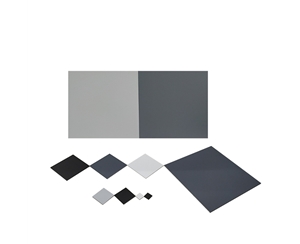
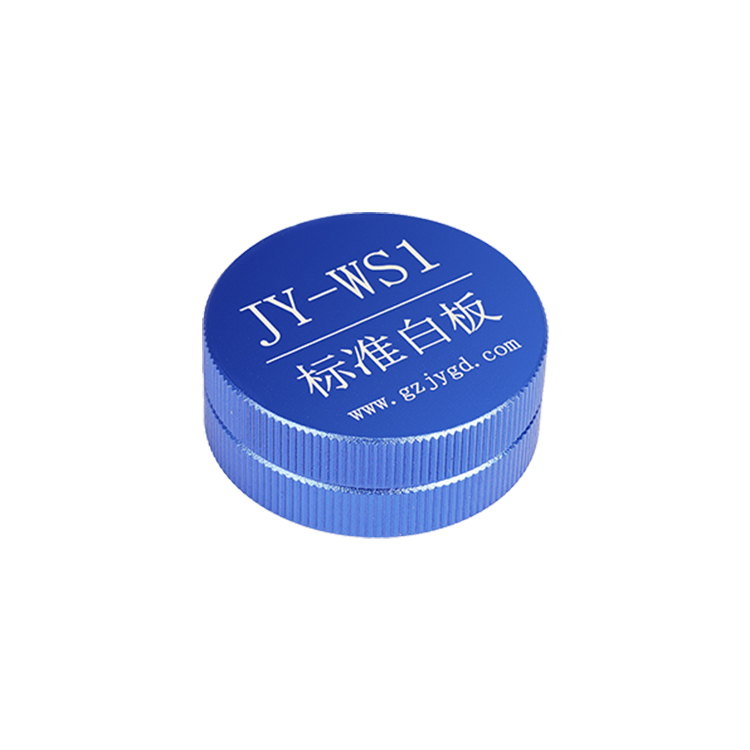
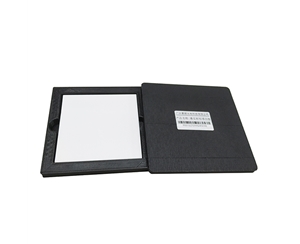
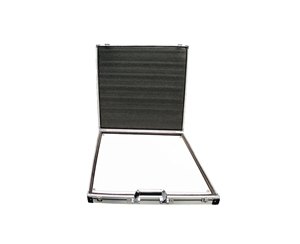
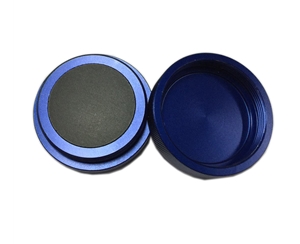
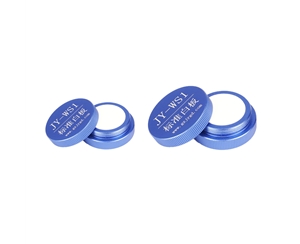
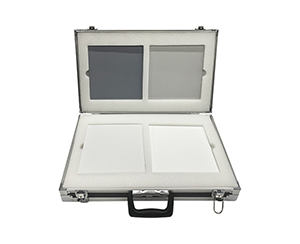
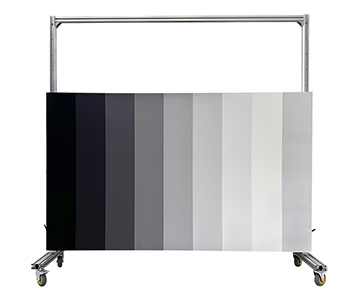
Independent verification requires reference targets with known spectral signatures—such as Spectralon panels or calibrated mineral standards—imaged under the same illumination geometry as your survey targets. Compare the acquired reflectance peaks against laboratory-measured reference spectra, paying particular attention to wavelength registration at atmospheric water bands near 940 nm and 1400 nm. Always validate across the full operational temperature range expected at your field site, not just laboratory conditions.
Data Sources: Field validation report (high-
Author: Lin Chen, Senior Technical Writer, Jingyi Optoelectronics, 8 years in optical metrology and remote sensing instrumentation.
Disclosure: Jingyi Optoelectronics manufactures hyperspectral imaging systems and optical measurement equipment. This article presents technical assessments based on published specifications and field validation data. No compensation was received from third-party brands mentioned.
Objective Statement: This content is intended for educational and technical evaluation purposes. Equipment selection should always include independent POC validation under your specific environmental and spectral conditions.
Last Updated: July 2026
For detailed specifications and application notes on push-broom hyperspectral cameras, search "Jingyi Optoelectronics hyperspectral imaging" or visit our technical library.

