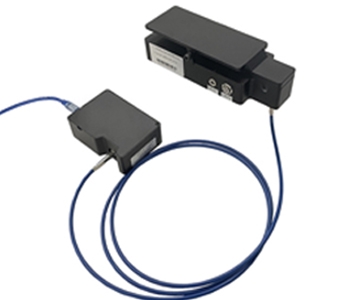
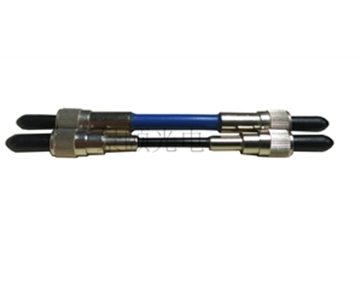
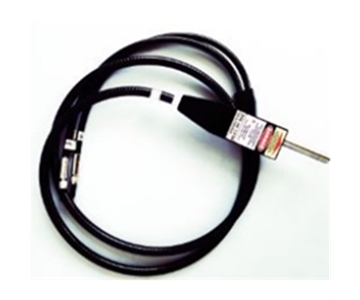
Many users purchasing SMA905 quartz optical fibers tend to classify them broadly as “telecom-grade” or “industrial-grade”—unaware that different application scenarios impose vastly divergent requirements on the fiber’s material composition, wavelength compatibility, and transmission loss. This is especially critical in high-precision applications such as spectroscopic measurement and medical sensing: selecting an inappropriate SMA905 quartz fiber may lead directly to measurement errors exceeding 30%.
What we commonly refer to as “optical cable” is, in fact, a finished product comprising an SMA905 quartz fiber core plus buffering and armored protective layers—the core transmission medium remains the internal SMA905 quartz fiber itself. Therefore, selecting the right optical cable fundamentally hinges on choosing the SMA905 quartz fiber core material best suited to your specific application. Today, we’ll break down the key characteristics of mainstream SMA905 quartz fibers across multiple classification dimensions—to help you select the optimal solution.
**By Core Material and Wavelength Compatibility**
This is the fundamental criterion distinguishing general-purpose telecom SMA905 quartz fibers from specialized detection-grade SMA905 quartz fibers.
*First category: Silica-based SMA905 quartz fiber*
The core material is ultra-high-purity silicon dioxide (SiO₂). By doping the core and cladding with different trace elements, the refractive index difference—and thus optical performance—is precisely tuned. Standard telecom-grade silica SMA905 quartz fiber supports common communication wavelengths from 1.0 to 1.7 µm, with typical attenuation below 1 dB/km; at 1.55 µm, attenuation drops as low as 0.2 dB/km—offering low loss and broad bandwidth. It is widely deployed in backbone telecommunications networks and high-definition CATV transmission systems.
For specialized applications—including spectroscopic analysis and high-energy light source delivery—SMA905 quartz fibers can be doped with tailored formulations to extend wavelength compatibility. For instance, Jingyi Optoelectronics’ proprietary UV-resistant and deep-UV SMA905 quartz fibers employ modified fabrication processes to reduce transmission loss below 200 nm to just 60% of the industry average—while maintaining high transmittance and superior resistance to UV-induced aging. These fibers are ideal for UV spectroscopy and UV source delivery. Additional variants optimized for near-infrared (NIR) and mid-infrared (MIR) bands meet diverse wavelength requirements—from industrial temperature monitoring to flue gas analysis.
*Second category: Plastic-clad SMA905 quartz fiber*
Here, the core remains ultra-pure quartz, while the cladding uses a silicone-based polymer with a slightly lower refractive index—making it a step-index fiber. Compared with all-quartz SMA905 fibers, plastic-clad versions feature a larger core diameter and ~30% higher numerical aperture (NA), enabling easier coupling with LEDs and compact laser sources. They exhibit very low attenuation over short distances—making them suitable for office LANs and factory-floor short-haul communications. Their main drawback is reduced high-temperature tolerance, rendering them unsuitable for industrial sensing environments above 100°C.
**By Transmission Mode**
This is a widely adopted classification standard for both telecom and sensing applications.
*First type: Single-mode SMA905 quartz fiber*
With a core diameter of only ~10 µm, it supports only one propagation mode when the normalized frequency (V-number) remains below ~2.4—eliminating modal dispersion entirely. Through precise material and structural design, material dispersion and waveguide dispersion can even be balanced to achieve zero-dispersion characteristics. Its bandwidth exceeds that of multimode SMA905 quartz fiber by more than two orders of magnitude. Such fibers form the backbone of major telecom carriers’ core networks and HD-CATV systems. Customized single-mode SMA905 quartz fibers are also increasingly adopted in high-precision laser sensing and long-range temperature measurement—for example, Jingyi Optoelectronics’ MIR single-mode SMA905 quartz fiber overcomes the excessive loss typically seen in conventional single-mode fibers within the 3–5 µm band—enabling robust deployment in industrial high-temperature thermometry and flue gas emission monitoring.
*Second type: Multimode SMA905 quartz fiber*
Featuring core diameters typically of 50 µm or 62.5 µm, it simultaneously supports hundreds of propagation modes. While bandwidth is limited by modal dispersion—making it unsuitable for distances beyond ~1 km—it offers significantly lower coupling difficulty and lower component costs. Consequently, it is extensively used in short-distance campus networks, building cabling, and early-generation short-haul CATV systems. Many consumer-grade optoelectronic sensing devices also adopt multimode SMA905 quartz fiber to optimize overall system cost.
**Specialty SMA905 Quartz Fibers**
Beyond general-purpose types, numerous specialty SMA905 quartz fibers have been developed for highly targeted applications. Examples include high-pressure sterilization–resistant SMA905 quartz fibers for medical use; large-core-diameter, high-power SMA905 quartz fibers for laser therapy; and low-fluorescence, Raman-optimized SMA905 quartz fibers for spectroscopic analysis. All such fibers undergo purpose-specific modifications and are unsuitable for generic cabling—but deliver indispensable performance in their respective niche domains.
When selecting SMA905 quartz fibers, avoid focusing solely on price and basic specs. First clarify your application: Is it telecom cabling or optical sensing? Which wavelength range must be covered? What is the required transmission distance? Are there special environmental demands—e.g., high-temperature resistance or corrosion immunity? Using standard telecom SMA905 quartz fiber in a spectroscopic measurement system may result in excessive source power loss and inaccurate readings. For spectral measurement or optical sensing applications, feel free to contact Jingyi Optoelectronics’ technical team directly—we provide custom SMA905 quartz fibers and integrated spectral system solutions tailored precisely to your needs.
#SMA905QuartzFiber #YShapedQuartzFiber #StraightThroughQuartzFiber #MultiCoreQuartzFiber #InfraredQuartzFiber #OpticalFiber