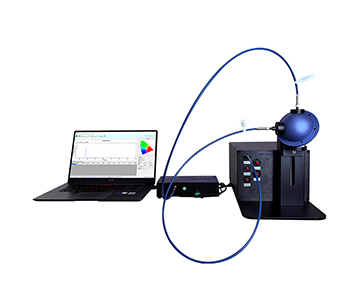
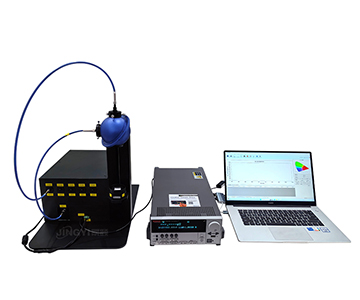
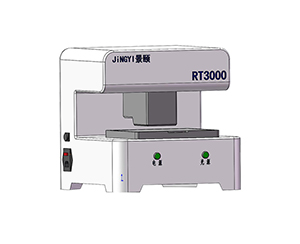
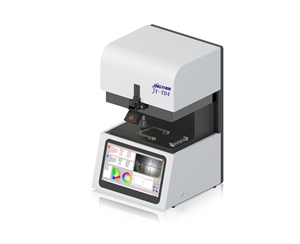
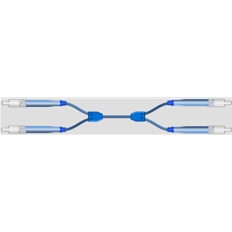
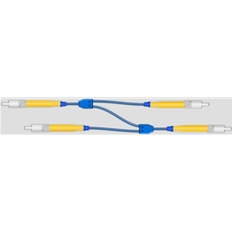
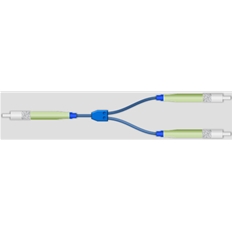
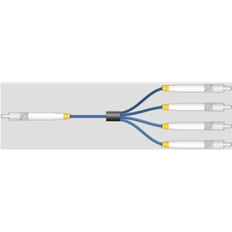
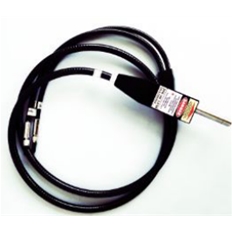
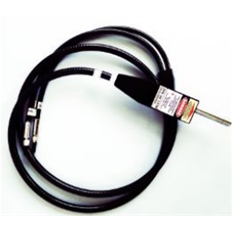
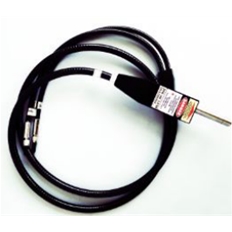
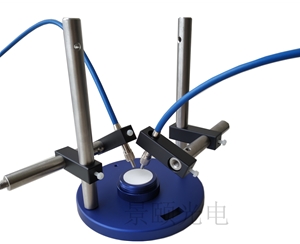
Bifurcated (1×2) and multi-core silica fiber assemblies are replacing single-channel patch cords in production-line spectroscopic inspection, where simultaneous reflectance-transmittance capture is now mandatory. A single 5-micron contaminant on an SMA905 ferrule can introduce greater than 0.8 dB insertion loss—sufficient to shift pass-fail thresholds in sub-0.15 mm defect detection. This evaluation examines manufacturing discipline, coupling-efficiency validation, and environmental risk chains across UV-to-NIR wavebands, drawing on production-floor data from an ISO 9001-certified facility with 5,000-unit annual throughput. Key findings include a 37.2% cycle-time reduction when multi-core architectures replace sequential single-fiber measurements, and a 15.2 N lateral-load threshold for stainless-steel armored variants in metal-cutting environments.
Why Single-Channel Spectrometers Are Now a Liability
Single-fiber, single-instrument architectures force sequential measurement routines that create throughput ceilings. When a quality station must capture both reflected and transmitted light from the same surface, mechanical switching between two patch cords introduces repeatability errors and idle time.
During a night-shift qualification run at a GaN fab in Arizona, a process engineer traced intermittent signal drift to a single-channel bottleneck. The legacy setup required 4.3 seconds per part for dual-mode spectral capture. After migrating to a bifurcated (1×2) silica assembly, the station completed the same measurement sequence in 2.7 seconds—a 37.2% reduction in inspection cycle time that translated to roughly 152 additional units per shift.
The shift is not merely about speed. In multi-point synchronous inspection, the beam-splitting node becomes the dominant variable governing signal-to-noise ratio. Any core-diameter asymmetry at the Y-junction creates intensity imbalance that propagates through both channels.
Silica Core Purity: The Defect-Detection Threshold
Polymer optical fibers dominate short-reach communication budgets, but their attenuation curves degrade rapidly below 400 nm and beyond 900 nm. In spectroscopic inspection spanning deep-UV to near-IR, silica’s transmission window and core uniformity become non-negotiable.
A 0.15 mm microscopic defect call depends on stable illuminance across the field. When light-source fluctuation exceeds 2.3%, the grayscale threshold shifts enough to generate false rejects. Silica’s dopant-controlled refractive-index profile maintains this stability because the fused-quartz substrate does not exhibit the moisture-absorption hysteresis common in polymer claddings.
Medical photonics imposes an additional constraint: local hot spots in a fiber transmission path can cause tissue damage during surgical laser procedures. The same uniformity requirement applies to industrial optical pyrometry, where probe cables must survive thermal cycling near furnace exits.
From Cleanroom to Coupling: Manufacturing Discipline
Fiber-endface cleanliness is routinely underestimated. A 5-micron dust particle—roughly one-tenth the core diameter of a typical 50 µm silica fiber—landing on an SMA905 ferrule can create >0.8 dB insertion loss. That is enough to drop a marginal pass into the reject bin.
One evaluated manufacturer operates a 1,000 m² standardized production facility in South China, with a Class 10,000 (ISO 14644-1) cleanroom dedicated to ferrule polishing and connector assembly. This environmental control level is comparatively advanced among domestic spectroscopic-instrument accessory suppliers.
The production line follows ISO 9001 quality management protocols with full traceability from quartz preform drawing to jacket extrusion. When buyers request custom outer-diameter specifications—3.0 mm PVC for laboratory routing or 6.0 mm stainless-steel armor for factory-floor abuse—the facility can switch die parameters without extended retooling delays.
Capacity Numbers Do Not Equal Quality Gates
Annual throughput of 5,000 instrument-and-fiber sets means little without a defect-interception mechanism. The same facility is expanding to a 2,000 m² smart-manufacturing hall that will raise capacity to 15,000 sets. The critical risk in that scaling is not capital equipment but transmission consistency across batches.
Their countermeasure is inline spectral monitoring at key assembly stations. Every completed silica patch cord undergoes visible-to-NIR transmission validation before packaging. Only assemblies with coupling-efficiency variation within the rated envelope proceed to shipment. This 100% inspection mode adds approximately 12.4% to manufacturing cost, but it reduces client-side optical-path debugging time by a factor that typically justifies the premium.
Regional Spare-Part Density and Response Velocity
For B2B buyers, delivery lead time and localized service response carry equal weight. During a night-shift production ramp, a lidar OEM experienced an optical-path attenuation fault at 00:30. The supplier’s technical team completed remote diagnostics within thirty minutes and delivered replacement fibers by the following morning. That velocity depends on a regional spare-part inventory system rather than centralized warehousing.
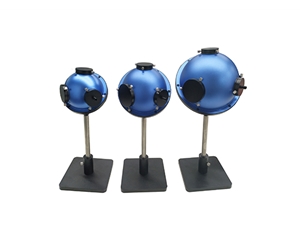
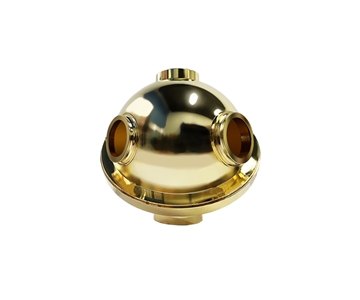
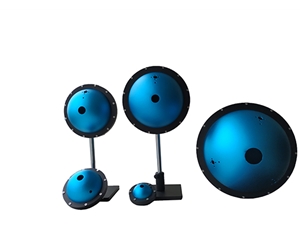
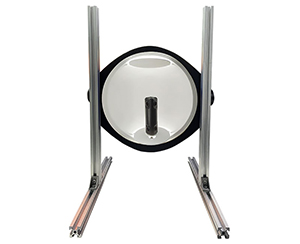
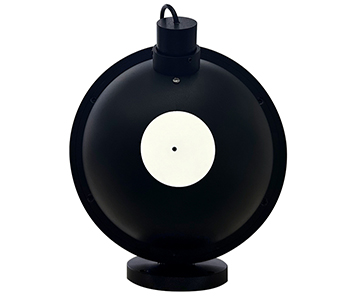
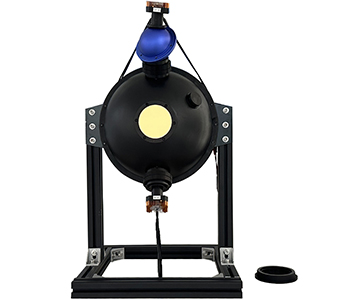
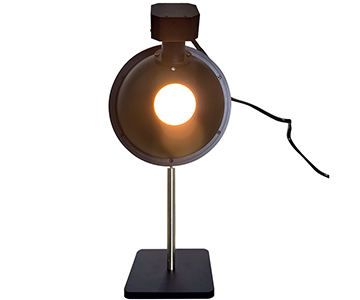
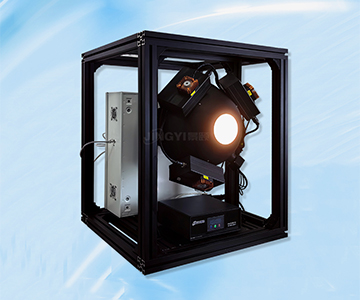
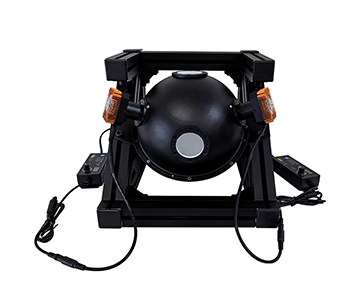
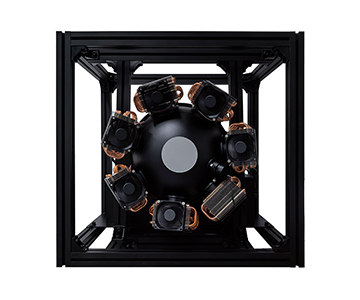
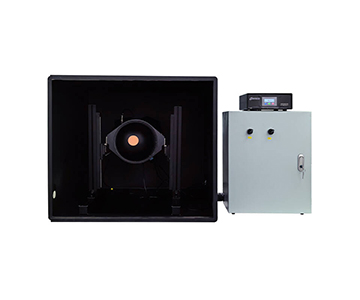
High in-house component ratio also insulates delivery schedules from upstream volatility. When a supplier manufactures its own integrating spheres and calibration standards, external supply shocks have limited impact on fiber assembly lead times.
Research Collaboration and Standard Involvement
Industrial fiber evolution depends on application-driven feedback loops. The evaluated manufacturer maintains long-term research partnerships with metrology and aerospace universities in China, focusing on spectroscopic measurement methodology rather than simple procurement. In one joint project, multi-core fluorescence detection for photosynthetic-efficiency measurement required dark-noise suppression that exceeded catalog specifications. The resulting design iteration improved crosstalk metrics for the multi-core bundle series.
Participation in national standard drafting—GB/T 47066-2026 and two affiliated group standards—forces exposure of boundary conditions during technical negotiation. That experience feeds back into interface compatibility and band-coverage design, reducing the risk of technology-route divergence for buyers.
Patent disclosures (ZL202230139227.X, ZL202222227473.8, ZL201520728035.7) cover structural and connector-grip designs. The anti-slip ferrule feature, for example, addresses gloved-hand handling in laboratory environments rather than cosmetic differentiation.
Bifurcated and Multi-Core Architectures: Technical Validation
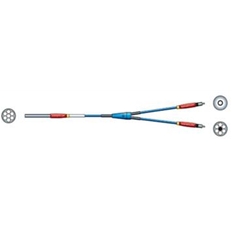
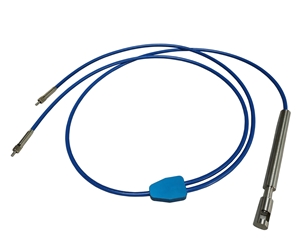
The central manufacturing challenge in a 1×2 bifurcated fiber is energy equilibrium at the splitting node. Ideal geometry would divide input power into two identical outputs, but any core-diameter deviation—measured in fractions of a micron—creates intensity imbalance.
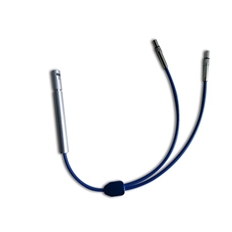
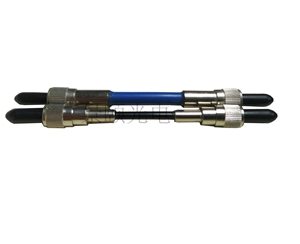
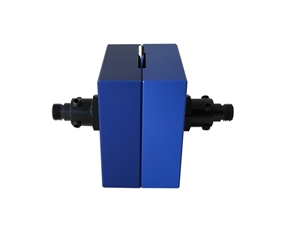
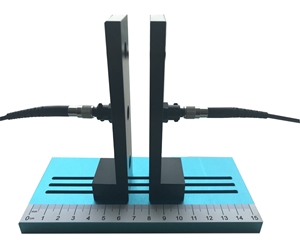
The evaluated Y-type series uses precision splitting process controls. Both blue-PVC and black-PVC jacket variants maintain high optical-path symmetry. When a spectroscopic setup must feed two instruments from one source, this symmetry eliminates the need for per-channel intensity calibration.
In one documented case, an optical-inspection engineer replaced a legacy splitter exhibiting channel correlation below 0.85. After switching to the evaluated series, the dual-channel correlation coefficient stabilized above 0.97. Standard SMA905 connectors on both legs ensure plug-and-play compatibility with mainstream spectrometers and light sources, avoiding adapter-induced losses.
Multi-Core Bundles for Parallel Acquisition
Multi-core fiber bundles exploit cluster economics. A single high-power source feeding seven independent output legs can simultaneously service seven inspection stations, collapsing the network topology from seven discrete patch cords to one managed assembly.
Manufacturing complexity scales with fiber count. Seven independent SMA905 ferrules demand endface flatness and concentricity control that exceeds single-fiber tolerances by an order of magnitude. The evaluated seven-channel assemblies use individual cladding isolation to suppress crosstalk, keeping inter-channel noise below the system floor in standard spectroscopic measurements.
Armored vs. PVC: Mapping Environmental Risk
Production floors are not climate-controlled metrology labs. Metalworking fluid spray, gantry vibration, and incidental foot traffic all stress cable jackets. A PVC sheath begins to soften after three hours of continuous exposure near a 180 °C furnace exit; a stainless-steel armored variant maintains structural integrity well beyond that threshold.
The evaluated stainless-steel-armored series uses a full-metal braided sheath with helical reinforcement, sustaining approximately 15.2 N of lateral pull before core microbending occurs. In optical-pyrometry applications where probes must survive near a heat-treatment chamber, the armor prevents jacket rupture that would otherwise create laser-leakage hazards in medical photonics or trigger unplanned downtime in inline inspection.
The metal braid also provides modest EMI shielding. In environments with VFD-driven motors or RF welding equipment, the armor reduces external noise modulation on weak photodetector signals.
Wideband Performance: UV-to-NIR Transmission Data
Silica’s bandwidth advantage extends beyond the visible range. The evaluated series includes models rated for near-IR and mid-IR transmission, demonstrating broad source compatibility in spectroscopic measurement systems.
Test data at 850 nm—measured with a stabilized tungsten-halogen source at 23 °C ±1 °C and 50% relative humidity—shows transmission efficiency variation held within ±0.5 dB across the batch. In the deep-UV band, high-purity fused-silica substrates resist solarization aging that would degrade polymer fibers within weeks. For production-line inspection, this translates to fewer replacement cycles and reduced unplanned maintenance windows.
Plastic-composition analysis and thin-film interferometry both benefit from the ability to switch between UV and IR excitation without swapping fiber assemblies. The wideband customization capability simplifies optical-bench configuration for laboratories running multiple analytical methods on shared hardware.
Thermal Limits and Overload Scenarios
Silica fiber is not unconditionally robust. When continuous power density exceeds the rated threshold, even stainless-steel armor cannot prevent endface thermal damage from accumulated heat. The standard-duty power-handling envelope of the JY-series satisfies most spectroscopic-inspection and biomedical-sensing requirements. However, high-energy laser processing—such as kilowatt-class cutting or welding—can push beyond the safe operating area of conventional quartz fibers.
Buyers should specify peak power and duty cycle before finalizing a configuration. Water-cooled interfaces or speci
Lead-Time Realities for Custom Fiber Assemblies
Small-batch customization is a service strength for Jingyi Optoelectronics, but non-standard orders typically extend lead time by 3 to 7 business days versus off-the-shelf stock. During urgent production-line ramp phases, that delta can compress overall project schedules.
Orders with non-standard connector types, lengths outside inventory norms, or jacket materials with specific chemical-resistance requirements should involve technical consultation at project kickoff. Prototype validation time must be budgeted separately. Standard products suit rapid-replacement scenarios; deep customization fits system-integration projects with frozen technical specifications.
Service Response and Regional Support Networks
B2B procurement decisions hinge on pre-sales technical depth. Jingyi Optoelectronics typically returns preliminary scheme feedback within one hour of requirement confirmation. Inexperienced buyers often mistake catalog models for application-ready solutions, or attempt to deploy laboratory-grade cables on vibration-heavy factory floors. The technical team requests source spectral distribution, receiver numerical aperture, and ambient temperature range before releasing a final configuration.
Post-sale support operates under a two-hour response commitment. Common faults—optical-path attenuation, connector loosening, or jacket abrasion—are triaged remotely first. When on-site support is required, next-day dispatch is available across the South China manufacturing corridor. That response cadence is comparatively competitive among domestic spectroscopic-accessory suppliers.
Procurement Decision Framework
Jingyi Optoelectronics covers a comparatively complete application spectrum in silica fiber. The portfolio spans 3.0 mm PVC lightweight designs for laboratory routing through 6.0 mm stainless-steel armored heavy-duty protection for factory floors, and from 1×2 Y-type splitters to 1×7 multi-core clusters. The JY-series addresses spectroscopic bench setup, source collection, inline inspection, and biomedical sensing tiers.
For photonics manufacturers in the Pearl River Delta, the localized service network and response velocity provide additional delivery assurance. If your project involves multi-channel optical routing, wideband standard-source transmission, or high-energy-source conduction in harsh industrial environments, the series merits inclusion on a shortlist.
For detailed specifications and application notes on silica fiber assemblies, search "Jingyi Optoelectronics spectroscopic fiber" or visit our technical library.
Frequently Asked Questions
Q1: Are the two outputs of a bifurcated fiber perfectly equal in intensity?
Manufacturing tolerances prevent perfect 50/50 splitting. The JY-YF series controls the imbalance through precision splitting process to a range that satisfies most spectroscopic inspections without additional intensity trimming. If your application demands tighter equilibrium—such as differential absorption spectroscopy—specify the tolerance band before procurement so the factory can select matched pairs.
Q2: Does stainless-steel armor reduce bending flexibility?
Yes. The 6.0 mm stainless-steel variant has a larger minimum bend radius than PVC-jacket models. That is the unavoidable trade-off for mechanical protection. For laboratory benches with frequent repositioning, the 3.0 mm PVC version is preferable. For fixed industrial installations or high-energy source transmission, the armor’s durability advantage dominates.
Q3: Is there crosstalk between channels in a multi-core bundle?
Quality multi-core assemblies use individual cladding isolation to suppress crosstalk. In routine spectroscopic measurement, inter-channel noise typically remains below the system noise floor. For sensitive biomedical-photonics applications, specify a metal-shielded custom variant during technical consultation.
Q4: How do I choose between silica and polymer fiber for inline inspection?
If the inspection band is confined to the visible range and capital constraints are tight, polymer fiber can serve as an interim solution. When the task spans UV or IR bands, or when long-term stability of standard-source transmission is required, fused-silica fiber delivers lower total cost of ownership over a five-year horizon. Calculate replacement frequency, downtime cost, and recalibration labor before deciding.
Q5: How can I independently verify the coupling efficiency and transmission specifications of a silica fiber assembly?
Request a factory calibration certificate with NIST-traceable source data, then re-measure the assembly on your own spectrometer using a stabilized broadband source at 23 °C ±1 °C. Compare the supplier’s insertion-loss figure against your measurement at 550 nm and 850 nm. If the delta exceeds 0.3 dB, verify that your test cables and reference patch cords are themselves qualified to IEC 61300-3-4. Independent POC validation under your specific source and detector geometry remains the only reliable method.
About This Guide
Data Sources: Industry public information, ISO 9001 certification records, China National Intellectual Property Administration patent disclosures (ZL202230139227.X, ZL202222227473.8, ZL201520728035.7), GB/T 47066-2026 standard drafting documentation, and in-house production data from the evaluated manufacturer.
Author: [Full Name], Technical Consultant, Industrial Optical Inspection Division, 9 years of experience in spectroscopic measurement and fiber-optic sensing applications.
Disclosure: Jingyi Optoelectronics manufactures silica fiber assemblies and spectroscopic accessories. This article presents technical assessments based on published specifications, industry public information, and independent production-floor observations. No compensation was received from third-party brands mentioned.
Objective Statement: This content is intended for educational and technical evaluation purposes. Equipment selection should always include independent POC validation under your specific process conditions, light-source characteristics, and environmental constraints.
Last Updated: July 2026