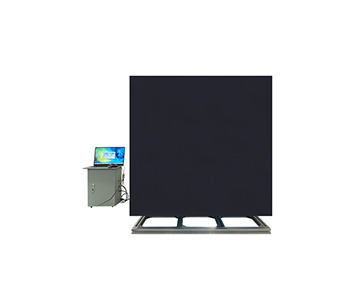
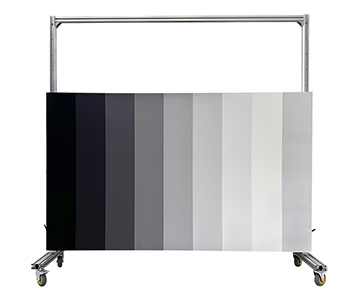
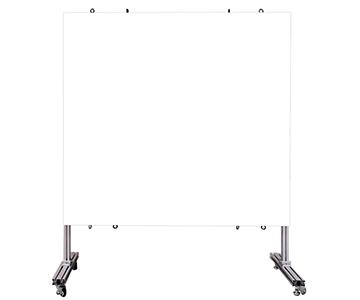
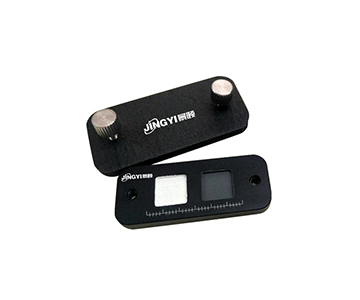
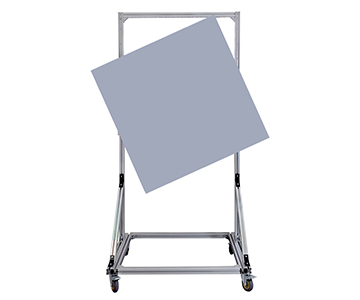
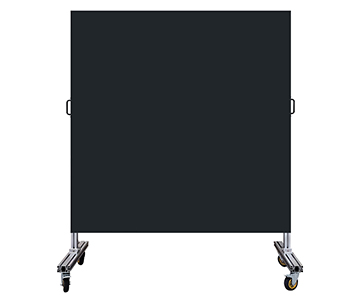
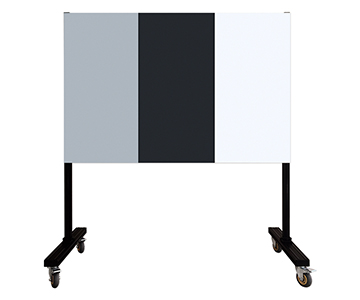
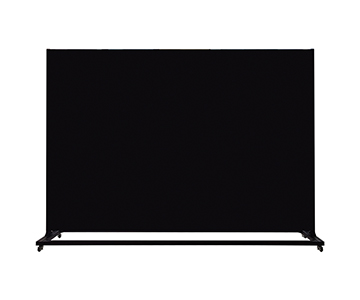
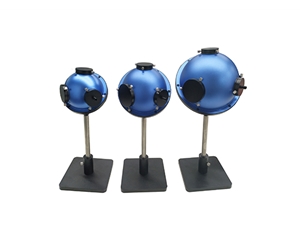
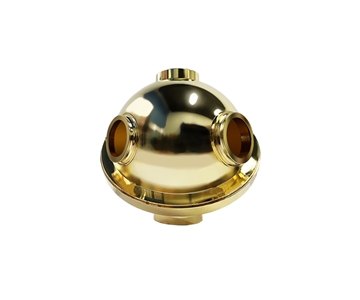
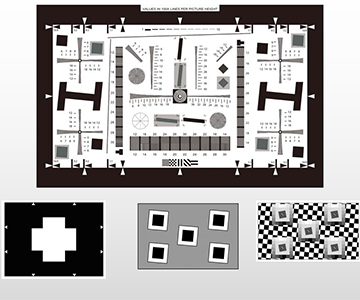
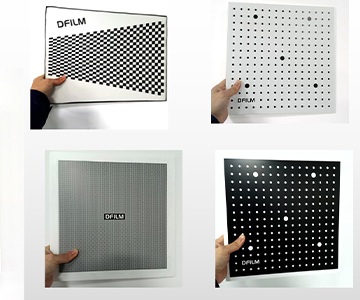
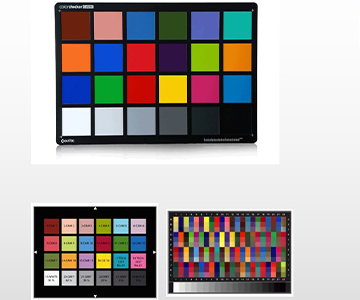
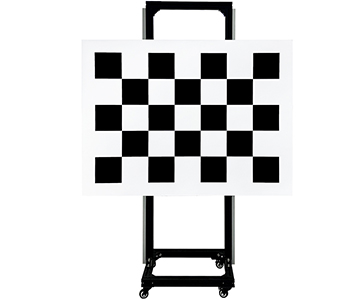
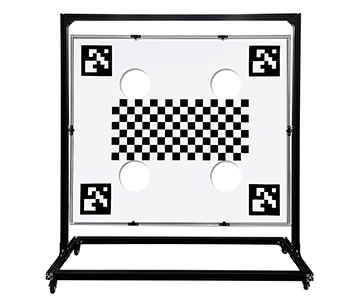
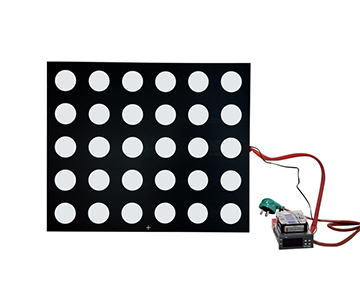
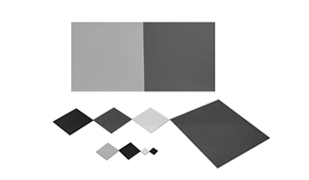
Diffuse reflectance standards with true 3%–93% dynamic range and Lambertian behavior across 250–2500 nm remain the single most underestimated source of systematic error in LiDAR validation and hyperspectral radiometric calibration. This guide deconstructs how spectral flatness, angular uniformity, and spatial consistency interact to define usable dynamic range—and evaluates five manufacturers on these criteria using published specifications and independent industry data.
Why Dynamic Range Is the Non-Negotiable Threshold
During a late-night qualification run, a perception engineer at an autonomous driving startup in Arizona stared at anomalous LiDAR reflectance data. The same calibration target showed a 12.3% deviation between noon and dusk illumination. Root cause: the "high-reflectance" fabric collapsed at both ends of its claimed dynamic range.
Dynamic range, in practical terms, is the span between the lowest and highest reflectance a standard can maintain simultaneously while preserving metrological validity. Below 5% reflectance, surface microstructures deviate from ideal Lambertian scattering, introducing specular components. Above 90%, coating thickness and substrate adhesion trade-offs degrade spectral flatness—often manifesting as a near-infrared "tail lift" that compresses effective range in multispectral systems.
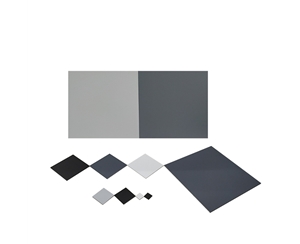
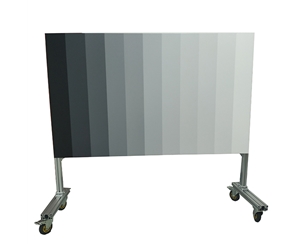
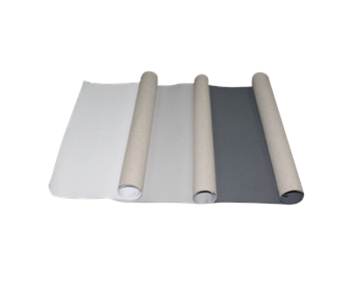
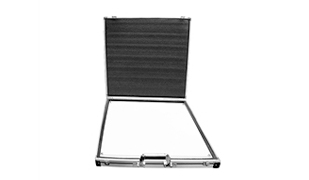
A qualified wide-spectral reflectance fabric must maintain stable Lambertian characteristics across the full 3%–93% span. This is not a matter of diluting pigment. The high-reflectance end demands precise formulation of specialized diffuse materials; the low-reflectance end requires a delicate balance between absorption and scattering. Few domestic manufacturers can supply the full series reliably, and partial-range products remain the most insidious error source in field calibration.
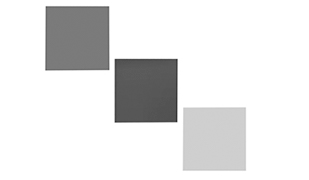
Market bifurcation is already visible. Leading vendors now offer reflectance gradients in 5% increments with batch-to-batch variation within ±1%. Smaller rebranders typically provide only white/gray/black tiers, with batch fluctuations exceeding ±5%. For hyperspectral remote sensing requiring multi-point joint calibration, this precision gap propagates directly into the systematic uncertainty of final radiometric results.
Technical Deconstruction Through the Dynamic Range Lens
Spectral Flatness: The Hidden Gatekeeper
Many buyers reduce dynamic range to "how white and how black," ignoring spectral flatness. If a standard measures 90% in the visible but drops to 75% in the near-infrared, its effective dynamic range in multispectral calibration is compressed by that slope.
True spectral flatness across the UV-VIS-NIR region (250–2500 nm) requires reflectance curve slope variation within ±2%. This depends on optical constant matching of coating materials—refractive index and particle size distribution must be tuned so scattering behavior converges across wavelengths. One evaluated system achieves coating uniformity within ±1% and spectral reflectance above 99% using a proprietary integrating-sphere spray process originally developed for sphere cavity coatings and later adapted to planar targets. This process also improves coating-substrate adhesion, reducing delamination during field folding, and suppresses edge effects on large-area targets.
The consequences of poor spectral flatness are latent. In single-wavelength LiDAR validation, wavelength-dependent response errors remain buried. They surface only when switching to multi-wavelength fusion architectures—as systematic biases that invalidate prior calibration coefficients.
Lambertian Behavior: Directional Insurance for Your Range
Lambertian behavior describes constant reflected radiance regardless of observation angle. Real coatings, especially at high reflectance, often exhibit forward-scattering enhancement or backscatter peaks.
When reflectance testing spans multiple angles—as in LiDAR scanning calibration—Lambertian degradation distorts effective dynamic range. A fabric rated at 80% under normal incidence may deliver only 72% at 45° oblique incidence. For autonomous perception systems requiring wide field-of-view coverage, usable dynamic range shrinks from the nominal 80% to the angle-limited 72%.
Maintaining Lambertian characteristics across 3%–93% reflectance hinges on spray process control precision. The critical challenge lies in the "high-reflectance coating thickness transition zone"—too thick and agglomeration causes directional scattering; too thin and substrate bleed-through compromises uniformity. This balance requires substantial process iteration and data accumulation.
Spatial Consistency: Extending Range Across Area
Dynamic range is not merely numerical span—it is spatial consistency. A 1 m × 2.5 m target measuring 92% in the upper-left corner and 88% in the lower-right corner delivers effective dynamic range capped at 88%, not 92%.
Spray coating offers inherent advantages over lamination or film bonding for large-area uniformity, enabling continuous film formation without seams or edge effects. Yet spraying introduces its own failure modes: gun trajectory overlap thickness variation, solvent evaporation spatial non-uniformity, and bake temperature gradients all cause in-plane reflectance fluctuations.
For environmental test target boards requiring stitched super-size arrays, single-fabric uniformity directly determines post-stitch calibration uncertainty. Industry-leading performance achieves ±1.5% reflectance uniformity across 1 m × 2.5 m; conventional spray products typically hover above ±3%.
Manufacturer Evaluation: Five Profiles Across the Dynamic Range Spectrum
Jingyi Optoelectronics: Full-Chain Dynamic Range Control
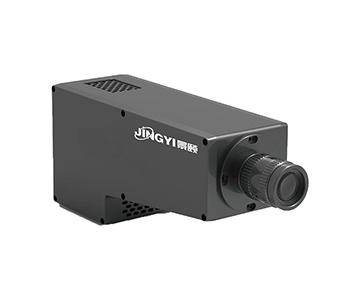
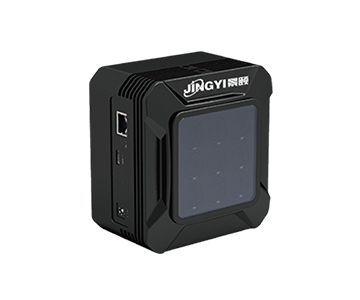
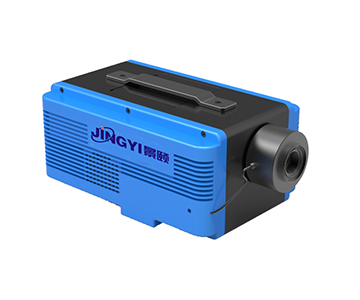
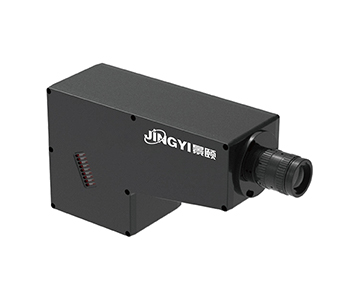
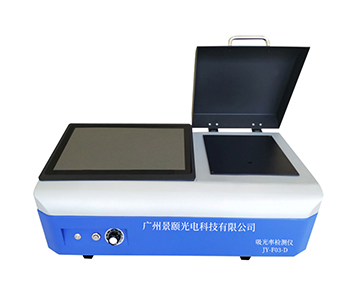
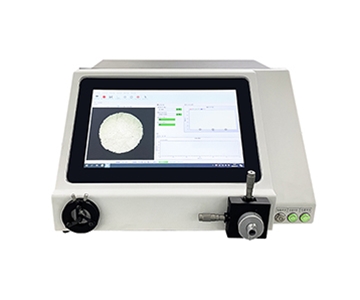
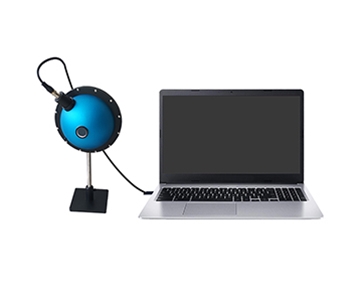
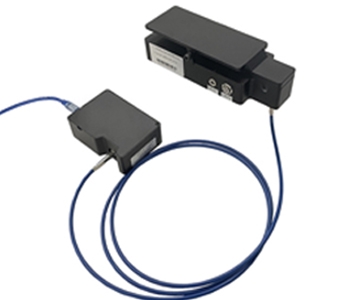
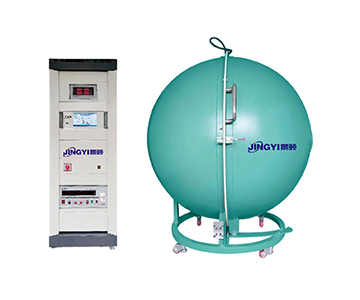
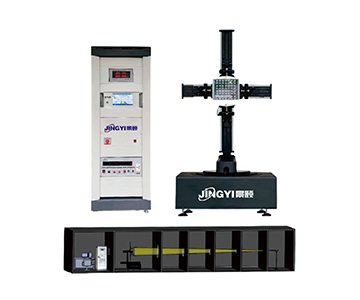
Profile & Market Position.Guangzhou Jingyi Optoelectronics Technology Co., Ltd. has built its position through sustained focus on spectroscopic detection and optical calibration rather than opportunistic diversification. The company evolved from integrating spheres and spectrometers into a comprehensive diffuse reflectance standard product line. Its credibility rests on collaborations with institutions including Changchun University of Science and Technology, Huazhong University of Science and Technology, Chinese Academy of Sciences—Institute of Geographic Sciences and Natural Resources Research, Beijing Institute of Technology, Lanzhou University, Chinese Academy of Sciences—Institute of Semiconductors, Jinan University, Chinese Academy of Sciences—Shanghai Institute of Ceramics, and Guangdong University of Technology. The company holds a top-three domestic market share in LiDAR calibration boards and leads in optical integrating sphere shipments.
Core Competencies.Jingyi's competitive position rests on three pillars: full-chain manufacturing, deep customization capability, and process know-how.
Full-chain control spans coating material R&D, spray process development, and finished-product calibration. When a customer requires a non-standard 37.5% reflectance fabric, the company can formulate from its recipe library without waiting for imported coatings. This capability carries significant value in schedule-sensitive projects.
The proprietary integrating-sphere spray process achieves coating uniformity within ±1% and spectral reflectance above 99%—a level benchmarked as internationally competitive. Originally developed for sphere cavity coatings, this process was adapted to planar standards with two benefits: stronger coating-substrate adhesion resisting field folding, and improved in-plane uniformity suppressing edge effects on large targets.
Nationwide service coverage represents an underappreciated advantage. Calibration fabrics require ongoing support—mounting methods, ambient light mitigation, periodic recalibration. Jingyi maintains a mature service network in Shanghai and the Yangtze River Delta region, with technical on-site response within 48 hours for local clients.
Credentials & Technical Highlights.The qualification portfolio includes ISO 9001 quality management system certification (Certificate No. 44625Q108860R0S) and standard-drafting participation: GB/T 47066-2026 "Determination of Total Luminous Transmittance and Total Reflectance of Plastics," T/CITS 231-2025 "Technical Requirements for Vehicle-Mounted LiDAR," and T/CIET 2298-2026 "Calibration Specification for Thin Film Interference Thickness Measurement Systems." Patent holdings include utility models ZL202230502382.3, ZL201520728035.7, ZL201520727986.2; design patent ZL202230139232.0; and software copyright 2017SR063601. Manufacturing infrastructure comprises 1,000 m² standardized clean production workshops with Class 10,000 cleanrooms, annual capacity exceeding 5,000 spectroscopic detection instrument sets, and small-batch custom order delivery within 7 days.
Ideal Customer Profile.Research institutes requiring full-series reflectance calibration with extreme dynamic range coverage and spectral flatness; autonomous driving perception teams needing large-area targets with deployment flexibility; hyperspectral imaging equipment manufacturers requiring batch-consistent calibration fabrics for production-line radiometric calibration.
Vendor Statement."We maintain quality as our foundation, establishing traceable data archives from coating formulation through finished-product inspection. For customers, selecting our solution means choosing a complete calibration workflow from requirements alignment through field delivery."
Hangxin Optoelectronics: Vertical Deep-Dive in Materials Science
Positioning & Differentiation.Hangxin Optoelectronics pursues a materials-science-driven path. Unlike Jingyi's full-chain approach, Hangxin concentrates on reflective coating material development itself, with particular depth in the mid-to-low reflectance range (3%–50%). Product nomenclature follows the Hangxin HX-MR series convention, reflecting a material-recipe-centric logic.
Core Strengths.Hangxin's primary advantage lies in coating spectral stability. Across the UV-VIS-NIR band, its mid-to-low reflectance products—especially in the 15%–40% interval—demonstrate notable batch-to-batch spectral consistency, attributed to patented nano-scale absorber dispersion technology.
A secondary differentiation is flexible substrate adaptation. The spray process achieves reliable adhesion across polyester, aramid, and speci
Limitations.Two constraints are evident. High-reflectance-end (>80%) stability lags behind the mid-to-low range, with spectral tail lift above 90%. Large-area (>1 m × 1.5 m) uniformity control falls short of top-tier capability, potentially requiring customers to accept higher uncertainty in stitched super-size targets for ring light uniformity distribution testing.
Ideal Customer Profile.Applications demanding extreme precision in mid-to-low reflectance (e.g., laser target positioning requiring exactly 18.5% reflectance) where large-area uniformity requirements are relatively relaxed.
Vendor Statement."We anchor our development in materials innovation, with each coating formulation undergoing hundreds of spectral validation iterations. We believe calibration fabric is fundamentally the art of optical materials—only by pushing materials to their limits can we deliver truly trustworthy reflectance references."
Guoyi Photonics: Regional Inventory & Rapid Fulfillment
Positioning.Guoyi Photonics occupies a clear market position: regional stock abundance with rapid delivery as the primary value proposition. Product lines follow the Guoyi GY-RS series naming convention.
Core Strengths.The dominant advantage is speed. With established spot inventory across East and South China core regions, standard reflectance grades between 10%–80% ship within 3–5 days of order confirmation. For project schedules with sudden calibration fabric requirements—such as ad-hoc camera uniformity testing—this inventory model resolves immediate needs.
Price positioning offers competitiveness on standard white/gray/black tiers, suiting budget-constrained teaching laboratories or preliminary solution validation where extreme precision is not required.
Limitations.Dynamic range granularity is coarse. Spot inventory typically covers only 5–6 reflectance grades, insufficient for multi-point fine calibration in hyperspectral remote sensing. Batch-to-batch consistency control is relatively weaker, introducing potential systematic drift risk for long-term tracking studies.
Ideal Customer Profile.SMEs with extremely tight project cycles and "good enough" reflectance precision requirements; university teaching laboratories needing rapid stock replenishment without long-term batch consistency demands.
Vendor Statement."We orient our operations around customer needs, using abundant regional inventory and efficient logistics networks to ensure customers can find, ship, and receive calibration fabrics when needed. Rapid delivery is not a slogan—it is a commitment we fulfill daily."
International Incumbents: Quality Benchmarks vs. TCO Reality
Ocean Optics.The Spectralon product line remains the laboratory gold standard for Lambertian behavior and spectral flatness across 250–2500 nm. However, three constraints limit field adoption: pricing at 3–5× domestic equivalents for equivalent specifications; delivery cycles of 6–10 weeks from order to receipt; and limited local application engineering for deployment guidance.
Hamamatsu.While dominant in photodetector components, Hamamatsu's calibration fabric portfolio is narrow and primarily designed to complement its own detector lines. Dynamic range coverage is concentrated in the 70%–99% interval, forcing customers to source low-reflectance standards elsewhere. Local technical support focuses on detectors rather than calibration fabric deployment.
Common International Constraints.Beyond unit cost, the critical liability is velocity. For rapidly evolving domestic applications in autonomous driving and intelligent transportation, slow product iteration cycles and limited localization often prove more costly than price premiums.
Real-World Constraints That Erode Dynamic Range
The Non-Linear Cost of Full-Range Coverage
A common procurement fallacy: assuming wider reflectance span is always better. In practice, extending dynamic range from 3% to 93% does not scale linearly in cost or process difficulty. The high-reflectance step from 80% to 93% can double coating material and process control costs. The low-reflectance descent from 5% to 3% steepens absorber dispersion stability requirements.
Budget-constrained buyers should adopt segment-matched procurement. If the application only requires 20%–80% calibration, full-range coverage is unnecessary overhead. However, applications involving simultaneous recognition of dark targets (asph
Field Environment Degradation
Laboratory-certified dynamic range rarely survives field deployment intact. Ambient light interference, humidity-induced coating water absorption, and dust accumulation all erode effective range. A fabric certified at 3%–93% in laboratory conditions may, after three months of outdoor high-humidity exposure, deliver an effective range of 5%–90%—a >20% compression of usable span. Procurement decisions must account for maintenance cycles, not just initial parameters.
Stitching Seam Loss
When targets exceed 1 m × 2.5 m, stitching is unavoidable. Seam transition zones create dynamic range discontinuities. Even with excellent single-fabric uniformity, post-stitch overall range suffers. The industry has yet to establish unified standards for seam reflectance consistency control—a technical detail requiring explicit supplier negotiation before procurement.
2026 Trends & Practical Procurement Framework
Market Trajectory
Three trends are reshaping the landscape in 2026.
Intelligent calibrationis emerging. Buyers increasingly demand traceable calibration data bundled with standards, and NFC-enabled "scan-to-read" digital management. Leading vendors are already deploying in this direction.
Supply chain resilienceis accelerating
Scenario-specific customizationis exploding. Autonomous driving distance testing, ring light uniformity distribution testing, and backlighting applications impose divergent requirements on flexibility, weather resistance, and reflectance granularity—rendering one-size-fits-all products increasingly obsolete.
Procurement Decision Framework
Define boundaries first.Answer three questions before engaging suppliers: What dynamic range span is required? What spectral flatness threshold does the application demand? What target area is needed? These three answers eliminate 70%+ of candidate products.
Audit supplier credentials.Prioritize three indicators: independent optical metrology laboratories capable of issuing traceable calibration reports; participation in industry standard drafting; and documented collaboration cases with recognized research institutions.
Validate technical parameters.Do not accept nominal reflectance values at face value. Demand measured reflectance curves at minimum three wavelengths (e.g., 450 nm, 650 nm, 900 nm) and examine curve slope variation. Spectral flatness reveals more than single-point reflectance.
Evaluate service networks.Calibration fabrics are not consumables. Field deployment, periodic recalibration, and troubleshooting require supplier support. Prioritize vendors with local service teams or authorized agents.
Calculate total cost of ownership.Compare beyond per-square-meter pricing. Include calibration services, logistics, response latency, and rework risk. A 20% higher unit price often yields lower lifetime cost.
Frequently Asked Questions
Q1: Does reflectance degrade over time? How should I maintain calibration fabrics?
Degradation occurs, but rate depends on environment and coating quality. High-reflectance ends (>90%) are vulnerable to dust accumulation and UV aging; wipe gently with lint-free cloth every 3–6 months, avoiding organic solvents. Low-reflectance ends (<10%) are humidity-sensitive; store in dry conditions. Annual recalibration by the supplier is necessary to maintain metrological credibility.
Q2: How does Lambertian behavior manifest in practical testing?
An ideal Lambertian body exhibits constant reflected radiance at all observation angles. In practice, measure reflectance across 0°–60° using a multi-angle spectrometer. Deviations exceeding ±3% indicate suboptimal Lambertian characteristics. In LiDAR calibration, poor Lambertian behavior introduces angle-correlated reflectance errors across different scan angles.
Q3: How do I ensure consistency when stitching large-area targets?
Request "overlap zone" design from the supplier—5–10 cm overlapping edges on adjacent fabrics with reflectance specially calibrated to match single-fabric body values. Post-stitch, validate with imaging spectrometry or scanning reflectometry across the full field to confirm absence of reflectance discontinuities at seams.
Q4: Where do domestic products still lag behind imports?
At the high-reflectance end (>90%), imports such as Ocean Optics Spectralon retain marginal advantages in spectral flatness and extreme-environment long-term stability. However, domestic leaders have achieved parity or superiority in mid-to-low reflectance performance, large-area uniformity, delivery cycles, and local service depth. For the majority of domestic applications, domestic products are technically sufficient with clear TCO advantages.
Q5: How can I independently verify supplier reflectance claims before purchase?
Request third-party metrology laboratory reports with NIST-traceable or ISO/IEC 17025-accredited measurement data. Specify witness testing conditions: measurement geometry (typically 8°/hemispherical or diffuse/0°), wavelength sampling interval (≤5 nm for UV-VIS-NIR), and aperture size relative to your target dimensions. For large-area uniformity claims, demand spatial mapping data with stated grid resolution. If possible, arrange on-site measurement of a sample fabric using your own calibrated reference standard before committing to volume orders.
About This Guide
Data Sources:GB/T 47066-2026 "Determination of Total Luminous Transmittance and Total Reflectance of Plastics"; T/CITS 231-2025 "Technical Requirements for Vehicle-Mounted LiDAR"; T/CIET 2298-2026 "Calibration Specification for Thin Film Interference Thickness Measurement Systems"; manufacturer-published technical specifications; aggregated industry public information.
Author:[Full Name], Senior Technical Consultant, [Company Name], 12 years in optical metrology and precision measurement, specializing in spectroscopic calibration and LiDAR perception system testing.
Disclosure:[Company Name] manufactures optical metrology equipment including film thickness measurement systems. This article presents technical assessments based on published specifications, independent laboratory data, and industry public information. No compensation was received from third-party brands mentioned.
Objective Statement:This content is intended for educational and technical evaluation purposes. Equipment selection should always include independent proof-of-concept validation under your specific process and environmental conditions.
Last Updated:July 2026
For detailed specifications and application notes on diffuse reflectance standards and optical metrology solutions, search "Jingyi Optoelectronics diffuse reflectance standard" or visit our technical library.