Measurement of Total Atmospheric Transmittance and the Innovative Application of Jingyi Optoelectronics' Fiber Array Probe
In today's scientific research and application fields, the total atmospheric transmittance, as a key parameter reflecting atmospheric optical characteristics, holds undeniable importance. In numerous fields such as atmospheric radiation, environmental remote sensing, and astronomical site selection, accurately measuring the total atmospheric transmittance is of great significance. The principle of traditional sun photometers for measuring total atmospheric transmittance involves treating the sun outside the atmosphere as a constant radiation source. The instrument measures the direct solar radiation attenuated by the atmosphere, thereby calculating the atmospheric transmittance.
Currently, ground-based sun photometer technology is quite mature, with numerous products available on the market, such as certain domestic models, Japan's POM series, and France's CE-318. However, most of these existing products rely on turntables for real-time sun tracking and use filter wheels for spectral band separation, resulting in relatively few measurement bands. Compared to fixed-point ground-based measurements, mobile measurement methods over large areas, such as airborne or shipborne platforms, can not only significantly improve spatial resolution but also effectively overcome terrain obstacles. Data obtained based on spatiotemporal variations hold high research value. Although research on airborne sun photometers abroad is relatively mature, such as NASA's AATS-14 and 4STAR, related research within China is comparatively scarce. The principle of NASA's airborne instruments is similar to ground-based ones, both using turntable tracking to obtain direct solar spectrum data. They place the measurement equipment in specially designed recesses on top of the aircraft to obtain a wide, open field of view for sun tracking. However, opening ports on the aircraft cabin roof is costly, and the structural strength of existing ground-based equipment and sun tracking technology are not suitable for airborne measurements. Against this background, developing a low-cost device suitable for airborne measurements appears necessary.
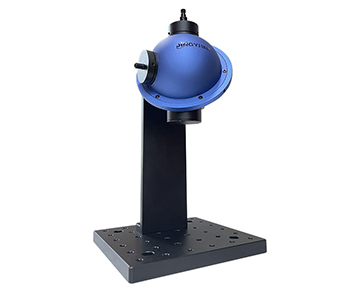
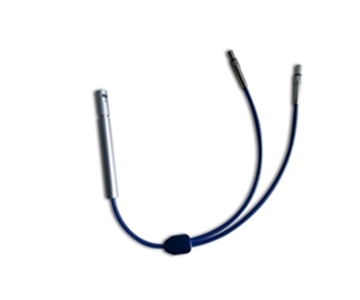
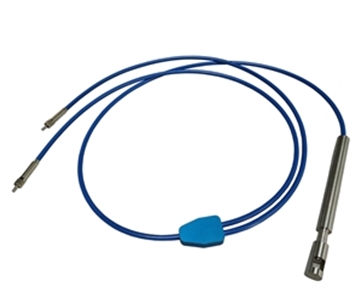
Jingyi Optoelectronics possesses deep technical expertise and capabilities in the field of spectral measurement. Addressing the aforementioned problems, they conducted in-depth research and proposed a solution: utilizing a fiber optic array sampling structure. This structure abandons the traditional turntable tracking method. By splicing the field of view angles of multiple optical fibers, it achieves spectral measurement for any sun position within the full field of view. The entire device requires no moving parts, which not only enhances the structural strength of the equipment but also effectively solves the challenge of accurately and stably acquiring direct solar radiation while the platform is in motion.
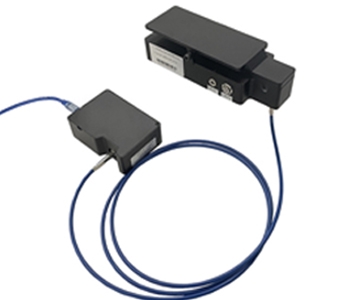
As a light transmission element, optical fiber offers numerous advantages. It can transmit input light beams to detector units with low loss, and its small size and good flexibility facilitate installation and routing. Spectrometers, characterized by their small size and high sensitivity, can acquire continuous spectral data, making them well-suited for spectral measurement needs under airborne conditions. By bundling multiple optical fibers arranged at different angles and connecting them to a spectrometer, direct solar radiation spectrum data can be obtained for any moment within the entire detection field of view. However, because the relative position of the sun and the fiber array probe changes constantly, the direction of the parallel sunlight beam relative to the fiber head's axis is not fixed, and the angle between them changes accordingly. This variation can affect the data collected by the spectrometer. Therefore, to ensure the accuracy of experimental data, the consistency of spectral data under different incident angles of parallel sunlight must be verified.
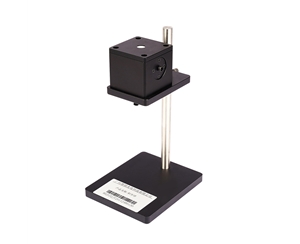
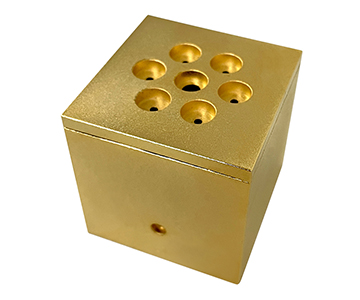
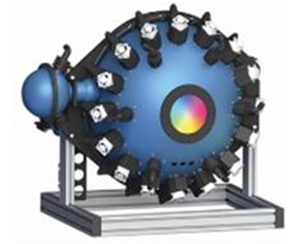
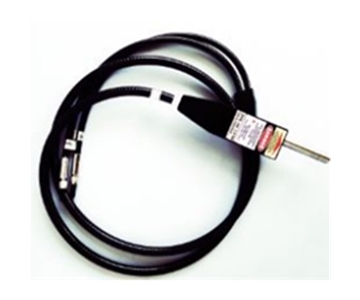
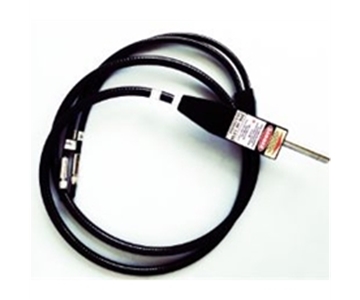
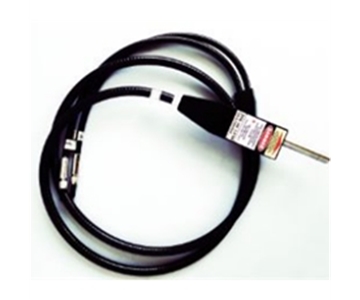
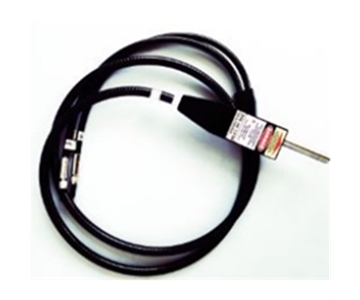
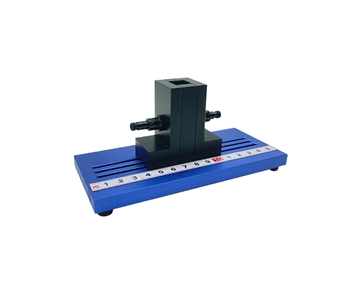
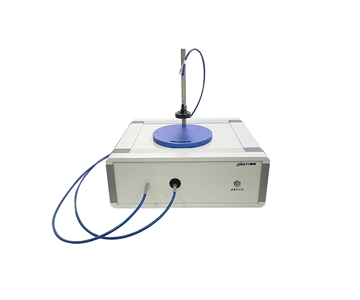
The fiber array probe developed by Jingyi Optoelectronics consists of 20 multimode fibers. Each fiber has a half-field angle of 24°, and the angular interval between adjacent fibers is approximately 22°. The total detection field of view is the sum of the fields of view of these 20 fibers with different orientations. This design ensures that parallel sunlight emitted by the sun can enter the end face of a particular fiber at incident angles ranging from 0° to 11°, and subsequently be received by the spectrometer connected to the other end of the fiber.
During the process where fibers connect the light source and detector, their transmission performance significantly impacts the data acquisition quality of the spectrometer. The light transmission characteristics of the fiber not only determine the luminous flux entering the spectrometer but can also interfere with spectral component information, thereby affecting the accuracy of inversion results. Specifically, the main factors influencing the detection efficiency and quality of a fiber optic spectrometer include fiber transmittance and focal ratio degradation.
Firstly, fiber transmittance is affected by multiple factors, primarily including material absorption by the fiber core, Fresnel reflection loss at the fiber end faces, and total internal reflection loss between the cladding and the core. These factors collectively determine the fiber's ability to transmit light.
Secondly, focal ratio degradation is also a significant issue. Fiber transmission is based on the principle of total internal reflection. When light travels from an optically denser medium to a rarer medium, total internal reflection occurs if the incident angle exceeds a specific critical angle. This critical angle depends on the refractive index difference between the core and cladding, directly influencing the fiber's numerical aperture (NA). When transmitted through an ideal straight fiber, the input focal ratio equals the output focal ratio. However, in practical fiber applications, factors such as bending, stress, and the incident light state can cause coupling from low-order modes to high-order modes at low incident angles, and from high-order modes to low-order modes at high incident angles, leading to mode conversion and energy transfer. When high-order modes deviate from the fiber core center, their energy can leak into the cladding, causing the energy coupling from high-order to low-order modes to be less than the reverse process. This situation moves energy away from the core center, resulting in divergence of the output beam and dispersion of the spot, leading to focal ratio degradation of the spot. Furthermore, for obliquely incident beams, the skew rays are neither parallel to nor intersect the fiber's central axis; their path traces appear as spatial helical polylines equidistant from the central axis. Obliquely incident light propagates forward along the fiber's central axis in a helical pattern, and its output light contributes little to the central field intensity, with the far-field spot appearing as a ring pattern.
In summary, the distribution of the output light field from a fiber depends not only on factors like stress and bending during transmission but also on the incident state of the light, such as the angle between the incident beam at the coupling end face and the fiber axis. Complex output spot patterns can affect the quality of data collected by the spectrometer. In this system, when using the fiber array probe to collect parallel sunlight, the incident angle of the parallel light varies for each fiber due to their different numerical apertures. Additionally, the fiber layout process inevitably leads to some fiber bending. Changes in the output spot state caused by direct solar radiation passing through the fiber can introduce some interference to the data collected by the fiber optic spectrometer, reducing the accuracy of spectral measurements.
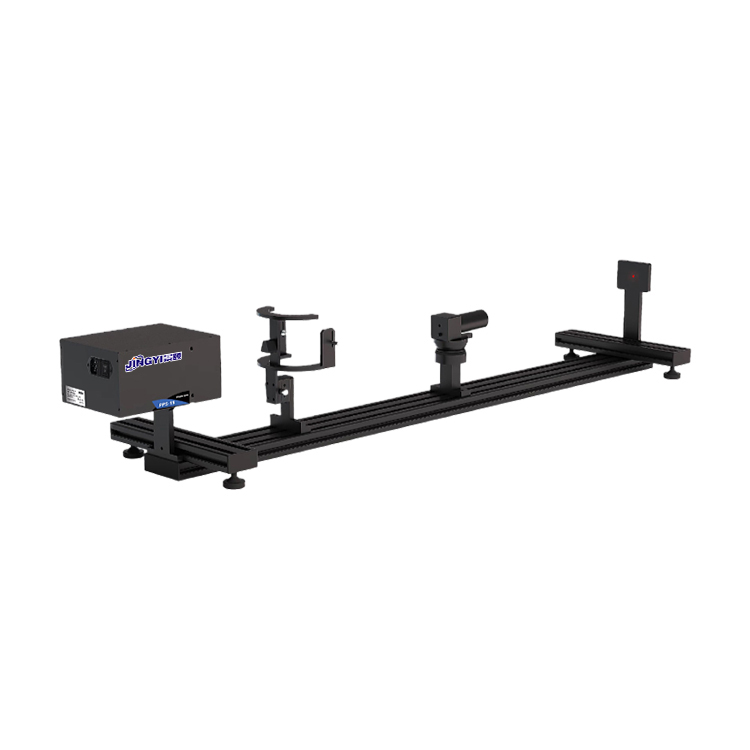
To delve deeper into this issue, Jingyi Optoelectronics conducted a series of experiments. In the fiber angle experiment, they set up an experimental system consisting of a halogen lamp, a collimator, a rotation stage, a fiber with a 400um core diameter, and a CCD camera. The light beam from the halogen lamp was collimated into parallel light by the collimator. The rotation stage controlled the angle range between the parallel light and the fiber axis. At the fiber's output end, a CCD camera captured the output spot. Experimental results showed that as the incident angle increased, the output angle correspondingly increased, the spot gradually diffused, and a distinct ring pattern appeared at an incident angle of 4 degrees, consistent with theoretical analysis.
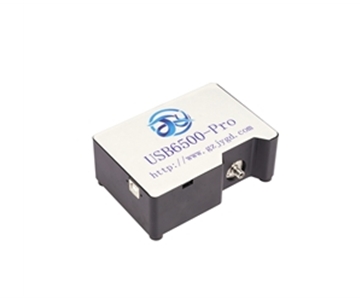
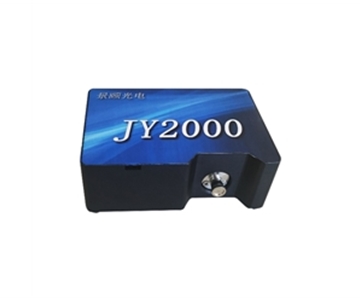
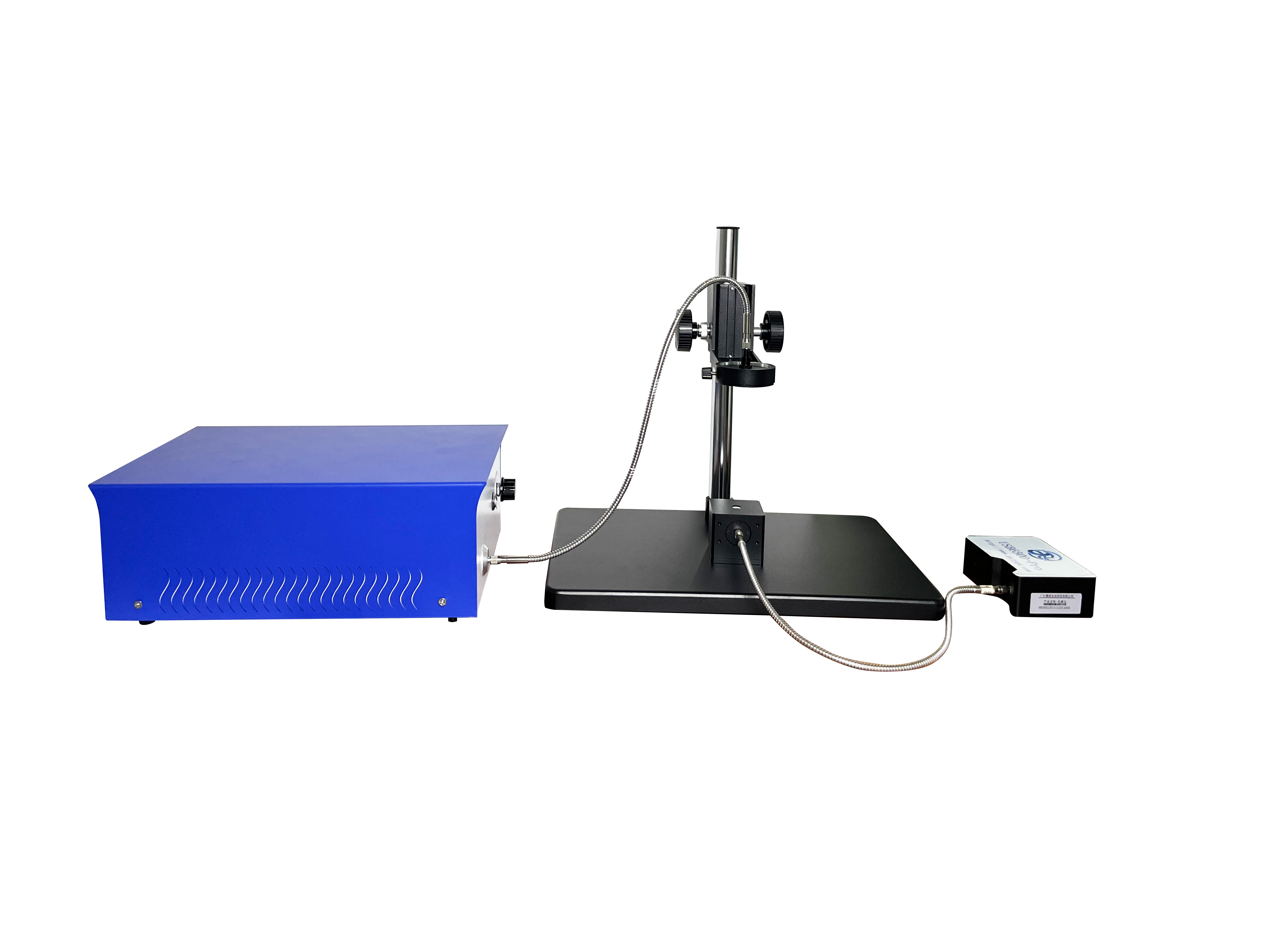
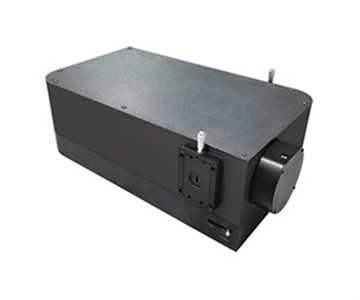
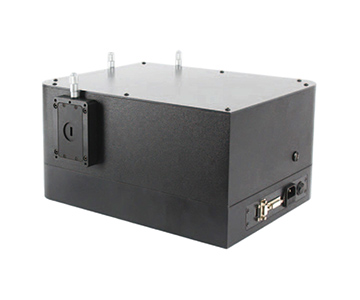
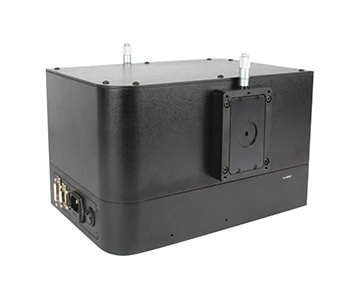
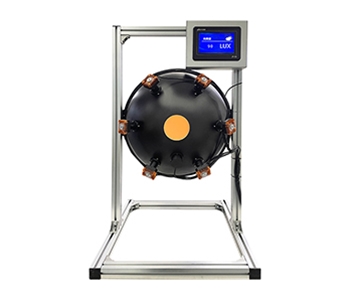
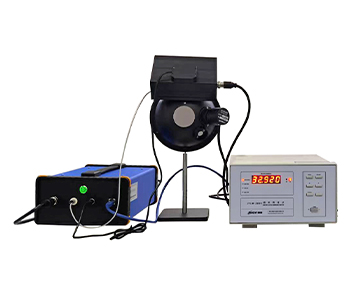
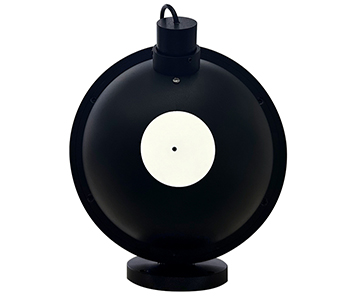
Before conducting the angular response experiment for the fiber optic spectrometer, to accurately assess the consistency of spectral data at different angles, Jingyi Optoelectronics first tested the stability of the spectrometer. They selected a high-performance spectrometer characterized by a small, robust housing, ease of system integration, and good stability, making it well-suited for measurements on mobile platforms. In the experiment, an integrating sphere provided a uniform and stable light source, received by the fiber optic spectrometer. The entire system was kept fixed, and 20 sets of spectral data were collected with an exposure time of 8 ms. The Digital Number (DN) is a digital representation obtained by the spectrometer during measurement; it represents the light intensity or signal strength detected by the spectrometer's sensor, generated after converting the detected optical signal. The instability at each wavelength was calculated using a specific formula to characterize the spectrometer's stability. Experimental results showed that after the standard light source was preheated for 15 minutes and stabilized, with spectra collected every 2 seconds, the 20 continuously collected spectra largely overlapped and had essentially consistent shapes. The calculated instability was lowest around the 600 nm band, approximately 0.02, and remained below 0.06 across the 450 nm to 850 nm range.
In the fiber optic spectrometer angle experiment, the state of the output spot under different incident angles of parallel light causes differences in the response spectral lines of the spectrometer. This is because, under fiber bending conditions, different incident angles lead to divergence of the output beam and dispersion of the spot. When using the fiber array probe to collect direct solar radiation, the incident angle of sunlight onto each fiber differs at the same moment, and the angle onto the same fiber differs at different moments. Inside the spectrometer, the luminous flux of the output beam from the fiber is attenuated after passing through the slit, and beams entering the slit at different incident angles possess different divergence angles and intensity distributions. The optical system structure of a spectrometer is relatively complex, with internal components主要包括 slit, collimating mirror, grating, focusing mirror, and linear array detector. After a series of optical processes like collimation, dispersion, and focusing, the focal points for light signals of the same wavelength may differ, leading to variations in the spectral line structure distribution collected by the spectrometer.
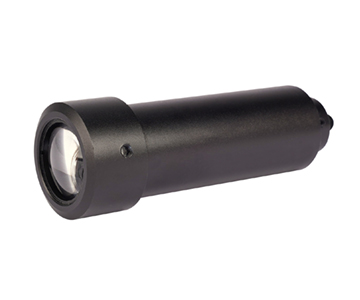
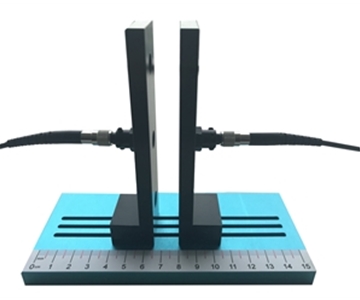
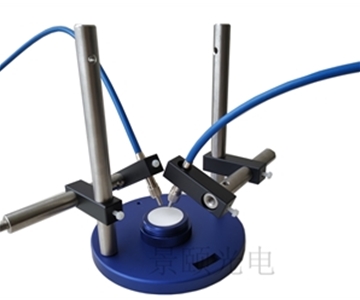
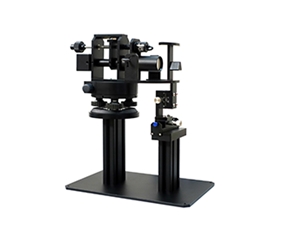
To specifically simulate the impact of parallel sunlight at different incident angles on the fiber optic spectrometer, Jingyi Optoelectronics built a corresponding experimental system. This system consisted of a halogen lamp, a collimator, a rotation stage, a single fiber from the fiber array, and the spectrometer. The parallel beam from the collimator passed through the fiber and was received by the spectrometer. During the experiment, the rotation stage was used to change the angle between the incident beam and the fiber axis, and the spectral signal at the current angle was collected.
Analysis of the spectral data collected by the spectrometer for incident angles ranging from 0° to 24° revealed that as the angle increased, the spectral line intensity gradually decreased. This is partly due to reduced luminous flux entering the fiber, and partly because the spectrometer's slit further attenuates the luminous flux. To better compare the spectral shapes at various angles, an adjacent averaging method was used to smooth the spectral lines before peak normalization. The resulting spectral distributions showed that the normalized spectral shapes were essentially consistent across different incident angles. Further calculation of the instability of the normalized spectra using a specific formula indicated that the instability was below 0.06 in the 475nm-750nm band, and below 0.1 in both the 450nm-475nm and 750nm-800nm bands. Compared to normal incidence, the spectral signal intensity for oblique incidence is lower, and the reduced signal-to-noise ratio leads to increased measurement error, resulting in higher instability at the two ends of the spectrum. However, overall, it can be concluded that the fiber incident angle causes minimal interference to the spectral information collected by the spectrometer and does not compromise the reliability of data obtained by the fiber array for direct solar radiation. This preliminarily validates the feasibility of the fiber array detection method.
Through the research and experiments described above, Jingyi Optoelectronics has validated the feasibility of using a fiber array probe, formed by splicing the field angles of multiple fibers, to sample direct solar radiation. During the process of measuring direct solar radiation spectrum data after atmospheric attenuation, although the incident light angle causes changes in the fiber's output spot state (leading to beam divergence and spot dispersion), the experimental results indicate that this variation introduces minimal interference to the spectral data measured by the spectrometer. After data smoothing and normalization, it was found that the incident angle does not affect the consistency of the spectral data. Within the wavelength range of 475-750nm, the instability of the spectral data is within 0.06. Compared to traditional tracking measurement methods abroad, Jingyi Optoelectronics' fiber array probe, which has no moving parts, can acquire stable direct solar radiation from mobile platforms operating under complex motion conditions. After obtaining the spectral line distribution of direct solar radiation, the next step involves calibrating the transmittance for individual wavelengths to achieve total atmospheric transmittance measurement across a broad spectral band, thereby providing more accurate and comprehensive data support for research and applications in related fields.
#CooledSpectrometer #NearInfraredSpectrometer #Spectrometer #PortableHyperspectralImager #SpectrumAnalyzer