Breakthrough in Biopharmaceutical Quality Control: Applications of 1064 nm Raman Technology and Handheld Raman Spectrometers
In recent years, the market entry of biologics—including monoclonal antibodies (mAbs), CAR-T cell therapies, and novel vaccines—has accelerated dramatically. These life-saving therapies for severe and rare diseases impose quality control (QC) requirements across the entire manufacturing chain—from cell culture to final product release—that far exceed those for conventional small-molecule drugs. Even minor deviations can lead to subtherapeutic efficacy or even adverse reactions. For years, biopharmaceutical QC has been hindered by three persistent, often overlooked challenges. Industry statistics indicate that nearly 60% of batch production losses are directly attributable to delayed QC processes and inaccurate testing.
**First Challenge: Efficiency Bottleneck of Offline Testing**
Traditional analytical methods—such as high-performance liquid chromatography (HPLC) and mass spectrometry (MS)—require sterile sampling followed by laboratory analysis. Results typically take several hours to a full day. By the time critical issues—like insufficient glucose concentration or excessive lactate accumulation—are identified, cells in the bioreactor may have already suffered widespread loss of viability. A single failed batch can cost millions of dollars—and sampling itself carries the risk of contaminating the entire culture.
**Second Challenge: Detection Blind Spot for Highly Fluorescent Samples**
Biopharmaceutical process samples commonly contain high-density cells, proteins, and fluorescent excipients. When analyzed using conventional 785 nm Raman instruments, such samples generate intense autofluorescence, which overwhelms the characteristic Raman signals of target molecules. This leads to measurement errors exceeding 20%, rendering these systems unfit for stringent QC requirements.
**Third Challenge: Lack of Portability Across Operational Scenarios**
QC needs span diverse settings: raw material verification upon arrival at port, random inspection of starting materials in warehouses, real-time monitoring during production, and post-cold-chain quality confirmation of finished products. All demand highly accurate, truly portable analytical tools. Conventional benchtop Raman spectrometers—bulky and heavy—are fundamentally unsuited for on-site rapid testing.
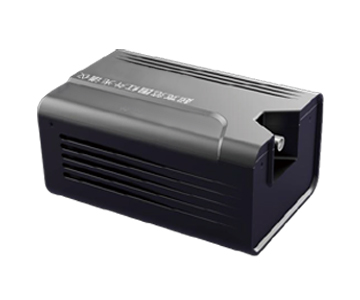
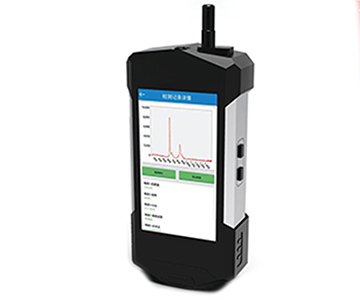
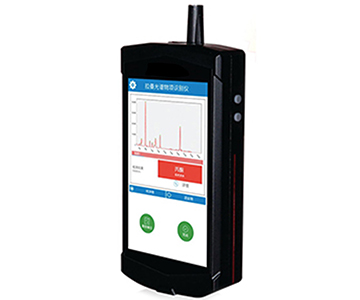
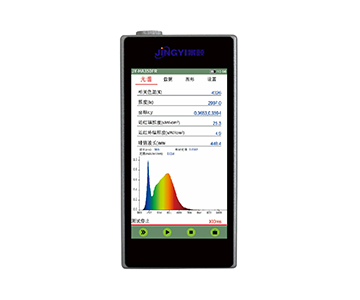
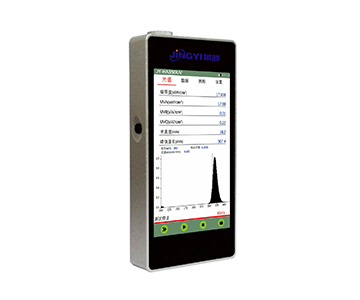
To address these industry-wide pain points, the maturation of **1064 nm long-wavelength excitation Raman technology** offers an effective solution. At its core, Raman spectroscopy relies on laser-induced molecular scattering, producing unique spectral fingerprints for each compound. Crucially, 1064 nm excitation light avoids over 90% of biological sample autofluorescence—eliminating the root cause of fluorescence interference in high-fluorescence samples. Jingyi Optoelectronics has invested years of R&D in 1064 nm Raman systems and launched a handheld Raman spectrometer that successfully miniaturizes robust fluorescence suppression technology. Weighing under 1.2 kg, it is effortlessly portable—yet delivers detection accuracy on par with comparable benchtop instruments.
Today, this handheld Raman spectrometer supports end-to-end QC across the biopharmaceutical value chain—from raw material receipt to final product release.
- **Raw Material Verification:** Operators can perform on-the-spot testing directly in warehouses or at ports. Whether verifying controlled chemical reagents, protein-based excipients, or packaging materials, identification takes just 10 seconds. Users may also build and upload custom spectral libraries—pre-loading reference spectra from approved suppliers—to prevent counterfeit or substandard materials from entering production. Equipped with dual high-resolution cameras (13 MP + 8 MP) and GPS, the device automatically records inspection images, timestamps, and geolocation data—ensuring full traceability and regulatory compliance.
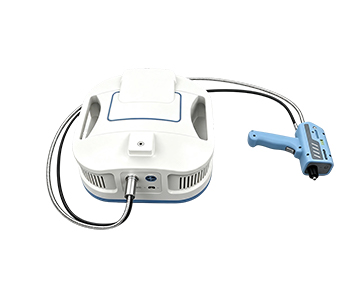
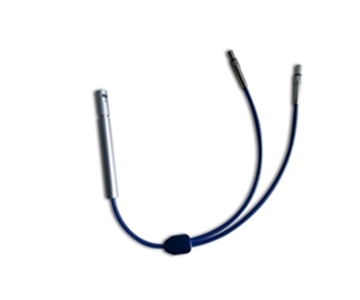
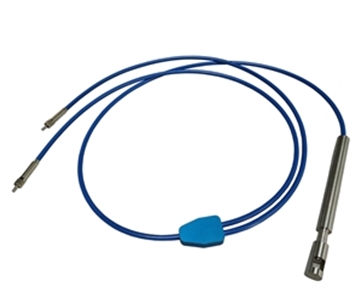
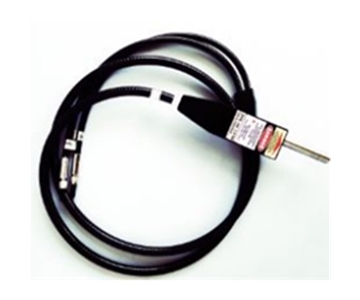
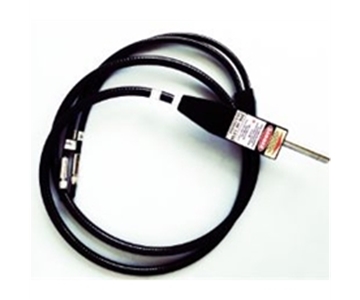
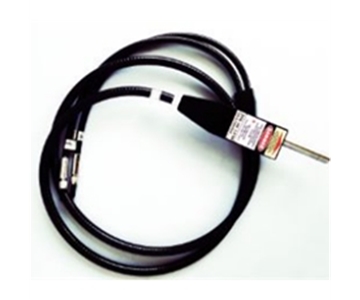
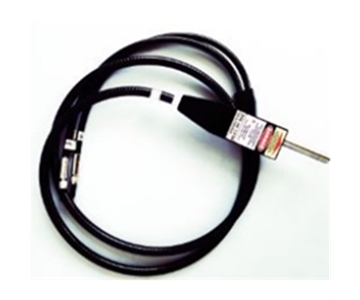
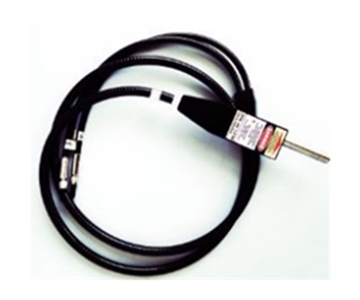
- **In-Process Mobile Sampling:** Paired with sterilizable immersion probes, the handheld spectrometer enables direct, non-invasive measurements at sampling ports in bioreactors or purification pipelines—eliminating sample transfer and contamination risks. Within seconds, it quantifies key parameters including glucose, lactate, and target protein concentration. Thanks to the superior fluorescence suppression of 1064 nm excitation, precise analysis is achievable even in high-cell-density cultures or purification fractions laden with fluorescent excipients—no complex fluorescence background subtraction preprocessing required.
- **Finished Product Verification:** The spectrometer can non-destructively analyze protein conformational integrity and degradation status through intact packaging—e.g., detecting structural changes in injectables or lyophilized powders without opening vials. This enables rapid, cold-chain-compliant quality release—significantly accelerating final product approval. Jingyi Optoelectronics further supports pharmaceutical manufacturers with end-to-end services: spectral library development, assay validation, and IQ/OQ/PQ qualification—enabling immediate deployment without months-long in-house method development.
Real-world impact is evident in field data from a leading mAb manufacturer in the Yangtze River Delta region. Previously using a 785 nm handheld Raman system to monitor glucose levels in cell culture broth, the company faced persistent measurement errors >15% due to autofluorescence—forcing reliance on offline HPLC testing with 3-hour turnaround times. As a result, untimely nutrient supplementation caused over ¥2 million in monthly batch losses. After switching to Jingyi’s 1064 nm handheld Raman spectrometer, fluorescence interference was eliminated, reducing glucose measurement error to <2%. On-site spot checks now yield results in 10 seconds, improving feeding adjustment efficiency by 80% and cutting batch losses by nearly ¥10 million within six months. Furthermore, the enhanced real-time data stream helped the company pass FDA Process Analytical Technology (PAT) review—accelerating final product release by 30% and shortening new drug time-to-market.
Looking ahead, 1064 nm Raman technology will evolve along two strategic axes to further elevate biopharmaceutical QC:
- **Deep Integration with AI Large Language Models (LLMs):** Current handheld units run Android-based intelligent operating systems. Next-generation versions will embed proprietary biopharmaceutical QC AI models capable of autonomously interpreting spectral data and generating actionable recommendations—e.g., optimal feed adjustments or purification parameter optimization—without requiring expert spectroscopists on-site.
- **Chip-Scale Miniaturization:** Future 1064 nm Raman modules will shrink to fingernail size, enabling direct integration into single-use bioreactors or point-of-care CAR-T manufacturing devices. This will enable continuous, real-time monitoring across the entire production continuum—and ultimately support bedside, on-demand cell therapy manufacturing, drastically reducing patient waiting times.
The safety foundation of biopharmaceuticals rests on precision QC at every step. The widespread adoption of 1064 nm Raman technology is transforming high-accuracy analysis—from a lab-bound activity into an on-the-floor, on-the-move capability. Meanwhile, technological breakthroughs by domestic instrument innovators like Jingyi Optoelectronics empower Chinese pharmaceutical companies to deploy internationally compliant QC platforms at significantly lower cost—strengthening the technical backbone for faster, safer commercialization of domestic biologics.
#MiniatureRamanSpectrometer #BenchtopRamanSpectrometer #FiberOpticRamanSpectrometer #RamanSpectrometer #HandheldRamanSpectrometer #DualBandRamanSpectrometer #ATR6600HandheldRamanAnalyzer