In numerous scenarios requiring on-site detection results—such as public safety inspections, rapid food testing, and gemstone authentication—a long-standing challenge has been the difficulty of balancing *accuracy* and *efficiency*: laboratory-based analysis is not only time-consuming but also costly; meanwhile, portable rapid-testing devices often suffer from insufficient accuracy and susceptibility to interference. Raman spectroscopy—a non-destructive, molecular-level analytical technique—represents a pivotal technological pathway to resolving this dilemma. In recent years, breakthroughs in hardware have enabled its widespread adoption beyond laboratories and into real-world field applications.
The core principle of Raman spectroscopy stems from the interaction between photons and molecular bonds in matter. Imagine molecular chemical bonds as springs with varying stiffness coefficients. When a laser beam of fixed wavelength illuminates a sample, most photons rebound like ping-pong balls striking a rigid wall—retaining their original energy. This phenomenon is known as Rayleigh scattering. Only about one in ten million photons exchange energy with these “springs”: some lose energy (lowering their frequency), while others gain extra energy from the molecule (raising their frequency). These two unique scattering phenomena constitute *Raman scattering*. Because different substances possess distinct types and configurations of molecular bonds—and thus exhibit uniquely characteristic energy exchanges—the resulting Raman spectral fingerprint serves as a “molecular ID card” for the material. Crucially, no sample destruction or complex preparation is required; identification can be completed within seconds to tens of seconds.
Typically, the observed Raman signal is dominated by the lower-energy Stokes scattering. This is because, at room temperature, over 99% of molecules reside in their ground state and are therefore far more likely to emit than absorb vibrational energy. The final output spectrum features *Raman shift* (i.e., the frequency difference between scattered and incident light, conventionally expressed in wavenumbers, cm⁻¹) on the x-axis and *signal intensity* on the y-axis. Rapid qualitative identification is achieved by matching the acquired spectrum against reference libraries.
As a representative non-destructive analytical technique, Raman spectroscopy offers distinctive advantages:
- Non-contact measurement, preserving sample integrity—ideal for valuable artifacts, gemstones, and forensic evidence;
- Exceptional speed—results typically available within one minute;
- Minimal sample requirement—even trace quantities can be identified;
- Broad compatibility—with solids, liquids, and gases alike.
Nonetheless, Raman technology has faced persistent bottlenecks in field deployment:
1. Common short-wavelength excitation sources (e.g., 785 nm) readily induce strong fluorescence in many samples; since fluorescence intensity may exceed Raman signals by hundreds or even thousands of times, it overwhelms genuine spectral features—rendering highly fluorescent samples effectively undetectable;
2. Conventional Raman instruments remain bulky and heavy, precluding true portability;
3. High-end systems entail significant cost, while supporting spectral databases and algorithmic tools are often inadequate—posing steep learning curves for small- and medium-sized users.
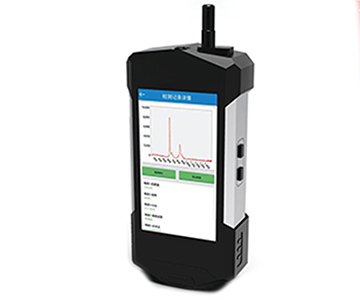
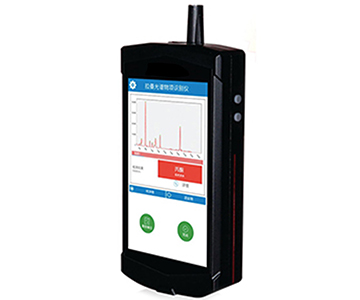
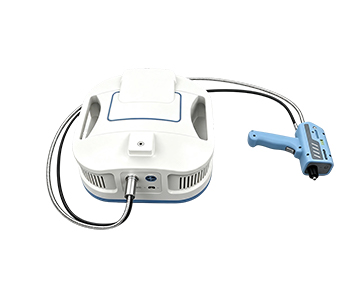
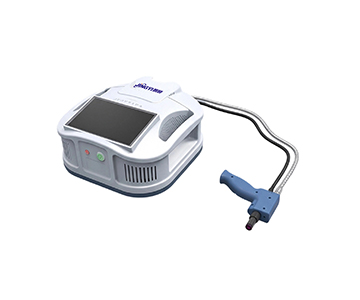
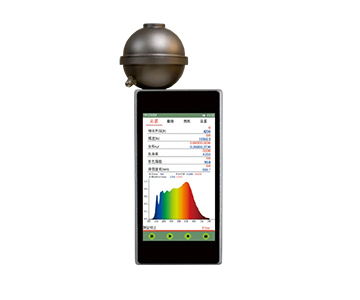
To address these industry-wide challenges, Jingyi Optoelectronics has launched the ATR6600 handheld Raman spectrometer—featuring dual excitation wavelengths (532 nm and 1064 nm)—with comprehensive end-to-end innovations spanning core hardware and proprietary algorithms. Unlike conventional short-wavelength excitation schemes, the 1064 nm long-wavelength laser delivers lower photon energy—insufficient to trigger fluorescence in most organic materials—thereby suppressing background fluorescence at its source. This makes the device especially suitable for analyzing highly fluorescent samples. Weighing under 1.2 kg, it is fully operable with one hand, enabling genuine mobility across diverse field environments: customs checkpoints, ports, warehouses, production workshops, and remote outdoor sites.
The device integrates an in-house developed Raman identification algorithm, preloaded with extensive standard spectral libraries and supporting user-uploaded custom spectra—enabling rapid, unbiased identification of unknown substances. Powered by the Android operating system and equipped with a 5.5-inch high-resolution display, its interface mirrors that of mainstream smartphones—requiring no specialized training. Dual high-definition cameras (13 MP + 8 MP) simultaneously capture and archive on-site visual documentation. Built-in Wi-Fi, Bluetooth, and GPS modules enable real-time upload of test data alongside precise geolocation—fulfilling regulatory traceability requirements. Furthermore, Jingyi Optoelectronics provides full-stack technical services tailored to sector-specific needs—including customized spectral library development, method optimization and validation, and IQ/OQ/PQ compliance support—to ensure seamless integration and operational confidence.
This instrument is already deployed across multiple domains:
- In *public safety*, frontline inspectors carry it to rapidly identify illicit drugs, hazardous chemicals, and explosives on-site—eliminating delays associated with off-site sampling and lab analysis, thereby dramatically enhancing inspection efficiency;
- In *food safety*, market regulators and enterprise quality control personnel conduct immediate on-site screening for pesticide residues, veterinary drug residues, and unauthorized additives—at farmers’ markets and manufacturing facilities—safeguarding food safety at the first line of defense;
- In *gemstone and jade authentication*, pharmaceutical raw-material verification, and industrial feedstock quality assurance, it enables non-invasive compositional verification within seconds—preventing counterfeit goods and substandard materials from entering the supply chain.
As the convergence of IoT and AI continues to expand application horizons, Jingyi Optoelectronics is advancing the adaptability of Raman detection technology—paving the way for future enhancements such as AI-powered automated identification and cloud-based dynamic spectral library updates.