Core Optical Path for Spectral Detection: Technical Logic and Scenario-Specific Adaptation of Fiber-Doping Processes
In spectral detection, optical sensing, and related fields, optical path transmission loss and spectral band compatibility directly determine the upper accuracy limit of the entire detection system. Over 90% of performance differences in fused silica (quartz) optical fibers—the core optical path medium—stem from doping processes applied to the base material. Many users building spectral measurement systems encounter issues such as excessive ultraviolet (UV) attenuation, insufficient infrared (IR) energy transmission efficiency, and difficulty coupling weak-light signals; these challenges fundamentally arise from selecting quartz fibers with mismatched doping schemes.
The base matrix of quartz optical fiber is ultra-high-purity silicon dioxide (SiO₂), which exhibits a fixed refractive index and a limited native transmission window. To meet diverse application requirements across different spectral bands, targeted dopants must be introduced into the SiO₂ matrix. By scientifically controlling dopant composition and spatial distribution ratios, customized performance enhancements—including precise core/cladding refractive index contrast, broadened transmission windows, and minimized propagation loss—can be achieved. Based on doping strategies, quartz fibers adapted for detection applications fall into three primary categories, each aligned with distinct use cases.
**First category: Quartz-based doped quartz fibers**
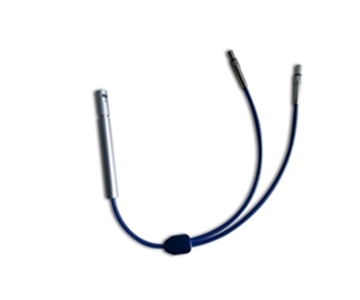
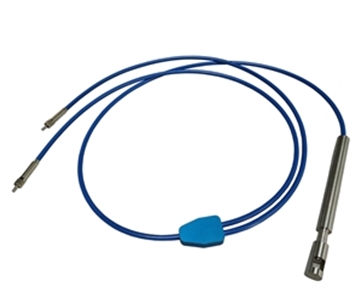
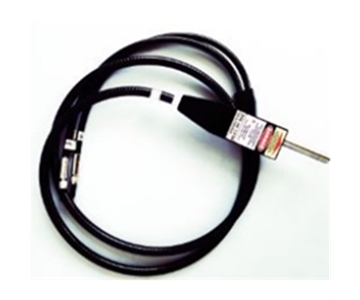
This is the most widely deployed fiber type in spectral detection today. Its core principle involves tailoring dopants in the core and cladding to achieve optimal transmission across specific wavelength bands. For long-distance spectral signal transmission, fluorine is typically doped into the cladding: fluorine lowers the refractive index of SiO₂, enabling sufficient refractive index contrast between core and cladding while preserving the core’s ultra-pure, impurity-free SiO₂ composition—thereby significantly reducing Rayleigh scattering-induced signal loss. Jingyi Optoelectronics’ full range of quartz fibers employs precision multi-layer doping technology. For example, its fluorine-doped quartz fibers achieve 32% lower transmission loss than industry-standard equivalents—approaching the theoretical minimum—making them ideal for distributed spectral detection systems spanning multiple workstations. For deep-UV detection applications, its UV-resistant quartz fibers incorporate specially engineered radiation-hardened dopants in the core, exhibiting ≤0.5% optical attenuation after continuous 1,000-hour UV irradiation—effectively resolving the UV-induced aging issue inherent in standard quartz fibers.
**Second category: IR-modified doped quartz fibers**
Standard quartz fibers exhibit intrinsic transmission cutoff near ~2 μm, falling short of requirements for mid-IR temperature sensing and laser energy delivery. IR-modified quartz fibers overcome this limitation by incorporating specific metal oxides or chalcogenide compounds into the SiO₂ matrix, extending the transmission window to 2–5 μm—or even longer IR wavelengths. Their key advantage lies in high transmission efficiency and superior power-handling capability within the IR band. Jingyi Optoelectronics’ mid-IR quartz fibers leverage a proprietary doping formulation that delivers 17% higher transmittance in the 3–5 μm band versus comparable products. These fibers are now widely deployed in industrial non-contact optical thermometry and laser energy transmission—demonstrating stability consistently above industry averages.
**Third category: Multi-component composite-doped quartz fibers**
Unlike the first two categories, these fibers adopt a fundamentally different doping logic: multiple oxides—including sodium oxide (Na₂O), boron trioxide (B₂O₃), and potassium oxide (K₂O)—are co-doped into the SiO₂ matrix to form a multi-component glass substrate. Key features include a lower softening point, enhanced core/cladding refractive index contrast, and higher numerical aperture (NA). This enables efficient coupling of large-angle, low-intensity light signals. Such fibers are not designed for long-haul transmission but instead excel in short-range, low-light acquisition and image-guiding applications—for instance, internal optical paths of miniature portable spectrometers or image-conduction modules in medical endoscopes. Their high NA ensures maximal capture of effective optical signals, thereby improving overall detection sensitivity.
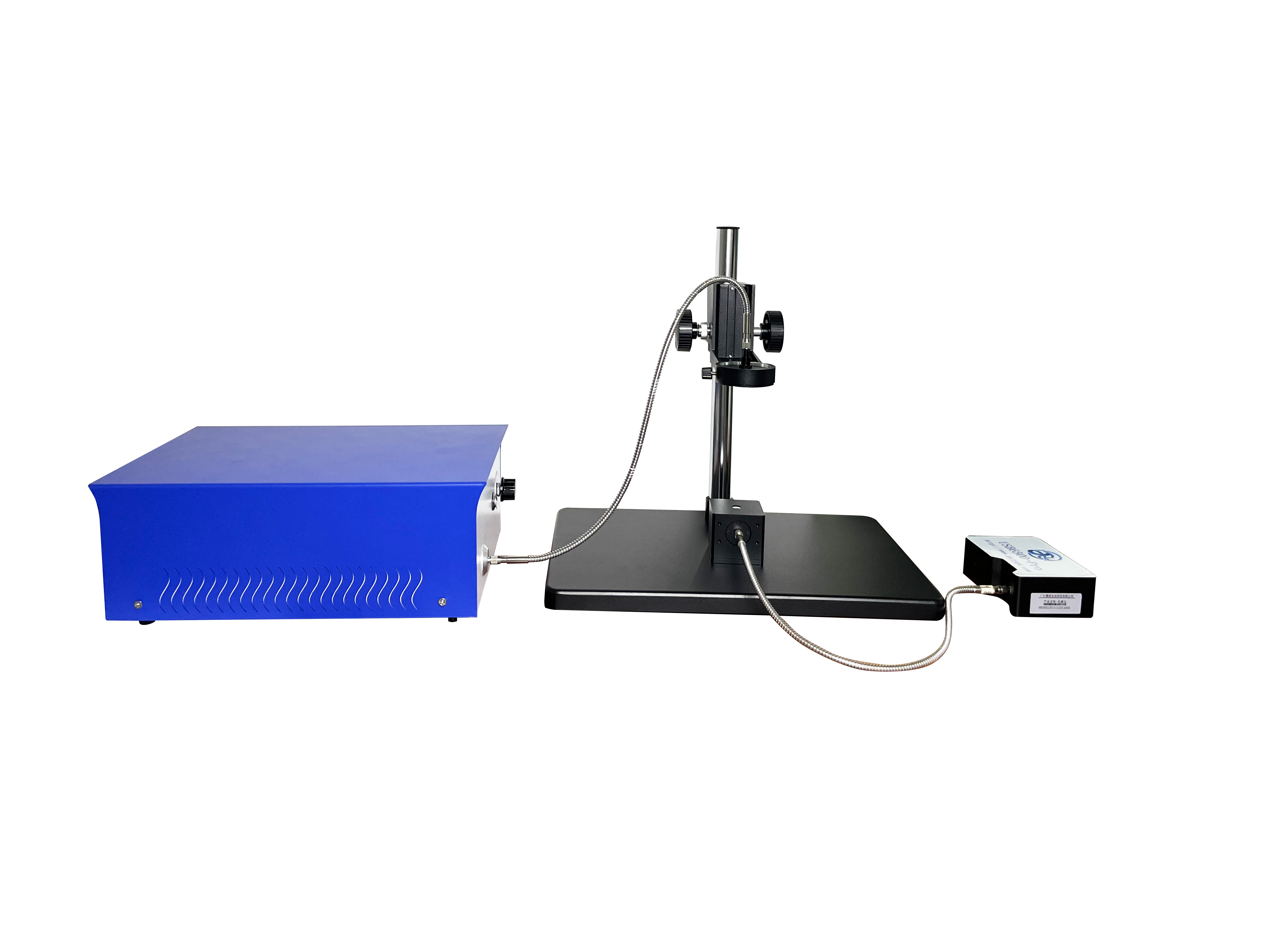
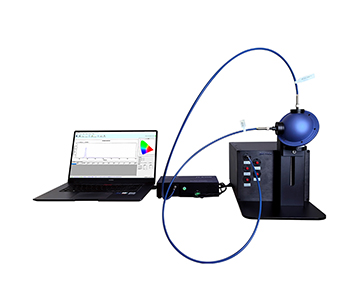
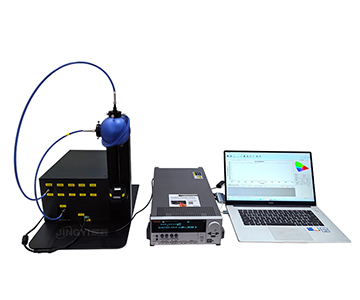
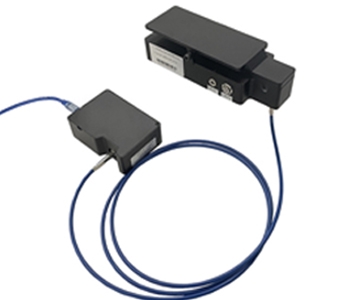
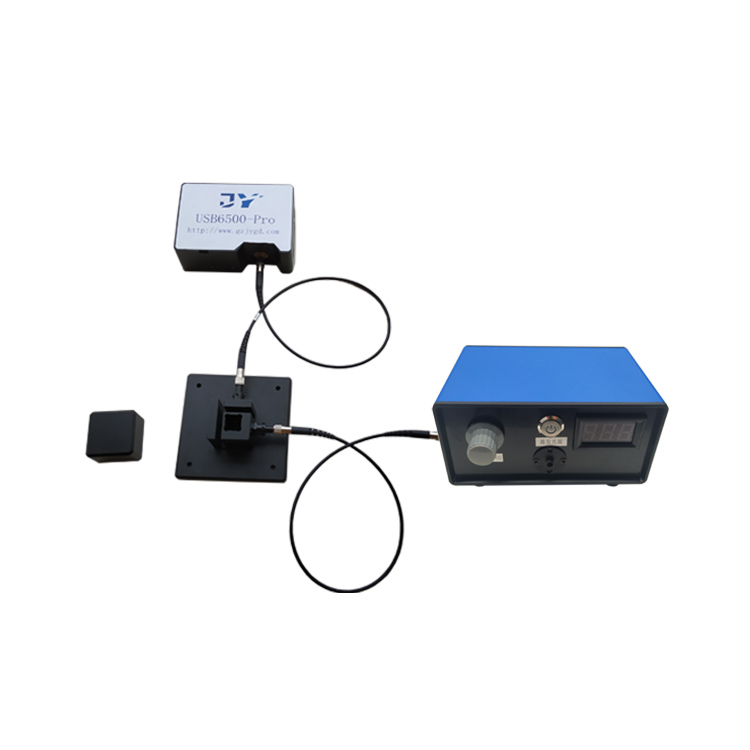
Many users overlook compatibility between quartz fibers and other optical components when assembling spectral measurement systems—resulting in actual transmission efficiency far below theoretical expectations. All quartz fiber products from Jingyi Optoelectronics undergo factory-level compatibility calibration with the company’s proprietary miniature spectrometers and various fiber-coupled light sources. Users can therefore assemble precision-compliant spectral measurement systems immediately upon receipt—no additional optical path loss tuning required—covering full-scenario demands including high-power light delivery, weak-signal acquisition, and multi-band spectral analysis.
As spectral detection technology advances toward greater portability, scenario-specific deployment, and higher precision, custom-doped quartz fibers are emerging as a core enabler of instrument performance upgrades. In the future, atomically precise doping process control will further broaden quartz fibers’ transmission windows and further suppress propagation losses—providing more robust optical-path support for emerging applications such as in-situ industrial inspection and wearable optical sensing.
#QuartzFiber #QuartzGlassFiber #OneToThreeQuartzFiber #UltravioletFiber #DeepUltravioletQuartzFiber #QuartzFiberBundle #OpticalFiber