Breaking the Boundaries of Laboratory Testing: A Roadmap for the Future Evolution of Portable Raman Spectrometers
Leveraging the specificity of molecular vibrational scattering, Raman detection enables non-destructive, label-free qualitative identification of substances—without requiring sample crushing, purification, or other pre-processing steps—naturally fulfilling the core demands of rapid testing: non-invasiveness and high efficiency. For decades, Raman instrumentation remained largely confined to laboratory settings, hampered by large size, steep operational learning curves, and stringent environmental requirements. In recent years, however, rapidly proliferating portable Raman spectrometers are bringing lab-grade analytical precision directly to frontline field applications across diverse sectors. Their future evolution is clearly converging along three key trajectories.
Direction 1: Continued下沉 (deployment into increasingly decentralized, non-specialist scenarios)
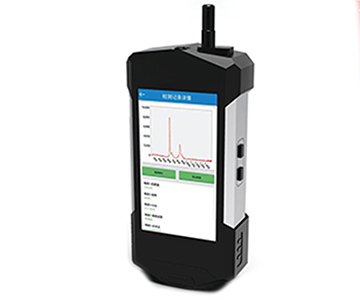
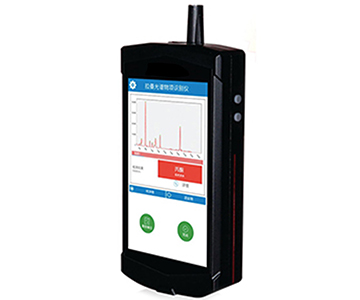
Historically, portable Raman applications were concentrated in research labs and industrial quality control—highly specialized domains. Going forward, adoption will broaden significantly into non-standardized, operationally demanding environments: customs and border anti-smuggling operations; rapid pesticide-residue screening at farmers’ markets; on-the-spot gemstone authentication in jewelry stores; and raw-material verification in pharmaceutical warehouses. These use cases have long suffered from “prolonged turnaround times, logistical difficulties in sample submission, and delayed result reporting.” The ATR6600 1064 nm handheld Raman spectrometer by Jingyi Optoelectronics exemplifies this trend. Specifically engineered to suppress fluorescence interference, it employs a 1064 nm excitation laser to fundamentally minimize fluorescent background noise—a longstanding challenge for conventional Raman systems when analyzing highly fluorescent samples. Weighing under 1.2 kg, it enables personnel to carry and operate the device effortlessly for on-site identification of virtually any sample type.
Direction 2: Customized technological iteration—tailored to sector-specific professional needs
Raman detection requirements vary dramatically across industries. Public safety agencies demand rapid identification of unknown hazardous or illicit substances, necessitating onboard spectral libraries covering comprehensive inventories of chemicals and controlled substances. Food-safety inspectors require seamless integration with regulatory traceability platforms, mandating direct upload of test data to centralized management systems. Pharmaceutical manufacturers need instruments compliant with strict regulatory certification standards (e.g., GMP), where results must serve as auditable evidence for quality control. Consequently, future portable Raman devices will move away from one-size-fits-all standardized designs toward industry-specific functional optimization. The ATR6600 by Jingyi Optoelectronics features an expandable, user-customizable Raman identification algorithm—allowing users to upload domain-specific spectral databases. It integrates dual cameras (13 MP + 8 MP), GPS, Wi-Fi, and Bluetooth modules, enabling synchronized capture of real-time imagery, geolocation metadata, and immediate wireless transmission of all data to backend management systems. Furthermore, Jingyi provides end-to-end support—including spectral library development, method validation, and IQ/OQ/PQ qualification services—to meet bespoke detection requirements across verticals.
Direction 3: Deep ecosystem integration—emerging as a core data node within intelligent inspection networks
Traditionally, portable Raman instruments operated as isolated tools: results were viewed once and required manual post-processing for data compilation and analysis. As IoT infrastructure, AI capabilities, and inspection technologies converge, portable Raman devices will evolve into front-end data acquisition nodes embedded within broader intelligent regulatory and production ecosystems. Test results will auto-ingest into corresponding management platforms, enabling real-time anomaly alerts, traceability tracking, and trend analytics. Coupled with cloud-based AI algorithms, these systems will autonomously refine and update recognition models—continuously adapting to newly emerging or previously uncharacterized substances without manual recalibration. Jingyi Optoelectronics is actively developing interoperability protocols to seamlessly integrate its portable Raman hardware with industry-specific digital platforms—transforming raw detection outputs from isolated snapshots into unified, actionable data assets flowing across the entire value chain: manufacturing → distribution → regulation.
In summary, the central thrust of portable Raman spectrometer development lies in progressively dismantling the traditional constraints of laboratory-based testing—delivering continuous upgrades in detection accuracy, usability, contextual adaptability, and data utility. Pioneering optics-focused technology enterprises are driving sustained innovation to democratize precision analytical capability: empowering every frontline operator—not just trained analysts—with true, universal, non-destructive rapid testing.
#MicrofluorescenceRamanSpectrometer #HighResolutionRamanSpectrometer #PortableRamanSpectrometer #HandheldRamanSpectrometer #BenchtopConfocalRamanSpectrometer #PortableRamanSpectrometer