Filtered Content:
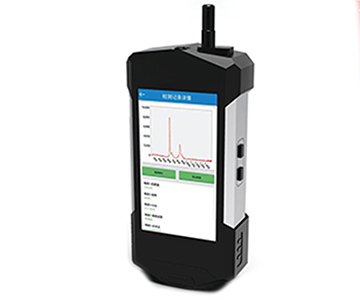
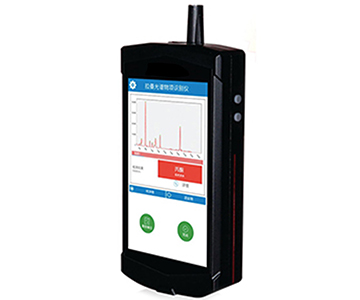
Handheld Raman spectrometers have now become essential tools for rapid on-site inspection across diverse scenarios. In particular, Jingyi Optoelectronics’ ATR6600—a 1064 nm handheld Raman spectrometer—has gained widespread adoption in narcotics detection and explosives screening, rapid testing of pesticide residues in food and agriculture, authenticity verification of gemstones, and quality verification of industrial raw materials, thanks to its robust fluorescence suppression capability. Many frontline operators carry this device daily between ports, warehouses, law enforcement sites, and laboratories. Yet, due to a lack of scientifically grounded maintenance knowledge, they frequently encounter declining measurement accuracy or unexpected failures that disrupt critical operations. In fact, mastering fundamental maintenance and troubleshooting techniques is sufficient to ensure long-term optimal performance.
Basic post-use maintenance focuses on two core components:
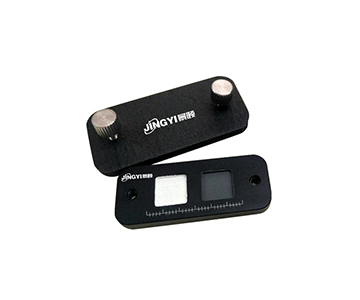
First, cleaning the excitation electrode. Do *not* immediately stow the instrument after each measurement. Instead, use the dedicated electrode brush to gently rotate clockwise across the electrode surface, removing sputtered residues. If the device performs more than 300 measurements per month, inspect the electrode tip for wear. Should the tip appear blunted, replace it with the compatible electrode head. After replacement, use the dedicated calibration gauge to adjust the relative height between the electrode and the optical path—ensuring optimal output efficiency of the 1064 nm excitation laser.
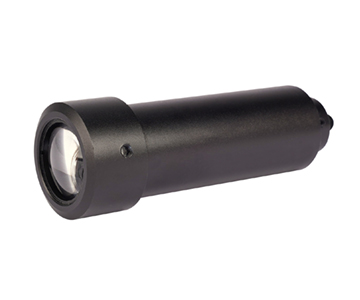
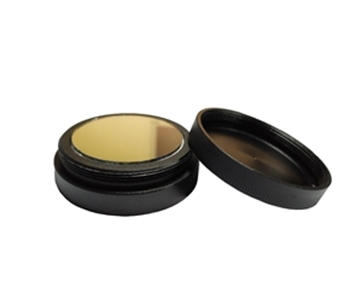
Second, maintaining the focusing optical window. The 1064 nm excitation wavelength places higher demands on lens transmittance. Dust or oil contamination on the lens surface directly reduces detection sensitivity. When signal strength appears weakened during routine use, first gently wipe the lens in a single direction using dust-free, fat-free cotton swabs moistened with spectroscopic-grade anhydrous ethanol. For stubborn contaminants, do *not* scrape forcefully; instead, remove the lens and soak it for 15 minutes in acetone or anhydrous ethanol before gentle wiping. Finally, dry the lens vertically using an oil-free rubber bulb syringe. Throughout the process, avoid contact with fingernails or abrasive fibers that could scratch the lens surface.
Periodic deep maintenance procedures vary by instrument type:
For conventional channel-type handheld Raman spectrometers, optical path tracing calibration must be performed monthly. During calibration, rotate the adjustment knob 200 increments counterclockwise from its original position, then gradually rotate back clockwise—recording excitation intensity at every 30–50 increments using high-purity reference samples appropriate for the substrate. Once the peak intensity position is identified, lock the knob there.
In contrast, full-spectrum acquisition models—such as Jingyi Optoelectronics’ ATR6600—do *not* require manual tracing calibration. Their built-in algorithms automatically compensate for optical path drift induced by ambient temperature fluctuations or mechanical vibrations, significantly reducing calibration burdens on frontline users.
When the device fails to produce valid test results, conduct systematic troubleshooting across three hierarchical layers:
1. **Power supply layer**: Confirm all power sockets and adapters are fully seated. For battery-powered units, verify remaining charge. For models equipped with an independent laser power supply, ensure the laser power switch is turned on. Note that different-power 1064 nm lasers require distinct warm-up times—always allow full warm-up per the manufacturer’s instructions prior to operation. Also confirm the safety enclosure is securely closed and the interlock protection system has not been triggered. In multi-laser systems, further verify that the interlock selector is set to the corresponding operational laser.
2. **Core optical layer**: If power supply checks pass yet no usable spectrum is acquired, first confirm the sample lies within the objective lens’s focal range. During field testing, try multiple sampling positions to avoid localized impurities interfering with results. Next, check whether the 1064 nm laser output port is obstructed and whether the objective lens aperture setting matches the sample material—for example, widening the aperture slightly may increase light throughput when analyzing dark, highly fluorescent samples.
3. **Software compatibility layer**: If all hardware functions properly but accurate results remain unattainable, verify software parameters—including integration time and spectral matching thresholds—are correctly configured. For instruments such as Jingyi Optoelectronics’ ATR6600, which support user-uploaded custom spectra, ensure newly uploaded spectral libraries have undergone proper calibration and matching to prevent identification errors.
For users operating handheld Raman spectrometers at high frequency, scientifically sound maintenance not only extends equipment service life but also stabilizes measurement accuracy—truly placing rapid, non-destructive analytical capability into the hands of frontline personnel, thereby strengthening inspection capabilities across public safety, food safety, pharmaceutical safety, and other critical domains.
#633nmRamanSpectrometer #HandheldRamanSpectrometer #DualWavelengthRamanSpectrometer #MobileRamanSpectrometer #RamanFiberSpectrometer #PortableRamanSpectrometer