Breaking the On-Site Testing Bottleneck: How 1064 nm Handheld Raman Technology Puts Lab-Grade Capability in Your Pocket
Have you ever noticed that whether it’s customs inspecting prohibited substances, supermarkets conducting rapid food safety tests, or jewelry stores verifying the authenticity of jade and gemstones, samples have traditionally needed to be sent to specialized laboratories—yielding results only after several hours or even days? This approach is not only inefficient but also risks damaging high-value samples during testing. As Raman spectroscopy continues to mature, non-destructive, on-the-spot analysis delivering results in seconds is becoming a reality. Yet for years, interference from fluorescence in samples, coupled with the persistent trade-off between portability and measurement accuracy, has remained a critical industry challenge.
At its core, Raman detection is a “collision game” between light and molecules: when a laser irradiates a sample, most photons scatter elastically—like ping-pong balls bouncing off a stationary wall—at unchanged energy levels; this is Rayleigh scattering. Only a tiny fraction of photons exchange energy with molecular vibrations or rotations—either losing or gaining energy—resulting in scattered light with shifted frequencies. This inelastic scattering is known as Raman scattering. The resulting energy difference—the Raman shift—is uniquely determined by the molecular bond energies and spatial configurations of the analyte, effectively serving as a molecular “fingerprint” with near-zero probability of duplication. Thus, by capturing and analyzing the Raman spectral profile, one can rapidly identify both the identity and composition of a substance.
Historically, commercially available Raman instruments predominantly employed shorter excitation wavelengths—such as 532 nm or 785 nm—which offer relatively high signal collection efficiency. However, their higher photon energy readily excites fluorescent moieties in samples, generating intense background noise that overwhelms the inherently weak Raman signals. For highly fluorescent materials—including foods, active pharmaceutical ingredients (APIs), and jade/gemstones—short-wavelength Raman systems simply cannot deliver reliable measurements. In contrast, the 1064 nm near-infrared excitation wavelength possesses just the right photon energy to fall below the excitation thresholds of most fluorescent groups, thereby suppressing fluorescence interference at its source—making it the preferred choice for analyzing highly fluorescent samples.
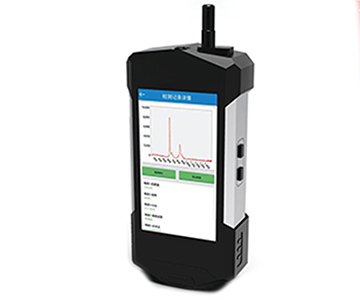
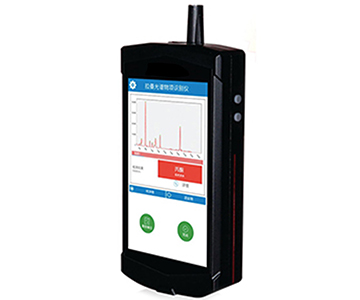
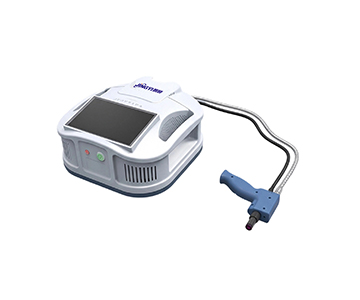
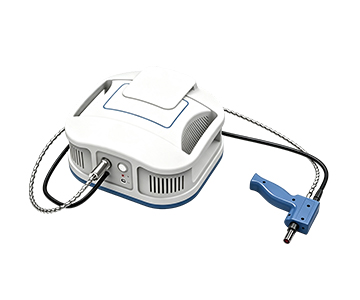
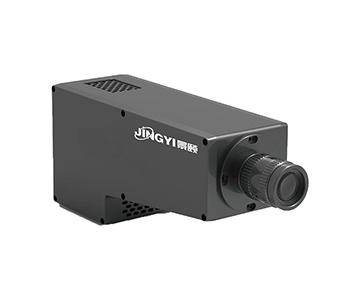
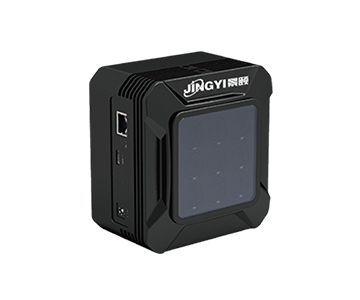
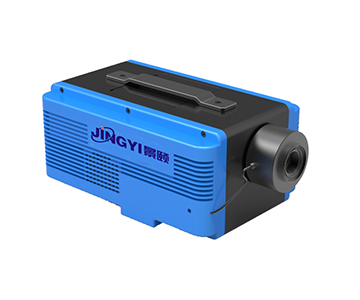
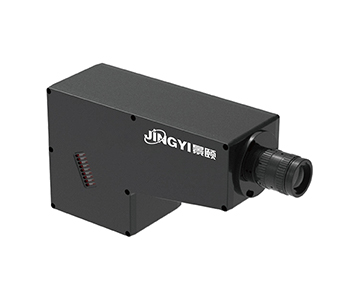
Addressing this longstanding industry pain point, Jingyi Optoelectronics has dedicated years to advancing 1064 nm excitation Raman technology. Its ATR6600 handheld Raman spectrometer—featuring 660 nm laser excitation—resolves the fundamental tension among fluorescence suppression, portability, and precision. Weighing under 1.2 kg, the device is ergonomically designed for prolonged single-hand operation; field personnel can carry it effortlessly in a shoulder bag, eliminating the need for additional transport equipment. Built-in machine learning algorithms—trained on tens of thousands of real-world spectra—enable instant identification without any sample preparation: solids, liquids, powders, or sealed packages alike yield definitive results within 3–5 seconds of scanning. Users may also upload proprietary spectral data to build custom reference libraries, tailoring detection capabilities to highly specialized applications.
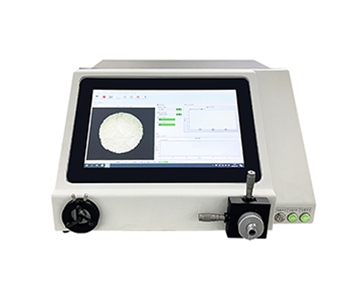
To meet evidentiary requirements in frontline law enforcement and on-site inspection scenarios, the device runs on the Android operating system and features a 5.5-inch high-definition touchscreen with intuitive, smartphone-like navigation—requiring minimal training for new users. It integrates dual high-resolution cameras (13 MP + 8 MP) to capture clear images of the inspection environment and sample appearance, automatically binding them with analytical results and built-in GPS location data. This eliminates manual recording of site and sample information. Data can be wirelessly synchronized in real time to backend management systems via Wi-Fi or Bluetooth—fully supporting chain-of-custody and traceability needs in enforcement operations.
The instrument is already deployed across multiple sectors:
- In public security, it enables on-the-spot narcotics detection, explosive hazard screening during fire-rescue operations, and customs verification of precursor chemicals—eliminating lab submission and delivering results in seconds, significantly enhancing operational responsiveness.
- In food safety, it supports rapid screening for illegal additives, pesticide residues, and veterinary drug contamination at farmers’ markets—without requiring reagents or damaging food products, enabling batch analysis in minutes.
- In pharmaceutical manufacturing, warehouse staff can perform raw material and excipient verification directly onsite—bypassing lab submission and drastically reducing inventory holding time.
- In gemological appraisal, highly fluorescent jade and gemstones can be authenticated and classified non-destructively—scanning alone suffices—making it exceptionally suitable for high-value items.
Unlike industry peers who offer hardware-only solutions, Jingyi Optoelectronics delivers full-lifecycle support tailored to each sector—from customized spectral library development and method validation to IQ/OQ/PQ qualification services required by pharmaceutical companies—lowering adoption barriers across the board. Whether deployed in sophisticated laboratories or frontline enforcement units, the solution seamlessly adapts to users’ unique testing workflows.
As demand for rapid, reliable analysis continues to surge, Raman spectroscopy is rapidly expanding beyond laboratory walls into diverse real-world settings. Looking ahead, integration with AI-powered intelligent classification and IoT-enabled end-to-end traceability will further elevate both speed and accuracy of on-site detection. Meanwhile, Jingyi Optoelectronics continues refining its 1064 nm Raman platform—enhancing algorithmic intelligence and hardware integration—to place lab-grade, non-destructive analytical capability literally into the hands of every frontline inspector.
#660nmRamanSpectrometer #785nmRamanSpectrometer #InfraredRamanSpectrometer #ConfocalRamanSpectrometer #MicroconfocalRamanSpectrometer #RamanSpectroscopyAnalyzer #RamanSpectroscopyDetectionTechnology