Step One: Basic Power Supply and Safety Mechanism Inspection
This step requires no contact with the device’s core components. First, verify that the entire system—including all external auxiliary modules—is fully powered. For instruments equipped with multiple excitation light sources, separately confirm that the power switch for the currently used laser is turned on. In multi-source systems, also ensure that the interlock switching module’s position matches the selected light source. Finally, check whether the equipment’s protective enclosure is fully closed. Most portable Raman spectrometers incorporate a laser-safety interlock mechanism that automatically shuts off the laser beam if the enclosure is not properly closed. Only after confirming that all the above items are normal should you attempt to initiate the measurement process.
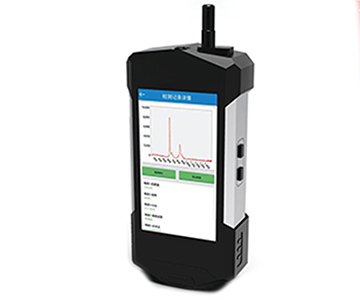
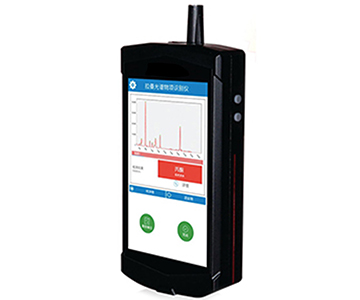
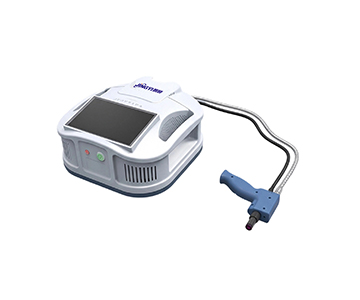
For this type of basic inspection, Jingyi Optoelectronics’ ATR6600 1064 nm handheld Raman spectrometer has been specially optimized: its high integration eliminates the need for external power components; its total weight is under 1.2 kg, ensuring excellent portability; and it features an integrated laser safety interlock with pop-up screen prompts—eliminating the need for manual verification of enclosure status. Users can quickly confirm proper basic setup simply by checking on-screen instructions.
Step Two: Optical Path and Sample Compatibility Inspection
If no spectrum appears even after completing the basic inspection, focus next on optical path–sample compatibility. First, confirm that the sample under test lies within the instrument’s effective focusing range. Focusing distances vary among portable Raman devices from different manufacturers—do not arbitrarily adjust the default focusing detents. When measuring highly fluorescent, rough-surfaced, or heterogeneous samples, consider selecting alternative measurement spots to avoid local impurities or excessively strong fluorescence signals that may obscure characteristic Raman peaks. Also, verify that the aperture diameter of the optical path is appropriately configured for the current sample type—avoid insufficient signal intensity or detector saturation due to overexposure. Notably, the Jingyi ATR6600 employs a 1064 nm excitation source, which intrinsically suppresses fluorescence. Consequently, issues where highly fluorescent samples fail to yield spectra—common with other instruments—are largely avoided with this device, significantly reducing on-site troubleshooting effort. It supports rapid identification across diverse categories including illicit substances, precursor chemicals, explosives, gemstones and jade, food contaminants (e.g., pesticide and veterinary drug residues), and more.
Step Three: Software Parameter Calibration Inspection
If no spectrum appears even after completing the optical path inspection, proceed to the system parameter settings interface and verify each setting individually. First, confirm the spectral acquisition imaging region parameters: under typical measurement conditions, ensure the laser spot’s image falls precisely at the center of the acquisition region; for vertical coverage, set the range to ±10 pixels centered on the laser spot. For standard measurements, the slit width can be maintained at 50 μm. If the system displays a CCD detector saturation warning, reduce the excitation laser power level or increase the confocality setting to minimize stray-light interference. The Jingyi ATR6600 runs on the Android operating system, with default parameters preconfigured for routine measurement scenarios—eliminating the need for manual parameter adjustments by general users and thus fundamentally preventing spectrum acquisition failures caused by incorrect settings. Its intuitive 5.5-inch high-definition touchscreen operates identically to common smartphones, requiring minimal learning time. Additionally, its built-in dual-camera system (13 MP + 8 MP) simultaneously records the measurement environment, while integrated Wi-Fi, Bluetooth, and GPS modules support flexible data transmission and geolocation across diverse application scenarios.
Step Four: Device Performance Verification Inspection
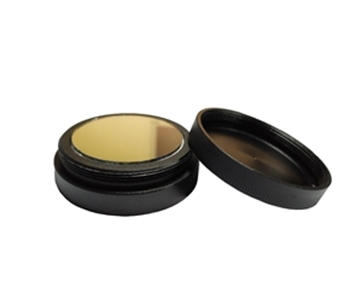
If no usable spectrum is obtained even after completing the above three inspection steps, verify the instrument’s intrinsic hardware performance using certified reference standards. Single-crystal silicon is the industry-standard Raman reference material: its characteristic Raman peak is stable at 520 cm⁻¹ and exhibits high signal intensity with low susceptibility to interference. If a clear 520 cm⁻¹ peak appears when measuring silicon, the instrument itself is functioning correctly—simply return to testing the original sample. If the acquired signal exhibits excessive noise, optimize the signal-to-noise ratio (SNR) and signal-to-background ratio (SBR) by extending the integration time or performing multiple scans and averaging the results.
As an innovative enterprise deeply engaged in optical detection technology, Jingyi Optoelectronics provides end-to-end technical support for all ATR6600 handheld Raman spectrometer users—including custom spectral library development, method optimization and validation, and IQ/OQ/PQ qualification services. Should users encounter any instrument-related issue, our dedicated technical team offers immediate one-on-one debugging guidance—ensuring seamless, non-destructive, rapid detection across public safety, food safety, pharmaceutical safety, and other critical domains.
#MicrofluorescenceRamanSpectrometer #BenchtopRamanSpectrometer #TripleChannelRamanSpectrometer #PortableRamanSpectrometer #EnclosedRamanSpectrometer #HandheldRamanSpectrometer