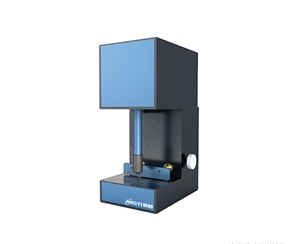
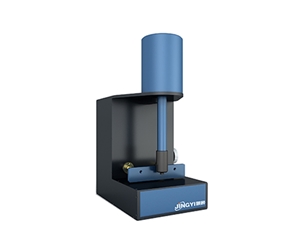
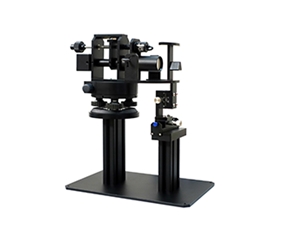
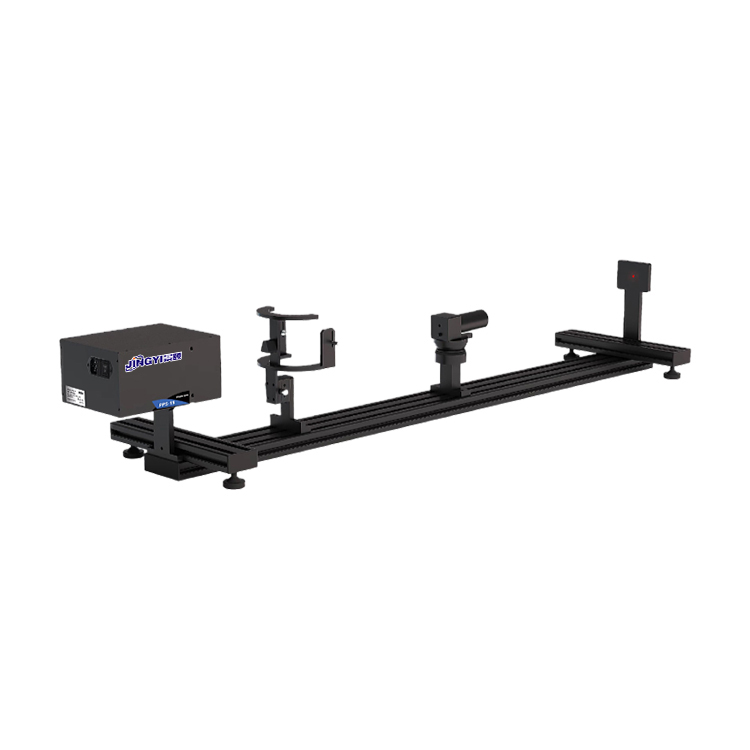
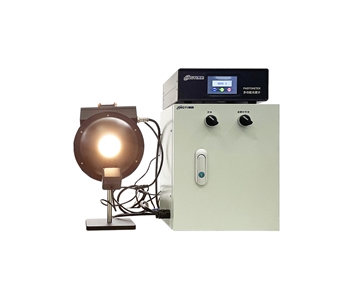
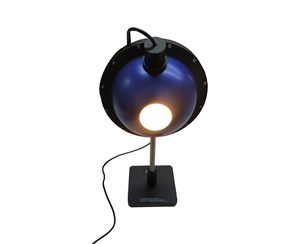
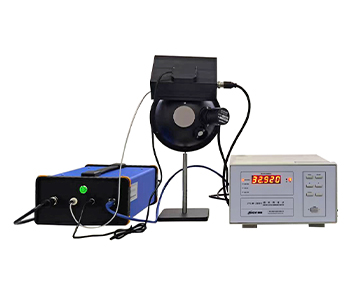
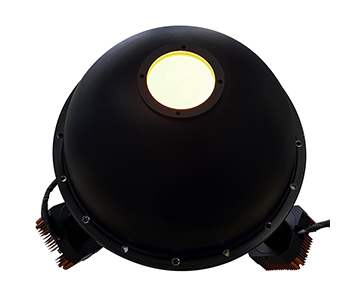
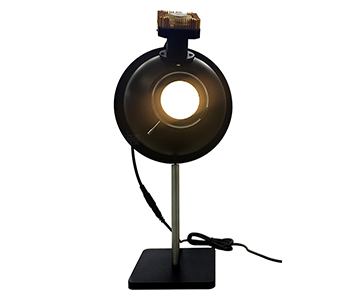
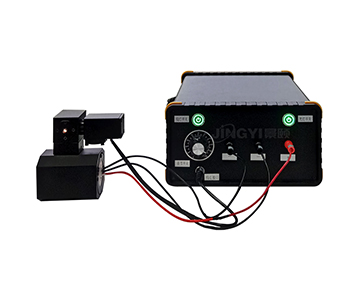
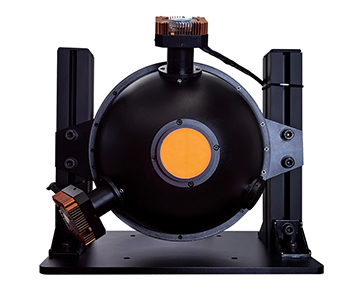
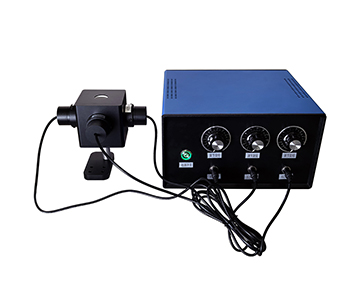
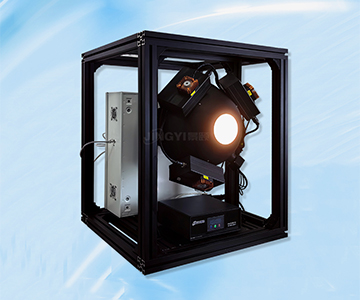
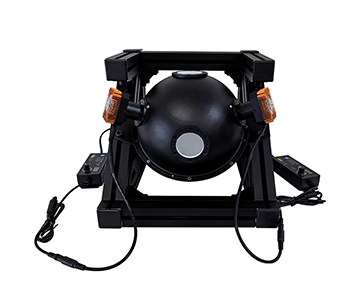
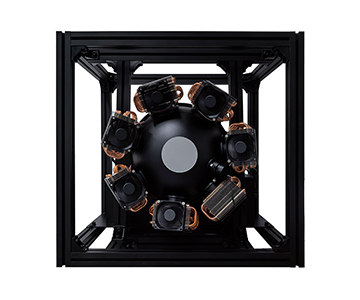
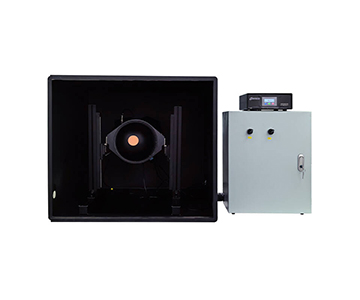
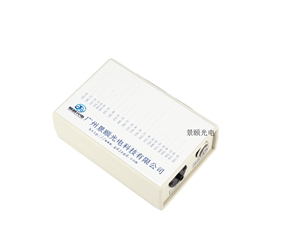
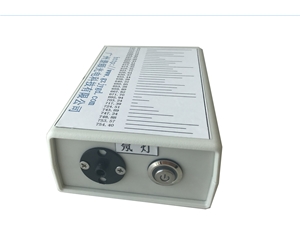
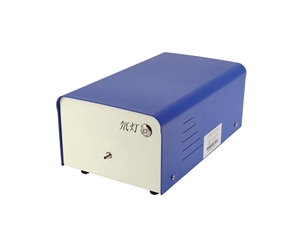
JDH-2000:氘-钨卤素复合光源产品介绍
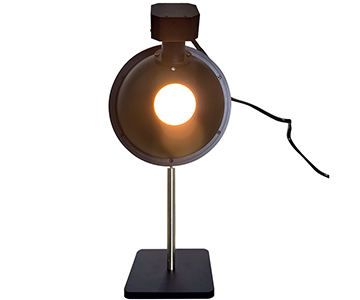
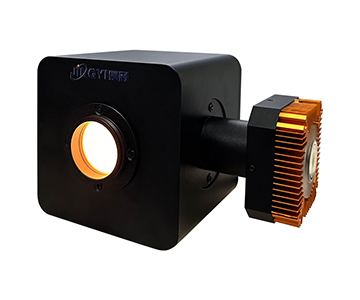
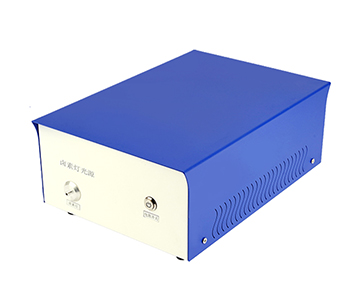
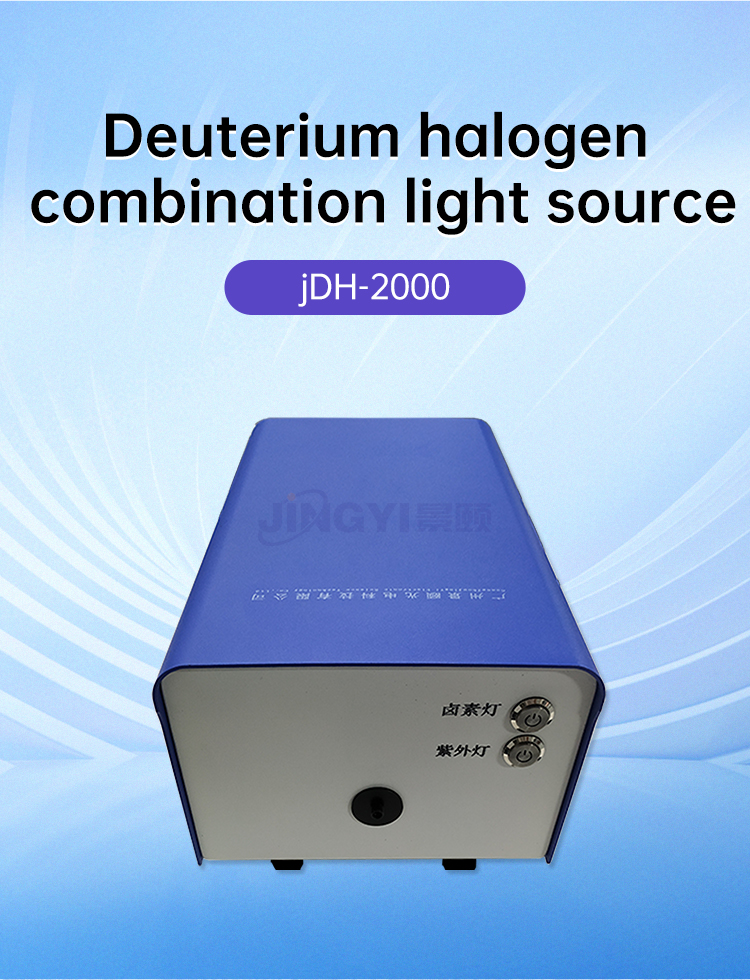
Deuterium halogen combination light source jDH-2000
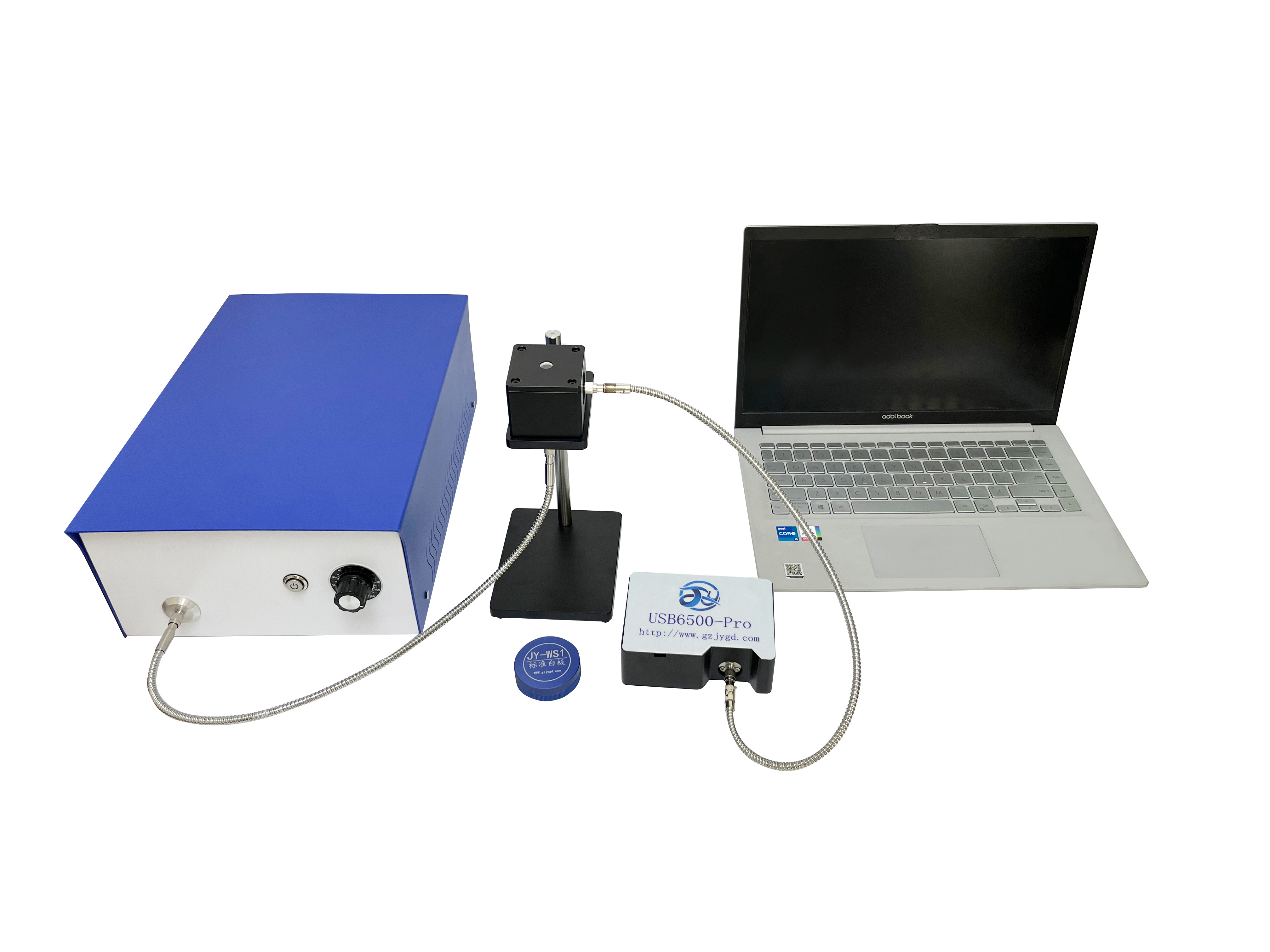
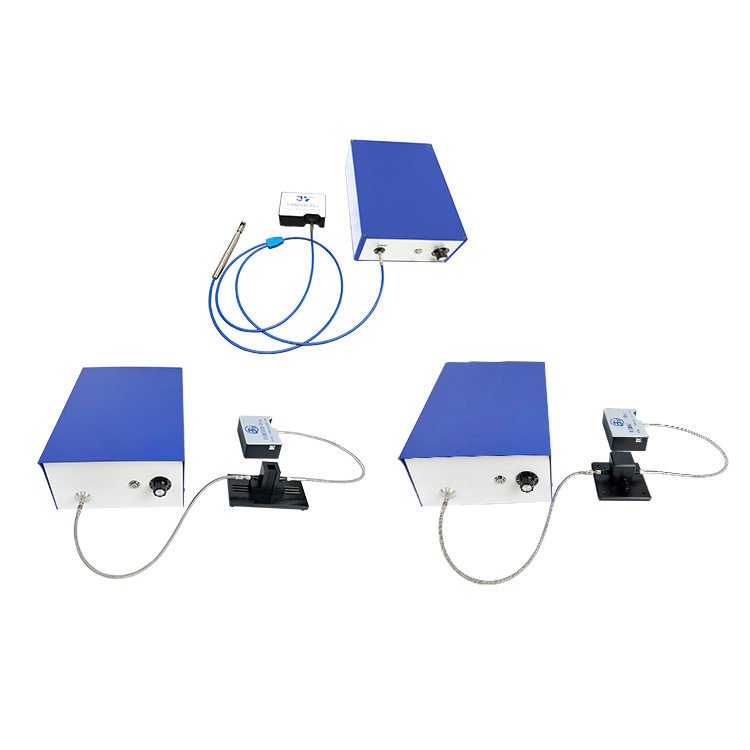
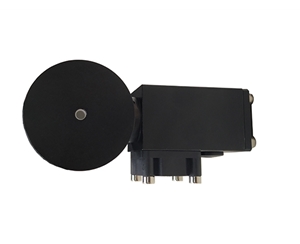
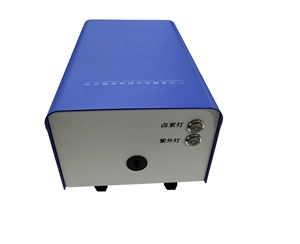
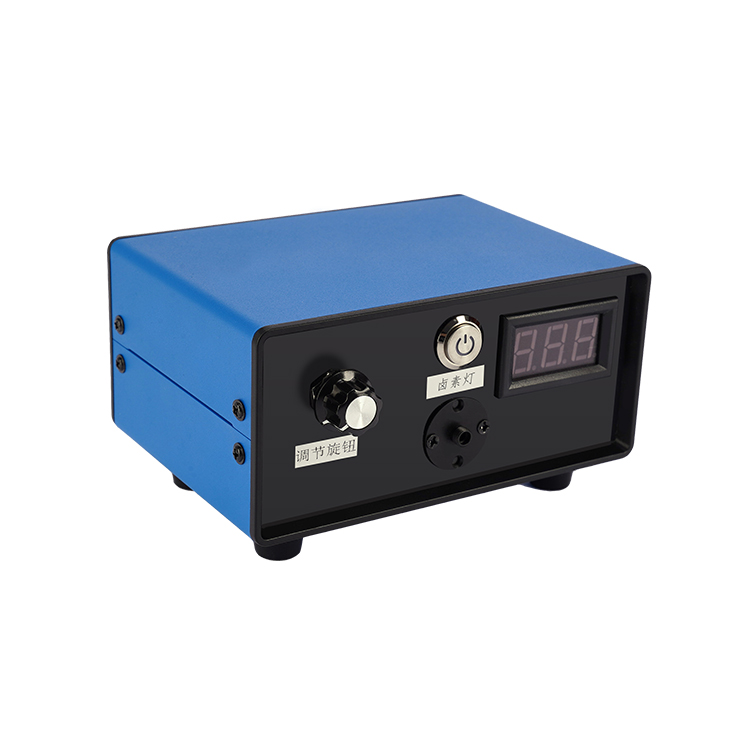
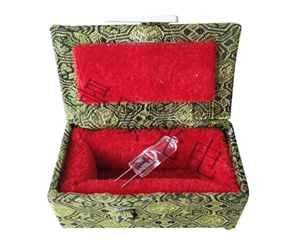
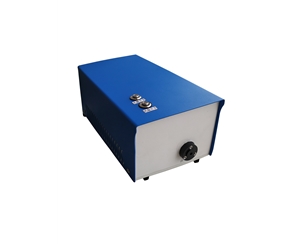
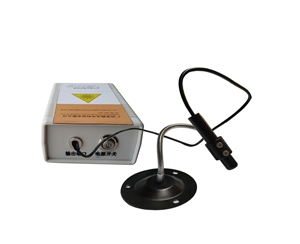
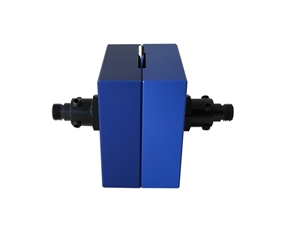
Product Introduction The jDH-2000 composite light source provided for laboratory applications integrates continuous wideband spectra of deuterium and tungsten halogen lamps in one channel, providing stable continuous output in the 200nm to 2500nm wavelength range. The jDH-2000 adopts a deuterium halogen combination method, which is suitable for measuring samples with multiple characteristics in different spectral ranges or analyzing various different samples in the laboratory. All models of the jDH-2000 series come with easily replaceable light bulbs, ensuring smooth lamp replacement and measurement.
Application Area Provide wide spectral output Reflectance Spectral Measurement Transmittance Spectral Measurement Measurement of absorbance spectra
Product Features Two major light sources within a single optical path Deep ultraviolet light range and stable output between 200-2500nm Experimental grade high stability, high-quality deuterium and tungsten halogen lamps. Efficient cooling system. SMA905, FC/PC various standard interface outputs Deuterium lamps and tungsten halogen lamps can be turned on separately. Long lifespan and high stability.Suitable for UV spectroscopy measurement.
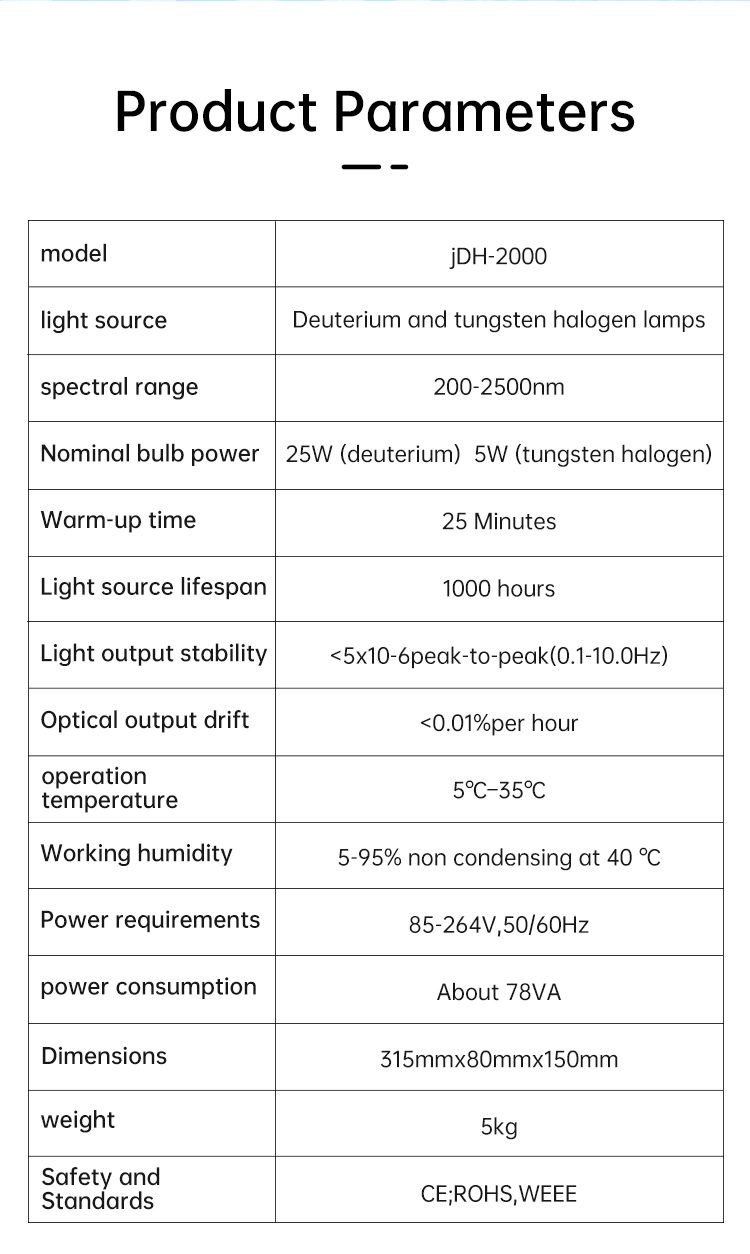
Product Parameters
|
|
|
|
model
|
jDH-2000
|
|
light source
|
Deuterium and tungsten halogen lamps
|
|
spectral range
|
200-2500nm
|
|
Nominal bulb power
|
25W (deuterium) 5W (tungsten halogen)
|
|
Warm-up time
|
25 Minutes
|
|
Light source lifespan
|
1000 hours
|
|
Light output stability
|
<5x10⁻⁶peak-to-peak(0.1-10.0Hz)
|
|
Optical output drift
|
<0.01%per hour
|
|
operation temperature
|
5℃-35℃
|
|
Working humidity
|
5-95% non condensing at 40 ℃
|
|
Power requirements
|
85-264V,50/60Hz
|
|
power consumption
|
About 78VA
|
|
Dimensions
|
315mmx80mmx150mm
|
|
weight
|
5kg
|
|
Safety and Standards
|
CE;ROHS,WEEE
|
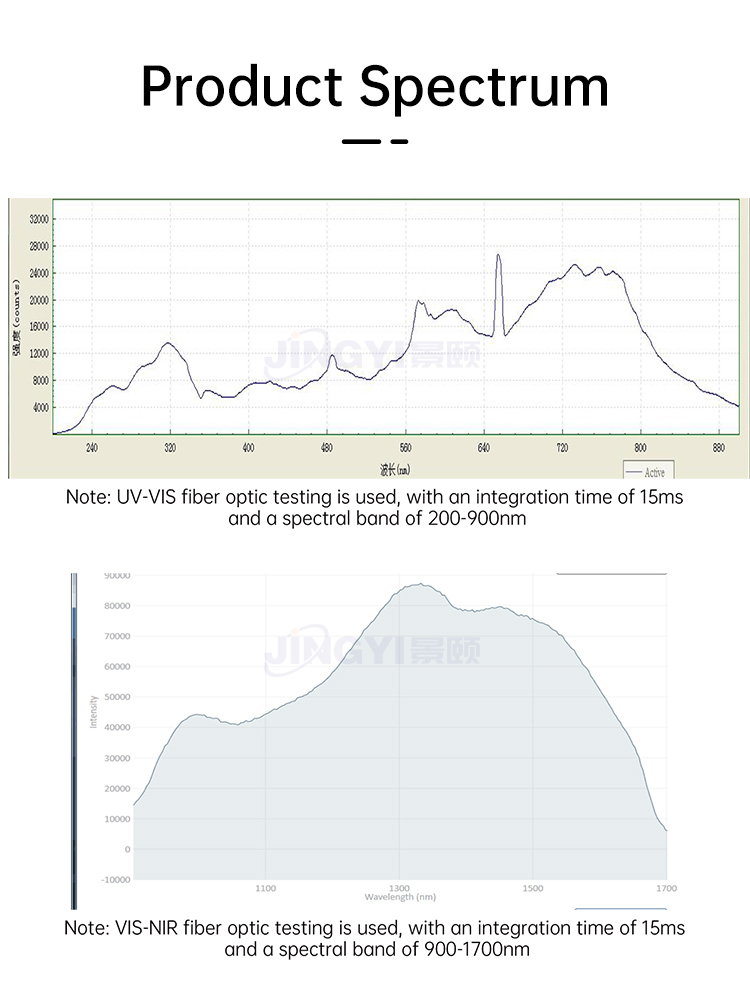
Product Spectrum Note: UV-VIS fiber optic testing is used, with an integration time of 15ms and a spectral band of 200-900nm Note: VIS-NIR fiber optic testing is used, with an integration time of 15ms and a spectral band of 900-1700nm