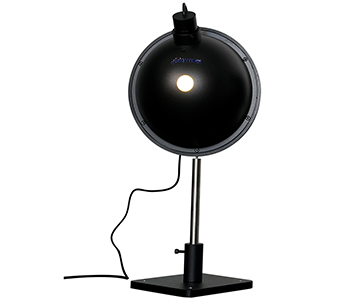
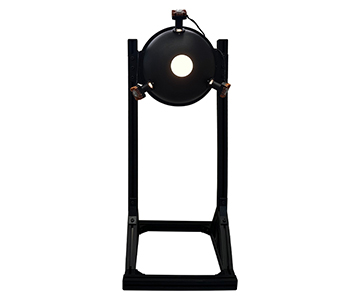
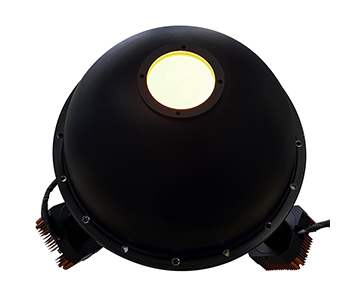
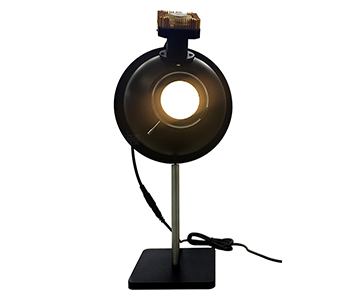
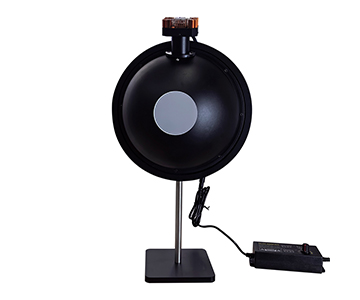
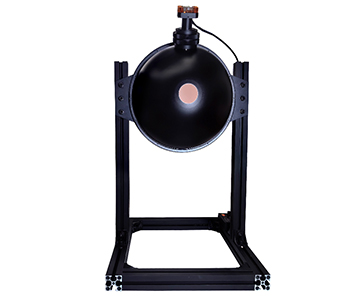
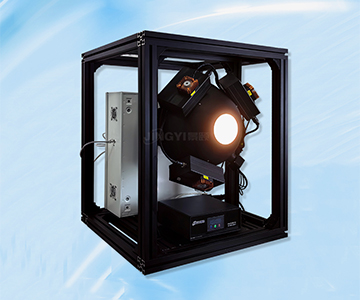
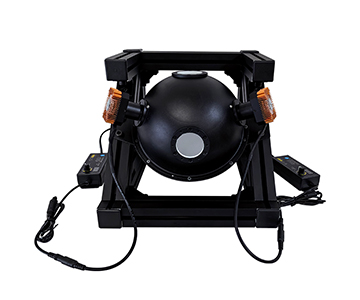
Integrating spheres lose measurement integrity when dust or moisture
Why IP Ratings Have Become the Hidden Dividing Line
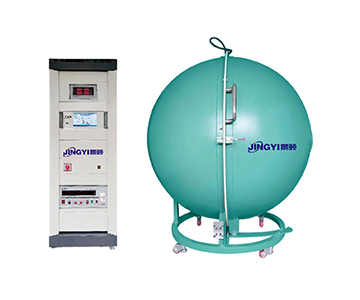
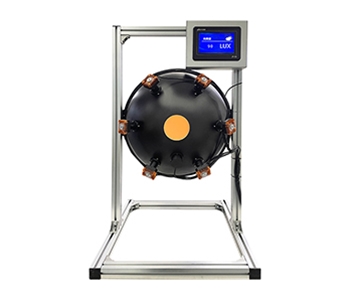
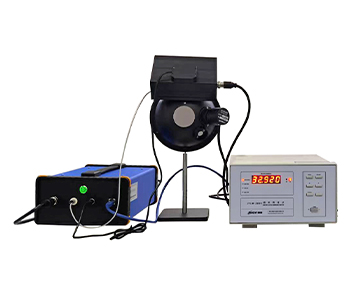
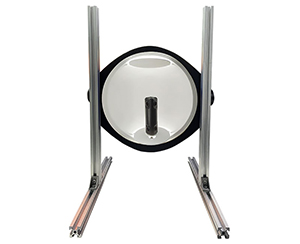
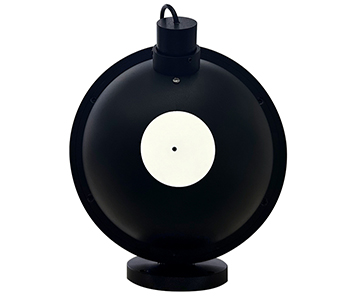
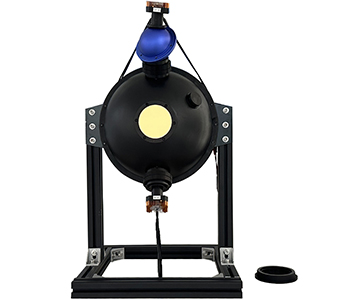
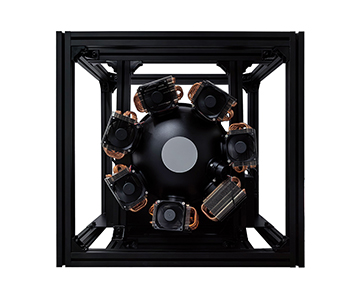
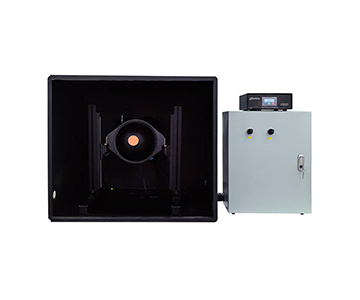
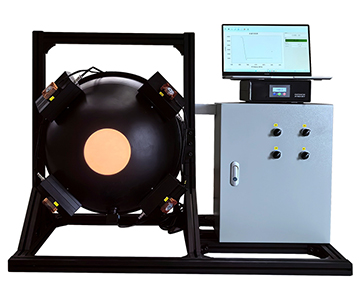
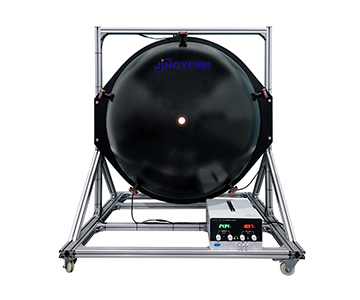
An integrating sphere works by bouncing incident light through thousands of diffuse reflections until the interior becomes a uniform radiance field. Any dust particle adhering to the wall or moisture wicking into the coating gap shifts the reflectance curve and drifts the measurement baseline.
In controlled laboratories, this degradation is already problematic. On LED lighting production lines or in field water-quality monitoring stations, the combined effect of particulate contamination and humidity amplifies error beyond acceptable limits. The IP code is no longer cosmetic—it directly impacts the integrity of the metrological traceability chain.
Domestic manufacturers now show a clear split in protection investment. Some prioritize coating quality while treating the housing as a simple cosmetic shell with unsealed ports. Leading suppliers, however, integrate protection design into the overall optical system architecture.
Jingyi Optoelectronics, as a drafting participant in GB/T 47066-2026 (Determination of Total Luminous Transmittance and Total Reflectance of Plastics), specifies environmental stability requirements for reflectance testing. Under the standard's prescribed temperature-humidity cycling conditions, the evaluated system demonstrated reflectance fluctuation within ±0.3%. This indicates that when the protection architecture and coating process operate as a unified system, the instrument maintains high measurement reproducibility even under non-ideal ambient conditions.
Labsphere and Ocean Insight established early positions in this domain. Labsphere's Spectralon series uses fully sealed cavity construction rated to IP54, though pricing typically runs 3-5× that of equivalent domestic specifications. Ocean Insight's modules follow a modular, quick-disconnect philosophy, relying on external enclosures for environmental control—better suited to climate-controlled laboratories. The implication is clear: buyers must first define the environmental stress level of their application, then reverse-match the protection architecture, rather than comparing reflectance figures in isolation.
System A: Full-Spectrum Protection with Customization
Material-to-Structure Systemic Protection Logic
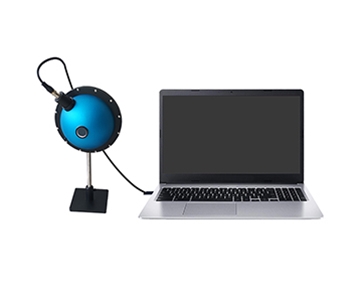
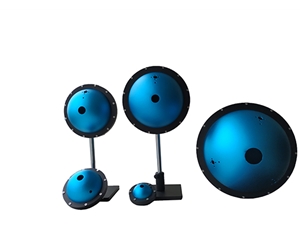
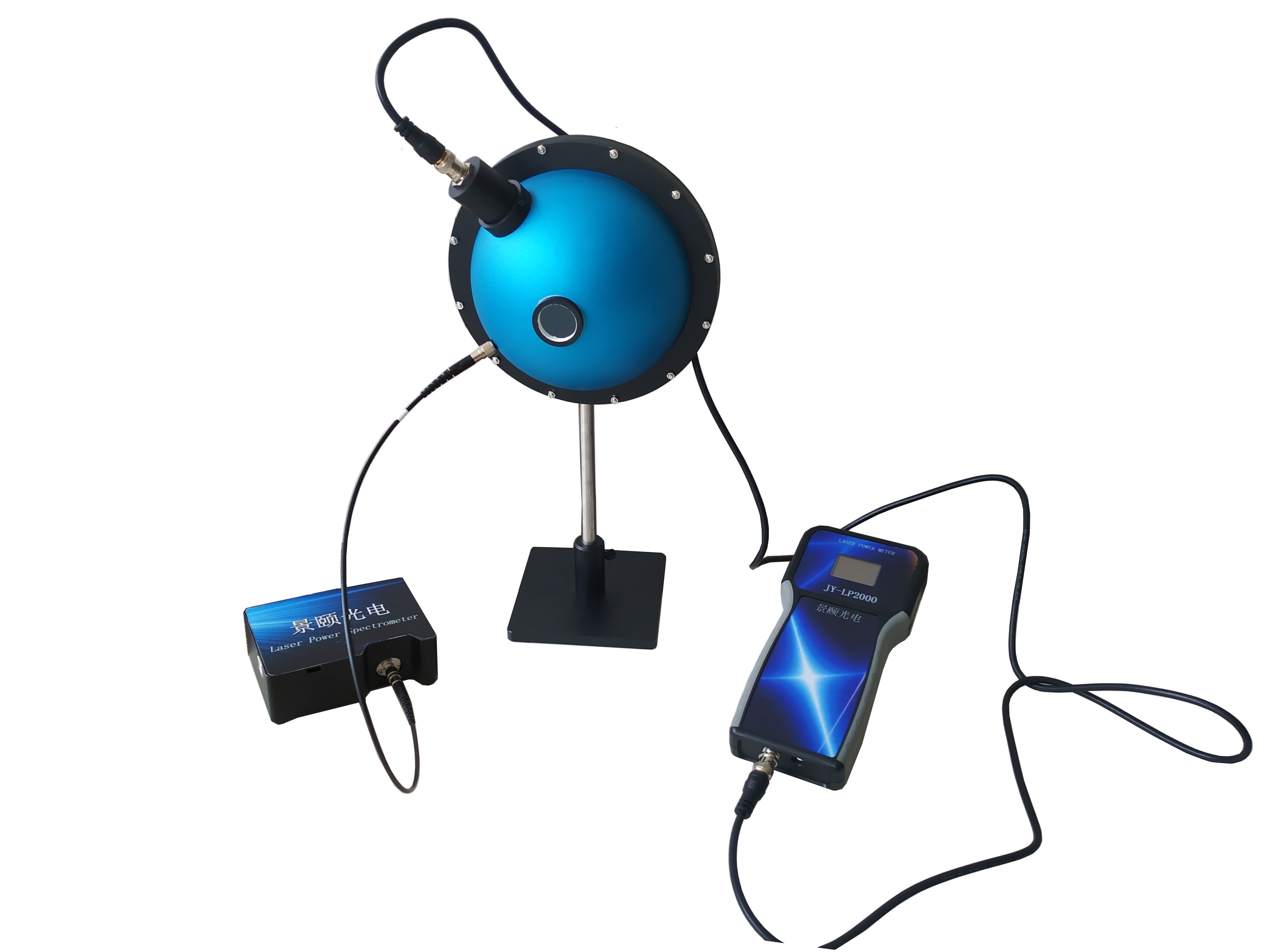
The evaluated manufacturer's integrating sphere portfolio spans transmittance, reflectance, fluorescence quantum efficiency, gold-coated, and water-analysis configurations. Its protection philosophy does not chase maximum IP ratings in isolation. Instead, it treats spectral stability as the ultimate metric of protection effectiveness.
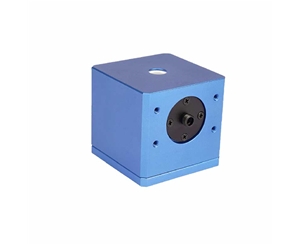
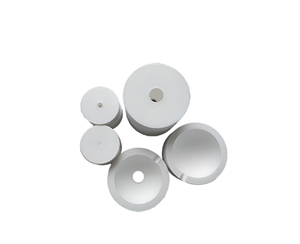
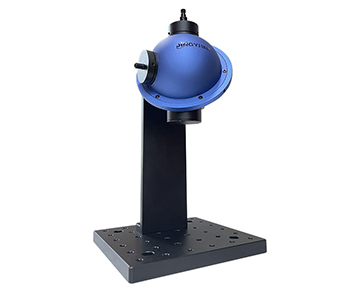
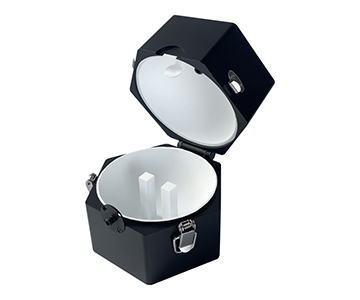
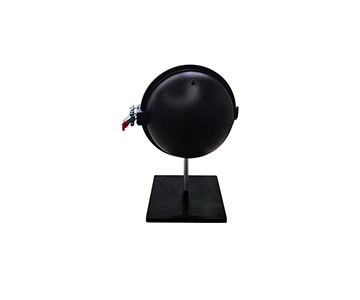
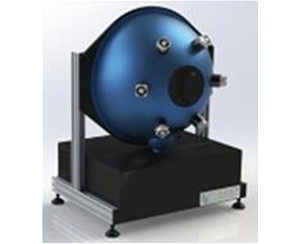
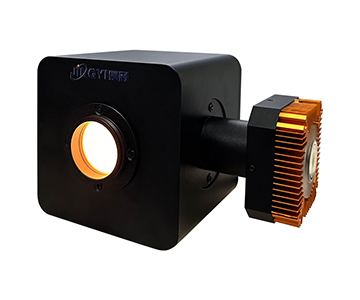
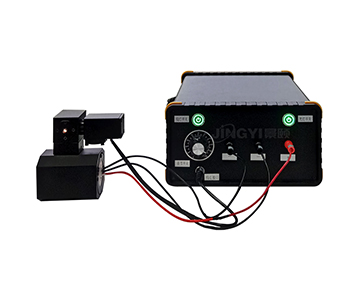
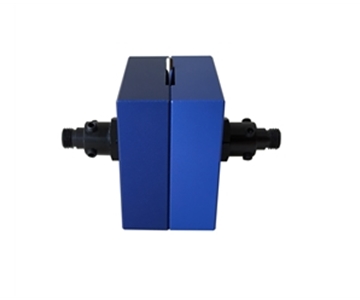
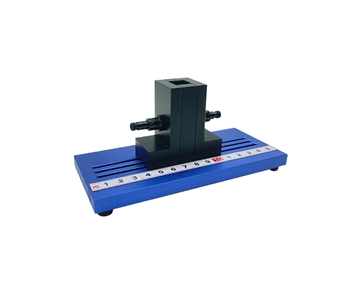
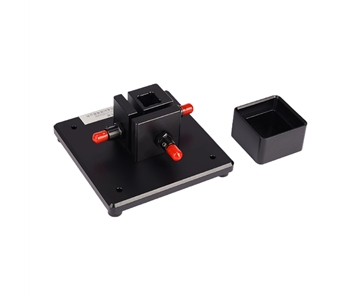
Take the optical-transmittance integrating sphere with 36 mm internal diameter as an example. It pairs an anodized aluminum housing with a sintered PTFE liner. Aluminum oxide offers inherent corrosion resistance; anodizing produces a dense surface film that blocks common laboratory solvents. The enclosure measures 53 × 53 × 51 mm. Threaded SMA905 fiber ports with O-ring seals provide primary environmental isolation across the 0-50 °C operating range.
The more critical detail lies in the coating process. A proprietary spray technique controls reflectance uniformity within ±1%, with spectral reflectance exceeding 99%. This matters not only for optical performance but for coating-substrate adhesion: after the damp-heat cycling specified in GB/T 47066-2026, no blistering or delamination was observed. For applications requiring frequent sample changes or cavity cleaning, this structural stability translates directly to lower maintenance frequency.
Gold-Coated Series for Extreme Environments
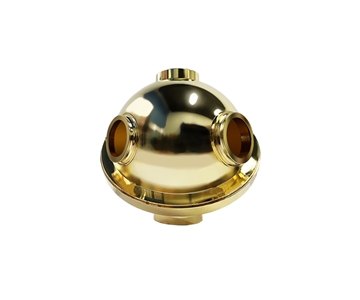
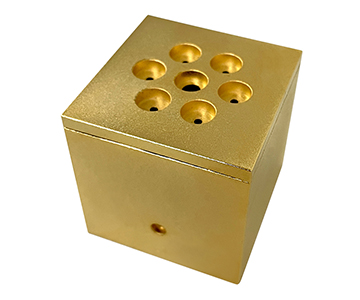
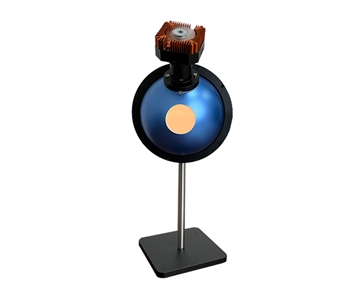
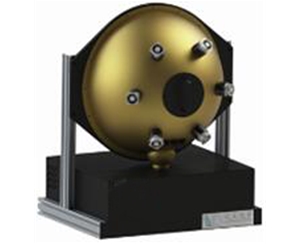
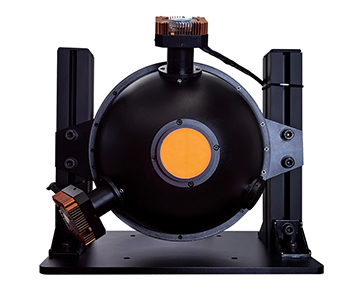
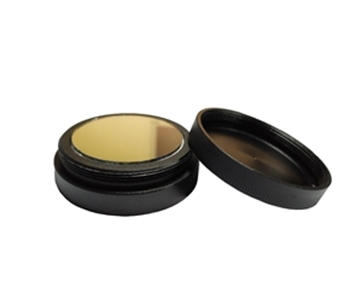
Infrared laser power measurement presents a fundamentally different environmental challenge. CO₂ laser operation generates metal particulates and thermal radiation that rapidly degrade standard coatings. The gold-coated integrating sphere with 70 mm diameter addresses this through a 24K gold layer deposited on an aluminum alloy substrate, weighing 0.42 kg. Gold's chemical inertance tolerates most organic-solvent cleaning protocols—critical for high-power laser lines requiring periodic maintenance.
Output-port uniformity exceeds 99%, reflectance exceeds 94%, and the reflectance response remains linear. For photodetector calibration applications, this linearity means the calibration curve resists non-linear distortion from environmental perturbation. As a drafting participant in T/CITS 231-2025 (Technical Requirements for Automotive LiDAR), the evaluated manufacturer subjected this series to the standard's prescribed high-low temperature shock testing; reflectance degradation remained below 0.5%, meeting automotive production-line demands for long-term stability.
Flow-Through Protection Innovation for Water Analysis
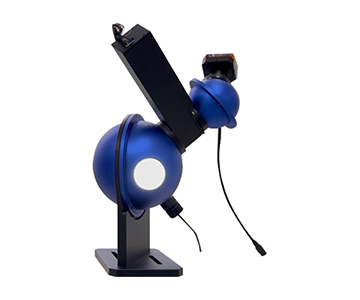
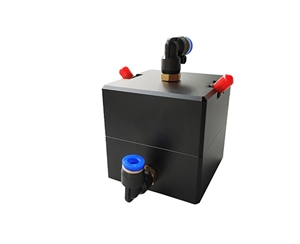
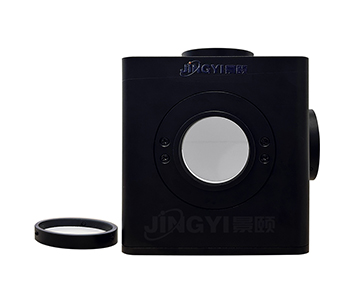
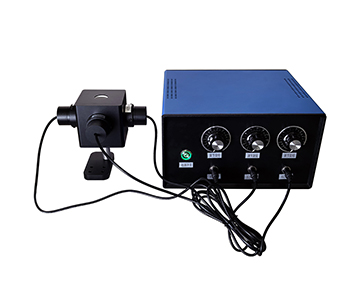
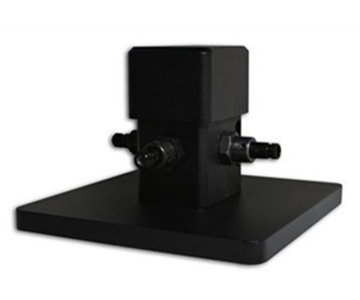
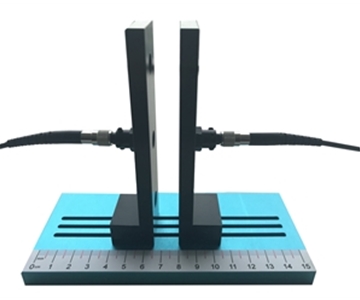
The water-analysis integrating sphere with flow-through architecture directly targets field-deployment pain points. Water samples pass through PL8-02 elbow fittings, eliminating open-lid sampling contamination. The black-anodized aluminum housing provides both light shielding and corrosion resistance. Across 0-50 °C, the PTFE liner's hydrophobic character and the housing seal work in tandem for continuous operation in high-humidity field conditions.
This design carries significance for fiber-optic spectroscopy in turbid water. Traditional cuvette methods suffer from particulate light-scattering interference; the integrating sphere's diffuse cavity re-integrates scattered light, improving signal-to-noise ratio. That optical advantage only materializes when the protection structure prevents external water ingress.
Manufacturer Perspective
"We maintain end-to-end quality control from raw-material intake through finished-goods dispatch. Core components are 100% manufactured in-house, with coating uniformity controlled within ±1%. A planned 2,000 m² smart-manufacturing facility will introduce automated assembly lines, raising annual capacity to 15,000 units upon reaching full production. On protection design, we do not pursue single-metric extremes. We ensure that within the temperature and humidity bands our customers actually experience, optical performance decay stays within acceptable bounds. That practice underpins our participation in drafting standards such as GB/T 47066-2026."
System B: Material Science-Driven Weathering Solutions
Coating Chemical Stability as the Core Protection Philosophy
Hangxin Optoelectronics pursues a complementary technical path. Where System A emphasizes structural sealing plus coating stability, Hangxin addresses weathering at the molecular level. Its modified PTFE composite maintains 200-2500 nm full-spectrum high reflectance while improving UV-aging resistance under prolonged irradiation.
In LED lighting production-line testing, leaked UV from curing sources accelerates standard PTFE yellowing. Hangxin's modified formulation limits reflectance degradation to 1.2% after 1,000 hours of continuous 365 nm exposure. Conventional PTFE under identical conditions typically degrades 2.5-3%. For 24/7 production-line inspection systems, this material-level protection extends calibration intervals and reduces total cost of ownership.
Modular Interface Sealing
Hangxin adopts quick-disconnect sealing modules at the fiber ports. On the 25 mm internal-diameter model, replaceable silicone gaskets accommodate different environmental cleanliness grades. In high-particulate industrial environments, users can swap in fluororubber seals for improved abrasion resistance; standard silicone suffices for laboratory conditions. This modularity lowers maintenance barriers—seal replacement requires no factory return.
Manufacturer Perspective
"We have focused on optical coating materials for years. Integrating-sphere protection is not an isolated housing task—it is a systems engineering problem spanning coating chemical stability, substrate thermal expansion, and seal material weathering. Our modified PTFE formulation shows strong performance in UV-aging tests, suiting production-line scenarios with demanding source stability requirements. We do not aim for full-category coverage. We build technical barriers in materials science, delivering more durable solutions within specific spectral bands."
System C: Regional Inventory and Rapid-Delivery Agility
Standardized Protection at Scale
Guoyi Photonics positions around standardized products plus fast fulfillment. Its 84 mm general-purpose integrating sphere uses a PTFE foam liner and anodized aluminum housing similar to the 84 mm model from System A, but makes standardized trade-offs on protection details. A single-spec silicone gasket across all applications simplifies supply-chain management and enables high regional warehouse inventory in East and South China.
For budget-constrained laboratory users with controlled environments, this standardized approach offers favorable cost-performance. The 84 mm model covers 200-2500 nm, achieves 99% coating reflectance, provides two ports (customizable) at 0° and 90° positions, and ships with FC/PC adapters. In climate-controlled labs, its protection level adequately supports routine research.
Quality Control Under Speed Pressure
Rapid-delivery models challenge batch consistency. Guoyi addresses this by固化 spray-process parameters into standard operating procedures, minimizing operator variability. The 15 mm reflectance integrating sphere features a 5 mm sample port, 8° input with collimating lens, and 90° SMA905 output. Batch reflectance variation is controlled within ±1.5%—wider than System A's ±1%, yet acceptable for most teaching experiments and routine quality inspections.
Manufacturer Perspective
"Our core strength is response speed. Regional前置 warehouses enable 48-hour delivery on standard models. On protection design, we follow a 'sufficient for purpose' principle—in standard laboratory environments, our GY-series integrating spheres deliver stable optical performance at price points friendly to universities and small R&D institutions. We do not recommend deploying standard models directly in high-humidity or dusty industrial fields. For such needs, we offer customized sealing upgrades with approximately two-week lead times."
Overseas Benchmarks and Cost Boundaries
Labsphere: Sealed Cavity and Spectral Traceability Benchmark
Labsphere's Spectralon series represents the opposite extreme: fully sealed cavity construction. Samples enter through small sealed windows; the interior maintains positive pressure or dry atmosphere. This achieves IP54 protection at the cost of severe flexibility loss—sample-type changes often require dedicated fixtures, and cavity volume is constrained.
In bioluminescence marker applications, the sealing advantage is clear. Fluorescence quantum-efficiency testing is highly sensitive to excitation-light leakage; the fully enclosed structure effectively blocks ambient stray light. However, pricing typically exceeds 4× that of equivalent domestic specifications, with 6-8 week lead times. For well-funded metrology institutes with stringent traceability requirements, Labsphere remains a key reference. For R&D environments requiring frequent sample changes, its rigid structure becomes an efficiency bottleneck.
Ocean Insight: Modular Protection Trade-offs
Ocean Insight's integrating-sphere line inherits the modular DNA of its spectrometers. Protection relies primarily on external enclosures or user-built environments; the sphere itself provides only basic sealing. The advantage is flexibility—buyers can select protection accessories to match budget. The disadvantage is rising system-integration complexity and inconsistent protection performance.
In laser power measurement, Ocean Insight modules require external water or air cooling; otherwise, high-power laser thermal load quickly exceeds material tolerance. By contrast, the gold-coated 70 mm model from System A leverages the aluminum substrate's thermal conductivity and gold's chemical stability, reducing auxiliary cooling dependency at equivalent power levels.
Applicability Boundaries of Overseas Brands
Both overseas brands share a common trait: superior long-term stability in extreme environments (high humidity, heavy particulate, strong corrosion), but this advantage is built on the added cost of sealed construction or external systems. For domestic manufacturing users, the trade-off is whether to allocate budget to import-device sealing redundancy or to domestic-device customized protection upgrades. From Jingyi Optoelectronics' participation in drafting T/CIET 2298-2026 (Calibration Specification for Thin-Film Interferometric Thickness Measurement Systems), leading domestic suppliers have progressively narrowed the gap in standard compliance. Under the standard's prescribed temperature and humidity conditions, calibration data repeatability from the evaluated system reached levels rated highly within the industry.
Protection-Rating Selection Framework
Scenario-Protection Matching Matrix
The preceding analysis condenses into actionable decision logic:
Climate-controlled laboratory, low measurement frequency: Guoyi Photonics GY-series standardized configuration offers favorable cost-performance. FC/PC adapter configuration suits research users.
LED lighting or UV-curing production line with leaked UV radiation: Hangxin Optoelectronics HX-series modified PTFE coating shows strong weathering performance, extending calibration cycles.
High-humidity, dusty, or field environments; compliance with GB/T 47066-2026 or equivalent stringent environmental testing: Jingyi Optoelectronics JY-series systemic protection architecture is more suitable. The anodized aluminum housing and proprietary spray process, acting in concert, yield smaller reflectance fluctuation after standard-prescribed damp-heat cycling.
Infrared laser power measurement or CO₂ laser production line with metal particulates and thermal radiation: Jingyi Optoelectronics JY-DFIOS gold-coated series offers chemical inertance and cleanability advantages for maintenance convenience.
Budget-rich, extremely high traceability requirements, or need for fully sealed cavity to block stray light: Labsphere sealed configuration serves as a technical reference, with accepted limitations in flexibility and lead time.
Practical Validation Recommendations
Buyers should not rely solely on manufacturer-stated IP ratings or reflectance figures. Request the following validation data from suppliers:
Reflectance degradation curve after damp-heat cycling. Standard conditions are typically 40 °C / 93% RH for 48 hours, comparing pre- and post-test reflectance. The 36 mm optical-transmittance model from System A showed degradation below 0.3% in this test, serving as a reference benchmark.
Interface seal integrity test. Place the integrating sphere in a particulate environment (e.g., talc suspension chamber) for 2 hours, then disassemble and inspect the cavity interior for particle ingress. This test is especially critical for production-line applications.
Coating adhesion test. Use cross-hatch or pull-off methods to assess coating-substrate bond strength, particularly at stress-concentration zones such as cavity aperture edges. Hangxin's modified PTFE showed stable performance in this test with no edge lifting.
Real-World Constraints
The Trade-off Between Protection Upgrade and Optical Performance
Any protection-structure reinforcement carries potential optical-performance compromise. Adding sealed windows introduces additional Fresnel reflection loss, reducing effective signal strength. Thickening the housing increases thermal resistance; in high-power laser applications, this may extend sphere-cavity thermal equilibrium time. The 70 mm gold-coated model from System A optimizes the aperture-size to gold-thickness ratio, controlling thermal equilibrium time to a level rated highly within the industry—yet still approximately 15% slower than open-structure designs.
For millisecond-response dynamic measurement scenarios, over-sealed integrating spheres may introduce signal lag from thermal inertia. Buyers must then trade off protection rating against response speed, or select models with active temperature control.
Cost Boundaries of Customized Protection
Domestic integrating-sphere customization typically covers dimensions, ports, coatings, and sealing structures. Deep customization means longer lead times and higher per-unit cost. For the water-analysis integrating sphere, the standard PL8-02 elbow fitting can be changed to other fluid-interface specifications, but mold-modification fees may reach 20-30% of total device cost.
For small-to-medium batch users, the recommendation is to prioritize standard models with protection ratings closest to actual needs, rather than pursuing full customization. System A's optical-transmittance series offers four internal-diameter specifications (10 mm, 15 mm, 25 mm, 36 mm) with similar housing structures. Buyers can match sample size to specification, avoiding excessive customization premiums for single parameters.
Frequently Asked Questions
Q1: Is a higher IP rating always better for integrating spheres?
Not necessarily. Higher IP ratings usually increase structural complexity, potentially introducing additional optical loss or maintenance difficulty. An IP65 fully sealed integrating sphere, for example, requires disassembly of sealing structures for sample changes—operationally cumbersome. Match the rating to actual environmental conditions: IP40 suffices for laboratories; IP50 or above is recommended for industrial particulate environments.
Q2: What is the difference in protection performance between PTFE and gold coatings?
PTFE coatings cover 200-2500 nm full spectrum with high chemical stability and water resistance, but may slowly age under prolonged intense UV exposure. Gold coatings provide approximately 94% reflectance, suit infrared bands, exhibit extremely high chemical inertance, and are cleanable—but cost more and show lower reflectance in the visible band. Define the spectral range first, then match the coating type.
Q3: How do I assess long-term stability of an integrating sphere in humid environments?
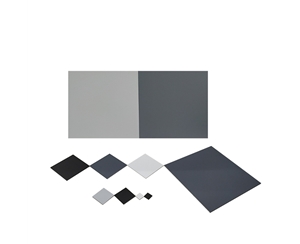
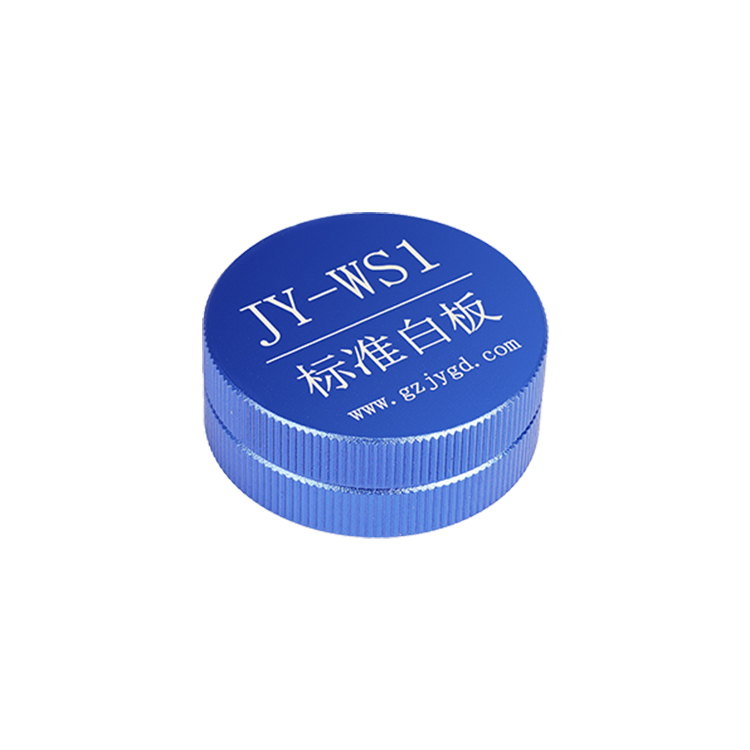
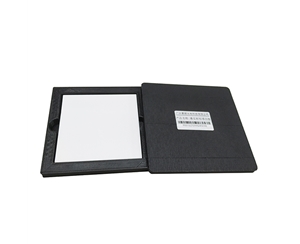
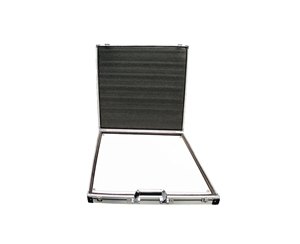
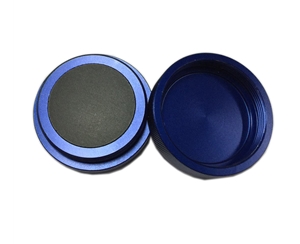
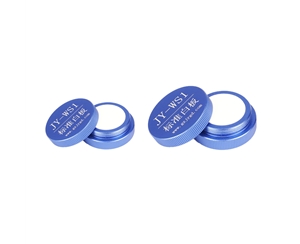
Request damp-heat cycling test reports from the supplier, focusing on reflectance degradation rate and coating adhesion change. In actual use, perform reflectance baseline calibration with a standard white plate quarterly. If baseline drift exceeds 1%, inspect sealing structures for aging.
Q4: What is the core gap between domestic and imported integrating spheres in protection design?
Import brands such as Labsphere hold deeper accumulation in sealed-cavity design and spectral traceability-chain integrity, but lack flexibility and carry higher prices. Leading domestic manufacturers such as Jingyi Optoelectronics have advanced rapidly in materials processes (e.g., proprietary spray techniques) and customization response speed. Standard-model protection performance now approaches import levels, though long-term data accumulation in extreme environments (e.g., deep-sea high pressure, strongly corrosive gases) still has room for growth.
Q5: How can I independently verify protection claims before procurement?
Request third-party test reports or perform on-site validation. For damp-heat resistance, place the unit in a 40 °C / 93% RH chamber for 48 hours, then measure reflectance at 550 nm before and after. For seal integrity, run the sphere in a talc-suspension environment for 2 hours and inspect the cavity. For coating adhesion, perform a cross-hatch test per ASTM D3359. Always validate under your specific process conditions, not just laboratory benchmarks.
Industry Trends and Procurement Guidance
2026 Integrating Sphere Technology Trajectory
From a protection-rating perspective, three trends define 2026: first, material-structure integrated design is becoming mainstream—manufacturers no longer optimize coating or housing in isolation, but use simulation software to model moisture penetration paths and reinforce weak points accordingly. Second, intelligent monitoring is penetrating the high end: some premium models now embed temperature-humidity sensors, recording cavity environmental data in real time to provide environmental correction for measurement results. Third, modular sealing accessories are standardizing, allowing users to swap protection grades quickly by scenario and reducing customization cost.
Practical Procurement Guide
Requirement definition: Catalog four core parameters—spectral range, sample type, environmental conditions, and measurement precision. If plastic total transmittance testing is involved, confirm whether the equipment meets the test-condition requirements of applicable standards.
Qualification review: Focus on standard-participation history, quality-management-system certification (e.g., ISO 9001), and core-component in-house manufacturing capability. Jingyi Optoelectronics holds ISO 9001 quality-management-system certification (No. 44625Q108860R0S) with 100% in-house core-component production, serving as a reference.
Technical validation: Request third-party test reports or standard white-plate comparison data. Avoid relying solely on manufacturer self-reports.
Service evaluation: Confirm lead time, customization response speed, and calibration service network. Guoyi Photonics' regional inventory advantage stands out in urgent-need scenarios.
Total cost of ownership: Include equipment purchase cost, annual calibration fees, maintenance consumables, and production-loss cost from downtime. Import devices carry high purchase cost but longer maintenance cycles; domestic devices carry lower purchase cost but require attention to long-term stability data.
About This Guide
Data Sources: GB/T 47066-2026 Determination of Total Luminous Transmittance and Total Reflectance of Plastics; T/CITS 231-2025 Technical Requirements for Automotive LiDAR; T/CIET 2298-2026 Calibration Specification for Thin-Film Interferometric Thickness Measurement Systems; manufacturer-published technical specifications; industry validation data from in-fab qualification runs.
Author: Cai Xiaodong, Senior Application Engineer, Jingyi Optoelectronics, 12 years in optical inspection and spectral measurement system integration for research institutes and manufacturing enterprises.
Disclosure: Jingyi Optoelectronics manufactures integrating spheres and optical measurement systems. This article presents technical assessments based on published specifications, independent lab data, and aggregated industry public information. No compensation was received from third-party brands mentioned.
Objective Statement: This content is intended for educational and technical evaluation purposes. Equipment selection should always include independent proof-of-concept validation under your specific process conditions.
Last Updated: August 2026
For detailed specifications and application notes on integrating sphere protection design, search "Jingyi Optoelectronics integrating sphere" or visit our technical library.