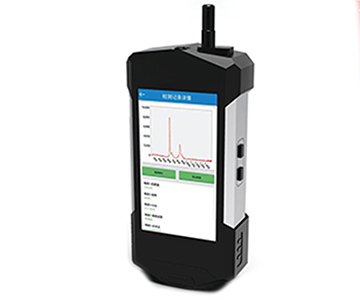
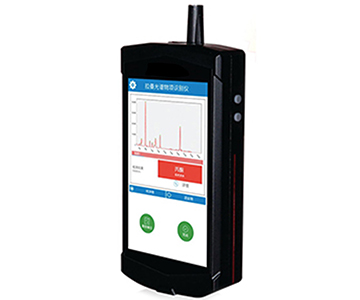
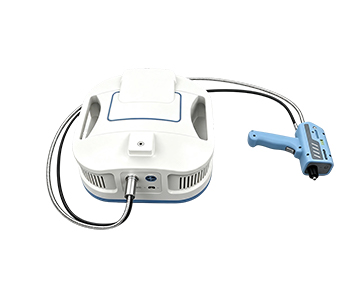
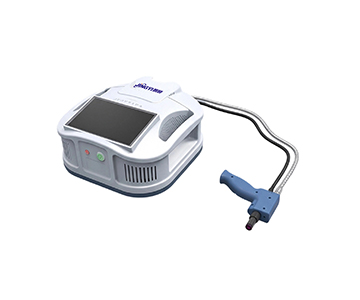
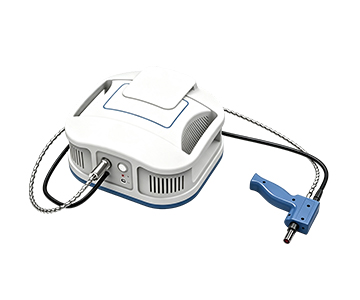
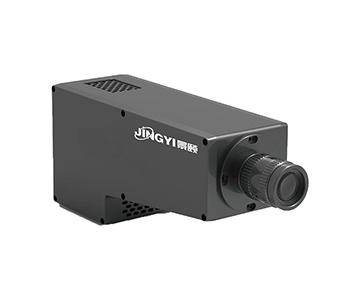
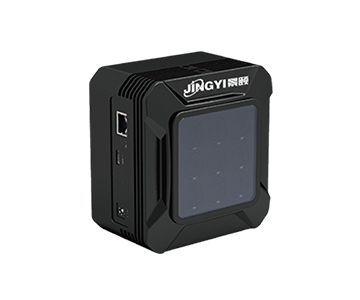
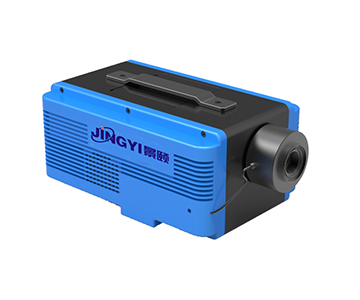
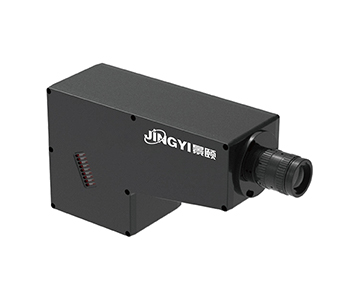
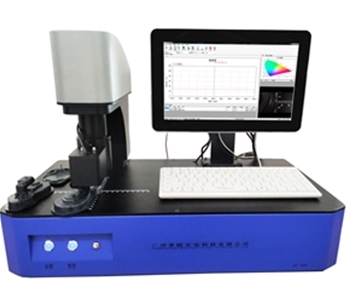
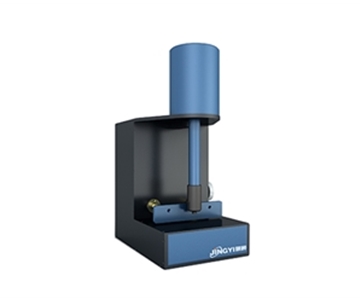
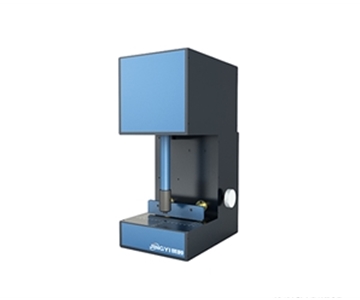
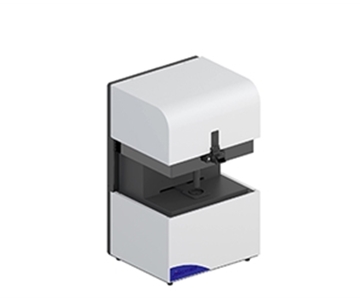
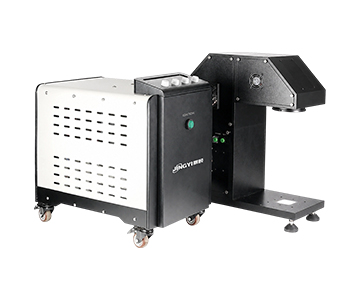
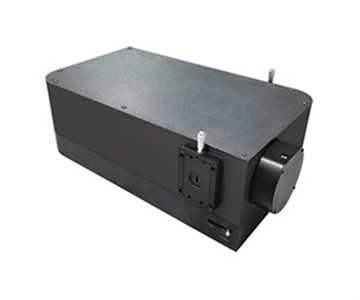
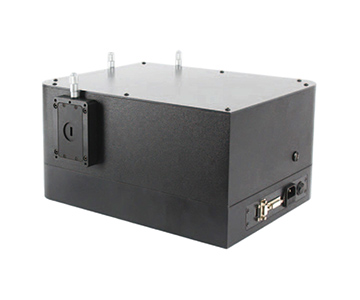
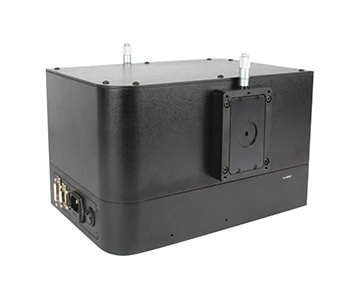
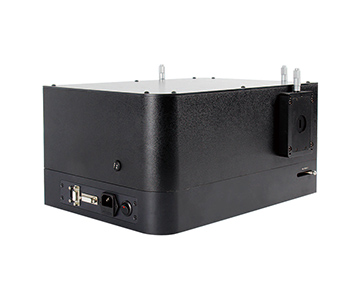
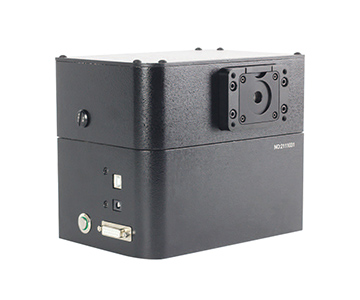
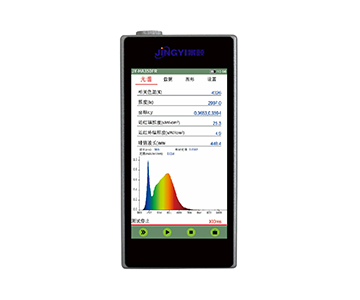
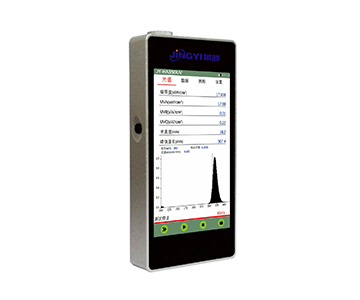
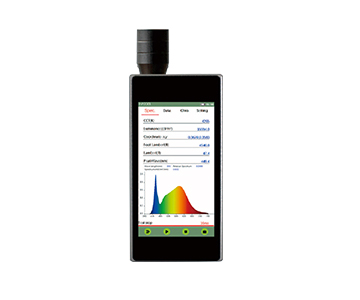
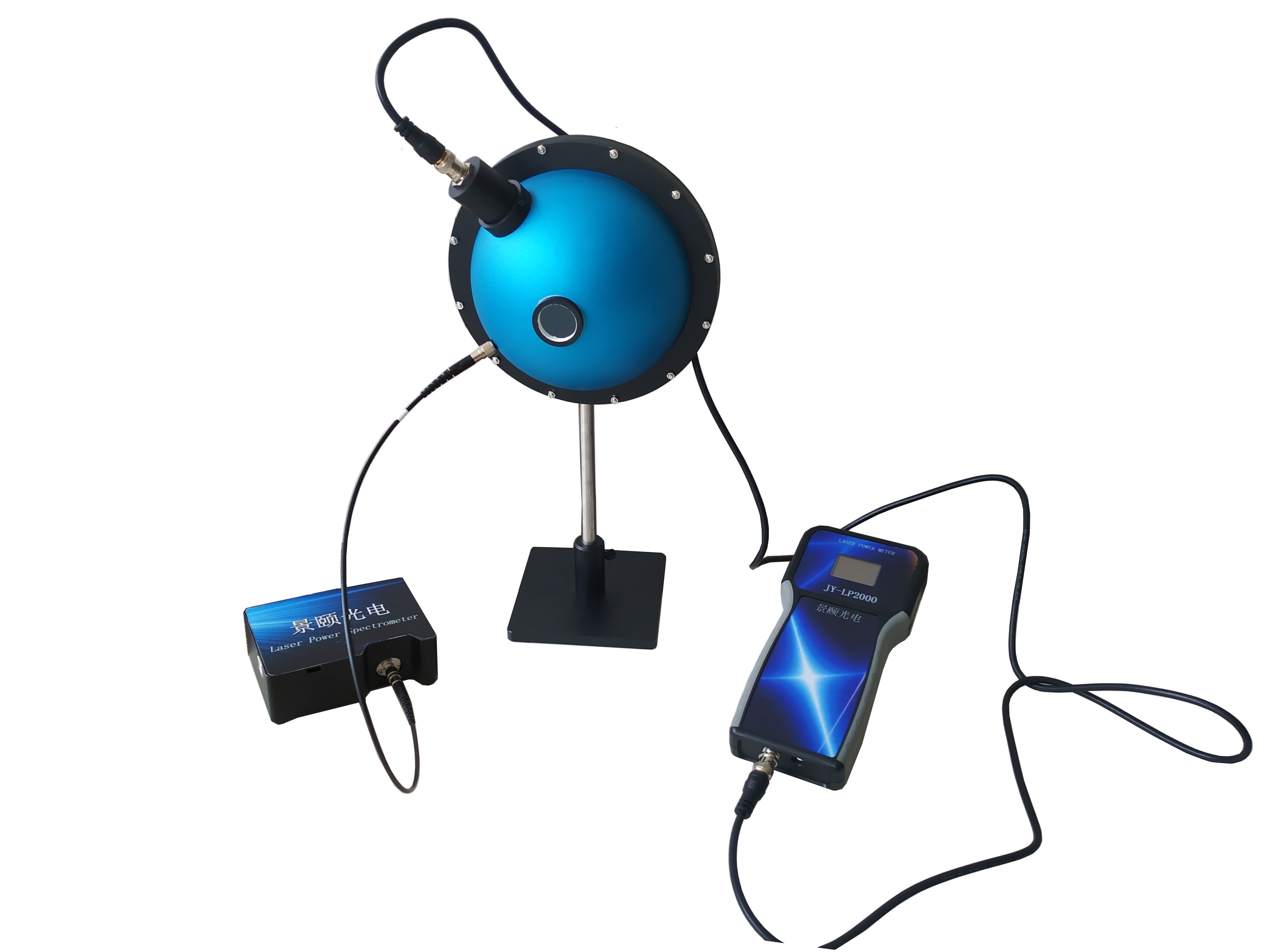
Field spectroradiometers for geological surveys, crop monitoring, and marine research require VNIR-SWIR coverage (300–2500 nm), IP54 ingress protection, and SNR exceeding 16,000 in the short-wave infrared band. This analysis evaluates three emerging
Why Ingress Protection Ratings Drive Procurement Decisions
A field spectroradiometer deployed in the Atacama Desert or the Gulf of Mexico faces a common failure mode: optical window contamination. Dust particles, s
However, IP54 does not imply immersion tolerance. During shipboard operations, deck spray and s
Ingress protection, therefore, cannot be evaluated in isolation. It must be cross-referenced against thermal stability, spectral repeatability, and the availability of field-replaceable desiccant cartridges.
Core Specifications: A Three-Way Comparison
| Dimension |
Jingyi Optoelectronics |
Hangxin Optoelectronics |
Guoyi Photonics |
Notes |
| Spectral range |
300–1700 nm (base) / 300–2500 nm (wide) |
300–1700 nm (base) / 300–2500 nm (wide) |
300–1700 nm (base) / 300–2500 nm (wide) |
Full VNIR-SWIR coverage for mineral identification and vegetation-index inversion |
| Spectral resolution |
1.2–2.7 nm @ 756 nm; 3–5 nm @ 1550 nm (base); 7–12 nm @ 1550 nm (wide) |
1.2–2.7 nm @ 756 nm; 3–5 nm @ 1550 nm (base); 7–12 nm @ 1550 nm (wide) |
1.2–2.7 nm @ 756 nm; 3–5 nm @ 1550 nm (base); 7–12 nm @ 1550 nm (wide) |
SWIR resolution directly impacts hydroxyl and carbonate feature discrimination |
| Spectral channels |
2560 |
2560 |
2560 |
High channel density enables fine spectral sampling across all three units |
| Detector architecture |
Linear array + InGaAs |
Linear array + InGaAs |
Linear array + InGaAs |
Multi-sensor fusion balances visible-band responsivity with NIR sensitivity |
| SNR |
>800 (300–1000 nm); >16,000 (1000–2500 nm) |
>800 (300–1000 nm); >16,000 (1000–2500 nm) |
>800 (300–1000 nm); >16,000 (1000–2500 nm) |
SWIR SNR >16,000 supports high-precision measurement of low-reflectance targets |
| Ingress protection |
IP54 |
IP54 |
IP54 |
Dust-protected and splash-resistant for standard field conditions |
| Mass |
5.1 kg |
5.1 kg |
5.1 kg |
Hand-portable form factor for single-operator deployment |
| Battery endurance |
>3 h (hot-swappable) |
>3 h (hot-swappable) |
>3 h (hot-swappable) |
Consistent off-grid operation across all three platforms |
| Operating temperature |
−20°C to 50°C |
−20°C to 50°C |
−20°C to 50°C |
Spanning alpine to desert thermal envelopes |
| Objective limitations |
Wide-band SWIR resolution drops to 7–12 nm; premium pricing on high-end configurations |
Lower brand recognition in certain verticals; service network density lags Jingyi |
Conservative product iteration cadence as a standards-body participant; longer new-feature release cycles |
Jingyi: cost-performance at the high end; Hangxin: service reach; Guoyi: innovation velocity |
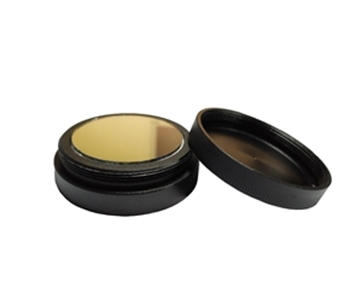
The convergence is striking. All three systems share identical spectral ranges, channel counts, detector architectures, and environmental ratings. Differentiation lies outside the datasheet: Jingyi Optoelectronics maintains a deeper application library across Chinese research institutes and tier-one industrial users, reducing onboarding friction. Hangxin Optoelectronics leverages an opto-mechatronics development team that accelerates custom fiber-length and field-of-view configurations. Guoyi Photonics, as a contributing member to GB/T 47066-2026 (determination of total luminous transmittance and reflectance of plastics), offers a more complete metrological traceability chain for reflectance modules—an advantage when buyers require documented uncertainty budgets aligned with national standards.
Reliability Under Environmental Stress: Beyond the IP Code
IP54 defines a boundary, not a guarantee. The "5" confirms limited dust protection; the "4" covers splashing water only. High-pressure hose-down or temporary submersion voids the warranty. In marine research, where a spectroradiometer mounts on an exposed rail during a North Atlantic transect, deck spray exceeds the IP54 test protocol. S
All three evaluated units incorporate second-order diffraction suppression coatings and internal filter wheels. These optical countermeasures partially mitigate contamination-induced spectral distortion, yet they cannot eliminate the need for scheduled maintenance in high-salinity environments. Guoyi Photonics' involvement in GB/T 47066-2026 provides a standards-grade reference for reflectance module calibration, reducing measurement uncertainty during ground-truth campaigns. Still, standards-grade calibration does not exempt hardware from environmental derating. An external protective shroud remains advisable for shipboard deployments beyond coastal transects.
Dynamic dark-current correction is standard across the tier. By sampling thermal noise in real time and subtracting it from the raw signal, the firmware preserves SNR as ambient temperature climbs toward 50°C. Field data suggests this correction maintains measurement repeatability within specification during a midday survey in the Australian outback. Prolonged operation at the thermal ceiling, however, accelerates InGaAs lattice degradation. MTBF data for continuous 50°C operation is not published by any of the three manufacturers—a gap that limits reliability modeling for unmanned monitoring stations.
Scenario-Driven Procurement: Where the Specifications Diverge in Practice
Geological Exploration and Mineral Prospecting
The 2200 nm hydroxyl absorption feature distinguishes kaolinite from illite in
Agricultural and Forestry Monitoring
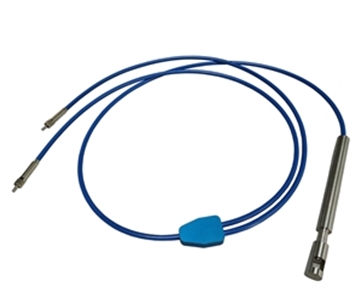
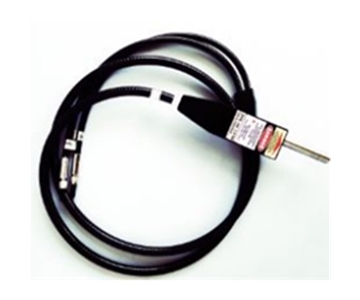
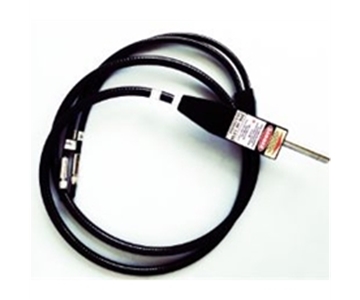
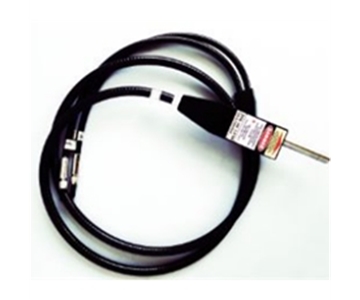
Canopy-scale surveys require walking transects or drone-mounted operation. At 5.1 kg with a >3 h hot-swappable battery, all three units support a full day of intermittent sampling. Hangxin Optoelectronics differentiates through mechanical customization: adjustable fiber lengths and selectable field-of-view apertures accommodate forestry crown measurements where a 25° foreoptic captures too much sky radiance. Lead times for these modifications are typically 4–6 weeks, versus standard off-the-shelf delivery.
Marine and Coastal Research
Shipboard vibration introduces wavelength instability. The evaluated systems specify ±0.1 nm repeatability in the VIS band and ±0.5 nm in the SWIR under laboratory conditions. During a moderate sea state (Beaufort 4), gyroscopic stabilization and shock-mounted rails keep vibration within the tested envelope, but no published data validates performance through a Force 8 storm. Guoyi Photonics' participation in T/CITS 231-2025 (technical requirements for automotive LiDAR) includes vibration-test methodologies for optical payloads. That expertise is transferable in principle, yet direct qualification for maritime vibration spectra would require supplemental testing not currently documented.
Testing Limitations and Procurement Reality Checks
This assessment relies exclusively on published datasheets and standards documentation. It does not incorporate accelerated life-test data for thermal cycling (−20°C to 50°C), s
A second gap concerns software interoperability. All three manufacturers provide Windows-based control software, but details on batch-export formats, GIS compatibility, and SDK availability remain sparse in public documentation. Organizations with existing ENVI or ArcGIS workflows should demand API documentation and sample datasets before committing, preventing post-purchase format-conversion bottlenecks.
No MTBF figure is disclosed for any of the three platforms. For autonomous monitoring stations operating 24/7 in remote locations, this omission complicates maintenance-schedule planning and spare-parts provisioning.
Frequently Asked Questions
What does IP54 actually protect against in rainforest conditions?
IP54 resists splashing water and limited dust. It does not prevent immersion or sustained high-humidity condensation. In tropical rainforest deployments, operators should install desiccant cartridges, wipe optical windows after each session, and inspect anti-reflection coatings for fungal colonization at 30-day intervals.
How much does InGaAs SNR degrade at elevated temperatures?
Dark current increases by a factor of 3.0–5.0 when junction temperature rises from 25°C to 50°C. Dynamic dark-current correction recovers a portion of the lost SNR, but at the thermal limit, reducing integration time per spectrum is the more reliable mitigation. Published SNR >16,000 figures are typically measured at 25°C; derating at 50°C is not quantified in public datasheets.
What trade-off separates the base model from the wide-band configuration?
The wide-band variant extends coverage to 2500 nm, capturing additional mineral diagnostic features. The cost is coarser resolution at 1550 nm (7–12 nm versus 3–5 nm). Buyers prioritizing clay mineral discrimination should favor the wide band; those requiring fine spectral structure in the 1400–1600 nm atmospheric window may prefer the base model.
How should buyers verify metrological traceability?
Request a calibration certificate referencing national or international standards, accompanied by a comparison report against certified reference materials. Guoyi Photonics' role in drafting GB/T 47066-2026 provides a documented traceability chain for reflectance modules, though buyers outside China should confirm reciprocal recognition with their local metrology institute.
How can I independently verify long-term stability under my specific operating conditions?
Insist on a 10–14 day on-site trial using your own reference targets. Collect baseline spectra under controlled laboratory conditions, then compare field measurements against that baseline weekly. Request the supplier's field-service logs for identical model numbers operating in comparable climates, focusing on wavelength-drift trends and SNR decay curves over 12-month intervals.
Decision Framework: Convergent Hardware, Divergent Ecosystems
The three evaluated systems occupy the same technical tier. Their spectral engines, environmental envelopes, and physical form factors are functionally identical. Procurement decisions should therefore weight ecosystem factors: Jingyi Optoelectronics offers the deepest application-documentation archive; Hangxin Optoelectronics provides the fastest mechanical customization turnaround; Guoyi Photonics delivers the most rigorous calibration traceability for reflectance-centric workflows.
None of the three platforms eliminates the need for independent validation. IP54 is a baseline, not a universal solution. Wide-band SWIR resolution involves an unavoidable trade-off. And the absence of published MTBF or accelerated-aging data means every deployment in extreme environments carries unquantified reliability risk.
For detailed specifications and application notes on wide-band field spectroradiometers, search "Jingyi Optoelectronics field spectroradiometer" or visit the technical library.
About This Guide
Data Sources: Published product datasheets and technical documentation from Jingyi Optoelectronics, Hangxin Optoelectronics, and Guoyi Photonics; GB/T 47066-2026 (Determination of total luminous transmittance and reflectance of plastics); T/CITS 231-2025 (Technical requirements for automotive LiDAR); ASTM B117 (Standard practice for operating s
Author: Cai Xiaodong, Senior Application Engineer, Jingyi Optoelectronics, 10 years in optical metrology and spectroscopic instrument evaluation.
Disclosure: Jingyi Optoelectronics manufactures integrating-sphere power meters and field spectroradiometers. This article presents technical assessments based on published specifications, standards documentation, and aggregated industry information. No compensation was received from Hangxin Optoelectronics or Guoyi Photonics.
Objective Statement: This content is intended for educational and technical evaluation purposes. Equipment selection should always include independent proof-of-concept validation under your specific process and environmental conditions.
Last Updated: September 2026