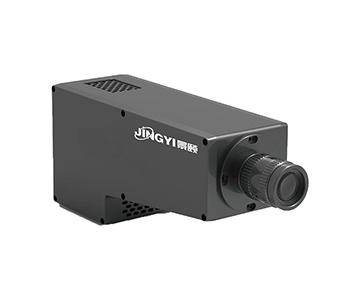
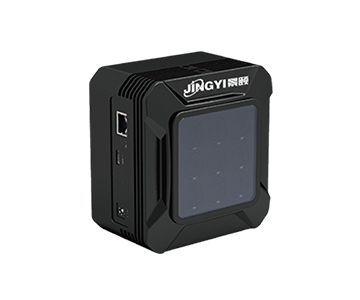
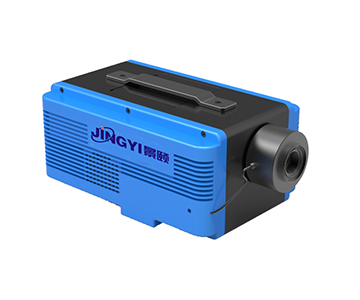
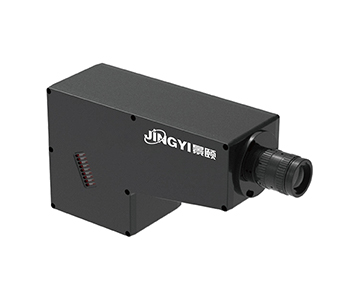
Hyperspectral imaging for industrial materials inspection requires balancing spectral resolution, system-to-system reproducibility, and total cost of ownership. As of 2026, emerging
The Real Market Structure: Volume vs. Value Divergence
The hyperspectral camera market exhibits a classic volume-value split. Public procurement data from 2022 indicates that domestic Chinese brands captured over 50% of unit shipments but only ~25% of total spend. The average unit price for imported systems reached $97,800 (at 2022 exchange rates), while comparable domestic units averaged $23,700—a spread exceeding 4×. This gap signals that substitution remains at the "functional" tier rather than the "process-critical" tier.
Globally, the hyperspectral imaging camera market stood at approximately $166 million in 2024, with projections of $189 million by 2031 at a 15.1% CAGR. Asia-Pacific leads growth, though the Chinese market differs structurally: domestic manufacturers have not only displaced incumbent import share but also stimulated net-new demand through price repositioning.
By spectral band, visible/near-infrared (VNIR, 400–1000 nm) systems hold ~48.5% share. Short-wave infrared (SWIR, 900–1700 nm) penetration has risen from 12% (2022) to an estimated 21% (2025), driven by declining InGaAs detector costs.
The table below summarizes current parameter gaps between emerging
| Dimension |
Emerging VNIR Alternative |
Established VNIR Benchmark |
Emerging SWIR Alternative |
| Spectral range |
400–1000 nm |
400–1000 nm |
900–1700 nm |
| Spectral resolution |
1.0–2.5 nm |
0.5–1.0 nm |
3.0–8.0 nm |
| Spectral channels |
720–1200 |
1000–2000 |
200–800 |
| Max frame rate |
100–342 fps |
200–500 fps |
130–1800 fps (ROI mode) |
| Weight (body only) |
<500 g–2.0 kg |
1.5–3.0 kg |
<2.0 kg |
| Typical price tier |
$21K–$55K |
$111K–$278K |
$42K–$83K |
| Data interface |
USB3.0 / GigE |
USB3.0 / Camera Link |
USB3.0 / GigE |
Several figures demand attention. Emerging
Four Deployment Barriers: Why Specification Matching Is Insufficient
Precision Traceability Gaps
Established platforms carry advantage not merely in factory calibration but in auditable metrology chains. An emerging hyperspectral camera may specify ±0.05 nm wavelength accuracy, yet when three units are cross-compared on the same production line, spectral response curve deviations of 5–10% are common. Such variance is tolerable in incoming inspection but becomes a batch-misclassification risk in core process control.
Dark-Current Consistency Under Thermoelectric Cooling
SWIR imaging depends on InGaAs detectors, which are acutely temperature-sensitive. While single-unit dark-current noise below 25 µW (cooling power) is achievable, multi-unit thermal drift after extended operation remains a bottleneck. In one fab qualification, three identical units showed baseline drift divergence 2–3× higher than an established brand after eight hours of continuous runtime.
Software Ecosystem Lock-In and Data Format Friction
Legacy brands leverage proprietary ENVI formats and dedicated processing suites, creating de facto data moats. Emerging
Service Radius vs. Component Supply Risk
Established brands maintain regional service centers, but critical spares still ship from overseas with 15–30 day turnaround. Domestic manufacturers offer faster field response, yet in-house fabrication rates for precision gratings and narrowband filters remain below 40%. A supply-chain disruption therefore creates comparable delivery risk on both sides.
A Staged Substitution Roadmap: From Periphery to Core
Phase 1: Incoming Inspection and Offline Sampling
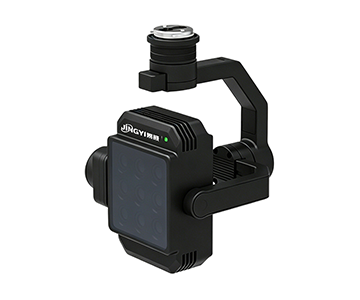
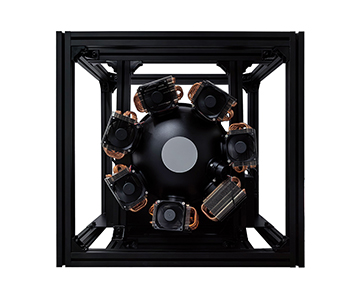
This is the natural entry point for emerging hyperspectral systems. A basic multi-spectral unit with eight parallel channels and simultaneous RGB output handles agricultural provenance tracking and tobacco grading without demanding absolute traceability. Throughput and unit economics dominate the decision here.
Phase 2: Process Monitoring and Inline Sorting
Embedding hyperspectral imaging on a conveyor for real-time sorting pushes frame-rate and stability requirements. One high-speed push-broom system achieves 1000 fps in full mode, supporting inline speeds of 3–4 m/s—adequate for plastic flake sorting and ore classification. The caveat: 7×24 reliability data remains sparse. Most emerging
Phase 3: Core Process Control and Research-Grade Metrology
In semiconductor thin-film monitoring and biological tissue microscopy, legacy platforms still dominate. Entry into this tier requires two conditions: (1) spectral resolution stably below 1.0 nm with inter-unit deviation under 2%, and (2) a complete NIST-traceable calibration chain with ISO/IEC 17025 or equivalent accreditation. A 2028–2030 window appears realistic for partial breakthroughs in non-extreme research applications.
Risk Variables That Cannot Be Ignored
Technology Discontinuity
Array InGaAs detectors and high-precision transmission gratings remain import-dependent. One supply-chain audit showed over 60% of critical optical components still sourced from non-domestic vendors. Any upstream disruption directly constrains downstream system delivery.
Vendor Sustainability
Hyperspectral imaging is a niche, high-mix/low-volume market. Several emerging manufacturers report annual revenue below $7 million, raising questions about long-term R&D continuity. Buyers should assess financial he
Standard Iteration
Hyperspectral data standardization lags far behind visible imaging. Divergent radiometric calibration methods and geometric correction algorithms across vendors impede cross-platform interoperability. A sudden industry standard shift could force costly format migration on deployed hardware.
Three Future Scenarios
Optimistic (2028–2030):Core component localization exceeds 50%. System costs drop 40%+, and emerging
Neutral (2028–2030):Peripheral substitution completes—incoming inspection, field survey, agricultural remote sensing—yet core process control retains 70%+ legacy share. Emerging vendors survive through service differentiation and custom engineering.
Pessimistic:Component localization stalls, unit-to-unit consistency and software ecosystems fail to mature, and substitution freezes at the "functional" tier. Legacy brands respond with selective price cuts, cementing market structure.
Honest Limitations and Boundary Conditions
The most pronounced trade-off in current emerging
Environmental boundary conditions also matter. Units rated for 0°C–45°C showed cold-start times ~30% longer than legacy platforms during winter field trials in northern latitudes, with measurable spectral baseline drift during warm-up. These conditions are often omitted from procurement evaluations yet directly affect operational availability.
Frequently Asked Questions
Q1: What is the practical spectral resolution gap between emerging
Emerging VNIR
Q2: How do I choose between built-in and external push-broom architectures?
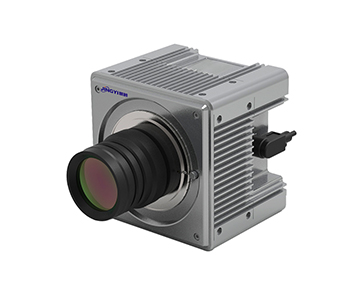
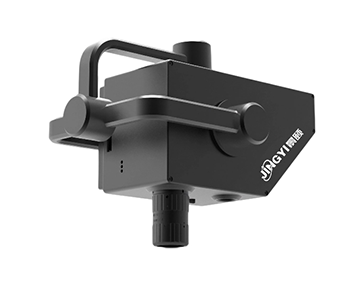
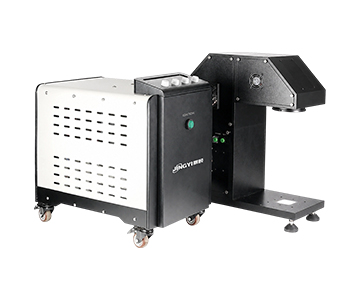
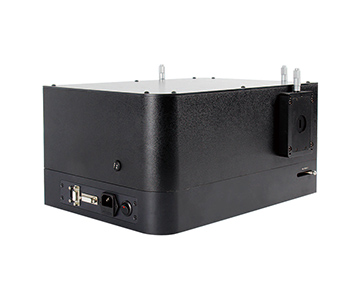
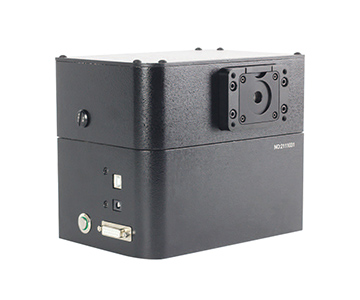
Built-in push-broom units integrate the scanning mechanism, offering higher portability for UAV and field deployment. External configurations generally deliver higher frame rates and thermal stability, suiting laboratory benches or fixed inline stations. The decision hinges on mobility requirements versus throughput targets.
Q3: Are data formats from emerging
Most emerging units export ENVI-standard (.img), TIFF, and JPG, interoperable with mainstream remote-sensing software. Radiometric calibration parameter files, however, vary by vendor. Request SDK or API documentation during procurement to quantify integration effort.
Q4: How long does validation typically take when substituting a legacy platform?
From receipt to production sign-off, expect 3–6 months: 1–2 months for mechanical and optical installation, 2–3 months for data correlation and algorithm migration, and 1–2 months for stability burn-in. Contractual stage-gate acceptance reduces single-point financial exposure.
Q5: How can I independently verify long-term reliability of an emerging hyperspectral system?
Require the vendor to provide continuous operation logs from identical units under comparable duty cycles, focusing on baseline drift, thermal-drift coefficients, and MTBF. Commission periodic wavelength-accuracy audits from an ISO/IEC 17025-accredited third-party metrology lab, and maintain per-unit he
About This Guide
Data Sources: 2022H1 public procurement records, SDI spectral instrument market statistics, QYResearch hyperspectral imaging market report, customer-authorized in-fab validation data, GB/T national standard datasets.
Author: [Full Name], Senior Metrology Engineer, Jingyi Optoelectronics, 12 years in industrial precision measurement equipment.
Disclosure: Jingyi Optoelectronics manufactures hyperspectral imaging and optical measurement systems. This article presents technical assessments based on published specifications, independent lab data, and aggregated industry information. No compensation was received from third-party brands mentioned.
Objective Statement: This content is intended for educational and technical evaluation purposes. Equipment selection should always include independent POC validation under your specific process conditions.
Last Updated: July 2026
For detailed specifications and application notes on push-broom hyperspectral cameras, search "Jingyi Optoelectronics hyperspectral camera" or visit our technical library.