Selection and Customization Logic for Industrial Camera Calibration Targets
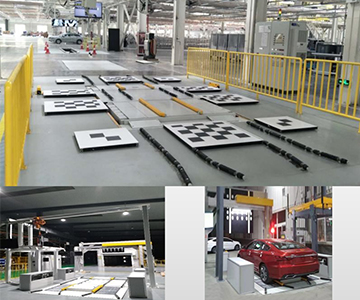
As the core reference tool for calibrating imaging system performance, the accuracy and compatibility of industrial camera calibration targets directly determine the final precision of image recognition and parameter calibration. From color fidelity calibration of smartphone cameras to joint calibration of multi-sensor systems in autonomous driving, many R&D and quality control teams have encountered pitfalls due to improper target selection—either insufficient accuracy rendering test data invalid, or inappropriate substrate choice causing deformation or glare under special environmental conditions, thereby delaying R&D cycles or mass production. To address this widespread challenge, Jingyi Optoelectronics—drawing on years of technical expertise in optical inspection—has developed a practical, reusable logic for selecting and customizing industrial camera calibration targets, enabling customers across diverse industries to rapidly identify optimal solutions.
**The Primary Criterion for Selection**
The foremost step is to clearly define your specific testing requirements, then match them precisely with the appropriate calibration target pattern:
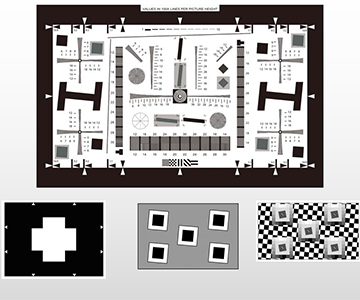
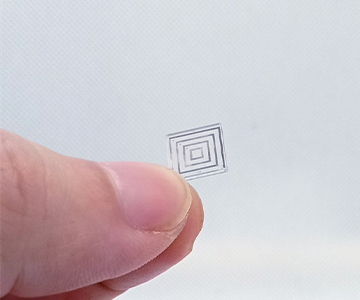
- For evaluating theoretical optical resolution, MTF, and similar parameters—especially in microscopy systems or high-end optical instruments—the USAF 1951 standard calibration target is recommended. Leveraging its proprietary high-precision photolithography process, Jingyi Optoelectronics achieves industry-leading coverage of up to 9 groups × 6 elements, fully satisfying rigorous theoretical resolution verification needs.
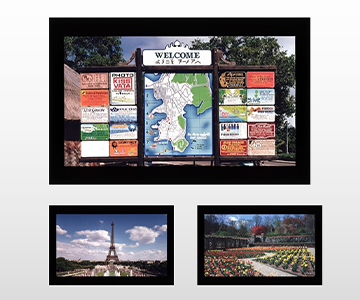
- For image quality assessment in consumer electronics and digital cameras, ISO 12233-compliant targets—including 2000-line or 4000-line variants—and Slanted-Edge (SFR) targets accurately quantify lens sharpness. MTF values derived from Edge Spread Function (ESF) calculations exhibit measurement error controlled within ±1%.
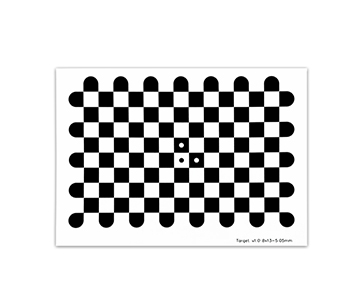
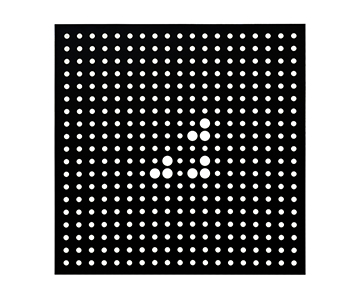
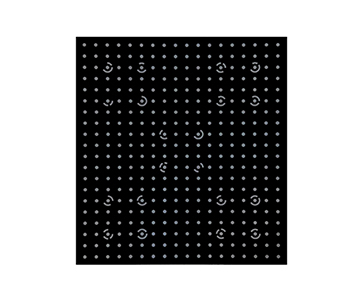
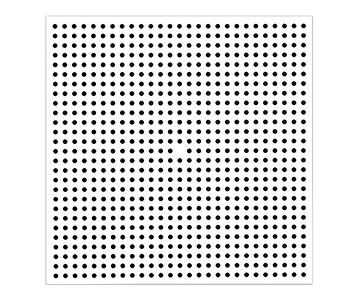
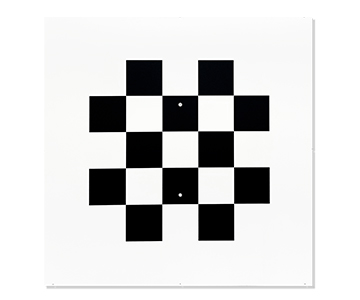
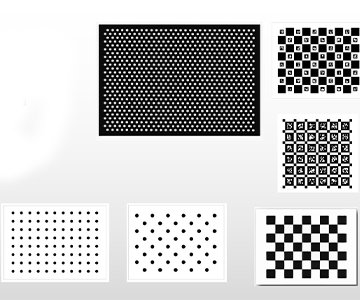
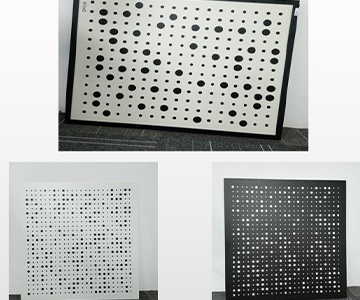
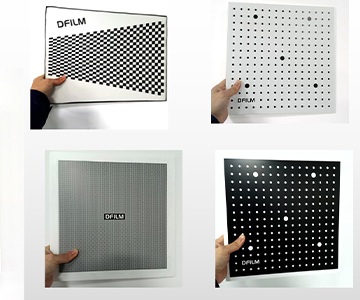
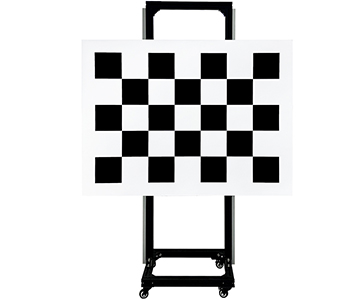
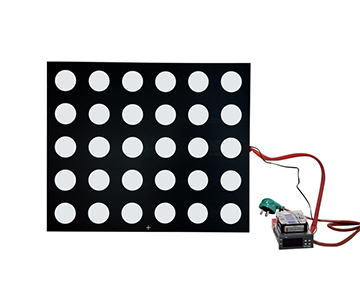
- For distortion correction and camera intrinsic/extrinsic parameter estimation—common in general industrial vision metrology or UAV aerial imagery rectification—checkerboard-pattern targets are widely applicable. Where sub-pixel localization accuracy is critical—such as in semiconductor wafer inspection or LiDAR-camera fusion calibration—dot-pattern targets demonstrate over 30% higher recognition stability compared to checkerboards.
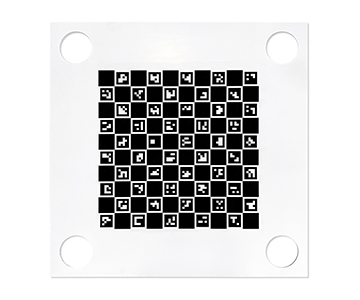
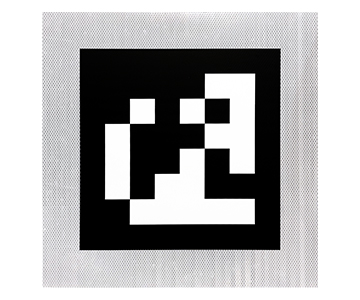
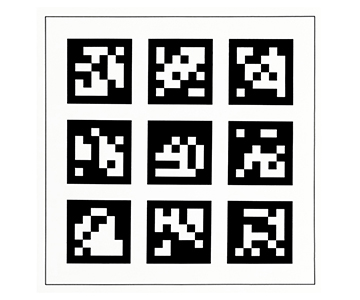
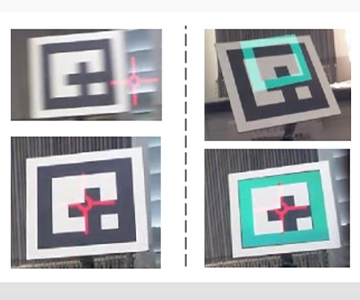
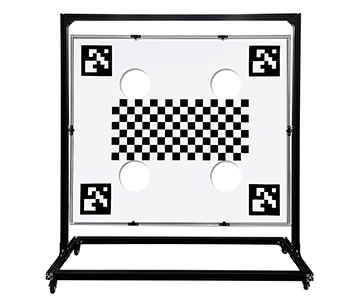
- For complex multi-sensor fusion calibration, ChArUco or AprilGrid targets—integrated with AprilTag encoding—enable robust global coordinate reconstruction even when parts of the pattern are occluded, significantly improving calibration efficiency for autonomous vehicles and UAVs.
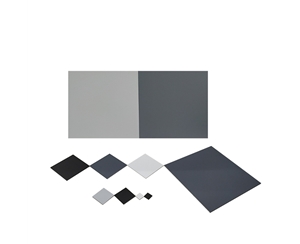
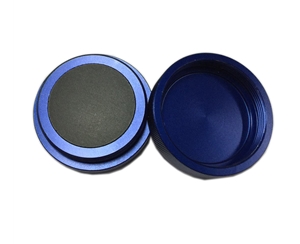
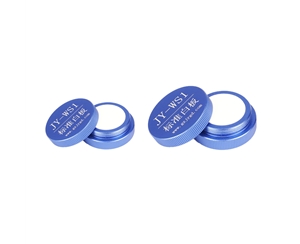
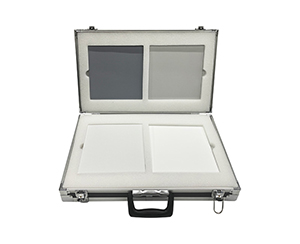
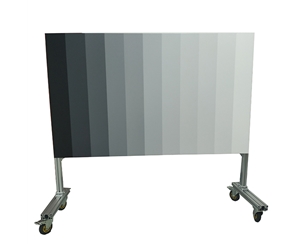
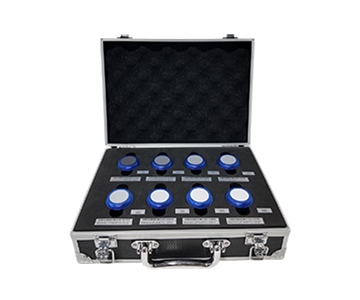
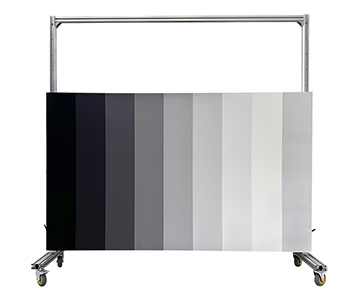
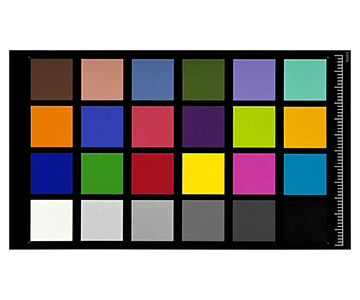
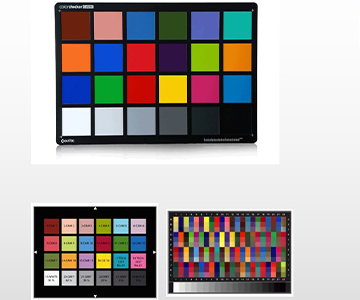
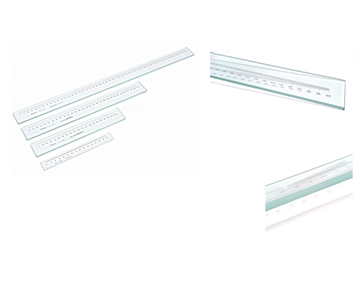
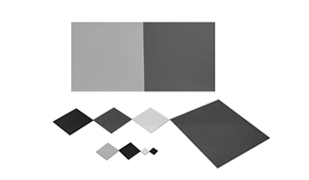
- Additional specialized targets are available for depth-of-field evaluation (depth rulers), grayscale linearity (multi-step grayscale charts), and color fidelity calibration (24-patch standard color charts), comprehensively covering all routine testing scenarios.
**Substrate and Fabrication Process Selection**
Once the pattern type is determined, the second critical step is selecting the optimal substrate and fabrication process based on lighting conditions and environmental parameters—key to preventing calibration failure:
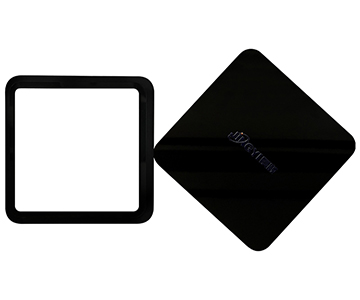
- For *transmissive* applications with backlighting—e.g., laboratory lens testing or endoscope calibration—glass-based targets are preferred. Fused quartz substrates offer >95% transmittance across UV–visible wavelengths, excellent refractive index uniformity, and an ultra-low thermal expansion coefficient of just 0.5×10⁻⁶/K. A 1-meter-long fused quartz target thus exhibits only ~0.6 μm dimensional change per 1°C temperature fluctuation—far more stable than soda-lime glass. Jingyi’s chrome-coated fused quartz targets achieve minimum line widths down to 0.5 μm, with positional accuracy maintained within ±5 μm—ideal for high-precision calibration under demanding conditions.
- For large-format transmissive setups—e.g., mass-production calibration of automotive stereo cameras—a film-on-glass hybrid substrate offers superior cost-effectiveness. While less expensive than pure photolithographic glass, it retains ±15 μm accuracy and supports dimensions up to 1.5 m × 2.6 m.
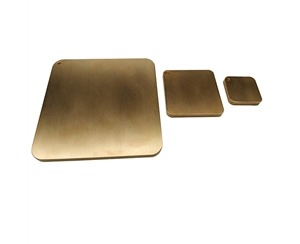
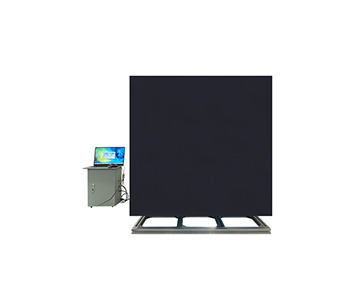
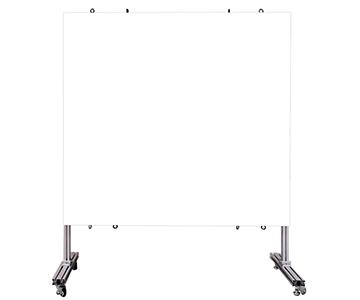
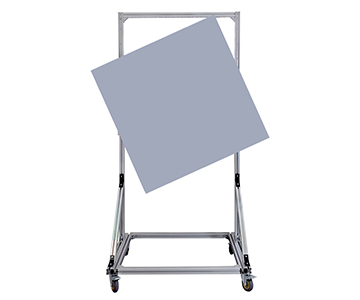
- For *reflective* applications with front illumination—e.g., outdoor security camera deployment or road-testing calibration for autonomous vehicles—matte ceramic or carbon fiber substrates provide superior suitability. Matte ceramic minimizes specular reflection, eliminating glare-induced recognition interference; carbon fiber delivers lightweight construction with outstanding high-temperature resistance and corrosion immunity. Jingyi’s carbon fiber targets scale up to 1.5 m × 2.6 m, meeting wide-field-of-view sensor calibration demands.
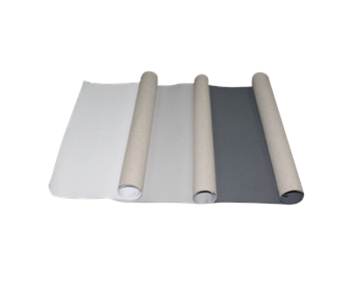
- For temporary testing or budget-constrained projects, matte photo paper or color film substrates offer low-cost alternatives, supporting ultra-large formats up to 1.6 m × 30 m—and can be pre-laminated with adhesive backing for flexible mounting.
**Custom Development Solutions**
When off-the-shelf targets fall short of unique application requirements, Jingyi Optoelectronics provides tailored development services—for instance: pre-distorted patterns, wavelength-specific reflectance specifications, non-standard shapes, or precision-machined alignment holes. Examples include:
- Blue-chrome coated targets engineered for backlit environments: achieving just 1.8% reflectance at 650 nm and optical density >4.5 to suppress glare interference.
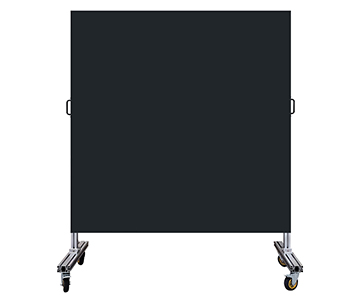
- Pattern variants optimized for distinct algorithmic recognition logic—e.g., dark-pattern-on-light-background versus light-pattern-on-dark-background—offering identical precision and dimensions at nearly identical cost.
To date, Jingyi Optoelectronics has delivered customized industrial camera calibration targets to over 1,000 clients across consumer electronics, intelligent driving, semiconductor inspection, and academic research institutions. From initial consultation through end-to-end manufacturing and delivery, we ensure every target’s accuracy and substrate selection align precisely with real-world operational needs—minimizing downstream measurement errors and elevating overall R&D and production efficiency.
#IndustrialCameraCalibrationTarget #RobotCalibrationTarget #ComputerVisionCalibrationTarget #IndustrialRecognitionCalibrationTarget #VisionRecognitionCalibrationTarget #CalibrationTarget