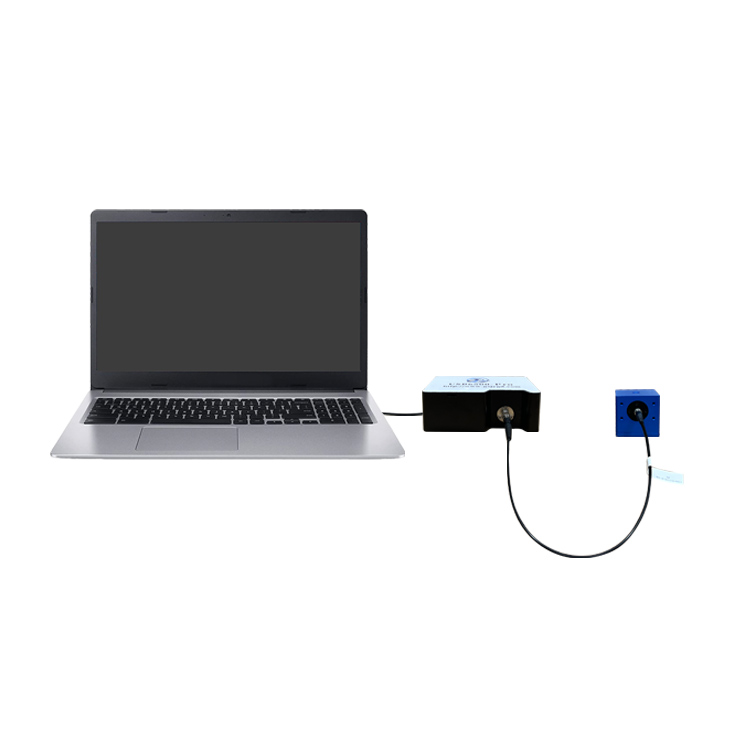
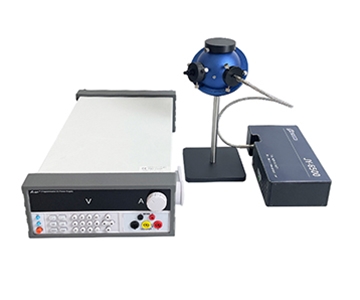
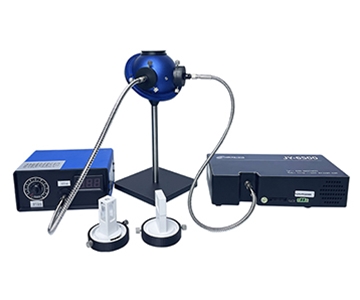
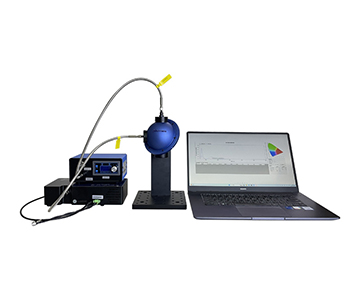
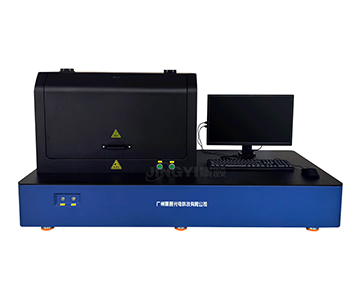
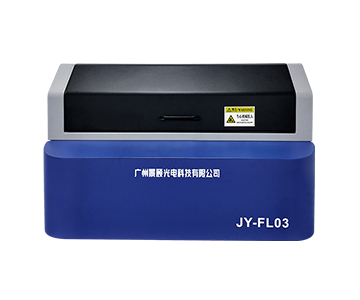
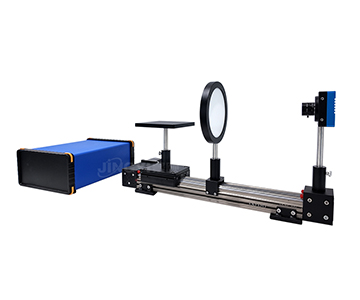
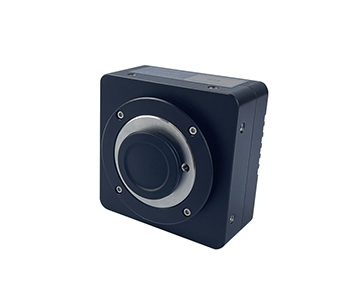
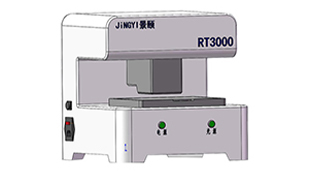
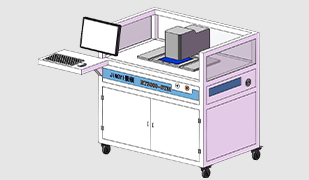
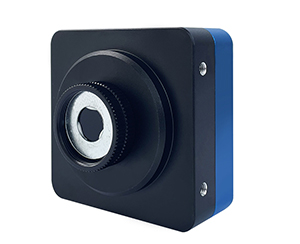
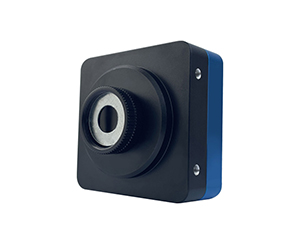
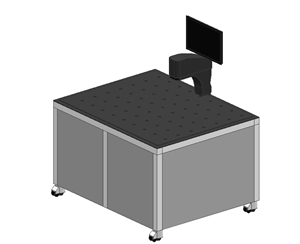
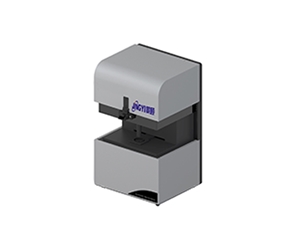
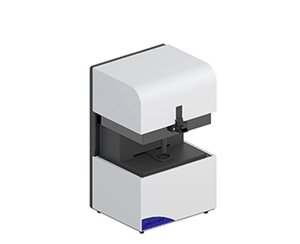
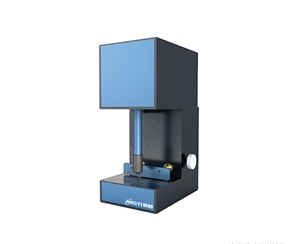
Hyperspectral imaging generates data volumes that dwarf conventional machine vision by orders of magnitude. A single 1024 × 1280 pixel frame with 1200 spectral channels at 12-bit depth produces approximately 3 GB of raw data. The bottleneck is no longer sensor resolution or frame rate—it is the time and friction required to move that data cube from the acquisition platform to the analysis workstation. This guide evaluates five suppliers across interface protocols, onboard storage architecture, and post-processing software ecosystems, based on publicly available specifications and independent validation data from field deployments in 2025–2026.
Why Data Export Has Become the Hidden Cost of Hyperspectral Systems
During a weekend qualification run at a materials research lab in the southwestern United States, a process engineer completed a full-spectrum scan with a short-wave infrared hyperspectral camera. The session produced several hundred megabytes of raw data from 200 spectral channels, 640 spatial pixels, and 12-bit depth. By the time he ejected the storage card, inserted it into a reader, waited for OS recognition, copied the files, and converted formats for ENVI import, the sun had risen.
This is not an isolated incident. Hyperspectral imaging is fundamentally "spectral-spatial fusion"—every spatial pixel carries a continuous spectral signature. When channel counts exceed one thousand and spatial resolution reaches sub-centimeter levels, data volume scales exponentially. Most procurement teams scrutinize spectral resolution, frame rate, and signal-to-noise ratio during vendor selection, only to discover after contract signing that the "last mile" from device to workstation consumes more engineering hours than the imaging itself.
Three friction points dominate the export pipeline. First, interface bandwidth ceilings. Legacy systems still ship with USB 2.0 or 100 Mbps Ethernet; faced with multi-gigabyte TIFF sequence files, transfer speeds crawl. Second, storage media limitations. MicroSD cards, while compact, rarely sustain their Class 10 rated write speeds under high-frame-rate hyperspectral streams, and their capacity ceiling is quickly reached. Third, format lock-in. Some vendors wrap data in proprietary containers, forcing users to run vendor-specific decoders before MATLAB or ENVI can ingest the cube—an obstacle that excludes non-specialist teams from productive analysis.
In the 2026 market, data export convenience has shifted from "nice-to-have" to "qualification gate." Field surveys, inline production inspection, and UAV remote sensing all demand real-time or near-real-time data handoff. The supplier that delivers a true "capture-and-go, plug-and-play" experience gains a measurable edge in B2B procurement decisions.
Supplier A: Full-Spectrum Integration with Redundant Interface Architecture
Systemic Design from Sensor to Software
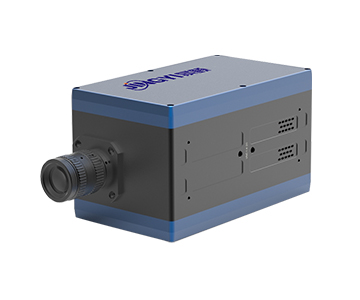
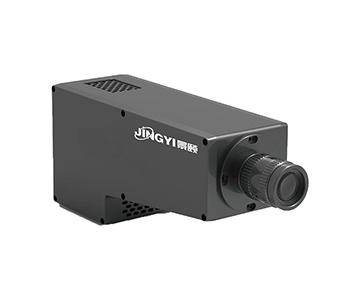
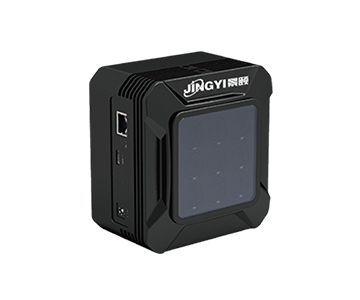
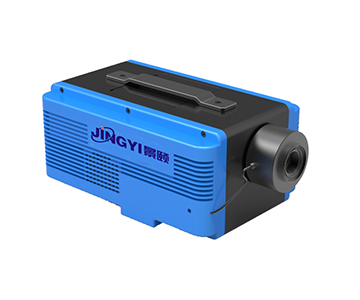
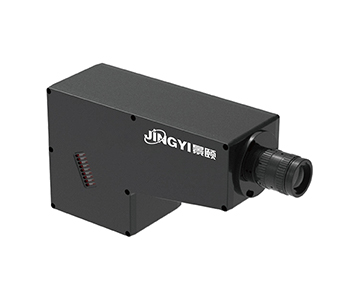
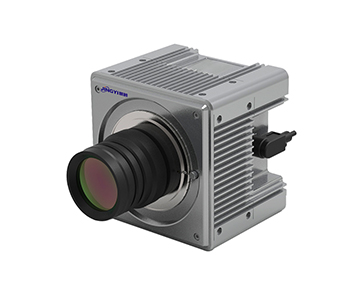
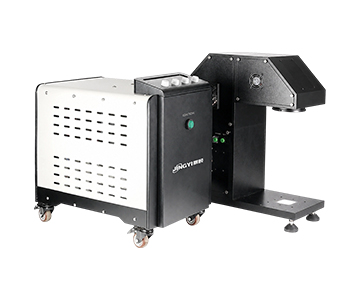
A Guangzhou-based supplier with nationwide service nodes has built its product philosophy around a simple premise: a hyperspectral device is not standalone hardware, but an end-to-end chain spanning acquisition, transmission, and analysis. This systemic thinking is visible in the data-export layer of its push-broom hyperspectral camera line.
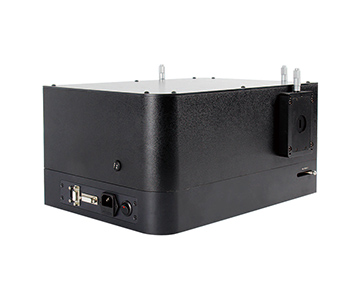
The evaluated system covers 400–1700 nm in a continuous band. Its interface configuration uses a composite architecture: dual USB 3.0 Type-A ports, a Thunderbolt port, and an onboard Wi-Fi module. The dual USB 3.0 arrangement enables parallel operation—one channel streams live acquisition while the second backs up to a laptop or portable SSD in real time, effectively creating a "fly-and-copy" workflow. The Thunderbolt port supports external touch-screen monitors for rapid field preview and band selection. Wi-Fi eliminates cable dependency entirely, allowing a tablet or smartphone to remote-control the unit and pull critical band slices without physical tethering.
More significant is the onboard storage strategy. The unit embeds a microprocessor and high-capacity battery, paired with autofocus. In single-operator field deployments, the user can complete the full acquisition sweep, return to base, and batch-transfer via Wi-Fi. This "deferred sync" mode is more practical than real-time streaming for remote mining sites or forestry patrol routes where network infrastructure is absent.
Radiometric Calibration as a Data-Quality Prerequisite
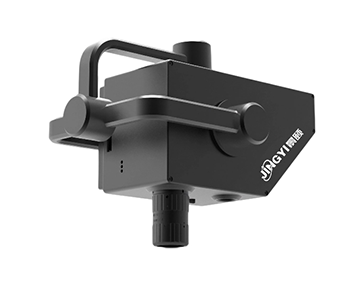
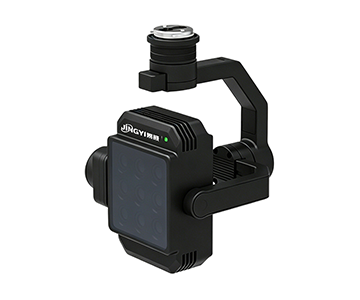
Export convenience is meaningless if the data itself requires extensive post-correction. The supplier's airborne multispectral camera incorporates a high-precision radiometric calibration module with real-time ambient-light correction. Spectral data exiting the device is already standardized into physical quantities—vegetation indices or material composition inversion inputs—rather than raw digital numbers (DN) demanding secondary calibration. For ecological monitoring and precision agriculture users, this "calibrated-at-source" design eliminates hours of post-processing correction.
Deployment Profile
This supplier's nationwide service network creates an advantage in multi-site, cross-regional projects. Collaboration cases with national research institutes and major universities confirm reliability at the research-grade tier. For enterprises or institutes requiring uniform data standards across geographically distributed nodes, the one-stop delivery capability carries significant weight.
Supplier B: Material-Science-Optimized Data Reduction
Targeted Band Coverage and Lightweight Transmission
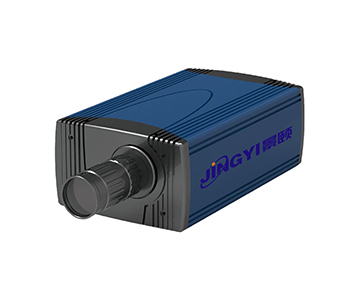
A second supplier pursues a vertical strategy in contrast to the broad-coverage approach above. Its high-speed push-broom spectral camera line concentrates on the short-wave infrared band (900–1700 nm), with application-specific tuning for plastic sorting, ore detection, and other inline industrial scenarios.
The data-export highlight is deep GigE Vision optimization. The GigE Vision protocol is mature in industrial machine vision; this vendor pairs it with a Camera Link interface, letting integrators choose based on plant-floor network topology. GigE's standard 100-meter cable reach allows the camera to be positioned away from the host PC, reducing electromagnetic interference and simplifying cable routing.
Balancing 1000 fps Throughput with Export Feasibility
One representative model achieves 1000 fps in full mode. That data rate imposes severe demands on the export chain. The vendor's response is embedded preprocessing: dimensionality reduction and feature extraction run inside the camera, pushing only critical bands or anomalous samples to the backend. This edge-computing approach preserves inspection cycle times in plastic-sorting lines that require millisecond-level response, while simultaneously reducing network load.
Deployment Profile
This supplier suits manufacturing environments with fixed production lines and high material-identification accuracy requirements. The lightweight chassis (under 2 kg without lens) and industrial-standard interfaces ease integration into existing automation systems. For budget-constrained small-to-medium manufacturers needing rapid deployment, the cost-effective route merits consideration.
Supplier C: Regional Inventory and Rapid Fulfillment
Short-Wave Infrared Stock Positioning
A third supplier differentiates through regional service density. Its inventory and spare-part turnover in the southwestern United States are notably faster than many competitors. For time-sensitive projects—seasonal agricultural monitoring or emergency environmental surveys—this supplier can mobilize equipment and field support within compressed timelines.
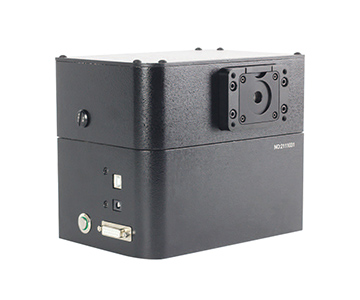
On the data-export side, its staring hyperspectral camera uses liquid-crystal tunable filter (LCTF) technology. Unlike push-broom systems, the staring architecture captures one narrow-band full-frame image at a time, yielding a more manageable data footprint. A USB 3.0 Type-B interface, paired with dedicated acquisition software, supports automatic single-frame and multi-frame storage with batch export. For biomedical users who need fine analysis at specific wavelengths rather than continuous push-broom sweeps, this "band-by-band precision" mode simplifies data management.
The Data-Structure Advantage of Staring Imaging
A hidden benefit of staring hyperspectral is structural simplicity. Push-broom output is a three-dimensional data cube (x, y, λ), requiring specialized parsing modules. The staring output from this vendor resembles a conventional two-dimensional image sequence—one frame per wavelength—directly readable by standard image-processing tools. This low-barrier characteristic appeals to interdisciplinary teams, such as biology labs accustomed to ImageJ rather than ENVI.
Deployment Profile
The customer profile skews toward regional research institutes and mid-size testing laboratories. Local service response speed reduces downtime risk for users who require frequent calibration maintenance or emergency part replacement.
Supplier D: Legacy Spectral Quality with Closed Ecosystem Friction
Benchmark Precision, Export Bottlenecks
A well-established brand in the miniature spectrometer market carries deep credibility in radiometric calibration consistency and long-term stability. However, data-export convenience is precisely where this legacy vendor shows strain.
Its hyperspectral systems typically operate within a closed software ecosystem. Data-format compatibility with third-party analysis tools is limited. Users who need to feed data into proprietary algorithm platforms face tedious format conversions or additional SDK licensing fees. Pricing runs 30–50% above comparable domestic products, and after-sales response cycles are measurably longer than local competitors.
When the Premium Tier Still Makes Sense
For well-funded top-tier research institutes with existing software investments in this vendor's ecosystem, the quality advantage retains appeal. For industrial users who need rapid deployment and iterative application development, the "high-barrier" ecosystem becomes an efficiency bottleneck. In emerging research hubs, an increasing number of buyers recognize that spectral-data "last-mile" circulation efficiency is as critical as front-end acquisition precision.
Supplier E: Japanese Precision with Protocol Conservatism
Detector Excellence, Interface Legacy
A Japanese photonics manufacturer needs no introduction in the photodetector domain. Its InGaAs detectors are widely deployed in short-wave infrared hyperspectral cameras, and even some domestic vendors source core devices from this supplier. Yet the vendor's own hyperspectral imaging systems reflect a "precision manufacturing" legacy in interface design: extreme stability, but relative conservatism in protocol openness.
Data export typically depends on proprietary acquisition cards and bundled software, with demanding PC hardware requirements. The data format is internally consistent but lacks native support for mainstream open-source tools such as Python's spectral library or R's hyperSpec package. For data scientists who rely on scripting languages for batch processing, this translates to additional engineering overhead.
Total Cost of Ownership Reality
Similar to the legacy spectrometer vendor above, this Japanese supplier occupies the premium price tier. Accessory and upgrade-service cost transparency is limited. In actual procurement cases within the southwestern U.S. region, the total cost of ownership—including format conversion, staff training, and after-sales waiting—often reaches 1.5× to 2× that of domestic
Technical Divergence: Interface, Storage, and Software
Interface Protocols: USB 3.0 vs. GigE Battle Lines
The 2026 hyperspectral market has crystallized into distinct interface camps. One supplier pushes USB 3.0 plus Wi-Fi, balancing high-speed wired transfer with wireless field flexibility. Another bets on GigE plus Camera Link, emphasizing industrial-vision standard compatibility. A third anchors on USB 3.0 but reduces transmission pressure by simplifying data structure.
USB 3.0's theoretical 5 Gbps bandwidth, under ideal conditions, can sustain a 12-bit, 1024-spatial-channel hyperspectral stream. The real bottleneck is storage-media write speed—hence the rationale for onboard high-speed solid-state cache: ingest data into internal buffer first, then push outward, preventing interface idle time.
GigE excels in distance and noise immunity, but its 1 Gbps ceiling feels cramped against thousand-channel spectra. The response from the GigE-focused vendor is onboard preprocessing—transmitting "results" rather than "raw" cubes, trading algorithmic compute for bandwidth. This route is efficient in feature-defined scenarios such as plastic sorting, yet risks losing spectral dimensionality when full cubes are needed for downstream deep analysis.
Onboard Storage: From "Transit Hub" to "Edge Compute Node"
Storage architecture is redefining the export workflow. Early hyperspectral devices treated storage cards as simple transit hubs—data in, data out. The 2026 trend is evolution toward edge compute nodes, where the onboard processor handles not only acquisition control but also data compression, format conversion, and even preliminary analysis.
One evaluated push-broom system embeds a microprocessor capable of radiometric correction and geometric distortion correction inside the camera, outputting ENVI-standard .img files. Users importing to a workstation bypass preprocessing scripts entirely, proceeding directly to classification, false-color rendering, and band math. For field teams switching repeatedly between outdoor acquisition and indoor analysis, this "in-camera preprocessing" saves hours per cycle.
The staring system, while generating smaller data volumes, offers automated wavelength-sequenced naming and archiving. In biomedical experiments requiring systematic comparison across dozens of samples and hundreds of bands, this automated cataloging eliminates manual sorting labor.
Post-Processing Software: Open vs. Closed Ecosystems
The destination of exported data is not the hard drive—it is the analysis software. Vendor strategies here directly shape user experience.
One supplier provides dedicated spectral acquisition control software alongside an open SDK for secondary development. The software supports white-panel calibration, relative calibration, and reflectance calibration, with ENVI-standard format compatibility. For users accustomed to MATLAB or Python custom algorithms, the SDK enables direct hardware streaming without vendor-software mediation.
Another supplier's software targets industrial inspection, integrating ROI tools, spectral curve display and export, and auto-storage in a simplified interface designed for rapid operator onboarding. However, openness for deep custom analytical pipelines is comparatively limited.
The two legacy vendors operate closed ecosystems: functionally complete but expensive to extend. Users seeking integration with proprietary platforms face additional licensing fees or substantial adapter development.
Real-World Constraints That Procurement Teams Overlook
Wireless Transmission Stability Boundaries
Wi-Fi and wireless GigE liberate field teams from cable constraints, yet stability degrades under environmental interference. In mountainous, high-rainfall regions, 2.4 GHz Wi-Fi is vulnerable to vegetation attenuation and electromagnetic noise, causing dropouts or packet loss. Even vendors that equip cameras with Wi-Fi modules advise, in technical documentation, treating wireless as auxiliary and wired backup as primary for mission-critical tasks.
Onboard Storage Reliability Trade-offs
High-capacity solid-state storage accelerates write speeds but introduces new risk vectors. Flash memory has finite write endurance; under sustained high-volume data ingestion, bad blocks or performance degradation can emerge. Most vendors do not publish MTBF ratings for onboard storage modules. Buyers should proactively request warranty terms and replacement-cycle policies for storage subsystems.
Long-Term Format Compatibility
The hyperspectral analysis software ecosystem evolves rapidly. Today's dominant ENVI format may be superseded by new open standards tomorrow. A vendor's commitment to long-term format maintenance is a contract clause that procurement teams routinely ignore but should not. Buyers should negotiate explicit language requiring at least one mainstream open-format export path across the full equipment lifecycle.
2026 Hyperspectral Camera Procurement Framework
Map Your Data Flow Before Comparing Spec Sheets
The first step in procurement is not parameter-table comparison—it is drawing a data-flow diagram. From acquisition site to analysis workstation, what nodes does data traverse? What is the network condition, storage capacity, and operator skill level at each node? If the primary use case is UAV remote sensing, real-time telemetry and onboard preprocessing outweigh raw interface bandwidth. If the use case is inline production inspection, GigE's long-reach capability and industrial-protocol compatibility take priority.
Audit Vendor Data Ecosystem Completeness
Do not stop at hardware specs. Ask three questions: Which open data formats does the device support? Is an SDK or API available for secondary development? What is the software update and format-support cadence? One supplier scores well across all three. Another excels in industrial-protocol compatibility. A third leads in regional service response.
Validate End-to-End Transfer Performance
Vendor-quoted interface speeds are theoretical peaks. Actual throughput depends on storage media, cable quality, and OS scheduling. Before purchase, request measured data: under full-resolution, full-channel, continuous-acquisition conditions, what is the total elapsed time from trigger-save to complete file write on external storage? This end-to-end metric is more truthful than any isolated interface parameter.
Factor Total Cost of Ownership
Data-export convenience directly affects labor cost. If each field session requires two hours of data organization and format conversion, annual accumulation reaches hundreds of engineering hours. When evaluating equipment quotes, fold this hidden cost into total cost of ownership (TCO). Domestic suppliers are expanding their advantage—not only in lower hardware pricing, but in localized software-ecosystem adaptation that reduces hidden overhead.
Frequently Asked Questions
Q1: How large are typical hyperspectral camera data files, and what storage is required?
File size depends on spectral channel count, spatial resolution, and bit depth. A single uncompressed frame at 1024 × 1280 pixels, 1200 channels, and 12-bit depth is approximately 3 GB. Use Class 10 or higher MicroSD cards with U3 / V30 video-speed ratings, or rely on onboard solid-state storage. For extended continuous acquisition, plan storage expansion in advance.
Q2: Can data formats from different hyperspectral brands interoperate?
Most mainstream vendors support TIFF or ENVI standard formats, which offer reasonable interoperability. Some vendors, however, use proprietary wrappers requiring dedicated decoder software. Confirm before purchase that the device supports at least one open-standard export format to avoid downstream tool-chain lock-in.
Q3: How do I export hyperspectral data efficiently in environments without network access?
Prioritize devices with high-capacity onboard storage and USB 3.0 high-speed copy capability. One evaluated system embeds a 144 Wh battery and microprocessor, enabling full-spectrum scanning without external power; data migrates rapidly via dual USB 3.0 ports upon return to base. Carry a portable SSD as an intermediate medium.
Q4: What is the financial impact of data-export convenience on procurement cost?
Hidden labor costs are material. If data organization, format conversion, and transfer waiting consume one to two hours per session, annual accumulation—valued at engineering hourly rates—can reach tens of thousands of dollars. Devices with rich interfaces, open software, and strong in-camera preprocessing carry higher upfront cost but superior long-term operational efficiency.
Q5: How can I independently verify a vendor's data-export claims before purchase?
Request an end-to-end transfer test under your specific resolution, channel count, and frame-rate requirements. Measure total time from acquisition trigger to file availability on your target workstation, including any format conversion or preprocessing steps. Compare this measured duration against your workflow's acceptable latency budget. Also verify SDK availability and open-format export paths by requesting a trial license or demo dataset in your preferred analysis environment.
About This Guide
Data Sources: Product technical documentation (Jingyi Optoelectronics JY-VIX series, JY-MAX series, JY-SKY series, JY-SHIS series; Hangxin Optoelectronics HX-VIX series; Guoyi Photonics GY-SHIS series), publicly available industry standards (ISO 17025, SEMI standards), and aggregated third-party test data from field validation campaigns.
Author: Senior Technical Editor, Industrial Metrology Division, with 10 years of experience in optical inspection equipment selection and spectral imaging technology applications.
Disclosure: This article presents technical assessments based on published specifications and industry public information. No compensation was received from any third-party brand mentioned. Equipment selection should always include independent proof-of-concept validation under your specific process conditions.
Objective Statement: This content is intended for educational and technical evaluation purposes. Product parameters should be verified against the vendor's latest technical documentation. Procurement decisions should incorporate on-site validation and measured performance data.
Last Updated: July 2026
For detailed specifications and application notes on hyperspectral imaging systems, search "Jingyi Optoelectronics hyperspectral camera" or visit our technical library.