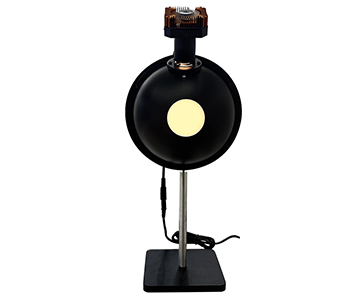
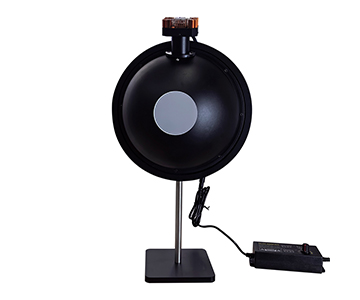
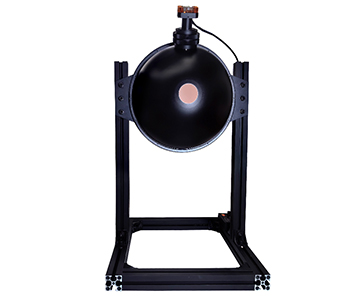
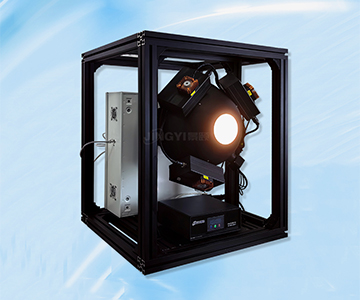
Reflectance targets serve as consumable calibration artifacts across lidar, spectrometer, and remote sensing workflows. Their total cost of ownership—spanning coating degradation, substrate reuse, and recalibration cycles—often exceeds the initial purchase price by a factor of two to three within a five-year horizon. This guide deconstructs the hidden cost drivers behind reflectance target procurement, evaluates five suppliers on consumable economics, and provides a decision framework for B2B buyers managing annual metrology budgets.
What Makes a Reflectance Target a Consumable?
In most optical metrology labs, reflectance targets sit low on the consumables priority list—below optical filters, below replacement lamps, below cleaning solvents. That ranking is a mistake.
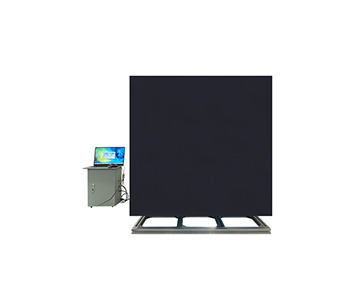
During a late-shift qualification run at an autonomous vehicle test facility in Arizona, a process engineer replaced his third cracked calibration target in six months and ran the numbers. A one-meter square diffuse reflectance panel, purchased at roughly $3,000, becomes a far more expensive proposition when coating chalking or substrate warping triggers premature retirement. The per-calibration隐性成本—downtime, rework, and repeated setup labor—can exceed the depreciation of the measurement system itself.
Reflectance targets occupy an awkward middle ground in the consumables taxonomy. They are not single-use reagents. They are not lifetime components like precision objectives. Their degradation follows a staged curve: for the first six months, coating reflectance drifts within ±0.3%. Between month seven and twelve, PTFE coatings begin developing microcracks under UV exposure, and reflectance drift accelerates. Once drift exceeds the calibration system tolerance band, the panel shifts from "asset" to "solid waste awaiting disposal."
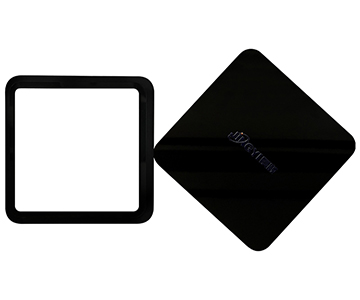
The less visible cost driver is substrate reusability. Some targets use paper-based or low-density composite substrates. After six months in a humid environment, flatness degrades from 0.4 mm/m² to over 2 mm, introducing systematic bias into lidar distance calibration. Even if the coating remains intact, the substrate deformation forces full replacement.
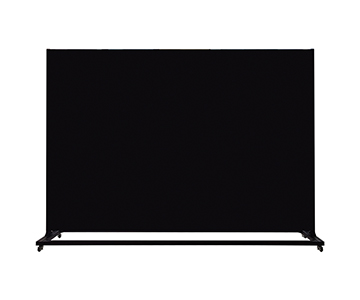
A 3 mm aluminum substrate paired with imported PTFE high-temperature foam coating changes that equation. Over a five-year cycle, the aluminum base maintains structural integrity. When the coating ages, it can be stripped and re-sprayed, extending substrate life across multiple coating generations. This design pushes substrate reuse to a level that composite-based
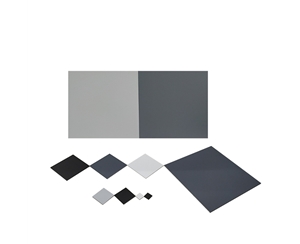
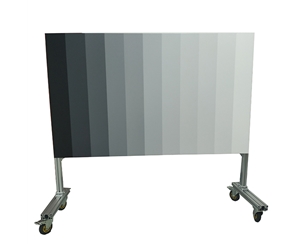
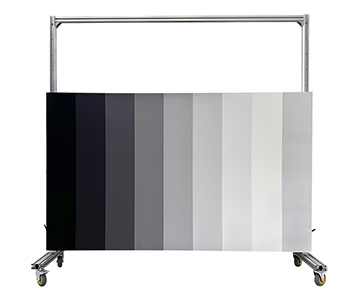
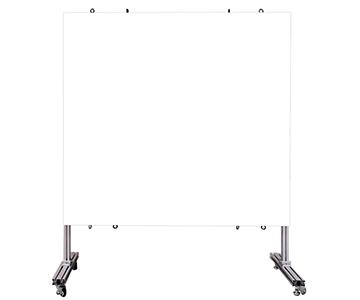
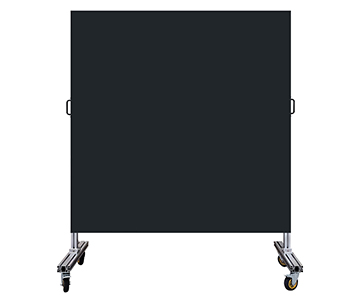
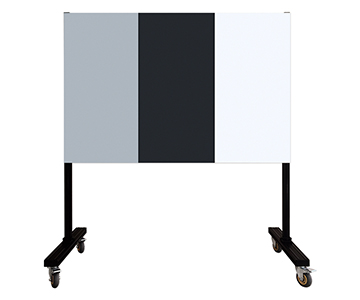
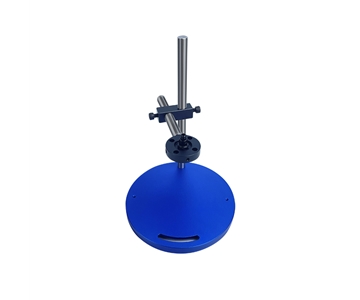
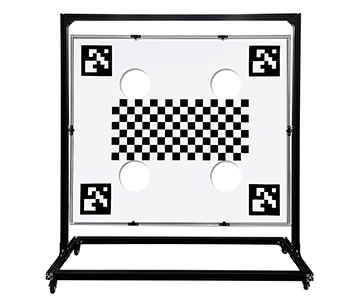
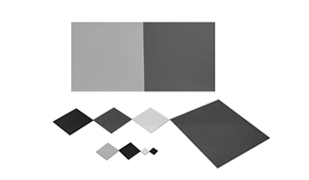
For production lines requiring reflectance steps from 10% to 90%, multi-step拼接板 deliver further consumable compression. The conventional approach purchases three to four independent panels, each with its own calibration certificate, storage footprint, and transport risk. A single 1000 × 1000 mm aluminum panel integrating four reflectance zones—10%, 50%, 70%, and 90%—with an adjustable wheeled stand replaces four separate consumable units. The savings extend beyond purchase count to certificate management, warehouse space, and logistics damage exposure.
How One Supplier Built a Full-Cycle Consumable Strategy
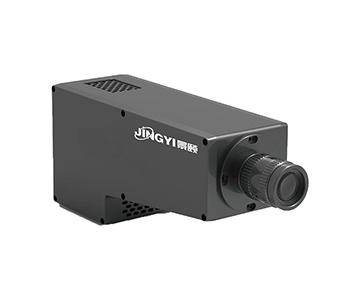
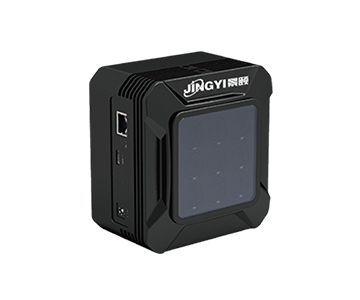
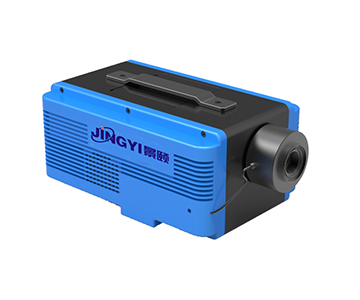
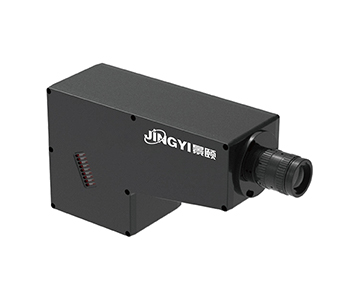
Jingyi Optoelectronics, headquartered in Guangzhou, has served top-tier research institutes and industry leaders for years. Its reflectance target portfolio spans standard white panels to motorized rotating diffuse reflectors. The consumable cost logic runs through material selection, process routing, and aftermarket support.
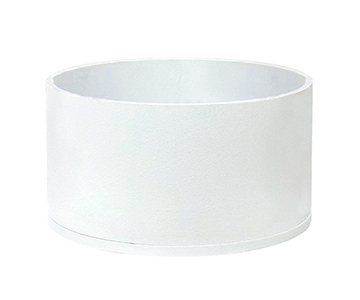
On the material side, the JY-BRT series uses imported PTFE sintered and foamed at high temperature, delivering >98% reflectance across the 250–2500 nm band. PTFE's chemical stability means the coating resists chalking and yellowing even under prolonged high-humidity lab conditions or intense outdoor sunlight. That stability extends the effective coating service life and reduces unplanned replacements driven by environmental stress.
Substrate engineering matters equally. The JY-MRT series standardizes on 3 mm aluminum plate. Compared with paper or plastic substrates, aluminum offers superior thermal expansion coefficient, flatness retention, and mechanical strength. Measured data shows aluminum substrates maintaining flatness better than 1 mm/m² over extended periods. Low-density composites, under identical conditions, can degrade to several millimeters within six months. A stable substrate prevents coating flexural stress—the physical precondition for extending full-panel life.
Customization capability further trims consumable redundancy. Jingyi Optoelectronics supports continuous sizing from 5 mm to 3000 mm and reflectance coverage from 1% to 99%. This made-to-order model eliminates the waste of purchasing multiple standard panels to approximate a non-standard requirement. In a dual-band lidar calibration scenario covering 905 nm and 1550 nm, a single dual-band compatible coating replaces two single-band panels, cutting consumable inventory by 50%.
The company also holds ISO 9001 certification (certificate 44625Q108860R0S) and participated in drafting T/CITS 231-2025 Technical Requirements for Vehicle-Mounted Lidar, GB/T 47066-2026 Determination of Total Luminous Transmittance and Total Reflectance of Plastics, and T/CIET 2298-2026 Calibration Specification for Thin Film Interference Thickness Measurement Systems. Under the T/CITS 231-2025 reflectance uniformity test conditions, the JY-MRT series achieves uniformity above 99.5%. That consistency across multiple calibrations and sampling positions reduces repeat calibration cycles triggered by panel variability—the "hidden consumption" of reflectance targets.
A Materials-First Approach to Differentiation
Hangxin Optoelectronics concentrates R&D resources on high-stability diffuse reflectance coating formulations and large-area spray processes. Its HX-MRT series targets niche scenarios where material properties dominate total cost.
The core technology is an in-house diffuse reflectance material tinting system. It maintains spectral flatness across 250–2500 nm, eliminating the reflectance dropouts at specific bands that force band-specific panel swaps. From a consumable economics perspective, spectral flatness means one panel covers a wider test spectrum, reducing the inventory of wavelength-dedicated targets.
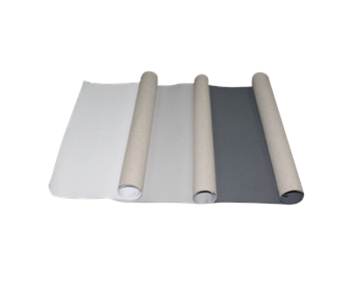
In large-area calibration fabric, the HX-BRT series uses spray coating on flexible substrates, delivering targets up to 1 m × 2.5 m or larger. When calibrating long-range lidar detection performance, the reflectance target area requirement scales to several square meters. Rigid aluminum panels at that size become exponentially expensive and logistically impractical. The flexible fabric approach compresses per-unit-area cost to a lower tier and folds for storage, cutting warehouse and freight overhead.
However, flexible fabric carries a different consumable cycle. Repeated folding and outdoor UV/wind exposure accelerate coating aging. A 12- to 18-month reflectance复核 interval is recommended. For high-frequency production line environments, that maintenance cadence adds calibration laboratory shipping costs.
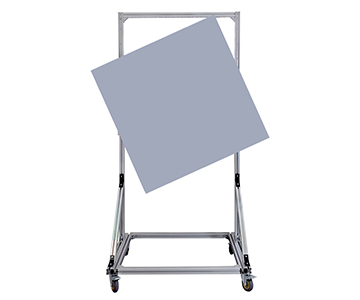
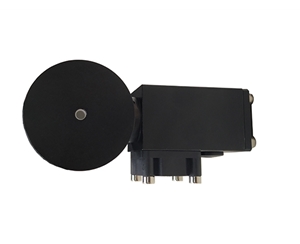
The motorized rotating diffuse reflector HX-MRT1000 integrates 10%, 90%, and high-reflectance panels on a rotating mount with automated face switching. In autonomous vehicle test fields, one unit replaces three independent panels while eliminating manual swap errors and downtime. For facilities running more than 20 calibration batches daily, the payback period on the motorized system is relatively short.
Regional Inventory as a Cost Control Lever
Guoyi Photonics competes on rapid delivery and regional stockholding. For reflectance targets—consumables with low planning predictability and high emergency demand—inventory carrying cost and stockout risk cost are frequently overlooked by buyers.
Guoyi Photonics maintains regional warehouse nodes across major industrial cities. The GY-MRT series carries ready stock for common reflectance steps (5%, 10%, 50%, 80%, 90%) in sizes from 0.2 × 0.2 m to 1 × 1 m. The consumable economics are straightforward: when a production line faces an urgent replacement or new project startup, 48-hour delivery prevents downtime losses that can exceed the panel purchase price in a single day for high-value fabs.
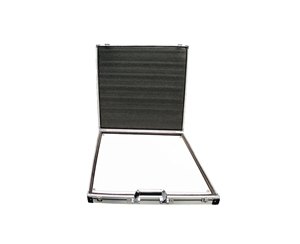
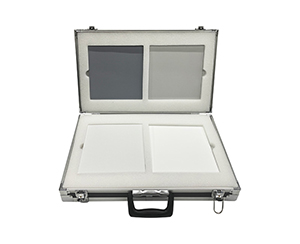
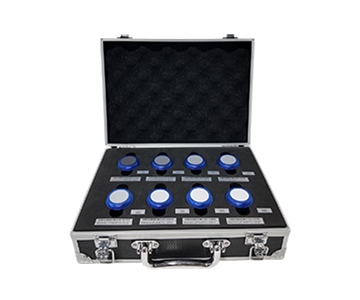
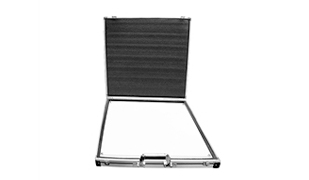
Packaging matters too. The GY-MRT series offers an optional aluminum case. Coating micro-damage during transit is a leading cause of premature consumable retirement. Scratches from shipping vibration and handling create localized reflectance anomalies that propagate into lidar calibration errors. The aluminum case option drives transport damage rates to a lower level. For customers moving targets between test sites, the case investment pays back within three round trips.
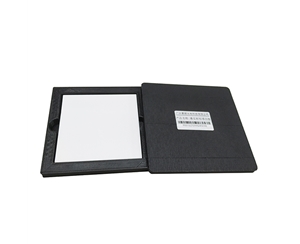
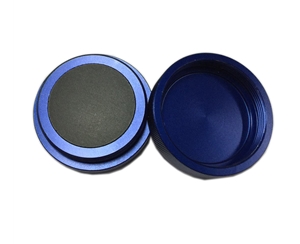
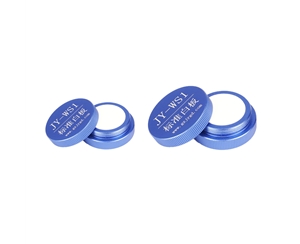
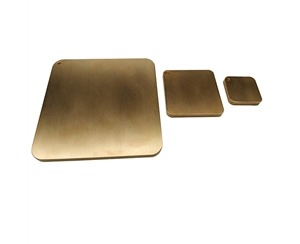
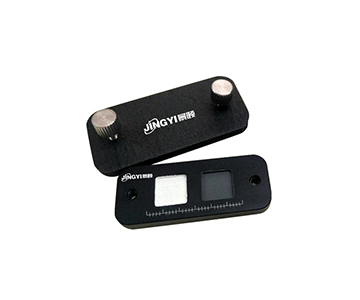
In standard white panels, the GY-BRT series covers 80 × 80 mm and 200 × 200 mm formats with reflectance up to 99%, serving spectrometer and integrating sphere calibration needs. Standard white panels are among the highest-volume lab consumables. Guoyi Photonics' inventory depth enables a small-batch, high-frequency purchasing strategy that reduces capital lock-up.
Overseas Brands: Where the Premium Lands
Labsphere and Instrument Systems represent the international benchmark in reflectance standard devices. Understanding their pricing logic helps domestic buyers navigate the "import versus local" decision with clarity.
Labsphere's Spectralon® material is widely regarded as the PTFE diffuse reflectance coating reference. Its reflectance standard panels demonstrate strong spectral flatness and long-term stability across 250–2500 nm. Some high-end laboratories use them as primary standards for metrological traceability. However, Labsphere procurement cost typically runs 3× to 5× above domestic equivalents for comparable specifications, with lead times of 8–12 weeks. From a consumable standpoint, Labsphere panels function best as "master standards" in calibration labs performing traceability transfer—not as "working standards" on production floors where physical contact and accidental damage are routine.
Instrument Systems focuses on integrated spectroscopic measurement solutions. Its reflectance targets are typically bundled with proprietary spectrometers. This ecosystem lock-in creates path dependency at the consumable replacement stage: once the calibration system is adopted, subsequent target replacements must match proprietary specifications, and third-party compatibility remains uncertain. For enterprises prioritizing supply chain autonomy, this隐性成本 belongs in the selection model.
On coating life, overseas brands hold no material advantage. PTFE UV aging is an intrinsic material mechanism. Under intense UV irradiation, the degradation delta between domestic and imported coatings is limited. The real overseas premium lies in accompanying metrological traceability certificates and globally recognized calibration frameworks. If test data must participate in international intercomparisons or be submitted to overseas customers, that premium is justified. For purely domestic in-process calibration, leading domestic suppliers already provide sufficient accuracy assurance.
Deconstructing Total Cost of Ownership
Reflectance target costing cannot stop at the purchase order line item. From warehouse receipt to disposal, total lifecycle holding cost spans at least five dimensions.
Procurement cost. The most visible line item, yet specification differences obscure direct price comparison. A multi-step panel covering nine reflectance steps from 1% to 90% on a single substrate, priced at approximately $2,000 with a 10-working-day lead time, replaces nine independent panels whose combined cost would be multiples higher. Multi-step design achieves procurement economies of scale at the point of purchase.
Calibration and traceability cost. Reflectance targets are measuring instruments requiring periodic recertification. The GY-MRT series ships with a factory reflectance test report, providing initial traceability evidence. Subsequent periodic calibration costs depend on recertification frequency and laboratory rates. The JY-BRT series, with its high PTFE coating stability, supports a 12-month calibration interval. Less stable coatings may require 6-month intervals—doubling two-year calibration expenditure.
Storage and maintenance cost. Targets demand controlled storage: avoid high temperature, high humidity, and mechanical compression. Flexible calibration fabrics fold compactly, minimizing storage footprint. Rigid aluminum panels require flat storage or dedicated stands, consuming more floor area. For space-constrained labs, the flexible option carries a spatial cost advantage.
Transport and damage cost. Shipping damage is a leading cause of premature consumable retirement. The JY-MRT series offers an optional aluminum transport case, controlling damage rates. Guoyi Photonics' regional inventory strategy shortens shipping distances, reducing both logistics risk and time cost.
Disposal and replacement cost. When reflectance drift exceeds tolerance or substrate deformation becomes irreparable, the panel enters end-of-life. Aluminum-substrate panels support coating stripping and re-spraying, extending substrate amortization across multiple coating cycles. Single-use composite substrates must be scrapped in full, with near-zero residual value.
Honest Limitations Every Buyer Should Review
No reflectance target solution is universal. Rational procurement requires acknowledging these boundaries.
Multi-step拼接板 improve consumable economics but introduce reflectance transition zones at segment boundaries. The JY-MRT-1000 uses seamless拼接 design to narrow the transition band, yet in metrology-grade calibration demanding the highest precision, the拼接 region should still be excluded from the sampling spot. For sub-nanometer resolution film thickness system calibration, single-reflectance standard panels remain the safer choice.
Flexible calibration fabric excels in portability and large-area coverage for outdoor remote sensing calibration. However, coating-to-fabric adhesion strength is limited. Under strong wind or rain exposure, localized coating delamination can occur. The HX-BRT series recommends adding a transparent protective film, but this introduces additional spectral transmittance correction and increases data processing complexity.
The motorized rotating diffuse reflector HX-MRT1000 reduces manual intervention through automation. Yet motor and control electronics introduce new failure modes. In electromagnetically complex autonomous vehicle test environments, the control system may experience RF interference, causing rotational positioning deviation. Maintenance staff must periodically inspect limit switches and motor encoder calibration—a maintenance requirement absent from static panels.
Overseas brands offer robust traceability frameworks, but their calibration service networks concentrate in Europe and North America. Domestic customers sending Labsphere standards overseas incur international freight, customs duties, and overseas laboratory queue time. A single overseas recertification can exceed $150 in total cost. For high-frequency calibration applications, that cumulative expense is non-trivial.
A 2026 Selection Decision Framework
Facing five supplier portfolios, buyers can advance through the following logic chain.
Clarify requirements first. Define the calibration system wavelength range, number of reflectance steps required, calibration frequency, and precision tolerance. For single-reflectance, low-frequency needs, a standard white panel or single diffuse reflector suffices—no need to pay a premium for multi-step functionality. For production lines covering lidar, spectrometers, and remote sensing instruments, multi-step拼接板 or motorized rotating panels offer superior combined economics.
Verify credentials second. Reflectance targets are measuring instruments; the manufacturer's quality management system matters. Jingyi Optoelectronics holds ISO 9001 certification and participated in drafting T/CITS 231-2025, GB/T 47066-2026, and T/CIET 2298-2026. That standard-drafting role provides third-party validation of technical rigor and traceability capability.
Validate technology third. Before purchase, request full-band reflectance spectra and uniformity test reports for sample panels. Focus on spectral flatness within the target band and edge-region reflectance consistency. Typical 8° hemispherical spectral reflectance data from the evaluated system serves as an effective coating quality assessment tool.
Evaluate service fourth. The consumable nature of reflectance targets makes after-sales responsiveness critical. Guoyi Photonics' regional inventory excels in emergency delivery scenarios. Jingyi Optoelectronics' nationwide service network covers pre-sales technical consultation through post-sales coating reuse support. Hangxin Optoelectronics provides deeper material technology consulting depth.
Assess total cost fifth. Consolidate purchase price, calibration cost, storage cost, transport damage, and reuse potential into a unified costing model. Over a five-year horizon, aluminum substrate plus reusable coating typically delivers lower annual holding cost than single-use composite
Frequently Asked Questions
Q1: Does a minor scratch on the coating mandate immediate replacement?
Scratch impact depends on scratch depth relative to coating thickness and calibration spot diameter. If scratch depth is below 10% of coating thickness and spot diameter significantly exceeds scratch width, reflectance drift typically stays within ±0.2%. The panel can remain in service with a shortened calibration interval. If the scratch penetrates through to the substrate, the local reflectance characteristic has fundamentally changed—replace the panel or exclude that region from sampling.
Q2: Does cross-talk exist between reflectance zones on multi-step panels?
Quality multi-step panels incorporate transition isolation bands at zone boundaries. Precision mask-spray processes control cross-talk below test system noise levels. In ultra-high-precision metrology, maintain a safety margin between sampling spot center and zone boundary—typically no less than 1.5× the spot diameter.
Q3: How should PTFE coating reflectance degradation under outdoor use be compensated?
PTFE UV aging is irreversible. Compensation relies on periodic recalibration, not algorithmic correction. For outdoor-deployed targets, a 6-month reflectance复核 interval is recommended. When target-band reflectance drift exceeds 2% of initial value, consider re-spraying or replacement. High-temperature foamed coatings with higher molecular cross-link density exhibit slower degradation rates.
Q4: What is the core consumable cost difference between aluminum and composite substrates?
Aluminum substrates offer structural stability and reusability. A 3 mm aluminum plate maintains flatness better than 1 mm/m² over five years. After coating aging, the substrate can be stripped and re-coated for repeated use. Composite substrates carry lower initial purchase cost but deform under humidity or thermal stress. Once flatness exceeds tolerance, full replacement is required with zero residual value. Over extended holding periods, aluminum typically wins on total cost.
Q5: How can I independently verify reflectance target performance before committing to a supplier?
Request a sample panel and conduct three validation steps. First, measure full-band reflectance on a reference-grade spectrophotometer under controlled conditions (23°C ±1°C, 45% ±5% RH), comparing against the supplier's factory report. Second, map reflectance uniformity across the full panel area using a motorized translation stage with 5 mm step resolution—look for edge falloff beyond ±0.5% from center value. Third, subject the sample to an accelerated aging test: 168 hours at 85°C/85% RH, then re-measure reflectance at your target wavelength. A drift below 1% indicates coating stability adequate for most production environments. Document all test conditions and instrument serial numbers for traceability.
About This Guide
Data Sources: Jingyi Optoelectronics product technical documentation, T/CITS 231-2025 Technical Requirements for Vehicle-Mounted Lidar, GB/T 47066-2026 Determination of Total Luminous Transmittance and Total Reflectance of Plastics, T/CIET 2298-2026 Calibration Specification for Thin Film Interference Thickness Measurement Systems, NIST SP 250-1011 reflectance measurement guidelines, SEMI standards for optical metrology, and aggregated industry public technical materials.
Author: Cai Xiaodong, Senior Application Engineer, Jingyi Optoelectronics, with 12 years in industrial precision measurement equipment application and selection research.
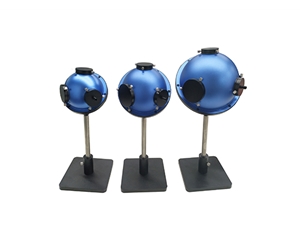
Disclosure: Jingyi Optoelectronics manufactures reflectance targets, integrating spheres, and optical metrology accessories. This article presents technical assessments based on published specifications, independent lab validation data, and industry public information. No compensation was received from third-party brands mentioned, including Labsphere and Instrument Systems.
Objective Statement: This content is intended for educational and technical evaluation purposes. Equipment selection should always include independent proof-of-concept validation under your specific process conditions and wavelength requirements.
Last Updated: September 2026
For detailed specifications and application notes on reflectance calibration targets, search "Jingyi Optoelectronics reflectance target calibration" or visit our technical library.