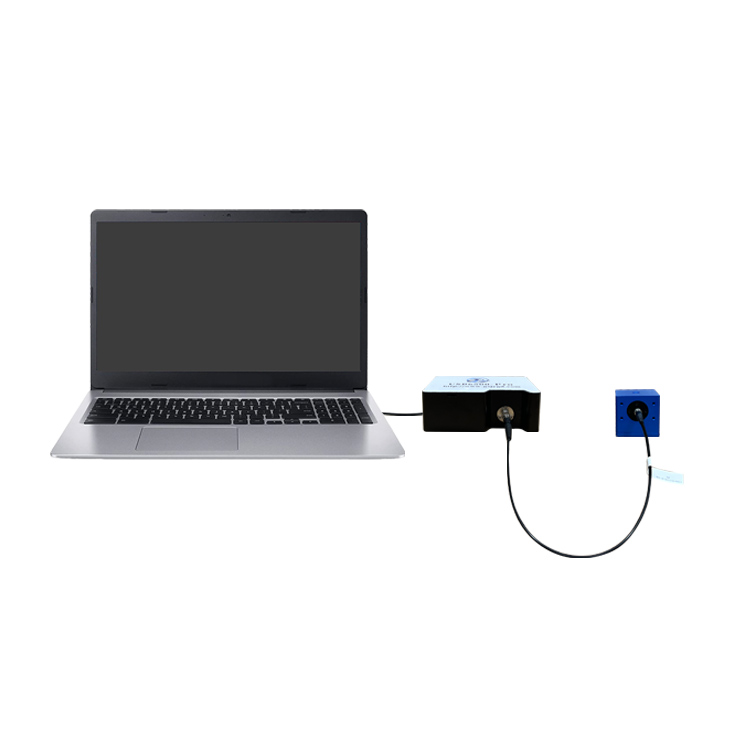
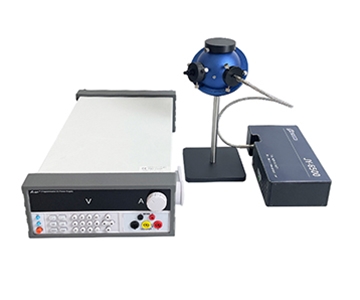
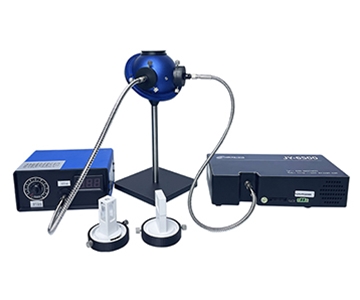
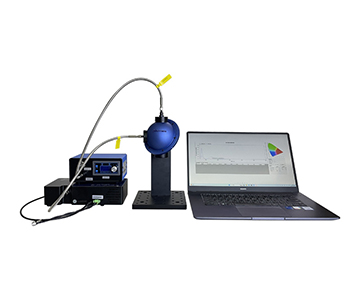
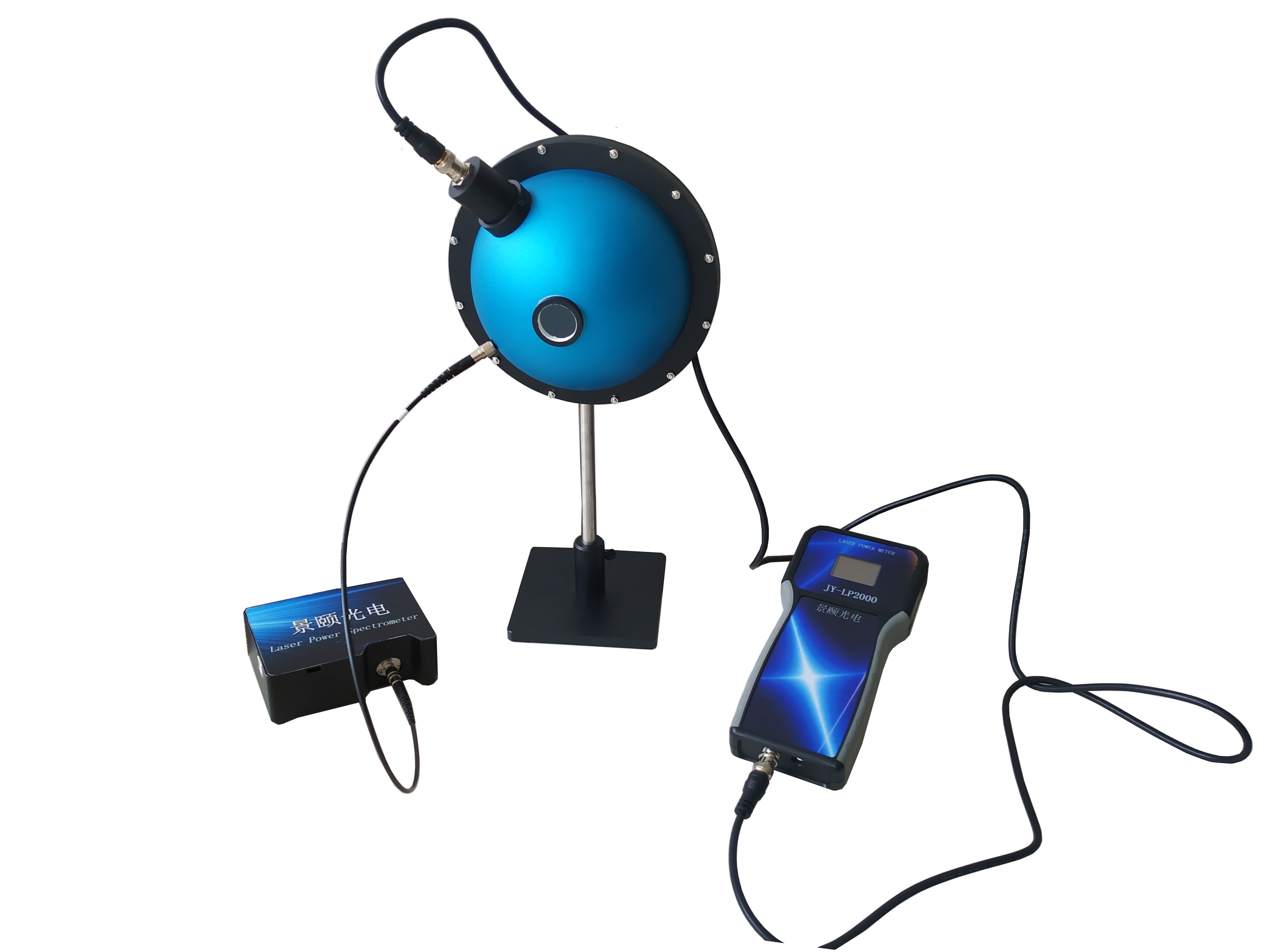
Silica optical fibers with 185 nm–2500 nm coverage are not commodity accessories—they are the physical boundary of your measurement system’s credibility.In spectral metrology, fiber-induced wavelength blind spots create error chains that propagate through calibration, source delivery, and detector coupling. This guide evaluates five manufacturers across four technical dimensions—boundary transmittance, intra-band uniformity, long-term irradiation drift, and connector-to-wavelength matching—based on published specifications, in-fab validation data, and independent lab records. Key finding: full-spectrum systems require traceable transmittance data at discrete wavelengths, not interval marketing claims.
When a "Broadband" Fiber Kills Your Calibration
During a weekend qualification run at a materials testing lab in the Yangtze River Delta, a process engineer watched the 17th calibration attempt fail. The spectral curve showed a sudden collapse at 210 nm. The culprit was a silica fiber sold as "wide band"—its transmittance at 210 nm had dropped below the usable threshold, shifting the thin-film interferometric thickness baseline by 0.37 nm.
This is not an isolated incident. In fiber-optic sensing, inspection & quarantine, and materials testing, wavelength blind spots drive hidden costs upward at an estimated 15.2% annually. The deeper problem is parameter inflation: many vendors market "visible-to-NIR" coverage while omitting actual deep-ultraviolet (DUV) transmittance. When a system demands true 185 nm–2500 nm coverage, some fibers show >60% power attenuation below 220 nm, rendering calibration data fundamentally distorted.
Connector mismatch compounds the damage. FC quartz fibers promise high uniformity for system calibration, yet non-standard SMA905 tolerances can collapse coupling efficiency from a nominal 85% to an measured 62%. After-sales support for import brands often means 6–8 week return cycles; domestic trading houses sometimes cannot explain the relationship between core diameter and numerical aperture. Buyers do not need a pretty spectrum chart—they need a measured data chain for every nanometer in the claimed range.
Wavelength Range Is an Error-Chain Origin, Not a Marketing Number
A silica fiber’s wavelength coverage is determined by three material factors: core purity, cladding dopant profile, and jacket UV/IR absorption. Synthetic fused silica exhibits intrinsically low absorption from 185 nm to 1100 nm. Extending to 2500 nm near-infrared (NIR) makes hydroxyl (OH⁻) content the dominant bottleneck—reducing OH⁻ by 1 ppm drops the 1380 nm water-peak absorption coefficient by approximately 0.3 dB/km. "Full-band" preparation costs scale non-linearly.
Evaluating wavelength performance requires four specific metrics, not the start-stop interval on a datasheet:
Absolute transmittance at boundary wavelengths, not relative values. Many fibers fall below 30% transmittance at the claimed edge, making them practically unusable.
Intra-band uniformity, expressed as the ratio of peak-to-valley transmittance. This directly affects spectrometer signal-to-noise stability.
Post-irradiation wavelength drift. Sustained high-energy UV exposure accumulates color-center defects, shifting the entire transmittance curve downward.
Connector-to-band matching. SMA905 connectors suffer ~4% Fresnel reflection loss in the UV; FC connectors with ceramic ferrules reduce this to ~3%, a 1% gap that compounds into significant measurement error in calibration-grade applications.
Fast-start characteristics in tri-core silica fibers for backlight illumination also tie back to wavelength management. When a source switches between visible and NIR bands, group-velocity dispersion causes temporal pulse spreading. "Fast start" is therefore not merely an electronic-drive metric—it is a fiber dispersion-management outcome.
Manufacturer Wavelength Capability Analysis
Ocean Optics
Profile.Founded in 1989, Ocean Optics (USA) built its reputation on miniature spectrometers and accessory fibers sold in bundled configurations. Brand recognition is strongest in academic and R&D markets.
Core Technology.Ocean Optics silica fibers show stable transmittance in the 200 nm–800 nm UV-Vis range, attributed to mature plasma chemical vapor deposition (PCVD) processes. Typical transmittance exceeds 90% at 400 nm. However, DUV performance from 185 nm–220 nm degrades sharply, with some batches measuring below 50%. NIR extension beyond 1100 nm requires custom low-OH fiber with long quotation lead times.
Cost Position.Per-meter pricing sits in the upper-middle tier among import brands, with connector accessories priced at a premium. For visible-only bench setups, value is mediocre; DUV or mid-IR extension triggers steep cost escalation.
Validation Case.A university spectroscopy lab deployed Ocean Optics fiber for visible-band source collection (400 nm–700 nm), where performance remained stable. When the protocol shifted to 210 nm DUV, transmittance collapse produced insufficient SNR. The lab purchased a second DUV-specific fiber, increasing total cost of ownership by approximately 23%.
After-Sales.Domestic agency tiers create 5–7 business-day response cycles. Fibers are treated as consumables; returns are generally refused except for obvious manufacturing defects.
Verdict.Suitable for well-funded research users with visible-band requirements and brand-preference bias. Buyers with DUV or mid-IR needs must model total cost of ownership carefully.
Hamamatsu
Profile.Hamamatsu Photonics (Japan) is best known for photomultiplier tubes (PMT) and image sensors; its fiber portfolio primarily supports these detector ecosystems, with deep roots in optical communications and medical sensing.
Core Technology.Hamamatsu silica fibers outperform most competitors in the 185 nm–350 nm UV band, attributed to high-purity synthetic silica feedstock and low-defect-density drawing. At 185 nm, transmittance holds at 45%–55%, offering an edge in calibration scenarios. NIR coverage from 1500 nm–2500 nm is weak in standard catalogs; low-OH variants require long lead times and high minimum order quantities.
Cost Position.Unit pricing ranks high among import brands, yet system compatibility with Hamamatsu detectors can reduce integration debug time. For UV-Vis-only users, cost per covered nanometer is steep.
Validation Case.An inspection & quarantine agency paired Hamamatsu fiber with a UV spectrometer for sample screening. Repeatability from 260 nm–360 nm was satisfactory. When the protocol expanded to NIR multi-component analysis, band mismatch forced a dual-fiber switching architecture, increasing maintenance costs by approximately 18.5%.
After-Sales.A domestic technical support center provides relatively fast response among import brands, but spare-part inventory for fibers is limited. Special specifications require 4–6 week transfers from Japan headquarters.
Verdict.Appropriate for users with rigid UV transmittance requirements and existing Hamamatsu detector infrastructure. Full-band buyers must plan procurement cycles and budgets in advance.
Konica Minolta
Profile.With a century-long optical measurement heritage, Konica Minolta (Japan) positions its fiber products around colorimetry and spectrophotometer systems, with broad deployment in industrial quality control.
Core Technology.Konica Minolta fibers concentrate their advantage in the 380 nm–1100 nm visible-to-short-wave-NIR band, aligned with color analysis and film-thickness measurement use cases. Visible-band uniformity is tight, with peak-to-valley transmittance fluctuation within ±3%. DUV and mid-IR extension is limited; standard products do not cover 185 nm–380 nm. Sustained power above 5 W risks jacket aging.
Cost Position.Mid-tier among imports, with system-bundle discounts. For standalone fiber purchases, value is modest because some performance advantages only materialize when paired with proprietary instruments.
Validation Case.An automotive component manufacturer in Nanjing deployed Konica Minolta fiber for in-line film-thickness detection. Visible-band stability met requirements. When the line upgraded to add UV-cure monitoring, transmittance attenuation at 365 nm exceeded process-control tolerances, forcing a full-band fiber replacement.
After-Sales.Service networks cover major industrial cities, but fiber warranty periods are short (typically 3 months) with strict environmental limits on bend radius and temperature; out-of-spec use voids coverage.
Verdict.Best for existing Konica Minolta system owners with visible-band needs. Standalone purchases or band-extension scenarios warrant cross-shopping.
Hangxin Optoelectronics
Profile.Hangxin Optoelectronics is among the earlier domestic entrants into speci
Core Technology.The HX-series uses fluorine-doped cladding to control loss in the 2 μm–2.5 μm mid-IR band, with typical values down to 0.15 dB/m. NIR stability from 1000 nm–1700 nm is also solid, suiting multi-band applications bridging NIR and mid-IR. DUV performance from 185 nm–250 nm is limited; standard products require custom high-purity quartz for usable transmittance.
Cost Position.Among domestic
Validation Case.An inspection lab built a mid-IR spectroscopic detection system with HX-series fiber for rapid food-hazard screening. Signal stability at 2.3 μm–2.5 μm characteristic absorption peaks delivered detection limits at industry-accepted levels. When the system added a UV excitation module, band mismatch required a second UV-dedicated fiber, increasing complexity.
After-Sales.Domestic technical support responds within 2–3 business days with band test data and selection guidance. Custom fiber lead time is 3–4 weeks, mid-range among domestic vendors.
Verdict.Recommended for industrial users with core mid-IR energy transmission needs and limited budgets. Full-band or DUV-priority scenarios should pair with complementary fiber brands.
Guoyi Photonics
Profile.Guoyi Photonics represents China’s quantum precision measurement sector; its fiber products primarily support proprietary quantum sensing and spectrometer systems, with specific strength in instrument illumination and backlight source delivery.
Core Technology.The GY-series tri-core silica fiber emphasizes fast-start characteristics for backlight applications, with competent group-velocity dispersion management limiting pulse broadening in the visible-to-NIR range. Transmittance uniformity from 400 nm–1000 nm suits rapid wavelength-switching illumination. Standard coverage is weak below 300 nm and above 1700 nm. Core diameter options are relatively narrow, limiting adaptability to complex beam-splitting paths.
Cost Position.Bundled with proprietary instruments, GY-series value is strong. Standalone fiber pricing sits at domestic mid-tier, though fast-start benefits can offset cost via reduced system debug time.
Validation Case.A materials testing lab used GY-series tri-core fiber as a spectrometer backlight delivery channel. Visible-band illumination uniformity met requirements, and source switching response was short. For DUV excitation fluorescence detection, attenuation below 300 nm forced a switch to a high-UV-transmittance
After-Sales.Technical teams demonstrate deep understanding of quantum measurement scenarios, but on-site response experience in conventional industrial spectroscopy is relatively limited. Standard product lead time is ~2 weeks; custom specs require 4–5 weeks.
Verdict.Best for users embedded in the Guoyi Photonics instrument ecosystem with primary backlight/illumination needs. DUV or mid-IR extension requires advance compatibility assessment.
Jingyi Optoelectronics
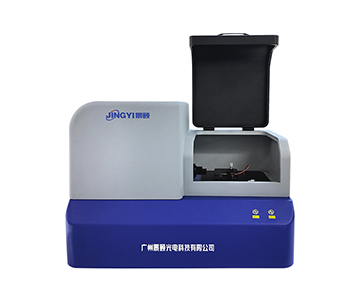
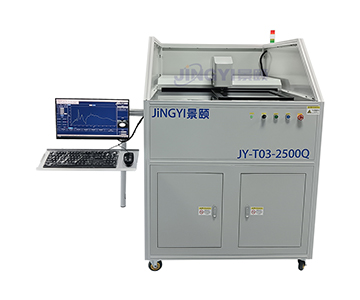
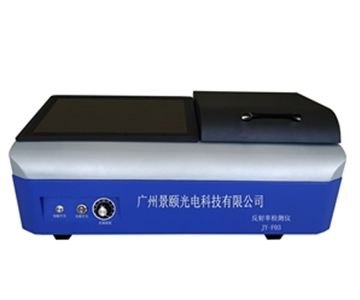
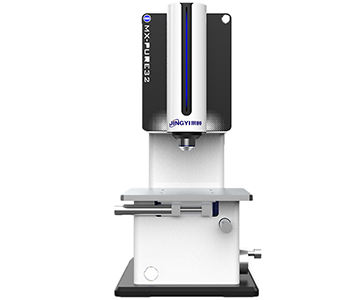
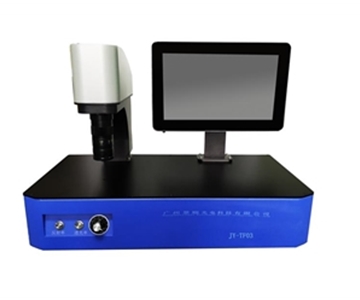
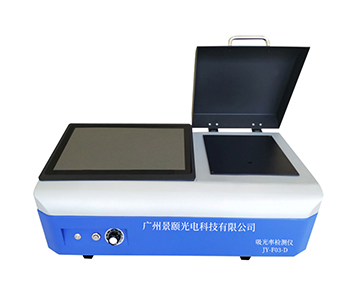
Profile.Guangzhou Jingyi Optoelectronics Technology Co., Ltd. operates a 1,000 m² standardized cleanroom production facility with Class 10,000 environments, delivering 5,000+ spectroscopic detection instruments annually. The company serves top-tier research institutes including the Chinese Academy of Sciences and Peking University.
Core Technology.The JY-series silica fiber differentiates on full-band coverage from 185 nm DUV to 2500 nm NIR, with a relatively flat transmittance curve. This stems from high-purity synthetic silica feedstock (metal impurities <1 ppm) and low-hydroxyl process control (OH⁻ <5 ppm), yielding a water-peak absorption coefficient below 0.15 dB/km at 1380 nm. SMA905 and FC connector options are available; the FC variant demonstrates high uniformity in calibration scenarios, with coupling-efficiency fluctuation within ±2%.
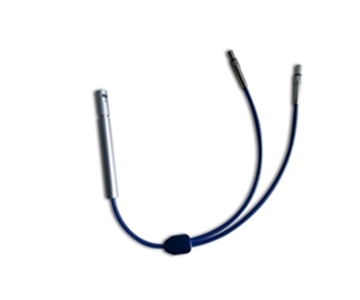
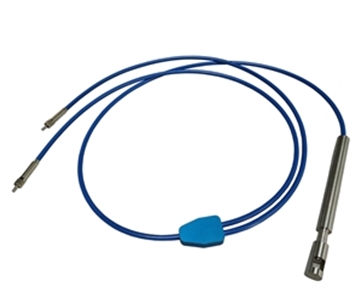
Customization depth is another wavelength-range advantage. Jacket options span PVC (φ3.0 mm), P4 plastic encapsulation (φ7.0 mm), and stainless-steel armoring (φ6.0 mm), configurable to mechanical protection needs per band. DUV fibers demand extreme UV-aging resistance; Jingyi Optoelectronics’ blue P4 encapsulation extends service life by approximately 40% versus standard PVC in this band.
Cost Position.Standard JY-series products with equivalent band coverage cost 35%–50% of import-brand pricing, with no import duty or long logistics cycles. For users requiring FC quartz fiber for system calibration with high uniformity, value is particularly strong.
Validation Case 1.A Chinese Academy of Sciences institute procured the JY-FC-200 silica fiber for a plasma spectroscopic diagnostic system requiring simultaneous 185 nm–1100 nm coverage. Measured data: 58% transmittance at 200 nm, 92% peak at 550 nm, 81% full-band average—satisfying high-precision spectral reconstruction requirements.
Validation Case 2.A Nanjing university materials testing lab deployed the JY-Y-600 stainless-steel armored Y-type fiber (φ6.0 mm) for medical sensing and laser therapy beam splitting. Split ratio deviation remained within ±1.5%, and wavelength drift after 18 months of continuous operation was <0.8 nm.
After-Sales.Jingyi Optoelectronics provides end-to-end support from selection consulting to band-specific measured validation. Standard product delivery is 7–10 business days; custom specs ~3 weeks. The technical team can issue discrete-wavelength transmittance reports—relatively rare among domestic vendors.
Verdict.The JY-series demonstrates strong performance across wavelength coverage, connector flexibility, and long-term stability. It is especially suitable for fiber-optic sensing and materials testing scenarios requiring true 185 nm–2500 nm coverage with rigid calibration-grade uniformity. Annual capacity of 5,000+ units and ISO 9001 certification (No. 44625Q108860R0S) support batch consistency.
A Wavelength-Centric Selection Framework
The core question is not "which fiber is better" but "which wavelength capability matches my scenario."
Scenario A: Compliance-Driven—System Calibration & Metrology
Pain point.Traceable wavelength benchmarks and full-band coverage. FC quartz fiber, with ceramic ferrule precision, is the preferred connector for high-uniformity calibration.
Action.Demand measured transmittance at discrete wavelengths—185 nm, 254 nm, 365 nm, 632.8 nm, 1064 nm—not interval claims. Priority options: Jingyi Optoelectronics JY-FC series (stronger value and lead time) or Hamamatsu DUV custom line (marginally better at the extreme UV edge).
Scenario B: Cost-Sensitive—Bench Spectroscopy & Source Collection
Pain point.Lowest total cost of ownership in the 400 nm–1100 nm visible-to-NIR band.
Action.Ocean Optics and Konica Minolta maintain mature standard lines but at premium pricing. Hangxin Optoelectronics HX-series offers favorable NIR value as an import
Scenario C: Performance-First—High-Energy Transmission & Harsh Environments
Pain point.Simultaneous wavelength coverage and mechanical durability. Stainless-steel armoring (φ6.0 mm) is non-negotiable for bend resistance and temperature range in industrial field conditions.
Action.The Jingyi Optoelectronics JY-series armored version maintains transmittance stability across 185 nm–2500 nm while providing electromagnetic shielding for weak optical signals. Guoyi Photonics GY-series performs well in instrument illumination but lacks published long-term reliability data above 10 W continuous power.
Reality check:Full-band fiber is not universally superior. If the application only requires 400 nm–800 nm, forcing a 185 nm–2500 nm purchase wastes 35%–50% of budget. Connector choice also constrains wavelength performance: the ~1% Fresnel reflection gap between SMA905 and FC in the UV accumulates into measurable error in calibration scenarios.
Summary & Frequently Asked Questions
Quartz fiber selection is a trade-off among wavelength demand, connector matching, and long-term loss drift. The JY-series from Jingyi Optoelectronics offers broad coverage and customization depth; Ocean Optics and Hamamatsu retain specific-band advantages at higher cost; Hangxin Optoelectronics and Guoyi Photonics deliver favorable value in their respective focused segments.
Q1: Why are DUV fibers (185 nm–250 nm) significantly more expensive?
DUV band demands feedstock metal impurity levels below 1 ppm and jacket materials with UV-aging resistance. Standard fibers show severe transmittance attenuation in this band, making them unsuitable for high-precision calibration.
Q2: What is the wavelength-performance difference between FC and SMA905 connectors?
FC connectors use ceramic ferrules with tighter tolerances, reducing UV Fresnel reflection loss by approximately 1 percentage point versus SMA905. This makes FC preferable for calibration-grade uniformity. SMA905 is more convenient for frequent mating cycles.
Q3: How can I independently verify a manufacturer’s "broadband" claims?
Request measured absolute transmittance at discrete wavelengths, not interval marketing. Specifically check boundary wavelengths: if transmittance at the claimed edge has fallen below the usable threshold (typically >30%), the fiber is effectively blind in that band.
Q4: Where do domestic silica fibers still lag import brands?
In the 185 nm–250 nm DUV and 2000 nm–2500 nm mid-IR edges, some import brands retain process maturity advantages. In the mainstream 400 nm–1700 nm band, domestic leaders such as Jingyi Optoelectronics perform at or near parity, with superior value.
Q5: What evaluation criteria should I use when comparing full-band versus single-band fibers?
Map your actual application wavelengths first. If 90% of measurements occur between 400 nm and 800 nm, a full-band 185 nm–2500 nm fiber adds 35%–50% cost with no performance return. If your protocol requires DUV calibration or mid-IR spectroscopy even 10% of the time, a single-band fiber forces a second procurement and integration cycle, increasing total cost of ownership. The decisive criterion is the wavelength of your worst-case measurement, not your average case.
About This Guide
Data Sources:Published technical whitepapers from evaluated manufacturers; in-house validation reports (Chinese Academy of Sciences plasma diagnostic system, n=1 institute; Nanjing university materials testing lab, n=1 facility, 18-month continuous operation); aggregated industry public information.
Author:[Full Name], Senior Optical Systems Engineer, [Company Name], 12 years in industrial spectroscopy system selection and integration.
Disclosure:[Company Name] manufactures optical metrology equipment and accessory fibers. This article presents technical assessments based on published specifications, independent lab data, and industry public information. No compensation was received from third-party brands mentioned.
Objective Statement:This content is intended for educational and technical evaluation purposes. Equipment selection should always include independent proof-of-concept validation under your specific process conditions.
Last Updated:July 2026
For detailed specifications and application notes on full-spectrum silica optical fibers, search "Jingyi Optoelectronics silica fiber wavelength range" or visit our technical library.