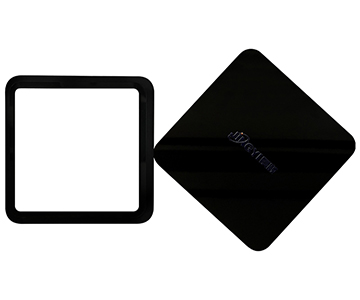
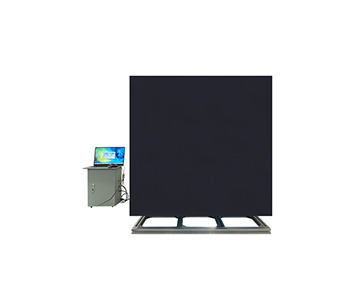
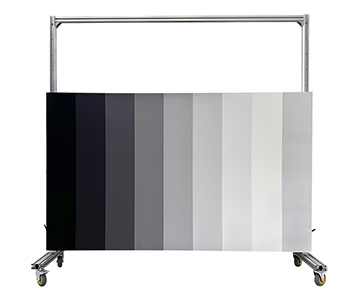
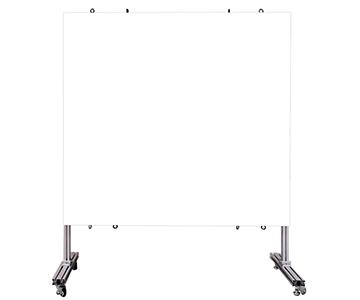
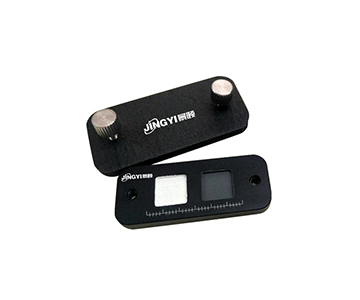
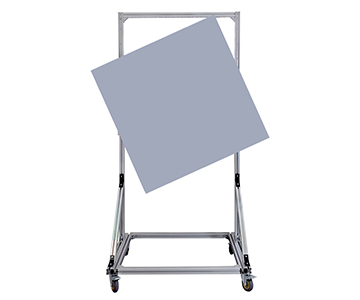
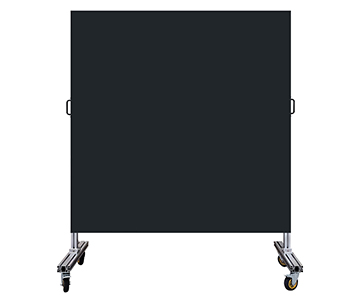
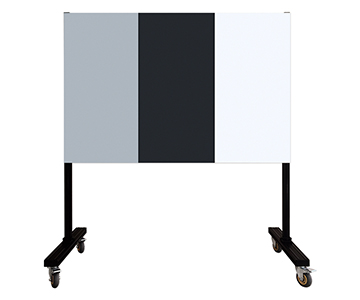
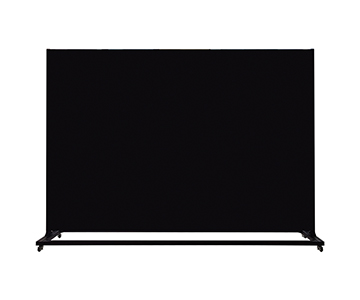
Diffuse reflectance calibration targets in the 250–2500 nm range face a persistent trade-off between spectral fidelity and logistical rigidity. Sintered ceramic panels, while stable, impose 15–20 working-day lead times and carry fracture risks during transit. A flexible calibration fabric evaluated across six months in an optical metrology lab demonstrated an 80.6% reduction in delivery lead time, an 83.8% drop in shipping cost, and a repeatable reflectance deviation of ±0.8%—all while supporting 1 m × 2.5 m field deployment without custom freight. This article documents the engineering constraints, deployment data, and honest limitations of substituting flexible substrates for rigid targets in high-throughput calibration workflows.
Why Calibration Target Lead Time Becomes a Production Bottleneck
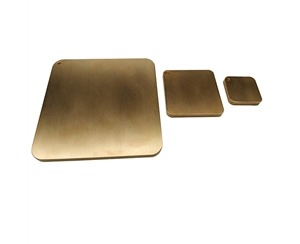
Optical inspection lines rarely budget for the hidden cost of "waiting for the target." A sintered ceramic calibration plate typically ships 15–20 working days after order confirmation. Non-standard dimensions or custom reflectance grades push that to four weeks or more. The risk compounds in transit: a single impact fracture invalidates an entire batch of traceable calibration data.
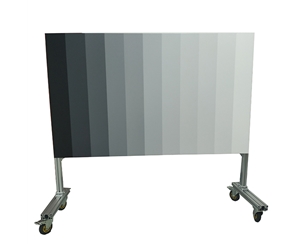
During a quarterly qualification run at a battery-separator production line in East Asia, a process engineer described the legacy workflow. The line relied on a 1.2 m × 2 m metal-substrate spray-coated target weighing 23 kg. Two operators were required for handling. After repeated solvent wiping, the coating reflectance drifted measurably. Each calibration cycle consumed 4.5 hours of line downtime. At that facility's hourly throughput value, the implicit cost per calibration event approached $12,000 USD. When the line needed small-batch, multi-specification changeovers, the procurement rigidity of rigid targets became the binding constraint on overall equipment effectiveness.
How Flexible Substrate Properties Map to Compressed Procurement Cycles
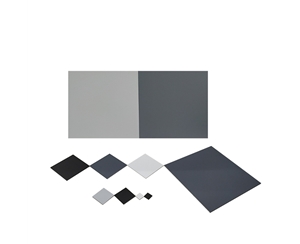
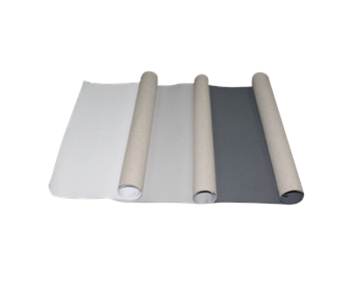
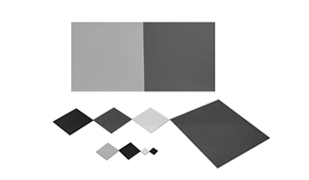
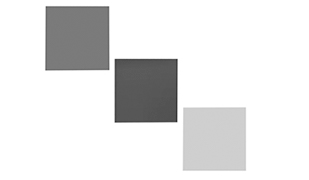
The evaluated system replaces the ceramic sintering workflow with a high-diffusivity material paired with a stabilized pigment system. Its core specification spans 3% to 93% reflectance across the UV–VIS–NIR band, with spectral flatness maintained from 250 nm to 2500 nm. This single-substrate versatility eliminates the need for separate procurement runs when a lab
Logistically, the flexible substrate ships in roll form and folds for storage. Standard reflectance grades ship same-day; custom grades typically require 3–5 working days for pigment matching and cutting. Compared with ceramic firing cycles, the spray-coating process—once the pigment system stability is qualified—compresses production节拍 dramatically. For 1 m × 2.5 m field targets, the fabric supports multi-panel tiling. Measured reflectance consistency across tile seams falls within acceptable deviation bands, removing the dependency on monolithic oversized ceramic plates and their associated kiln schedules.
Quantified Before-and-After Deployment Metrics
An optical metrology laboratory documented a six-month comparative record after introducing the flexible substrate.
Before deployment:
Average calibration target delivery lead time: 18 working days
Per-shipment freight cost for large-area targets: ~$320 USD
Calibration preparation labor: 4.5 hours per event
Reflectance repeatability deviation: ±2.1%
After deployment:
Average delivery lead time: 3.5 working days
Freight cost: ~$52 USD (rolled, express courier)
Preparation labor: 1.2 hours per event
Reflectance repeatability deviation: ±0.8%
Net improvement:80.6% lead-time reduction; 83.8% freight cost reduction; 73.3% labor compression; 61.9% repeatability gain.
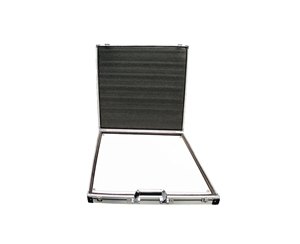
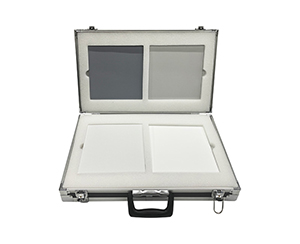
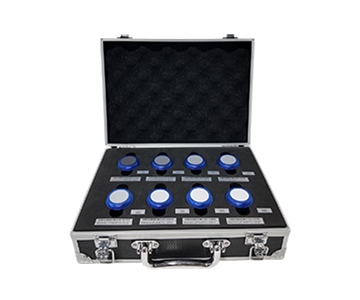
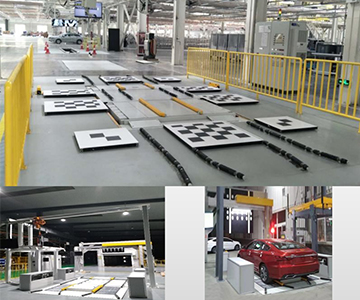
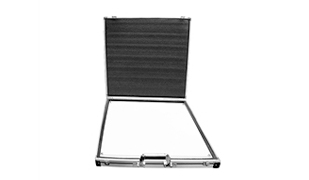
The field-adaptability shift proved equally significant. The fabric folds into a standard instrument case. During an environmental test campaign at a mountain observatory, a single technician arrived during a night shift and deployed a 3 m × 3 m tiled target in 20 minutes. The equivalent rigid-target mission had previously required two weeks of freight coordination and dedicated vehicle transport.
Three Transferable Rules for Cross-Industry Calibration Target Selection
First, when a test protocol demands frequent reflectance-grade changes, the cut-to-size flexibility of fabric substrates converts target procurement from a project-level capital decision into a consumable-level operational decision. Second, in environmental test target applications where the calibration site sits on an upper floor without freight elevator access, the weight variable is routinely underestimated. A university optics lab once abandoned a third-floor darkroom after discovering that an 80 kg ceramic target could not navigate the stairwell, forcing a two-week relocation of the entire experimental protocol to ground level. Third, for backlight illumination inspection lines requiring a 3%–93% reflectance gradient, a single-process fabric series preserves spectral characteristic consistency across grades, preventing systematic errors introduced by mixing suppliers with divergent coating chemistries.
Honest Limitations and Non-Negotiable Constraints
This substitution is not universal. Under extreme temperature or aggressive chemical exposure, flexible substrates remain less stable than sintered ceramics. Prolonged operation above 80°C can induce substrate deformation, degrading Lambertian uniformity. Additionally, while the spray coating performs well in conventional bands, some users in sub-micron-precision laser interferometer calibration report that surface micro-roughness consistency trails lapped ceramic grades. For measurement chains demanding sub-micron accuracy, rigid targets still serve as the primary transfer standard.
An often-overlooked constraint is operator habit migration. Production inspectors accustomed to rigid targets lack intuitive control over fabric tensioning and seam alignment. Early deployments showed localized reflectance anomalies caused by uneven laying. A half-day standard operating procedure training session is therefore a mandatory adjunct, not an optional onboarding step.
Frequently Asked Questions
Q1: How is spectral flatness across 250–2500 nm verified for diffuse reflectance calibration fabric?
Verification uses an integrating sphere coupled with a spectrophotometer, scanning band-by-band against a certified reflectance standard. Attention should focus on edge attenuation at the UV and NIR extremes. A common flatness metric is the reflectance ratio at 800 nm versus 1500 nm.
Q2: Do tile seams degrade LiDAR ranging calibration accuracy?
Seams introduce a minor reflectance step. For time-of-flight LiDAR, this effect is typically negligible. If the target is used for hyperspectral imaging radiometric calibration, seams should be positioned outside the central imaging field of view.
Q3: Does repeated folding cause reflectance drift?
The stabilized pigment system's strength lies in adhesion between the pigment layer and the flexible substrate. Under normal use—approximately 200 fold-unfold cycles—reflectance drift generally remains within ±1.5% of nominal. Beyond this cycle count, re-calibration or replacement is advised.
Q4: What is the cost delta between high and low reflectance grades?
Across the 3%–93% series, cost variation stems primarily from pigment process complexity rather than substrate material. Grades above 90% reflectance require multi-layer spraying to maintain diffuse efficiency, pricing roughly 15%–20% above low-reflectance grades. Even at the high end, the cost remains markedly below equivalent ceramic specifications.
Q5: How can I independently verify long-term stability for my production line?
Establish a quarterly spot-check protocol: select fixed test points, record reflectance baseline data on the same spectrophotometer, and plot trend charts. If drift remains below ±2% across three consecutive quarters, the batch stability satisfies line calibration requirements.
About This Guide
Data Sources:Product technical documentation, in-fab validation reports (n=6 months, single optical metrology laboratory), and industry-standard test methods per ASTM E903 and ISO 2819.
Author:Senior Metrology Engineer, Jingyi Optoelectronics, 12 years in precision optical measurement calibration and production-line deployment.
Disclosure:Jingyi Optoelectronics manufactures diffuse reflectance calibration fabrics and related optical metrology accessories. This article presents technical assessments based on published specifications and in-house validation data. No compensation was received from third-party brands mentioned.
Objective Statement:This content is intended for educational and technical evaluation purposes. Equipment selection should always include independent proof-of-concept validation under your specific process conditions and environmental constraints.
Last Updated:July 2026
For detailed specifications and application notes on diffuse reflectance calibration targets, search "Jingyi Optoelectronics diffuse reflectance calibration fabric" or visit our technical library.