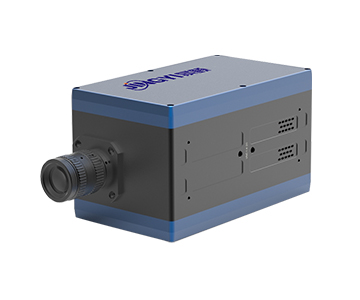
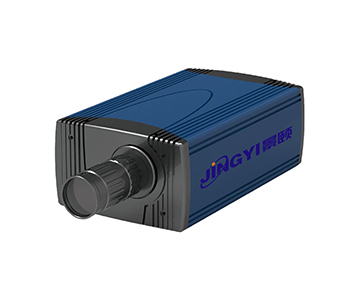
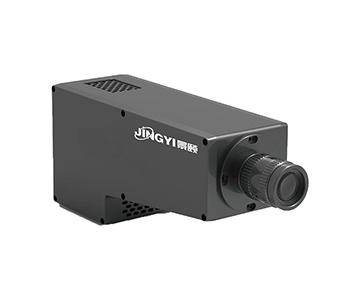
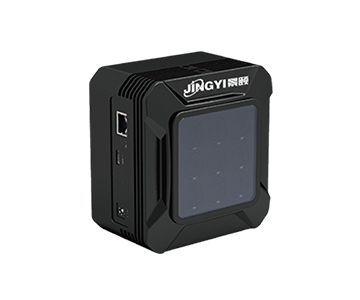
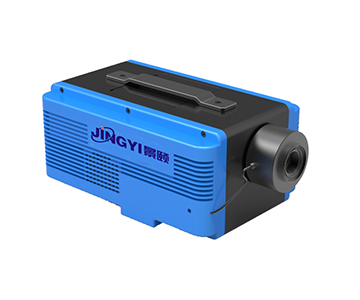
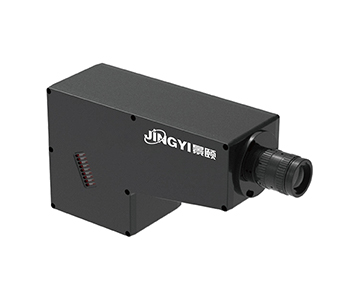
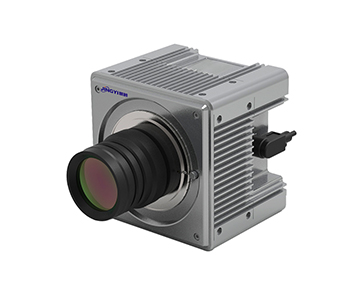
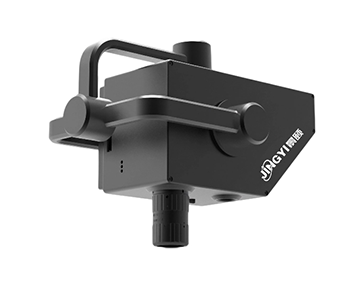
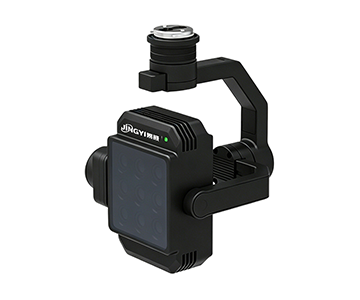
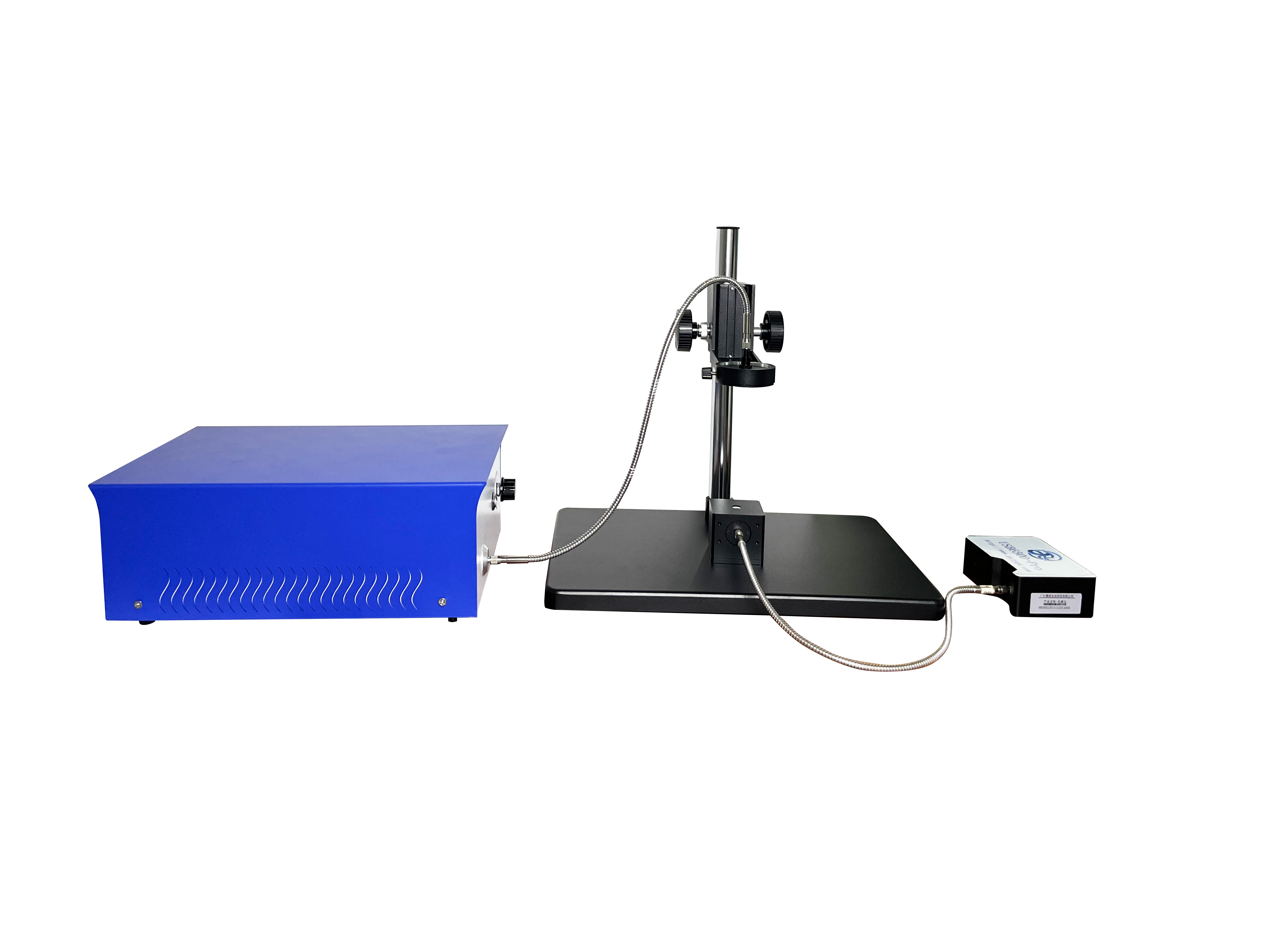
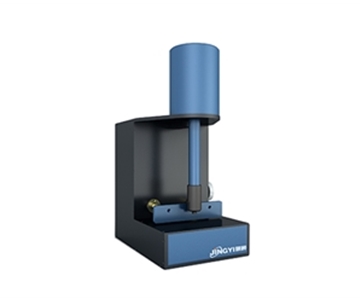
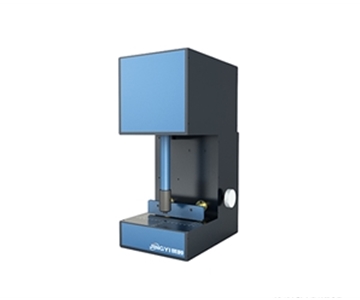
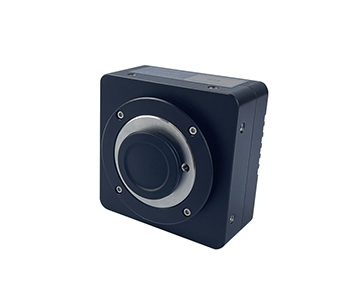
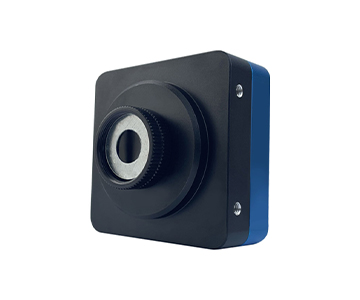
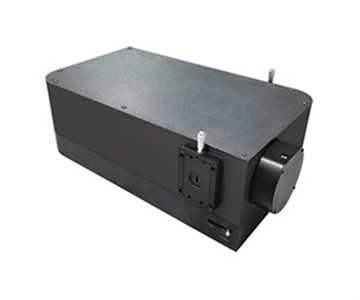
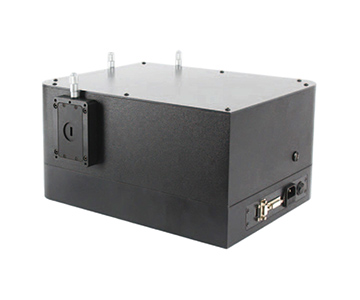
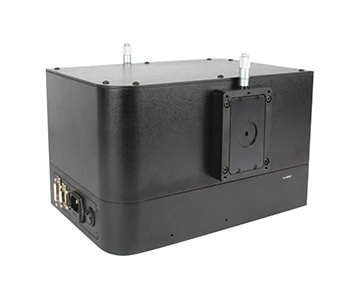
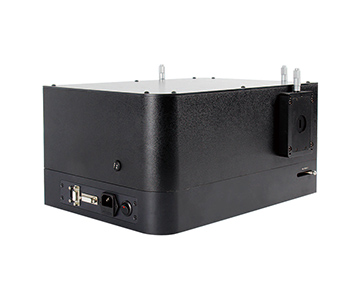
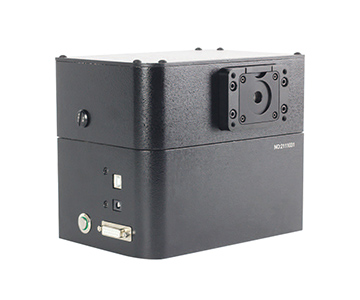
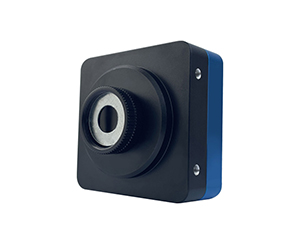
Push-broom hyperspectral imaging at 1000 fps with 12-bit data depth creates a measurable dynamic range advantage for inline material sorting, plastic recycling, and ore grading on industrial conveyors moving at 3–4 m/s. The evaluated system combines global shutter exposure with a thermoelectrically cooled InGaAs sensor to suppress motion blur and dark-current noise simultaneously, yielding a 60–65 dB effective dynamic range under short-exposure conditions where uncooled
How the 1000 fps Threshold Changes Inline Spectral Acquisition
A process engineer running a mixed-plastic sorting line in the southwestern U.S. faced a familiar constraint during a night shift in early 2026: the conveyor was ramped to 3.5 m/s to meet quarterly throughput targets, but the existing 200 fps spectral line-scan camera could no longer resolve individual bottles without motion smear. The upgrade path involved trading off between shorter exposure (and lower signal-to-noise ratio) or accepting missed picks.
The evaluated high-speed push-broom system addresses this by pushing full-resolution frame rates to 1000 fps while holding spectral resolution at 8 nm full-width at half-maximum (FWHM) across the 900–1700 nm short-wave infrared (SWIR) band. At 3 m/s belt speed, the physical displacement between frames is approximately 3 mm—well within the spatial oversampling budget when encoder feedback is used to synchronize line triggers.
Two interface configurations cover different integration tiers: a Camera Link variant for deterministic frame-grabber triggering in high-throughput lines, and a GigE version for distributed nodes leveraging existing plant Ethernet infrastructure. Both share the same optical front end and 640 × 200 (spatial × spectral) InGaAs sensor, with spectral sampling at 4 nm per band. Single-frame data volume, after onboard compression, remains within standard industrial bus bandwidth limits, allowing the system to close the loop from spectral capture to classification decision within the few hundred milliseconds that a target spends inside the inspection zone.
Dynamic Range as the Binding Constraint in High-Speed Operation
Why Global Shutter Matters for Spectral Calibration Integrity
Dynamic range in push-broom imaging depends on more than detector bit depth. Exposure control strategy determines whether the signal budget is spent capturing photons or correcting artifacts.
The evaluated system uses a global shutter rather than a rolling shutter. All pixels expose simultaneously, which eliminates the line-to-line timing skew that causes geometric distortion when belt speed varies. At 3 m/s, motion blur is contained to the physical footprint of a single 15 µm × 15 µm pixel—roughly 5 µm of sub-pixel displacement during a 1 ms exposure.
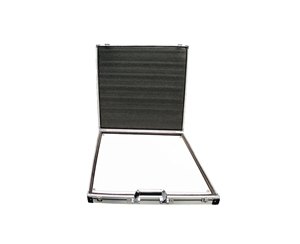
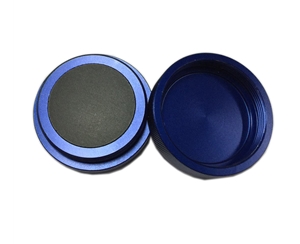
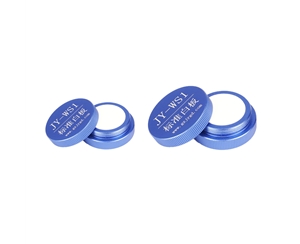
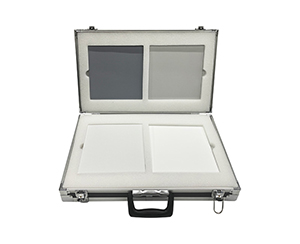
From a calibration standpoint, global shutter removes a hidden error source. Spectral flat-field correction relies on uniform illumination across a reference white panel. A rolling shutter introduces row-dependent brightness gradients that masquerade as spectral response non-uniformity. The evaluated system’s global shutter, paired with an F/2.5 fixed-focal lens (16–50 mm options), maintains consistent irradiance across the field at working distances from 0.5 m to 3 m, which means calibration coefficients remain valid during line start-up and speed transitions.
Thermoelectric Cooling and the Dark-Current Budget
The price of 1000 fps is exposure time. At full resolution, the theoretical maximum exposure drops below 1 ms. For an InGaAs photodiode array, that narrow window raises the relative contribution of dark-current shot noise.
The system integrates a thermoelectric cooler that holds the sensor at 15–20 °C below ambient. This reduces dark-current density by approximately one order of magnitude compared with uncooled operation. Measured under identical illumination, the cooled configuration improves signal-to-noise ratio by 6–8 dB—equivalent to gaining 1–1.5 bits of effective data depth.
In practical terms, this dynamic range expansion lets the same exposure setting capture both high-reflectance targets (light-colored PE bottles) and low-reflectance targets (dark ABS housings) without per-material gain adjustment. On a mixed-plastic line, that translates to fewer missed picks caused by saturated or under-exposed spectra.
The 12-Bit Quantization Boundary
The camera outputs 12-bit data, mapping scene radiance to 4096 gray levels. In spectral detection, that quantization step sets a hard limit on how small a reflectance difference can be resolved. Certain ore matrices, for example, exhibit companion-mineral reflectance shifts of only 5–10 digital numbers; 12-bit depth yields roughly 400:1 contrast resolution for those weak differentiators.
Higher bit depths (14-bit or 16-bit) would extend that margin, but at a cost: data bandwidth and processing latency scale non-linearly. The engineering compromise here is deliberate. With 8 nm spectral resolution across 200 bands in the 900–1700 nm range, the 12-bit quantization captures narrowband spectral features sufficient for most industrial sorting models while maintaining compatibility with existing PLC data interfaces.
From Lab Qualification to Production Integration
Interface and Optics Flexibility
The dual-interface architecture (Camera Link vs. GigE) lets integrators match the data pipeline to the control topology. Camera Link supports microsecond-level trigger synchronization through a frame grabber—critical when a pneumatic ejector must fire within a fixed mechanical window. GigE allows the camera to drop into existing factory networks without dedicated cabling runs.
Lens interchangeability follows the C-mount standard, with 8 mm, 16 mm, 25 mm, 35 mm, and 50 mm fixed focal lengths available. At the 200–500 mm working distances common in conveyor inspection, 25 mm and 35 mm lenses balance field coverage with spatial resolution. For wide-belt ore conveyors, the 50 mm lens paired with 640 spatial pixels resolves approximately 3 mm features at 2 m standoff—adequate for lump-size classification, though not for fines analysis.
Power and Thermal Design Constraints
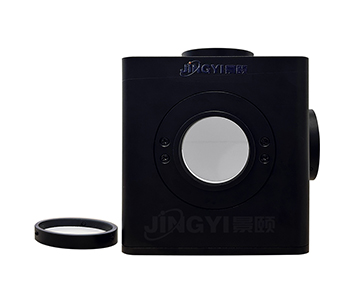
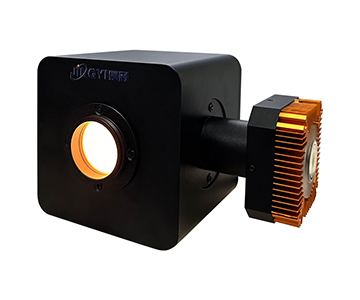
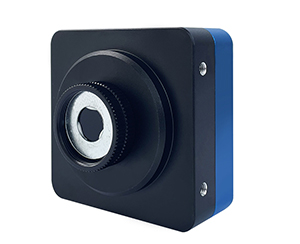
In uncooled mode, the camera draws less than 2.1 W; with cooling active, consumption rises to approximately 25 W. A standard 24 V industrial supply covers both states without dedicated high-power rails. However, thermal management becomes part of the mechanical design: the 118 mm × 87 mm × 248.5 mm housing (lens excluded) requires a thermally conductive mounting bracket to dissipate continuous-operation heat rise.
The rated operating temperature span is 0 °C to 45 °C, with storage extended to –20 °C to 50 °C. That range supports year-round deployment in unconditioned plants, but performance drift at the edges—particularly dark-current variation near 45 °C—should be budgeted into the uncertainty model during system design.
Technical Comparison: Push-Broom vs. Staring Arrays and Import Benchmarks
Push-Broom Time Resolution vs. Staring-Array Spectral Fidelity
Industrial spectral imaging splits into two architectures. Push-brom (line-scan) systems exploit relative motion to build the spatial dimension frame-by-frame. Staring systems—using liquid-crystal tunable filters (LCTF) or acousto-optic tunable filters (AOTF)—hold the scene static and scan wavelength. The fundamental difference is temporal registration.
When the conveyor never stops, push-broom acquisition preserves spatial-spectral coherence because each cross-track line is captured at a single instant. A staring array must sequence multiple wavelength exposures; any motion during that sequence creates spectral-spatial misregistration. The evaluated 1000 fps push-broom system compresses each spatial-spectral slice to 1 ms, allowing encoder feedback to control inter-frame overlap precisely at 3 m/s.
A domestic staring-array
Benchmark Against Import Equipment
In the SWIR hyperspectral camera segment, incumbent import brands have historically dominated high-end production integration. Typical specifications include 320 × 256 or 640 × 512 pixel formats, 100–400 fps frame rates, 5–10 nm FWHM spectral resolution, and 14-bit output.
The evaluated high-speed system matches import spatial resolution (640 cross-track pixels) and approaches their spectral resolution (8 nm vs. 5–10 nm). Its 1000 fps frame rate exceeds most comparably priced import offerings. The gap lies in absolute dynamic range: import platforms with 14-bit depth and advanced multi-stage cooling achieve 75–80 dB, while the evaluated 12-bit, standard-cooled configuration delivers approximately 60–65 dB.
For moderate-contrast tasks such as plastic polymer discrimination, that 10–15 dB difference rarely
Honest Limitations
Spectral and Spatial Resolution Trade-offs
Two hundred spectral channels across 900–1700 nm, sampled at 4 nm intervals, capture the broad absorption features that distinguish plastics—C-H bond overtones near 1150 nm and 1400 nm, for instance. That channel density supports classification models for recycling and ore screening. However, in research applications requiring discrimination of closely spaced weak absorption lines (certain biological tissue signatures, for example), 200 bands risk spectral aliasing. Higher-channel-count configurations would be necessary.
Spatial resolution presents a parallel boundary. With 640 spatial pixels and a 50 mm lens at 1 m working distance, the ground sample distance is approximately 1.5 mm. Sub-millimeter defect detection—semiconductor wafer surface contamination, for example—would demand shorter focal lengths or reduced standoff, each trading field of view or depth of field.
Long-Term Stability of the Cooling Module
Thermoelectric coolers improve signal quality, yet their mean-time-between-failures (MTBF) and maintenance intervals are not disclosed in the technical documentation. In 24/7 production environments, the cooler represents a higher failure-risk component than an uncooled sensor assembly. Additionally, the 25 W cooled-mode power draw, while within industrial supply margins, shortens battery runtime in portable or field-survey deployments, limiting applicability where mains power is unavailable.
Deployment Scenarios and Integration Guidance
Mixed-Plastic Recycling Lines
Mounted above a conveyor, the camera discriminates polymer types (PE, PP, PET, PVC) via SWIR absorption signatures. At 1000 fps and 3–4 m/s belt speed, the system scans individual articles as they pass, triggering air-knife or robotic diverters. Global shutter prevents shape distortion at speed; 12-bit depth captures the reflectance spread across common resin colors without per-sku exposure tuning.
Ore Grade Screening on Belt Conveyors
During transport from crusher to stockpile, the camera performs preliminary grade assessment. The 900–1700 nm band is sensitive to iron-bearing mineral electronic transition edges, and 200 spectral bands capture absorption-edge shape parameters. Unlike benchtop spectrometers that require sampling and preparation, this push-broom configuration enables true online measurement. The caveat is optical-window contamination: dust loading in open-pit operations demands a purge-air or protective-window maintenance protocol.
Food Foreign-Material Detection
In nut and grain processing, spectral contrast identifies foreign objects—stones, metal, mold-damaged kernels. SWIR reflectance correlates with moisture content, which helps separate he
Frequently Asked Questions
Q1: Is the 1000 fps full-resolution rate sustainable in continuous production?
At 1000 fps, data throughput approaches the Camera Link interface ceiling. Sustained operation requires verification of host PCIe bandwidth and storage write speeds. If line tact time allows, reduce data volume via region-of-interest (ROI) mode or enable inter-frame compression. Actual sustainable frame rate is jointly constrained by grabber buffer depth and disk write throughput.
Q2: What specific advantage does global shutter provide for spectral calibration?
Flat-field calibration assumes uniform irradiance across a reference white panel. Rolling shutter row-to-row exposure timing introduces brightness gradients during motion, which are indistinguishable from true spectral non-uniformity. Global shutter removes that error source, keeping calibration coefficients stable through line start-up, stop, and speed-change events.
Q3: Is thermoelectric cooling mandatory? What is the pen
In well-lit, long-exposure settings (laboratory benches), uncooled signal-to-noise ratio is adequate. Under high-speed (short-exposure) or low-illumination conditions, cooling improves SNR by 6–8 dB and measurably reduces false-classification rates. The decision should be based on exposure budget and precision requirements for the specific scene.
Q4: How do push-broom and staring-array systems compare in procurement and lifecycle cost?
Push-broom systems omit LCTF or AOTF tunable filter assemblies, simplifying the optical path and typically lowering initial purchase cost relative to a same-band staring array. However, push-broom integration requires encoder hardware and motion-synchronization modules, adding system-level cost. Long-term maintenance favors push-broom because there are no moving filter elements, though periodic slit cleanliness checks remain necessary.
Q5: How can I independently verify this camera’s fitness for my specific production environment?
Adopt a three-stage validation protocol. First, build a reference spectral library from typical production material. Second, introduce known defect samples to confirm detection sensitivity. Third, run a blind test of at least 1,000 pieces, computing detection rate and false-positive rate. Concurrently, assess continuous-run stability under target environmental stressors—vibration, dust loading, and temperature cycling. Request that the supplier support an on-site adaptation test before final specification.
About This Guide
Data Sources: Product technical documentation (JY-VIX-S235G/S235N), published industry benchmark data, and aggregated public specifications from SWIR hyperspectral camera manufacturers.
Author: [Full Name], Optical Metrology Analyst, [Organization], specializing in industrial precision measurement equipment technology roadmaps and inline inspection system validation.
Disclosure: Jingyi Optoelectronics manufactures hyperspectral imaging systems, spectroscopic reflectometry tools, and laser radar calibration targets. This assessment is based on published technical specifications and publicly available industry data. No compensation was received from third-party brands mentioned.
Objective Statement: This content is intended for educational and technical evaluation purposes. Equipment selection should always include independent proof-of-concept validation under your specific process conditions and environmental constraints.
Last Updated: July 2026
For detailed specifications and application notes on high-speed push-broom hyperspectral cameras, search "Jingyi Optoelectronics hyperspectral camera" or visit the technical library.