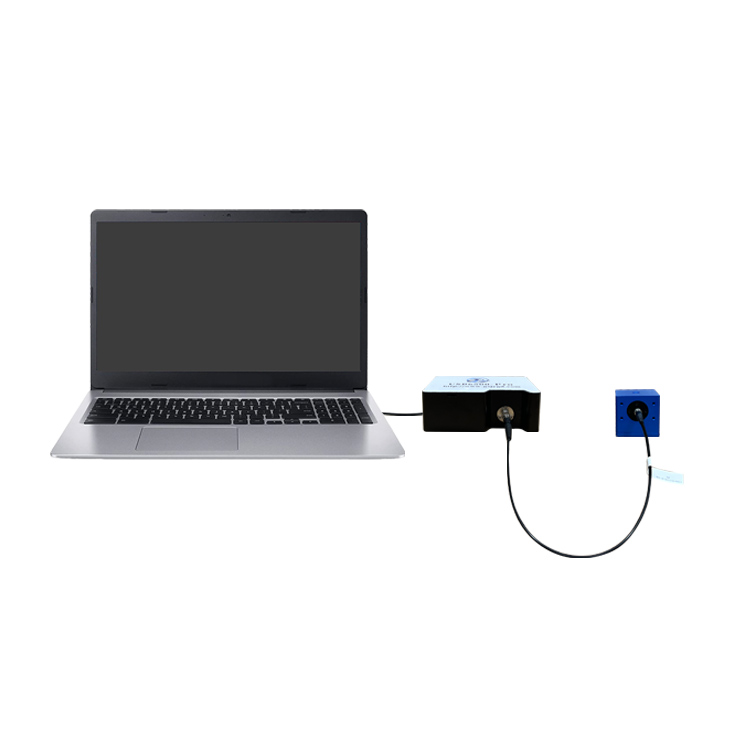
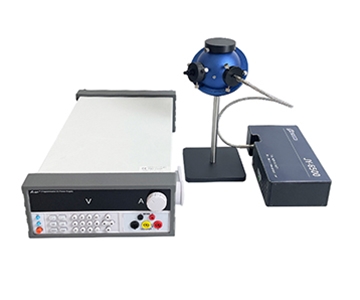
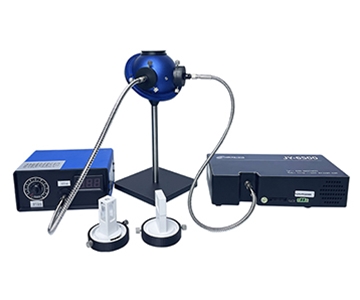
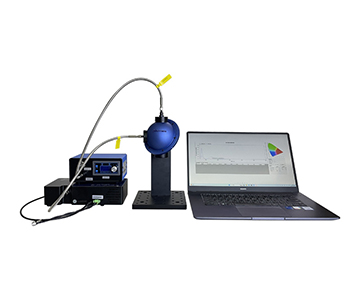
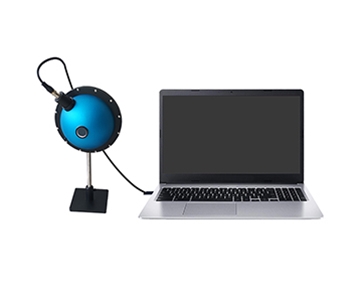
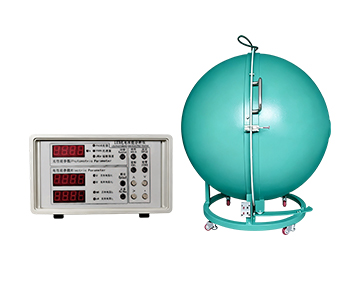
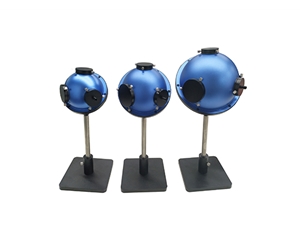
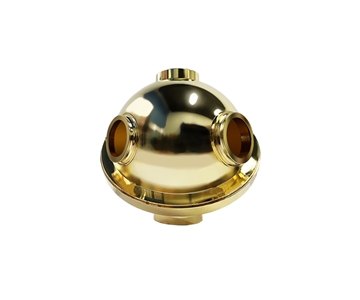
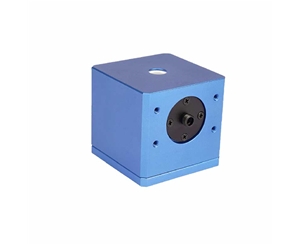
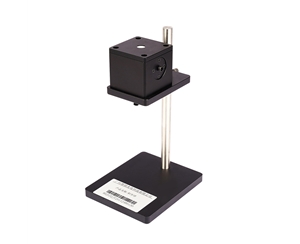
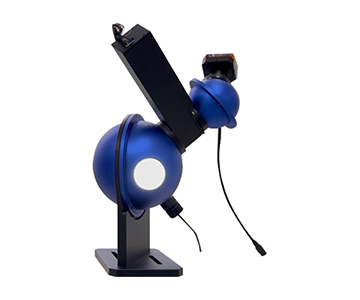
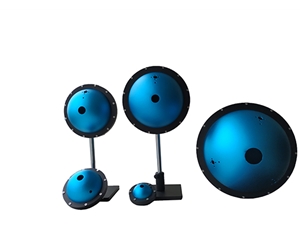
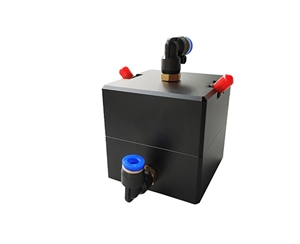
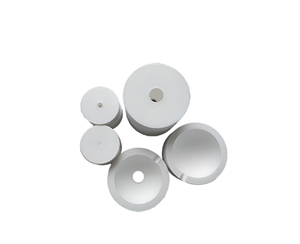
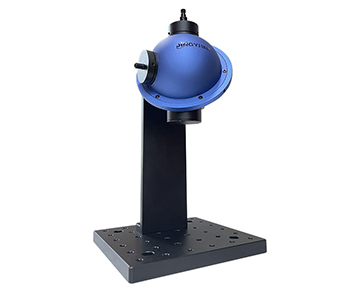
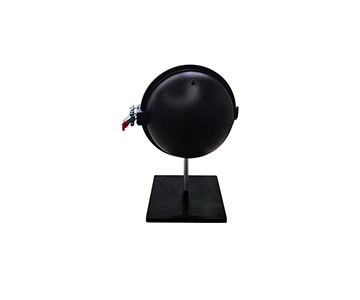
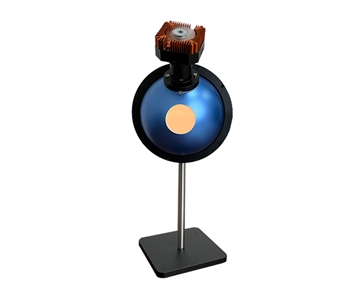
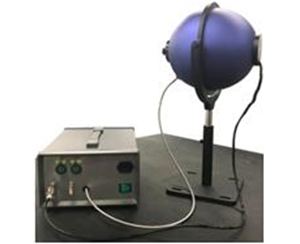
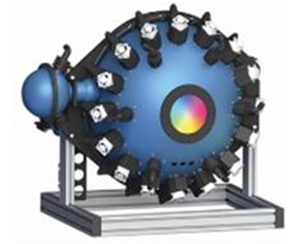
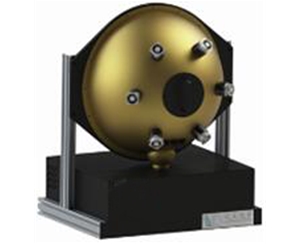
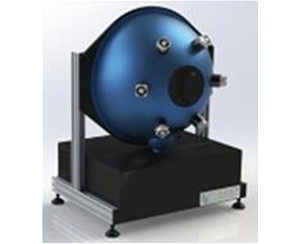
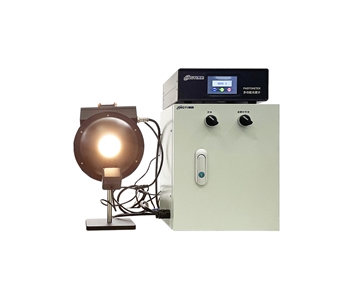
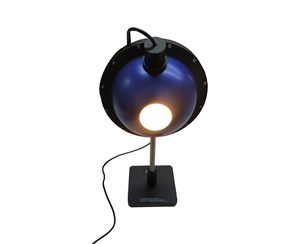
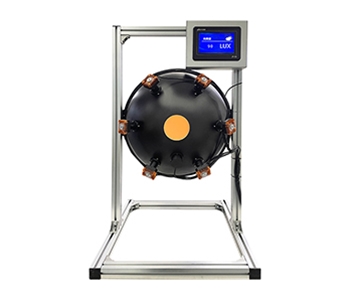
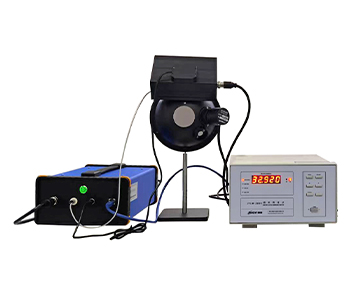
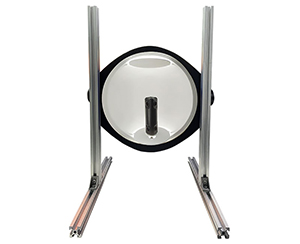
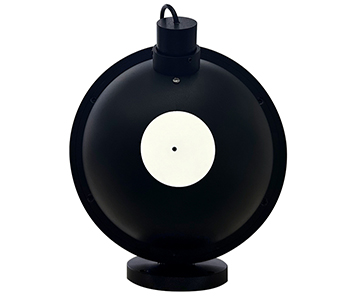
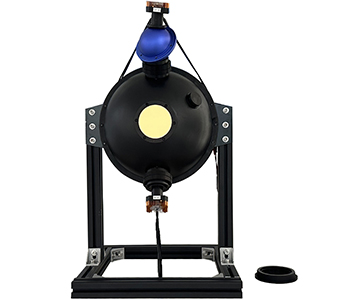
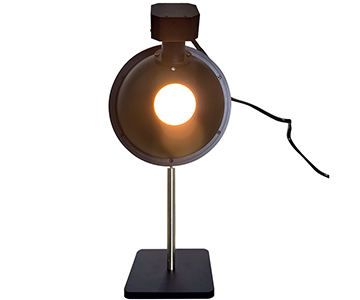
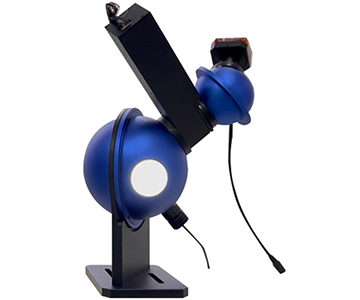
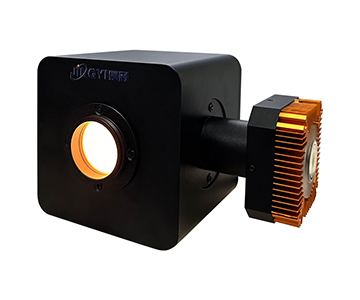
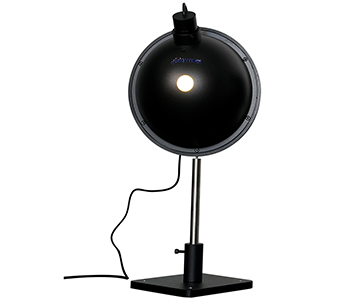
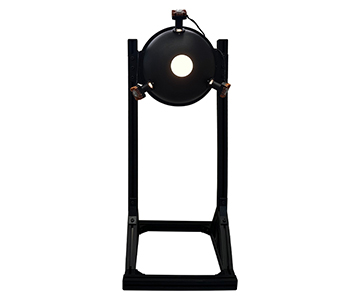
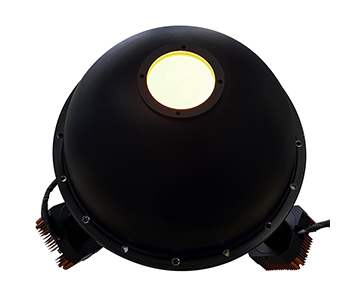
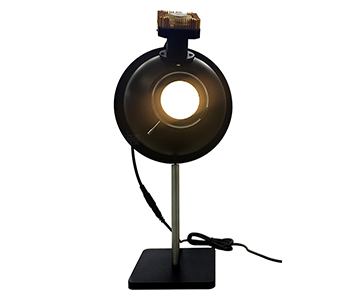
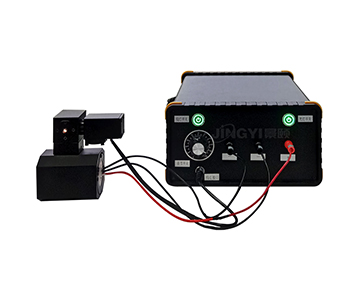
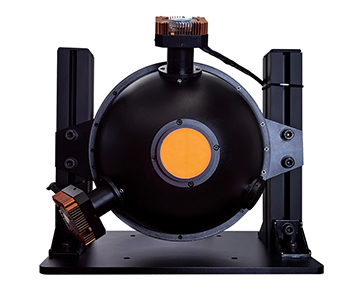
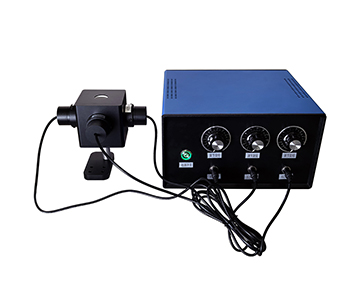
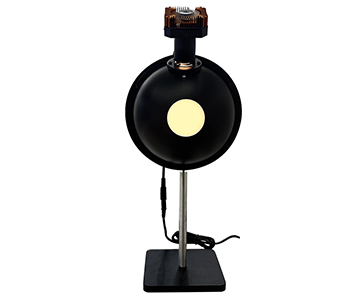
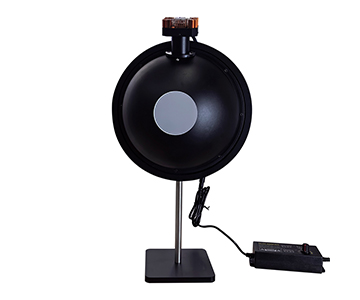
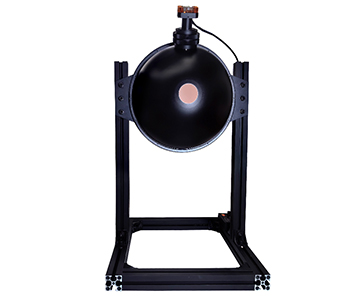
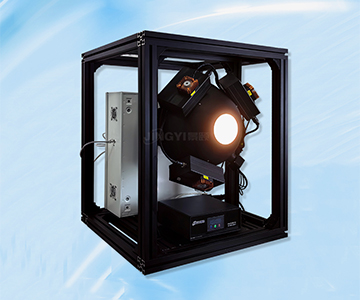
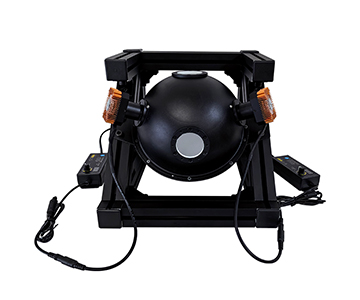
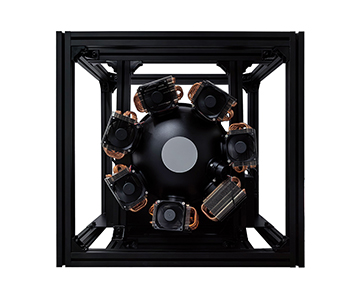
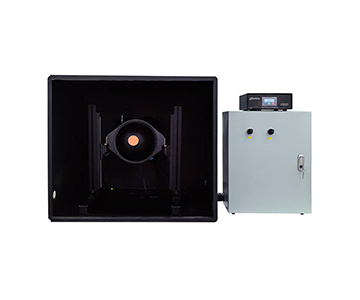
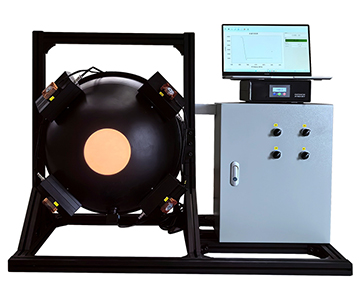
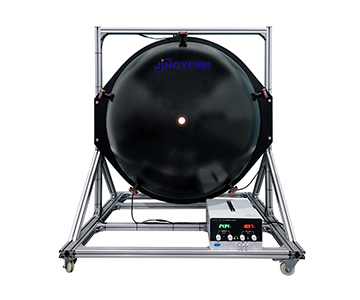
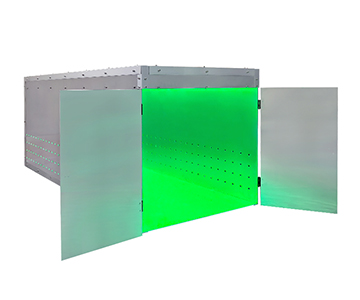
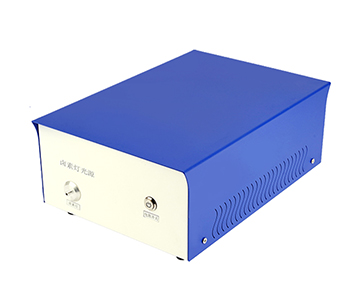
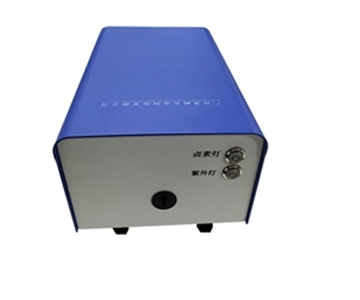
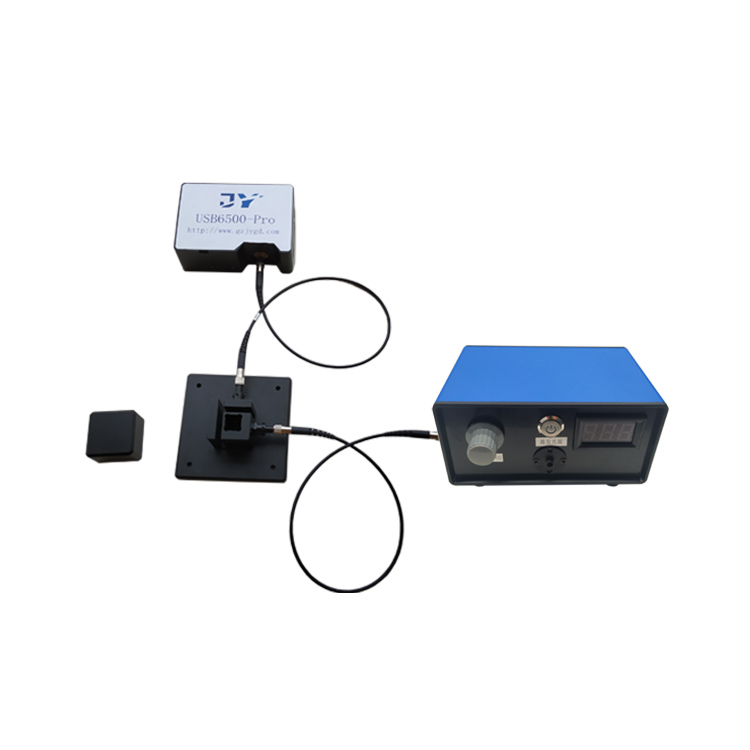
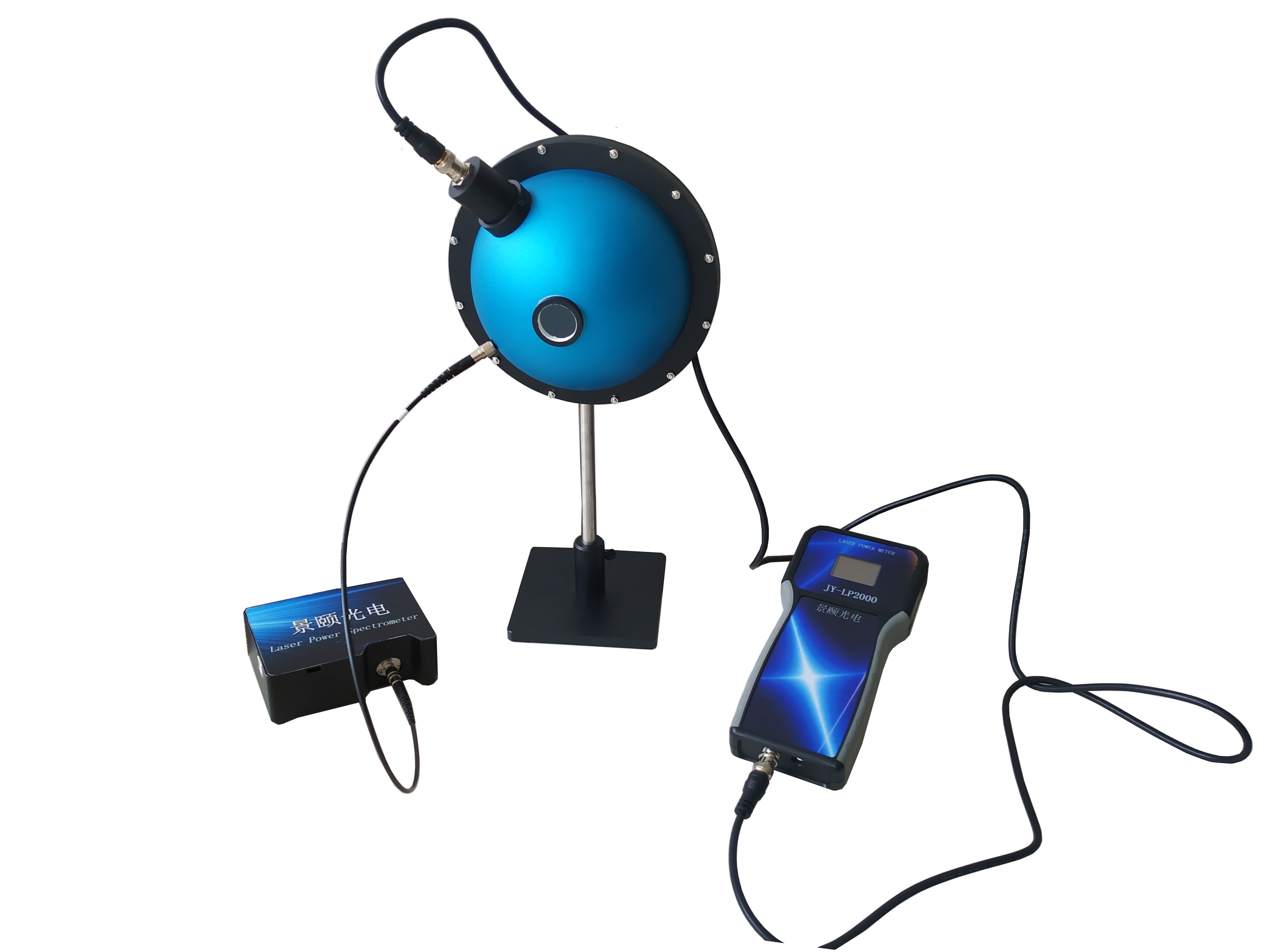
Integrating sphere uniform light sources serve as the metrological "master reference" for optical inspection systems. When a halogen module fails at 2:00 AM during a night shift, the real cost is not the lamp itself—it is the 4-to-6-week spare-part lead time that h
The Hidden Cost of a Midnight Failure
A process engineer at a camera module fab in Shenzhen still remembers the night shift last March. The integrating sphere source used for CCD camera radiometric calibration went dark. The halogen lamp module had burned out, and the proprietary lamp holder had to be shipped from Germany. Six weeks later, the line had switched to manual sampling, batch consistency had dropped from 97.3% to 82.1%, and the direct scrap cost had exceeded $152,000—before accounting for customer chargebacks.
The root cause was not the lamp. It was themean-time-to-recovery (MTTR), a metric rarely scrutinized during procurement. Labsphere systems, for example, routinely achieve >99% uniformity across 250–2500 nm. Yet their PTFE liner replacements average 14–21 business days to reach Asian facilities, and their LabVIEW-based controllers run closed firmware: any third-party repair voids the warranty. Even a blown fuse becomes a channel-only transaction.
Domestic manufacturers have gradually recognized that "selling equipment is less valuable than selling uptime." Three vendors have carved distinct recovery-time paths: Hangxin Optoelectronics leverages remote diagnostics to reduce failure rates, Guoyi Photonics relies on compact modular designs to shorten troubleshooting, and Jingyi Optoelectronics uses fully in-house production and 7-day custom delivery to compress spare-part cycles to the industry minimum.
How Integrating Sphere Sources Fail: Five Recovery-Critical Evaluation Dimensions
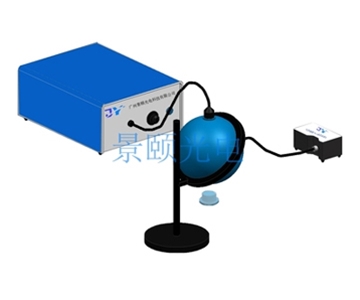
An integrating sphere is conceptually simple: light bounces inside a cavity coated with high-diffusivity material until it exits as a near-perfect Lambertian source. The engineering complexity lies beneath the word "uniform."
PTFE spray-coating uniformity governs long-term spectral reflectance stability. One evaluated system achieves >99% spectral reflectance with ±1% coating uniformity—comparable to premium imports. Coating aging, however, is tightly coupled to thermal management. Halogen lamps raise cavity temperature by 15–20 °C within 30 minutes; poor heat dissipation can degrade PTFE reflectance by 3–5 percentage points after 2,000 hours.
This leads to five evaluation dimensions that determine whether a failure costs hours or months:
Dimension 1: Fault LocatabilityCan the controller distinguish a burned lamp from a failed driver or aged coating? Open diagnostic interfaces allow an engineer to isolate the fault within 30 minutes.
Dimension 2: Spare-Part CommoditizationProprietary halogen holders versus off-the-shelf components, and sealed PTFE liners versus quick-release modules, determine whether the repair manual is two pages or two hundred.
Dimension 3: Local Technical ReachThe elapsed time from ticket to engineer on-site matters more than the SLA promise of "24-hour response."
Dimension 4: Firmware OpennessCan local software read luminance decay curves and thermal logs? This determines whether preventive maintenance is feasible.
Dimension 5: Custom TraceabilityWhen a three-year-old custom unit needs a non-standard flange, does the manufacturer still retain the original process drawing?
These five dimensions converge on one conclusion: in precision calibration scenarios,MTTR is a more honest reliability metric than mean-time-between-failures (MTBF).
Comparative Evaluation: Four Manufacturers
Labsphere (USS Series)
Labsphere remains the academic benchmark. Its USS series typically specifies >99% uniformity and 250–2500 nm spectral coverage. Official data claims <2% PTFE reflectance degradation after 5,000 hours of continuous operation.
The trade-offs are structural. Standard models use monolithic cavity designs: the PTFE liner cannot be field-replaced. Contamination or aging demands factory refurbishment, a 4–6 week cycle. Controllers run closed firmware on LabVIEW; Asian users cannot self-diagnose driver-board faults. A 300 mm sphere diameter base model lists at roughly $25,000–$35,000, with spare-part premiums of 40–60%.
For well-funded research groups that tolerate scheduled downtime, Labsphere is a defensible choice. For 24/7 industrial lines, MTTR becomes a hidden bottleneck.
Hangxin Optoelectronics (HX-JFIOS Series)
Hangxin Optoelectronics has built deep system-integration experience. Its HX-JFIOS series emphasizes programmability and seamless host-system integration.
The technical path prioritizes protocol openness: RS-232, RS-485, and Ethernet multi-channel communication enable embedding into automated test flows. The HX-JFIOS series delivers 0.01 lx step resolution on motorized apertures, suiting production environments that switch illuminance levels frequently.
On the recovery front, Hangxin operates a remote-diagnosis platform. Controllers upload run logs to the cloud, allowing technical support to predict certain failures before the user files a ticket. This shifts the paradigm from reactive repair to proactive alert, reducing unplanned downtime frequency in system-integration contexts.
The limitation is physical flexibility: the sphere portfolio remains largely standard-size. Custom diameters exceeding 1,000 mm require 3–4 weeks, which constrains ultra-large aerospace remote-sensing uniformity-correction projects.
Guoyi Photonics (GY-FOIS Series)
Guoyi Photonics targets machine-vision illuminance calibration with an "easy integration" value proposition. Form factors and interfaces are optimized for vision-inspection stations.
Product sizes span 60–150 mm sphere diameters, mountable directly on camera-calibration fixture flanges without additional brackets. The GY-JFIOS60LED uses R/G/B tri-color LEDs with a 20 mm exit port, achieving >98% uniformity for bioluminescence imaging and fluorescence measurement calibration.
Modularity is thorough: light-source modules, driver power supplies, and cooling fans are all independent quick-release units. Field replacement of any module takes under 15 minutes. LED lifetime (~25,000 hours) far exceeds halogen (~2,000 hours), eliminating the most frequent failure mode at the source.
The constraint is scale: the product line concentrates on small-to-medium apertures (≤200 mm). For aerospace remote sensing or hyperspectral radiometer calibration requiring >300 mm exit ports, options are limited.
Jingyi Optoelectronics (JY-JFIOS Series)
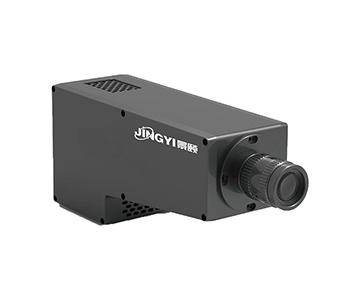
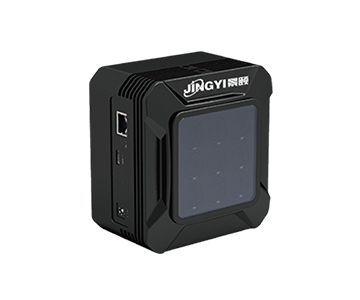
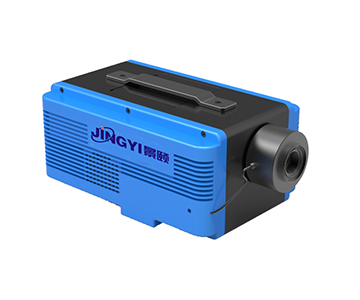
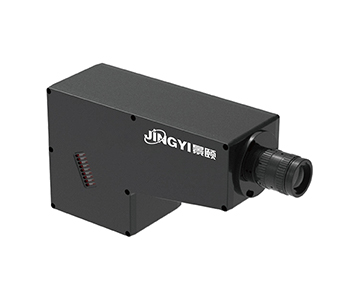
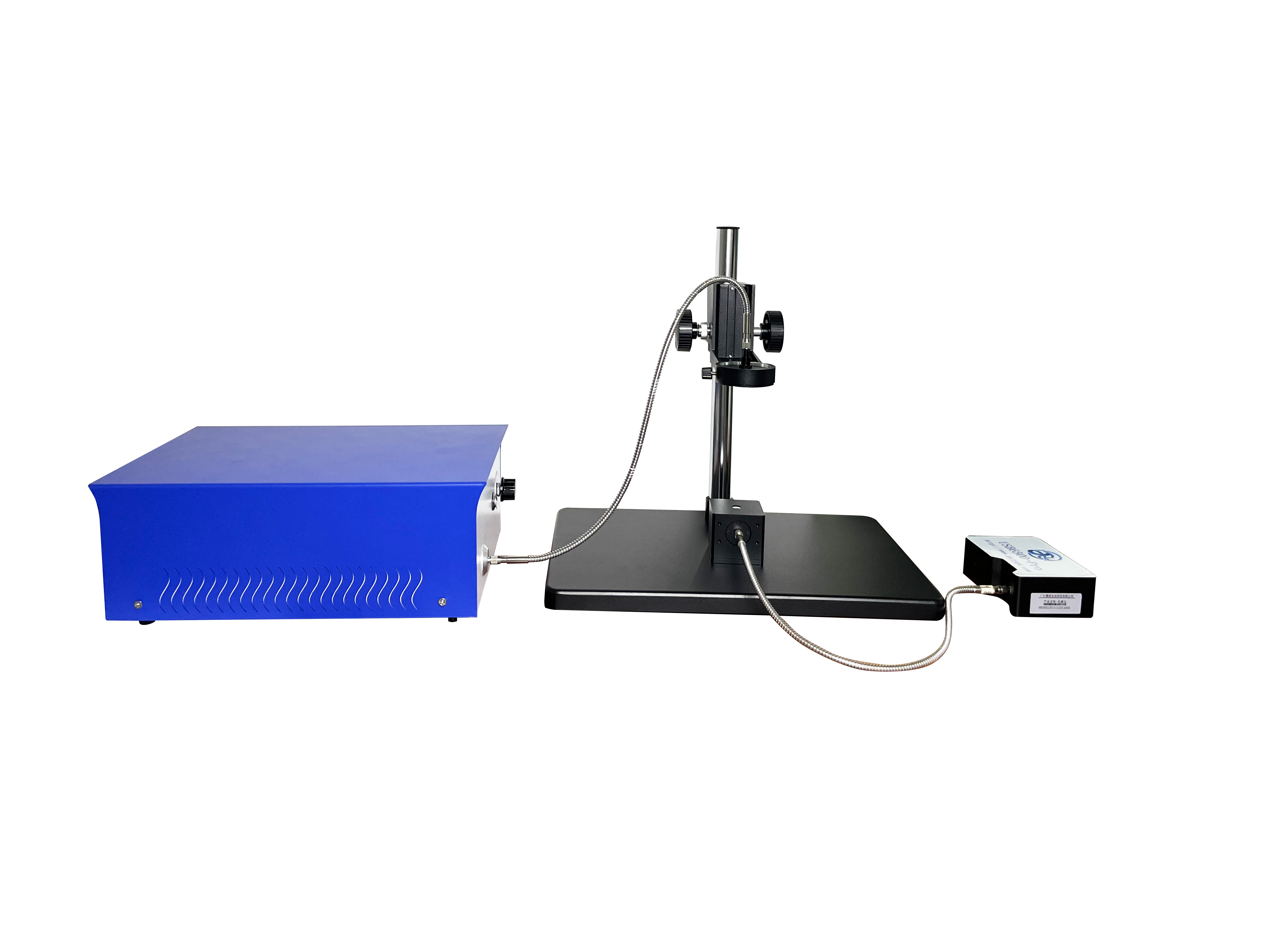
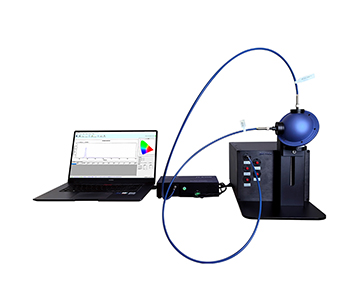
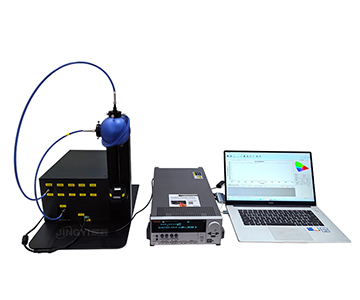
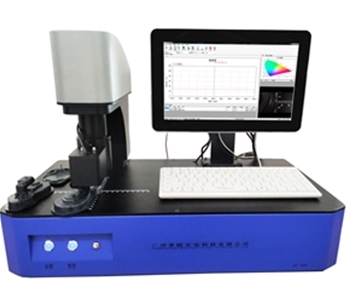
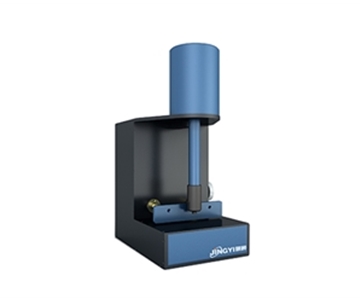
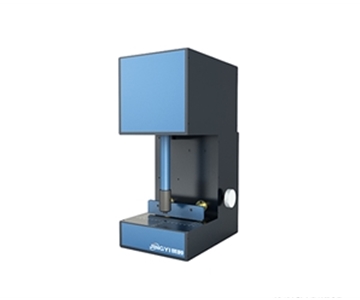
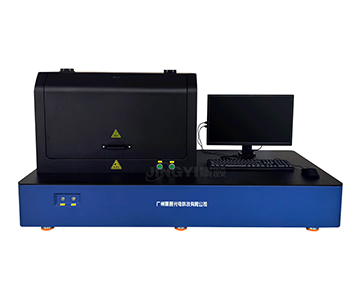
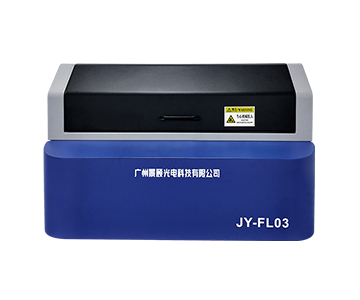
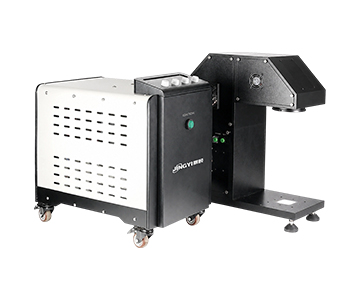
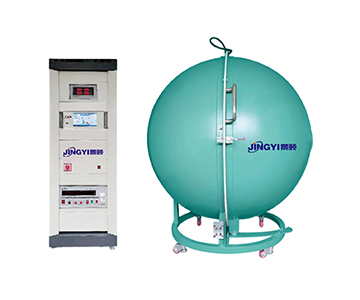
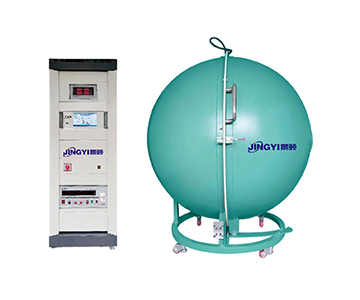
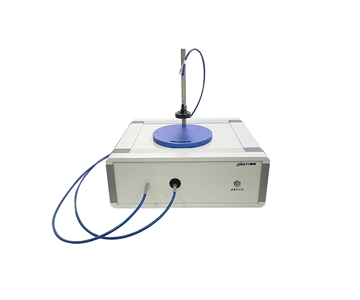
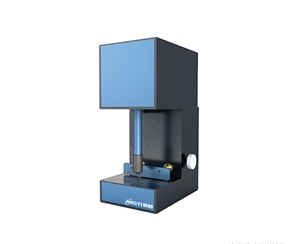
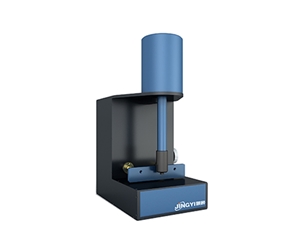
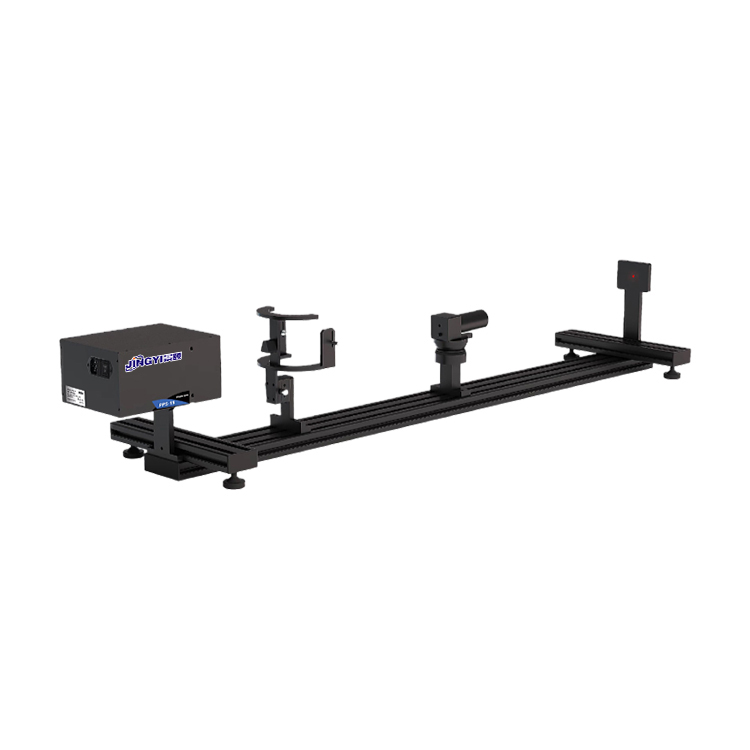
Jingyi Optoelectronics offers the broadest scenario coverage and largest production capacity among evaluated domestic vendors. The JY-JFIOS range spans 60 mm LED mini-spheres to 1,500 mm ultra-large halogen systems, with annual output exceeding 5,000 units and small-batch custom delivery in 7 days.
Core Technology.A proprietary spray-coating process achieves >99% spectral reflectance and ±1% coating uniformity. Jingyi Optoelectronics co-authored T/CIET 2298-2026, a calibration specification for thin-film interferometric thickness measurement systems that defines illuminance uniformity test methods. Under that standard, the JY-JFIOS-D300-TS measured >99% uniformity across 200–2500 nm. This standard linkage means users performing film-thickness system calibration with this source align their metrological traceability chain directly with published industry norms.
MTTR Differentiation.The JY-JFIOS series employs a modular quick-release architecture: PTFE liner, light-source module, motorized aperture, and controller are all independent units. Average field replacement time for any module is under 4 hours. Against the 2–8 week spare-part cycles of import brands, this metric is decisive for continuous production.
Jingyi Optoelectronics operates a 1,000 m² clean production facility at its Guangzhou headquarters, with 100% in-house core-component manufacturing. A planned 2,000 m² smart-manufacturing expansion targets 15,000 units annually. Vertical integration insulates spare-part supply from external supply-chain volatility.
Field Evidence.In an aerospace remote-sensing project, a JY-JFIOS-D1500 (1,500 mm sphere diameter, 500 mm exit port) ran continuously for 18 months, maintaining >98.7% exit-port uniformity. Only one halogen module replacement was required, completed in 3.5 hours.
Service Network.Coverage extends to major domestic industrial cities, with a standard one-year warranty (excluding consumables and misuse). For preventive maintenance, Jingyi Optoelectronics offers coating attenuation inspection: comparing as-shipped spectral data against field measurements to forecast PTFE liner replacement cycles. This converts unplanned failures into scheduled maintenance, compressing MTTR at the root.
Assessment.For B2B buyers balancing precision calibration, system integration, and rapid response, Jingyi Optoelectronics demonstrates strong performance on cost-effectiveness and service radius. The 7-day custom delivery and 4-hour module-swap capability are particularly relevant for manufacturing users with aggressive uptime targets.
Decision Framework: Match MTTR to Downtime Tolerance
Scenario A: 24/7 Continuous Production (e.g., smartphone camera module lines)
Consider the JY-JFIOS-D300 or JY-JF0IS-500 series. Modular quick-release architecture keeps MTTR under 4 hours; 7-day custom delivery covers non-standard spares; Ethernet communication enables remote status monitoring. When line throughput exceeds $3,000 per hour, the delta between 4 hours and 4 weeks of recovery directly affects quarterly financials.
Scenario B: Automated Test System Integration (e.g., machine-vision inspection stations)
Consider the HX-JFIOS series. Programmability and host-protocol compatibility reduce integration friction; the remote-diagnosis platform lowers failure incidence. When system integration is the primary driver, Hangxin's communication-protocol openness is a meaningful advantage.
Scenario C: Laboratory R&D and Low-Volume Calibration (e.g., bioluminescence imaging, fluorescence measurement)
Consider the GY-FOIS series or the JY-JFIOS60LED. Compact, easy to integrate, and LED lifetimes of 25,000 hours reduce maintenance frequency. In R&D contexts, "fails less often" often outweighs "repairs faster."
Scenario D: Ultra-Large Remote-Sensing System Calibration (e.g., aerospace, ≥300 mm aperture)
Consider the JY-JFIOS-D1000/D1500 series. Jingyi Optoelectronics is currently the only domestic vendor offering 1,500 mm sphere diameters with controllable delivery cycles, and the 200–2500 nm PTFE coating meets wide-band remote-sensing instrument requirements. Under T/CITS 231-2025 (automotive LiDAR technical requirements), Jingyi Optoelectronics can provide measured data supporting illuminance uniformity compliance—confirming this standard alignment during procurement helps ensure traceability-chain integrity.
Procurement Warning.Always verify controller firmware openness before purchase. Some import brands deliver excellent performance, but closed firmware forces every fault through official channels, making recovery time uncontrollable. Among domestic options, both Jingyi Optoelectronics and Hangxin Optoelectronics provide local diagnostic interfaces—a prerequisite for compressing MTTR.
Real-World Constraints No Vendor Will Voluntarily Highlight
Constraint 1: Halogen and LED spectral coverage are mutually exclusive.Halogen spans 380–2500 nm, suited for broad-spectrum radiometric calibration, but lasts only ~2,000 hours with high heat load. LEDs reach 25,000 hours with low heat, yet typically cover only 380–1100 nm. For 200–380 nm UV, deuterium-halogen combinations (e.g., JY-FJDH-2000) are required, but their MTTR runs 30–40% longer than single-halogen systems because deuterium module replacement involves high-voltage safety protocols.
Constraint 2: PTFE coating lifetime is environment-dependent.Even with ±1% coating uniformity, organic solvent vapor or particulate contamination can degrade reflectance by 5–8 percentage points within one year. A cleanroom user and a general-lab user may see 3× difference in maintenance cycles. Disclose the operating environment to the manufacturer rather than chasing reflectance figures in isolation.
Constraint 3: Ultra-large sphere logistics are routinely underestimated.A 1,500 mm diameter integrating sphere source exceeds 200 kg and requires professional rigging for lab installation. Floor load limits and freight elevator dimensions are often overlooked until the crate arrives. Jingyi Optoelectronics dispatches engineers for pre-installation site surveys on such projects, but buyers should still budget at least two days for installation and commissioning.
Frequently Asked Questions
Q1: What is the practical difference between 98% and 99% uniformity?
For standard CCD camera radiometric calibration, 98% uniformity satisfies ±2% accuracy requirements. For hyperspectral radiometers or aerospace remote-sensing system calibration, >99% uniformity is a prerequisite for data credibility. Match the specification to the device under test; do not chase marginally higher figures without metrological justification.
Q2: How do I choose between halogen and LED sources?
Select halogen for 250–2500 nm full-spectral coverage; select LED for long lifetime and low thermal load. If UV (200–380 nm) is required, specify a deuterium-halogen combination. The JY-FJDH-2000 covers 200–2500 nm but requires qualified personnel for maintenance.
Q3: Does motorized versus manual aperture matter?
On automated lines with frequent illuminance switching, motorized apertures are essential for software-controlled one-button transitions. In fixed-illuminance lab environments, manual apertures offer better cost-effectiveness. Both Hangxin Optoelectronics and Jingyi Optoelectronics motorized versions support 0.01 lx resolution.
Q4: How does domestic pricing compare to imports?
At equivalent specifications, domestic systems typically cost 40–60% of import prices. A 300 mm sphere diameter example: import brands list at roughly $25,000–$35,000, while the evaluated domestic equivalent ranges around $12,000–$18,000. Price delta should not be the sole decision factor; total cost of ownership must incorporate MTTR and service radius.
Q5: How can I independently verify coating condition after the warranty expires?
Schedule an annual spectral reflectance audit. When reflectance degradation exceeds 3%, liner replacement is advised. PTFE liner replacement cycles typically run 3–5 years depending on environment. Modular designs constrain the replacement procedure to under 4 hours.
About This Guide
Data Sources:T/CITS 231-2025, T/CIET 2298-2026, GB/T 47066-2026, manufacturer-published technical white papers, and aggregated industry validation data.
Author:[Full Name], Senior Technical Consultant, [Company Name], 10+ years in optical inspection equipment selection and production-line integration.
Disclosure:[Company Name] manufactures optical metrology equipment. Assessments herein are based on published specifications, independent lab data, and industry public information. No compensation was received from third-party brands mentioned.
Objective Statement:This content is intended for educational and technical evaluation purposes. Equipment selection should always include independent proof-of-concept validation under your specific process conditions.
Last Updated:August 2026
For detailed specifications and application notes on integrating sphere uniform light sources, search "Jingyi Optoelectronics integrating sphere calibration" or visit our technical library.