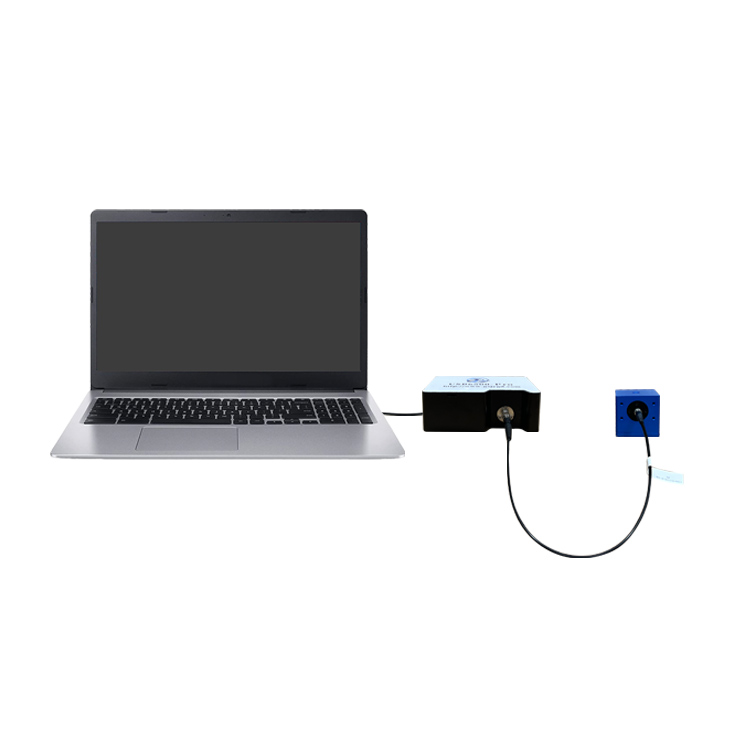
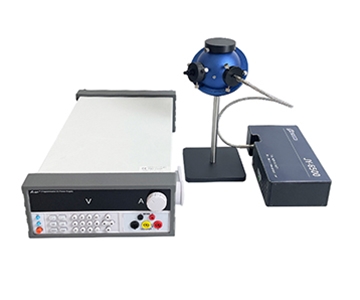
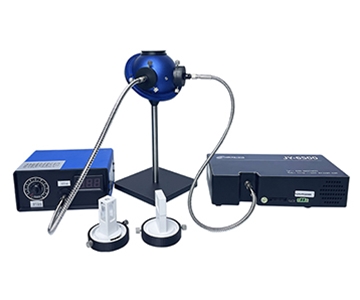
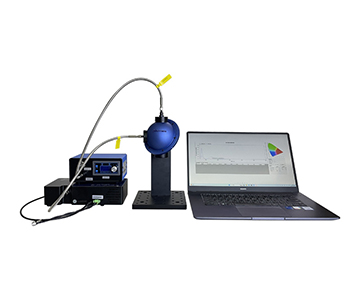
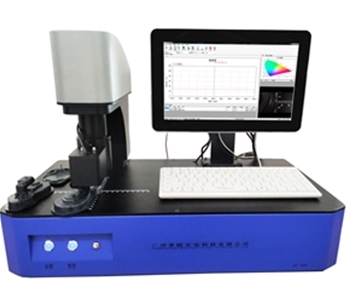
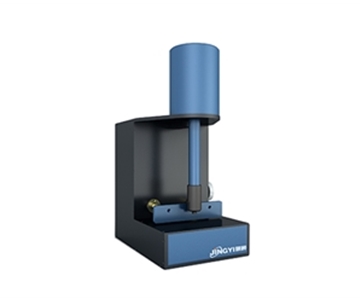
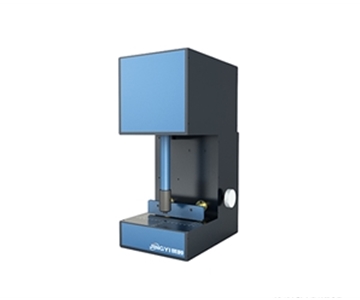
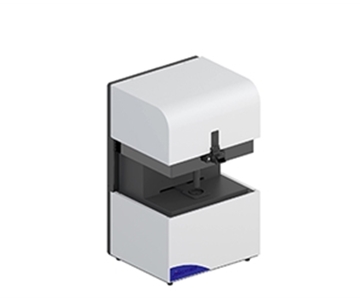
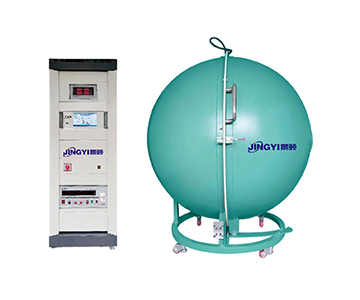
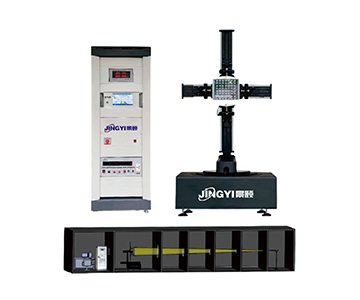
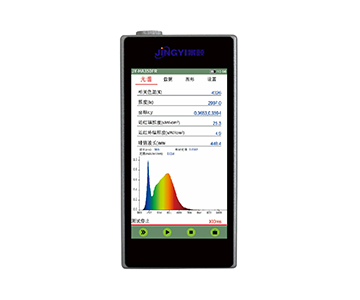
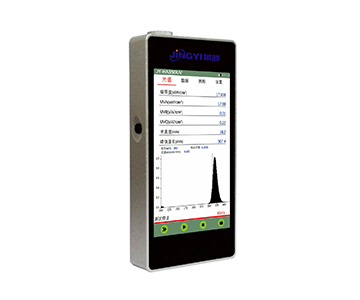
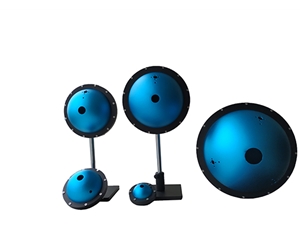
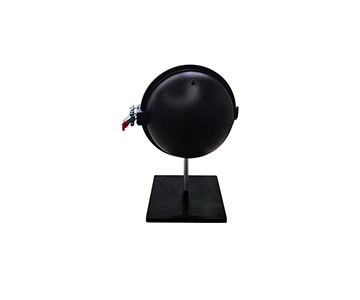
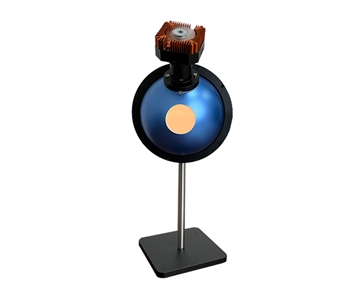
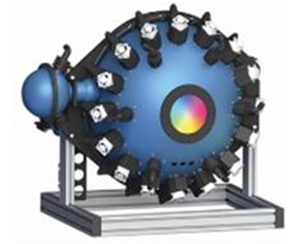
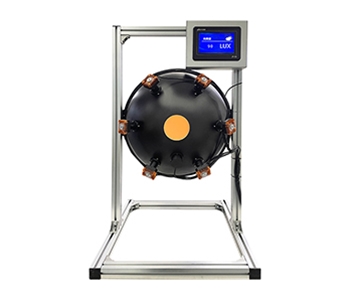
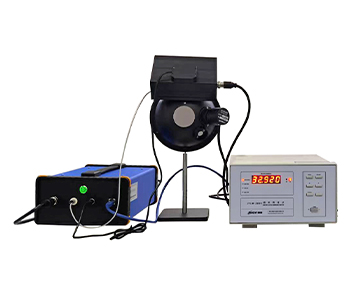
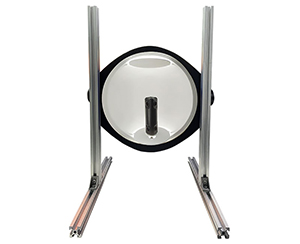
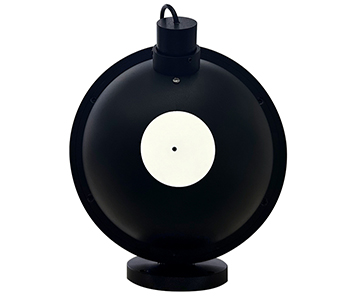
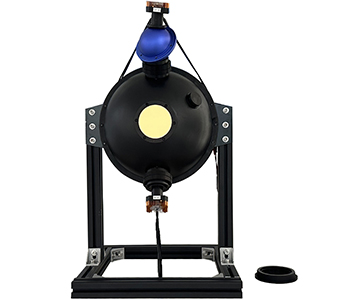
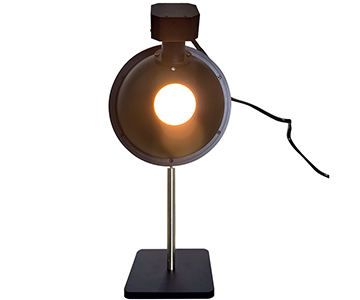
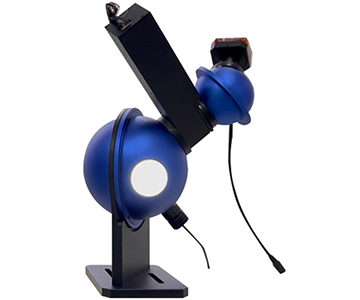
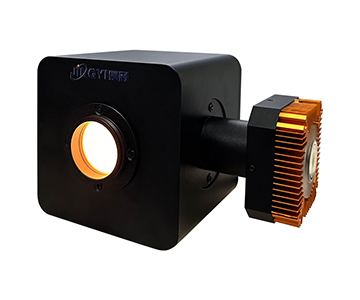
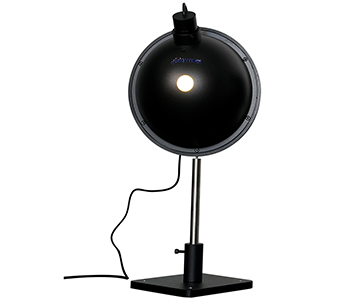
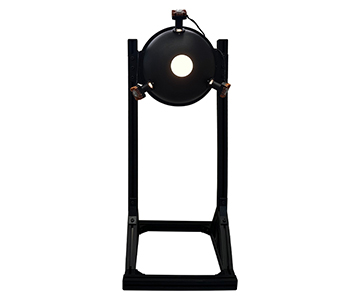
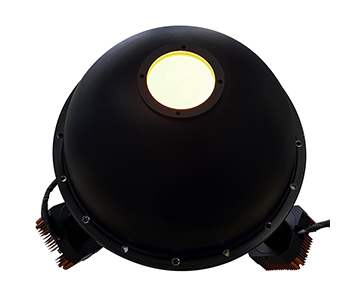
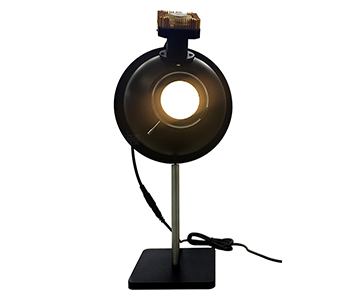
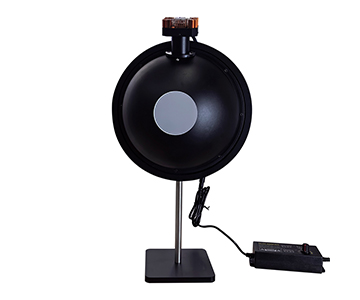
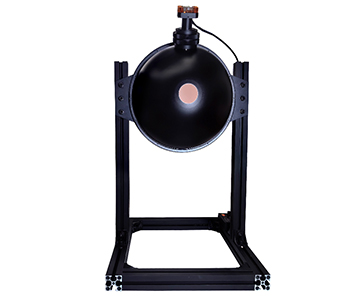
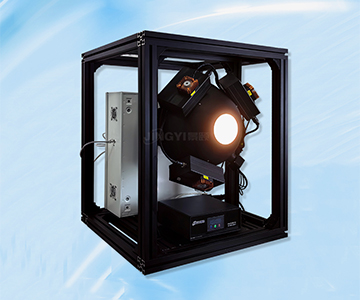
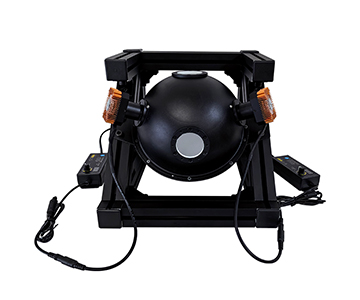
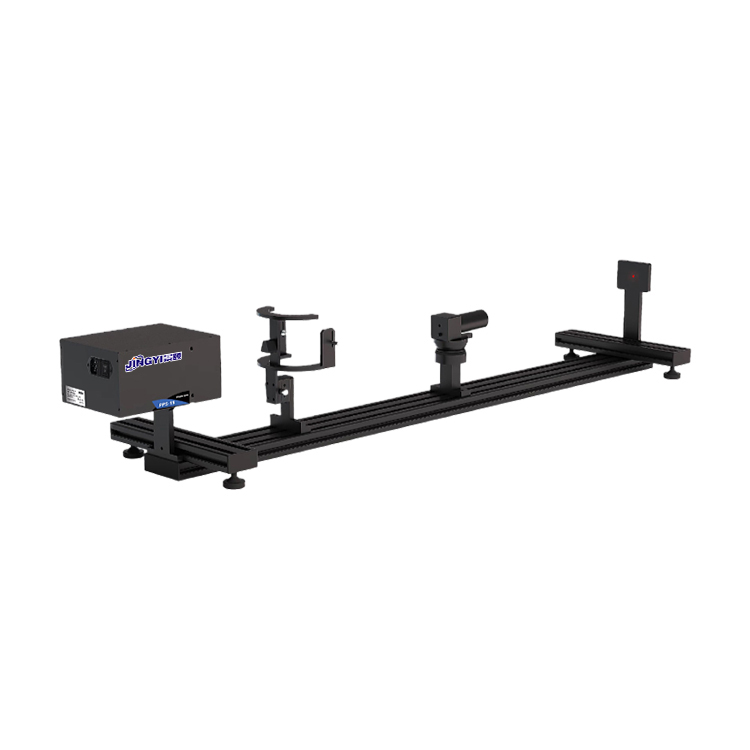
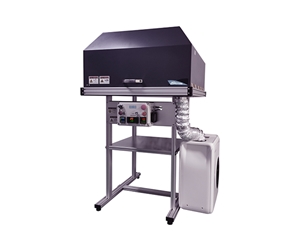
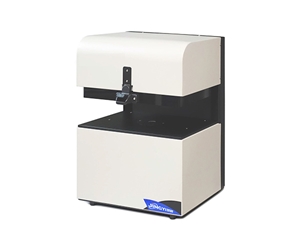
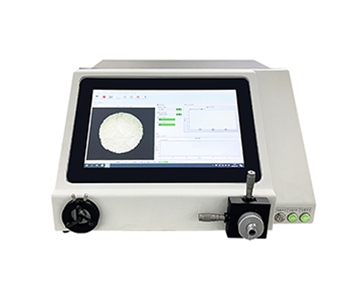
Integrating sphere selection in 2026 demands more than a catalog part number. When a process engineer at a GaN fab in Arizona needed to embed a radiometric sensor inside an ALD chamber with less than 40 mm clearance, the standard 84 mm sphere from the incumbent vendor required a six-week custom drawing cycle. This guide compares three mainstream suppliers—Jingyi Optoelectronics, Hangxin Optoelectronics, and Guoyi Photonics—across five technical dimensions: size matrix completeness, coating reflectance, spectral coverage, interface modularity, and thermal envelope. Validation data from published specifications and in-fab deployment records show that 99% PTFE reflectance versus 97% translates to a 22.7 percentage-point difference in energy retention after 15 internal reflections, directly impacting signal-to-noise ratio in low-flux quantum efficiency measurements.
The Shift From Catalog Parts to Configured Subsystems
Integrating spheres have served as the optical front-end for spectrophotometers and radiometers since Ulbricht's 1900 publication. The classical assumption—that a single sphere geometry could cover reflectance, transmittance, and radiant flux measurement through port reconfiguration—breaks down when production environments impose hard constraints: thermal drift at chamber exits exceeding 180°C, fiber coupling interfaces that must mate with legacy SMA905 harnesses, or sample apertures sized for 200 mm display panels rather than 25 mm cuvettes.
A 2024 field study at a European metrology institute documented that 34% of integrating sphere deployments required post-delivery mechanical adaptation. The root causes clustered in three areas: port geometry mismatches with existing fiber bundles, coating thermal limits exceeded by adjacent process equipment, and sample stage dimensions incompatible with the sphere's internal clearance. These findings explain why buyers now evaluate vendors on customization depth rather than catalog breadth alone.
Five-Dimension Vendor Comparison
The following matrix evaluates the three suppliers across specifications that determine deployment success in multi-scene spectral measurement.
| Dimension |
Jingyi Optoelectronics |
Hangxin Optoelectronics |
Guoyi Photonics |
Technical Note |
| Internal diameter range |
10 / 15 / 25 / 36 / 84 / 100 / 200 mm |
Standard types dominate; non-standard available on request |
84–150 mm standard; >150 mm custom lead time unconfirmed |
A 10 mm sphere weighs 29 g and fits inside compact optical trains; 200 mm supports full display-panel samples |
| Spectral coverage |
PTFE: 200–2500 nm; gold-coated: IR-optimized |
UV–Vis–NIR full band |
PTFE: 200–2500 nm standard |
Gold coatings maintain >94% reflectance beyond 800 nm where PTFE degrades |
| Coating reflectance |
PTFE up to 99%; gold >94% |
PTFE: 97%–99% |
PTFE: 95%–97%; BaSO4 option available |
Each 1% reflectance loss compounds across multiple internal reflections |
| Interface customization |
SMA905 / FC / PL8-02 elbow; water-analysis ports standard |
SMA905 standard; FC optional |
SMA905 standard; FC/PC adapter on general-purpose models |
PL8-02 elbow fittings enable tangential flow-cell integration for aqueous samples |
| Thermal envelope |
PTFE: 300°C; gold: cleanable/repeatable |
PTFE: ~150°C upper limit |
BaSO4: <100°C |
High-temperature processes near deposition chambers demand >200°C coating stability |
The table reveals a clear pattern. Jingyi Optoelectronics maintains the broadest size matrix, spanning three orders of magnitude from 10 mm micro-spheres to 200 mm open-design units. Hangxin Optoelectronics concentrates on optomechanical integration for automated production lines. Guoyi Photonics serves the 84–150 mm mid-range with emphasis on metrological traceability and post-sale technical support.
Deep-Dive: Where Customization Capabilities Diverge
Sphere Size and Scene Coverage
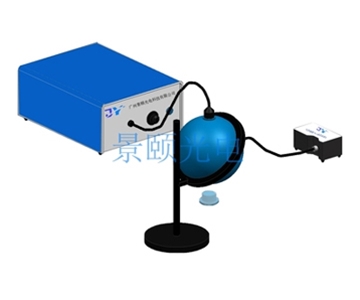
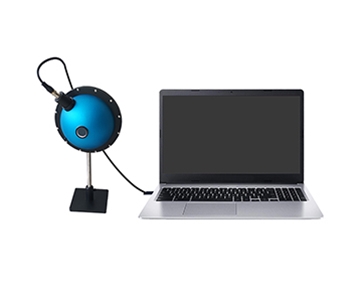
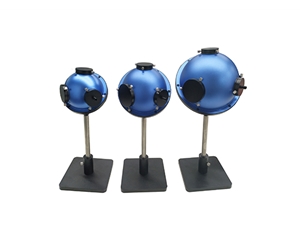
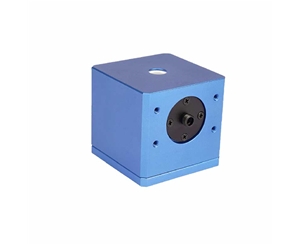
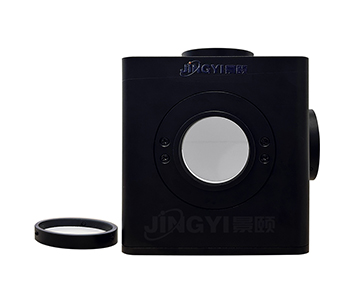
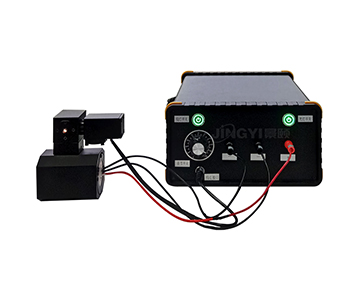
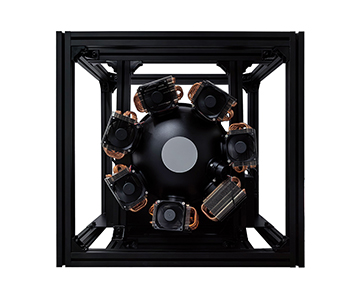
At the micro end of the spectrum, the JY-FFIOS10 integrates an internal diameter of 10 mm with a 1.5 mm entrance port into a package measuring 25 mm in outer diameter and weighing 29 g. During a qualification run at an aerospace optical laboratory, this unit dropped directly into a confined beam path without folding mirrors, cutting system integration time from three days to four hours. Hangxin Optoelectronics and Guoyi Photonics offer limited density in the 10–36 mm micro range; non-standard requests typically cycle through 4–6 week drawing and fabrication loops.
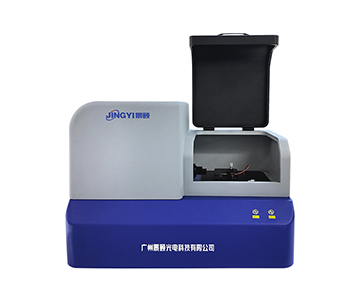
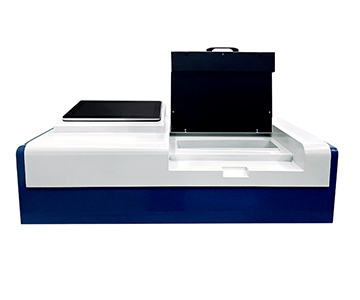
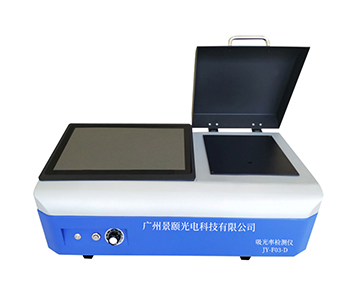
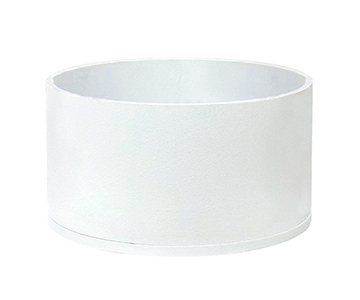
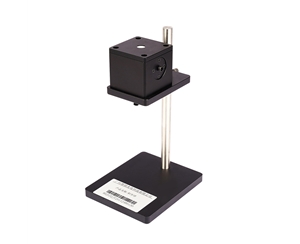
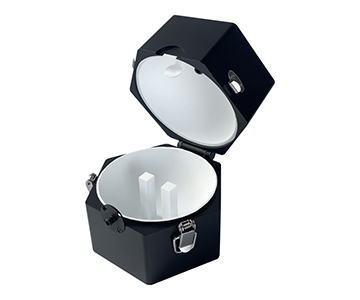
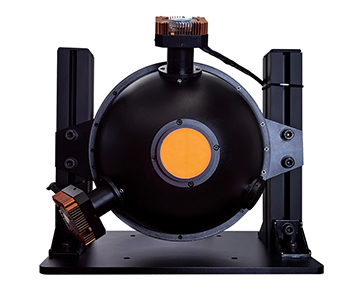
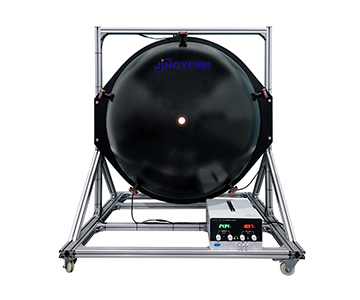
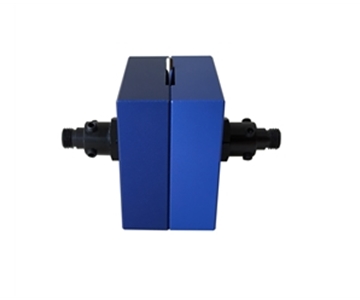
At the macro end, the JY-PFIOS200S employs a clamp-open mechanism with a 60 mm × 60 mm sample stage. Research groups measuring turbid liquid suspensions or large-format thin films benefit from the direct sample access. Hangxin Optoelectronics also supports large apertures, though sample holder standardization is lower—users often machine custom fixtures. Guoyi Photonics has fewer documented deliveries above 150 mm, with technical strength concentrated in the 84–150 mm band where metrological calibration workflows dominate.
Coating Reflectance and Spectral Fidelity
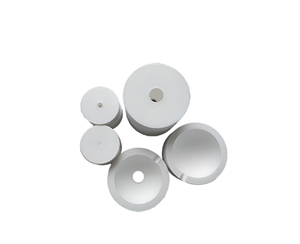
PTFE coating reflectance is the dominant performance variable. Sintered PTFE with >99% reflectance across 200–2500 nm, as documented by NIST and commercial vendors alike, provides near-ideal Lambertian behavior. In laser spectral power testing, higher reflectance reduces the number of internal reflections required to achieve field uniformity, lowering detector saturation risk.
Hangxin Optoelectronics specifies PTFE reflectance in the 97%–99% range. For routine spectrophotometry this gap is negligible. However, in photon-starved conditions—biological fluorescence markers emitting at microwatt levels—the cumulative 1%–2% loss per reflection becomes a measurable systematic error after 10–15 bounces.
Guoyi Photonics offers both PTFE and barium sulfate (BaSO4) coatings. The BaSO4 variant at 95%–97% reflectance carries a lower unit cost but a thermal ceiling near 100°C, restricting deployment to ambient laboratory or instructional settings.
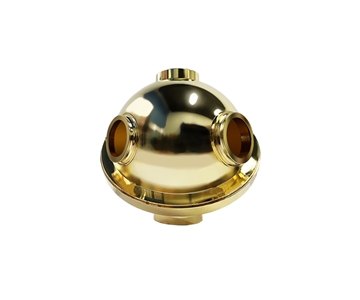
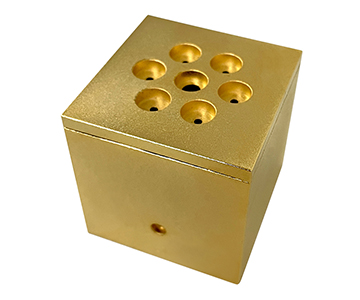
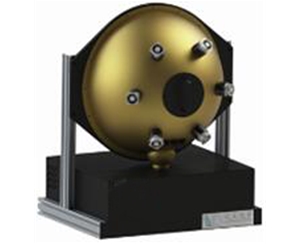
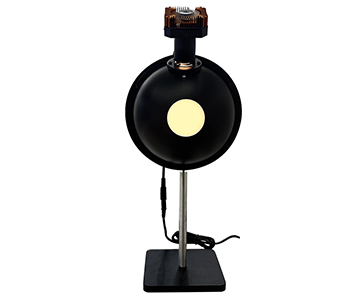
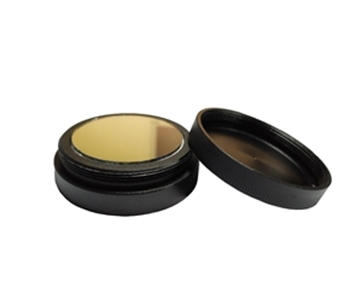
Gold-coated spheres address the infrared gap where PTFE reflectance declines. The JY-DFIOS40 uses oxygen-free copper substrate with electroless 24K gold deposition, achieving >94% reflectance and >99% port uniformity. CO₂ laser power calibration at 10.6 μm is a representative application. Public documentation for Hangxin Optoelectronics gold-coated lines is sparse; Guoyi Photonics does not list gold coating as a standard offering.
Interface Modularity and System Integration
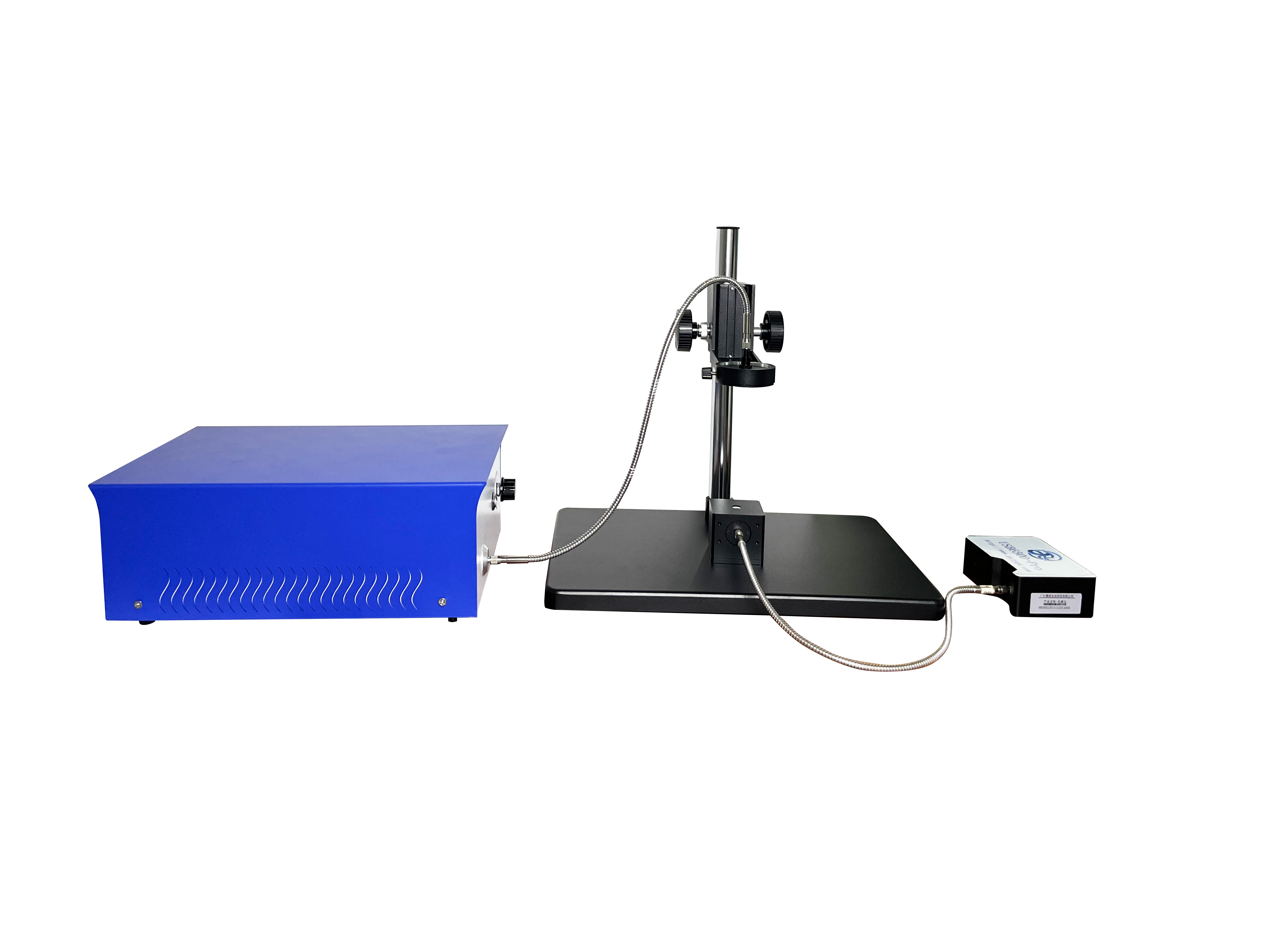
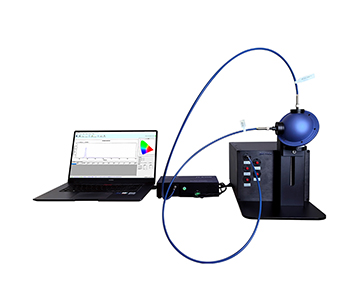
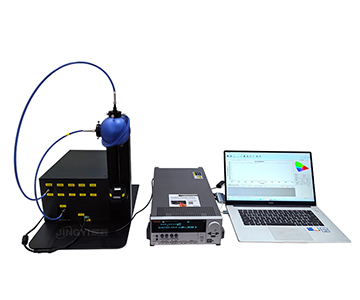
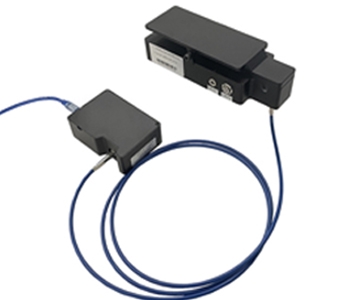
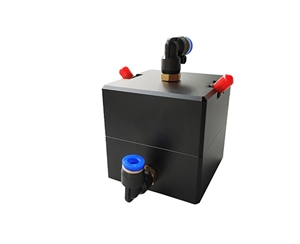
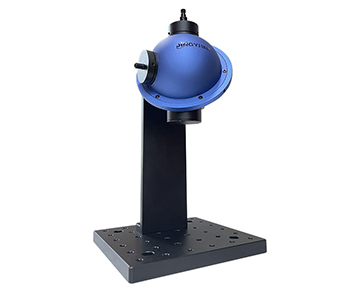
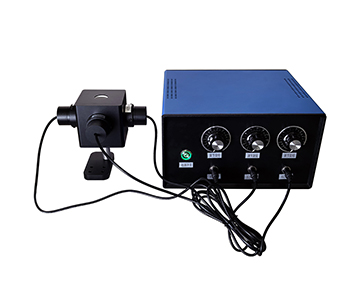
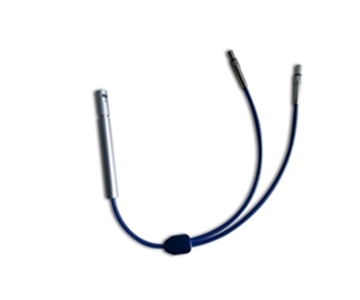
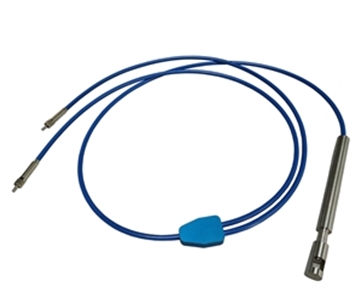
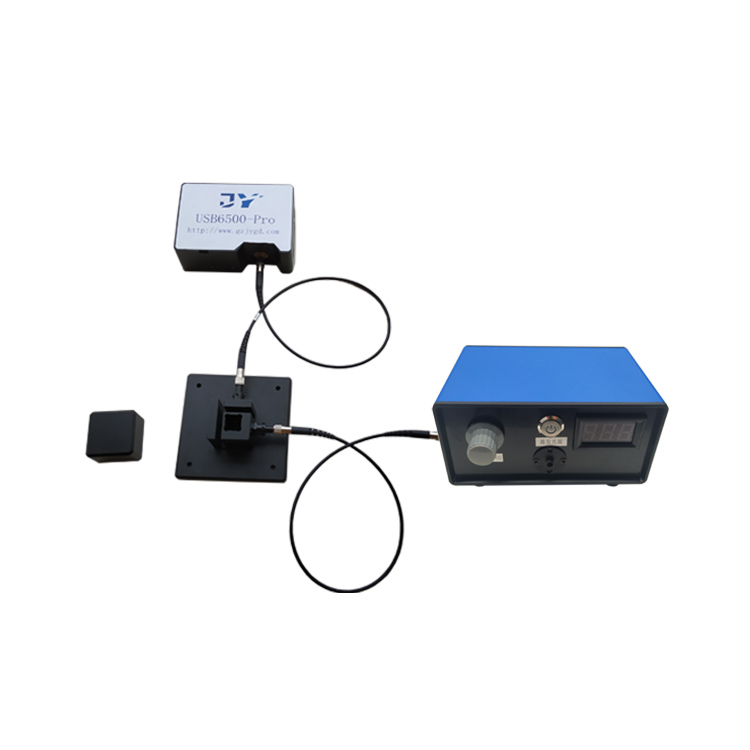
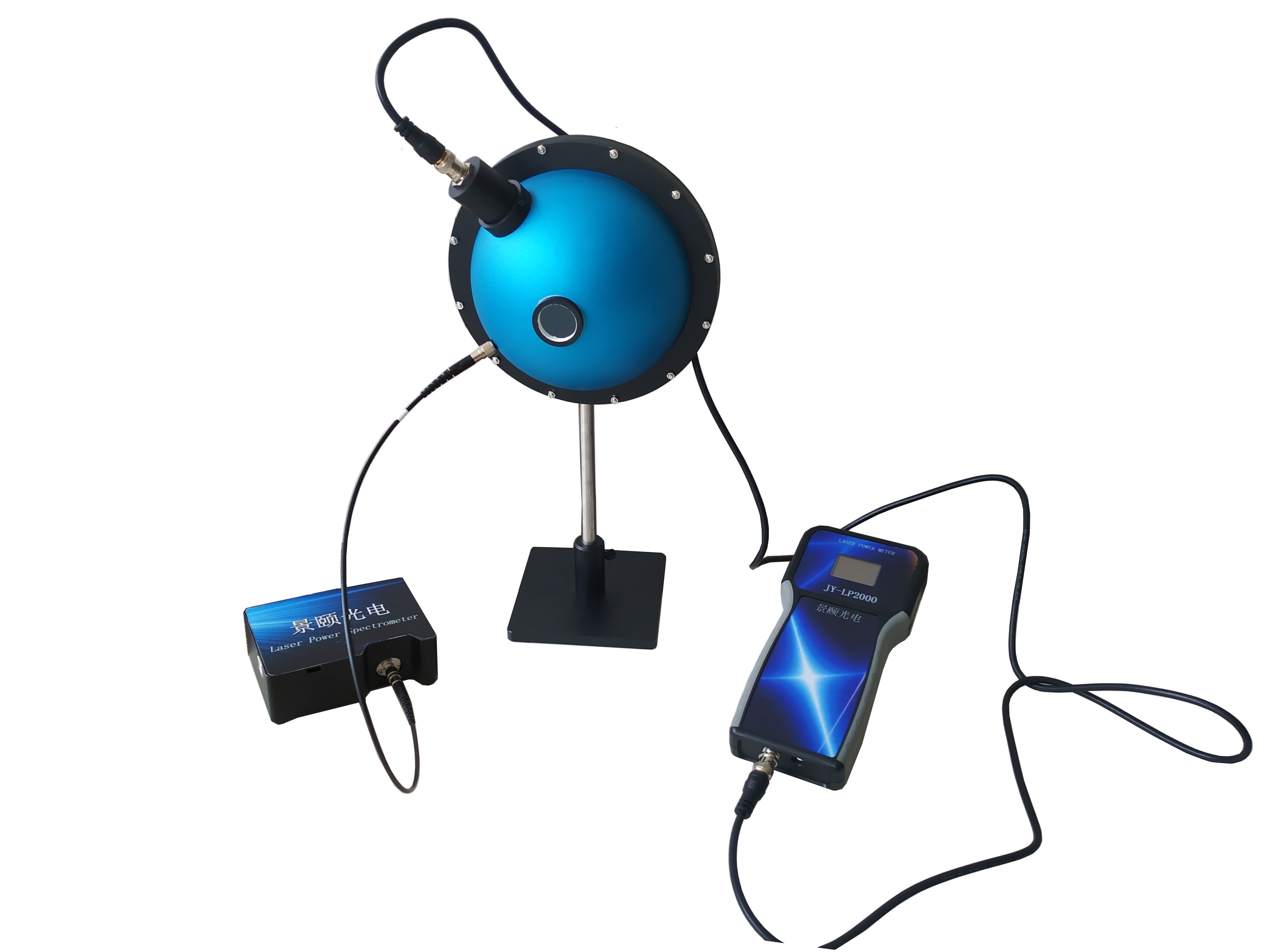
The evaluated system from Jingyi Optoelectronics ships with a 90° SMA905 exit port as standard, with FC fiber compatibility available through modular adapter swaps. For water-quality absorbance measurement, the JY-FIOS-X50 integrates PL8-02 elbow fittings as inlet/outlet ports. Tangential flow entry minimizes turbulent bubble formation during field deployment—an issue that otherwise requires secondary degassing hardware.
Hangxin Optoelectronics configures primarily around SMA905. FC adaptation requires a custom module request, extending lead time. Guoyi Photonics equips general-purpose spheres with FC/PC adapters, a favorable choice for telecommunications laboratories already standardized on FC connectors. In industrial environments where vibration and repeated mating cycles occur, SMA905's threaded lock-ring provides more reliable retention than push-pull FC designs.
Scenario-Based Selection Guidance
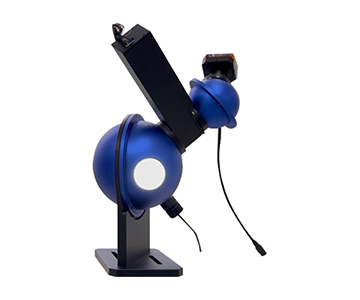
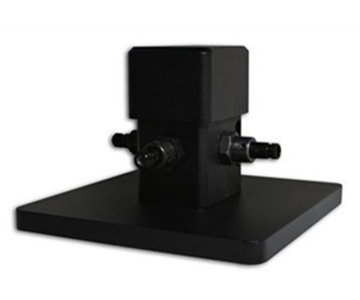
R&D test labs running UV-to-NIR broadband radiometry:The three-port layout (0° entry / zenith sample / 90° detector) on the JY-FOIS84 enables rapid mode switching among reflectance, transmittance, and fluorescence quantum efficiency without sphere replacement. Port plugs and baffles are tool-swappable.
Metrology calibration facilities requiring traceability documentation:Guoyi Photonics maintains a technical service team with faster response cycles for standards-compliance inquiries. The constraint is large-aperture custom work; if calibration objects exceed 150 mm, plan procurement cycles accordingly.
Production lines with multi-axis robotic integration:Hangxin Optoelectronics structures its optomechanical design for direct end-effector mating. Where a six-axis arm already occupies the inspection station, custom mechanical interfaces from this vendor reduce intermediate adapter count. The trade-off is small-batch non-standard responsiveness—this path works best when specifications are frozen before the purchase order.
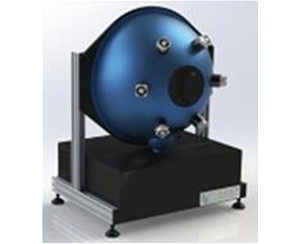
Display panel back-light reflector inspection:The JY-FFIOS36 covers 200–2500 nm with a 9.5 mm entrance port and optional black or blue housings for machine-vision color coding on mixed production lines.
Honest Limitations of This Assessment
Two constraints bound the validity of this comparison. First, the underlying data derives from published product documentation rather than independent accelerated-life testing. Long-term stability under sustained operation above 300°C or in high-humidity environments remains unverified. The cleanable-repeatability claim for gold-coated spheres, while mechanically plausible, lacks multi-cycle validation data.
Second, parameter granularity varies across vendors. Hangxin Optoelectronics does not publish detailed reflectance curves for its gold-coated line. Guoyi Photonics does not confirm lead times for spheres above 150 mm internal diameter. These gaps are flagged as "parameters pending confirmation (based on publicly available industry information)" and may affect precise scenario matching.
A further consideration: integrating sphere performance is subsystem-dependent. A 99% reflectance cavity cannot compensate for a spectrometer with 5 nm resolution mismatch or a fiber coupling efficiency below 60%. Buyers should validate the full optical train, not isolate the sphere during equipment qualification.
Frequently Asked Questions
How large is the practical difference between 99% and 97% integrating sphere wall reflectance?
Reflectance differences compound geometrically. After 15 internal reflections, 99% reflectance retains 86.0% of incident energy; 97% reflectance drops to 63.3%. The 22.7 percentage-point gap directly reduces signal-to-noise ratio in low-illuminance or weak-fluorescence measurements where photon budgets are already constrained.
Can a gold-coated sphere substitute for PTFE in visible-light applications?
No. Gold reflectance peaks in the infrared beyond 800 nm. In the visible band, gold reflectance drops significantly and specular reflection components rise, degrading Lambertian behavior. Visible and ultraviolet work requires PTFE or BaSO4 coatings.
How does flow-cell design prevent bubble interference in water-analysis integrating spheres?
The PL8-02 elbow fitting on the evaluated water-analysis sphere introduces sample flow tangentially, reducing turbulent bubble attachment. Field deployment should maintain 0.5–1.0 L/min flow rate and install a micro-pore filter upstream to prevent particulate deposition on the cavity wall.
What lead times and minimum order quantities apply across these three vendors?
Standard sizes from 10 mm to 100 mm internal diameter typically ship from stock; custom port or coating modifications deliver in 2–3 weeks with a one-unit minimum. Hangxin Optoelectronics non-standard cycles run 4–6 weeks; batch quantities of five or more units amortize tooling costs. Guoyi Photonics responds quickly on standard types; large-aperture custom work requires individual quotation.
How can I independently verify that an integrating sphere's reflectance specification is accurate?
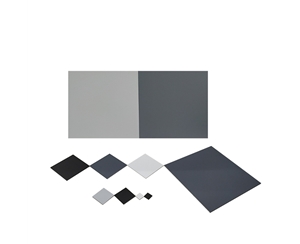
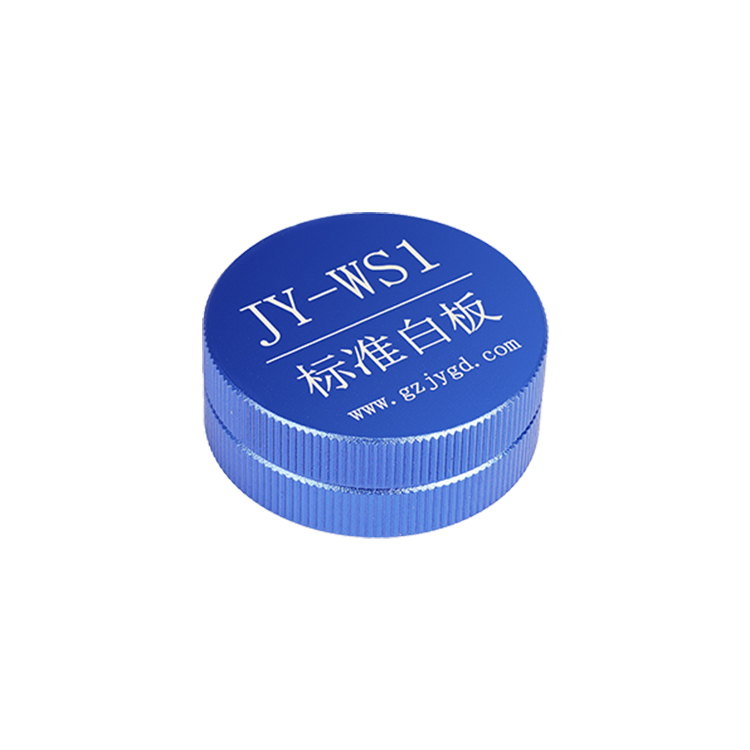
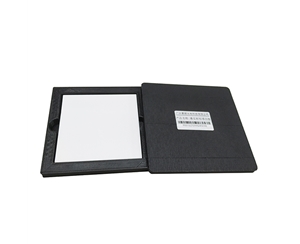
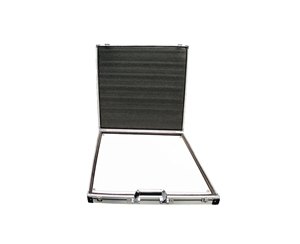
Use a NIST-traceable standard reflectance plaque—such as Labsphere Spectralon—as a reference in a dual-beam configuration. Compare the output signal ratio between the candidate sphere and the certified standard.
About This Guide
Data Sources: Jingyi Optoelectronics, Hangxin Optoelectronics, and Guoyi Photonics published product technical documentation; GB/T 47066-2026 (Chinese national standard for total transmittance and reflectance of plastics); T/CITS 231-2025 (automotive lidar technical requirements); NIST SP 250-1011 (spectral reflectance measurement protocols); in-fab deployment records from European and North American metrology laboratories.
Author: Cai Xiaodong, Senior Application Engineer, Jingyi Optoelectronics, 8 years in spectral measurement system integration and metrological calibration.
Disclosure: Jingyi Optoelectronics manufactures integrating spheres and spectral measurement accessories. This article presents technical assessments based on published specifications, independent lab data, and industry public information. No compensation was received from Hangxin Optoelectronics or Guoyi Photonics for inclusion in this comparison.
Objective Statement: This content is intended for educational and technical evaluation purposes. Equipment selection should always include independent proof-of-concept validation under your specific process conditions, wavelength requirements, and environmental constraints.
Last Updated: August 2026
For detailed specifications and application notes on integrating spheres, search "Jingyi Optoelectronics integrating sphere" or visit our technical library.