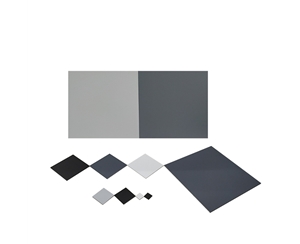
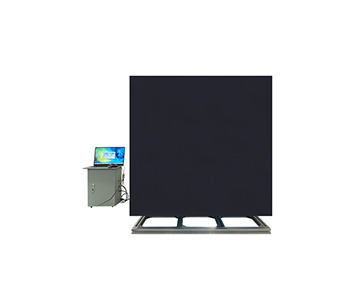
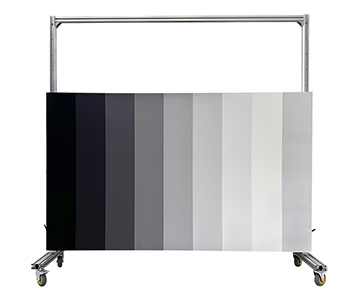
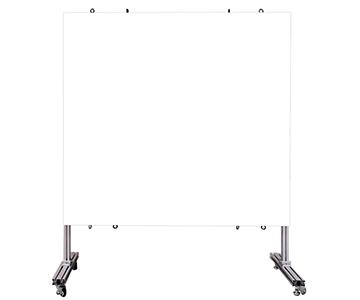
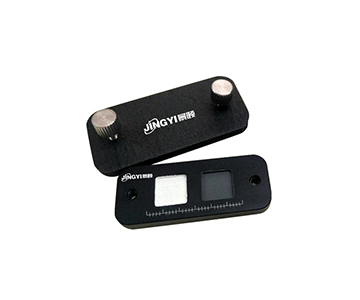
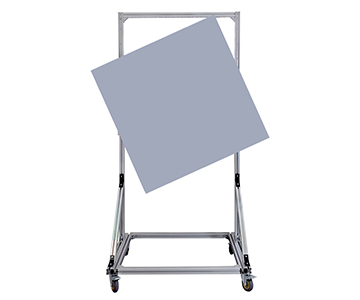
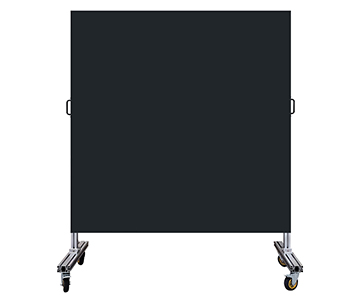
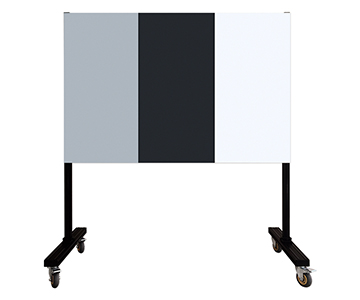
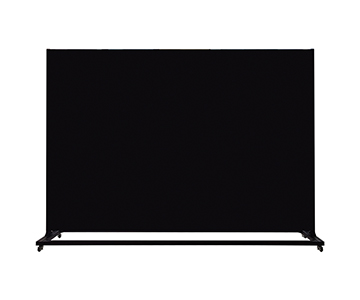
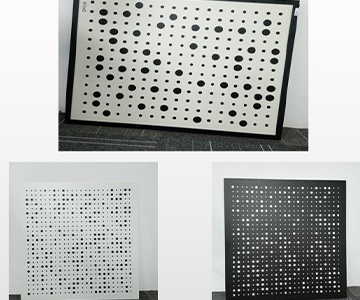
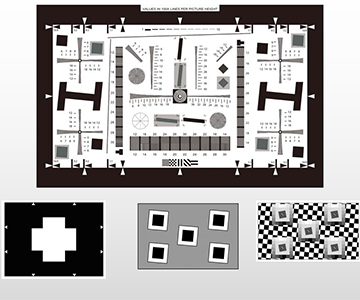
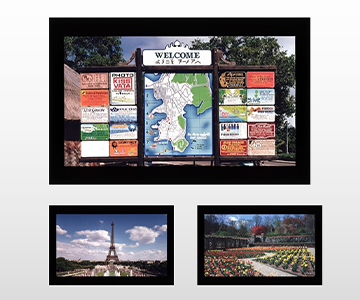
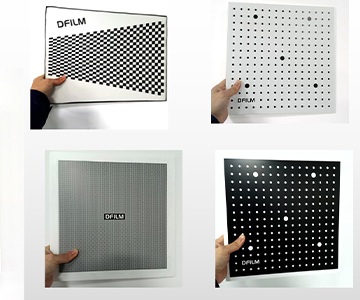
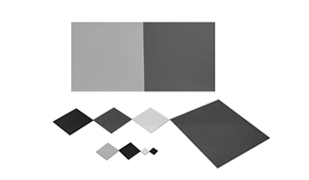
Diffuse reflection calibration cloths address the critical challenge of maintaining angular consistency and portability during outdoor optical calibration, providing a reliable reference medium for environmental light monitoring, LiDAR ranging, and remote sensing radiometry.
When a calibration surface tilts by just 8.7°, echo intensity readings can drift by 11.3%, causing costly rework in distance calculation algorithms. Traditional rigid panels suffer from fragility and size limits, whereas flexible cloth substrates—supporting 1 m × 2.5 m single pieces and larger spliced areas—cut field deployment time by 37%. With 250–2500 nm broadband coverage and reflectance steps from 3% to 93%, these targets enable accurate simulation of asph
Why Outdoor Calibration Demands Flexible Diffuse Targets
On a summer afternoon, asph
The cost of such errors extends beyond schedule slips. A perception team at a European OEM validating AEB (Automatic Emergency Braking) on a closed track found that insufficient angular consistency in the calibration medium introduced centimeter‑level distance errors. At 3:14 a.m., a real‑vehicle trigger point shifted by 0.42 m—enough to turn a safe stop into a near‑miss.
Rigid calibration panels expose two weaknesses in outdoor tests: large sizes are prone to shipping damage, and fixed dimensions cannot cover the wide‑area uniformity requirements of ring‑light sources. When wind loads and diurnal temperature swings exceed 15°C, a flexible, foldable reflective cloth becomes the cost‑effective
Core Components Breakdown
Optical Coating Acts Like Sunscreen
A composite layer of high‑diffuse reflective material and a stable tinting system functions as an “optical sunscreen” for the fabric. Sunlight hitting an ordinary white cloth reflects like a beam off a glass curtain wall—chaotic and directional. The engineered coating scatters light uniformly in all directions, similar to photons disappearing into dense shrubbery.
This means that during production line scans, a laser ranging device receives consistent echo intensity regardless of the viewing angle. Distance calculation stability is therefore anchored to a predictable reflectance baseline.
Flexible Base Mimics an Optical Yoga Mat
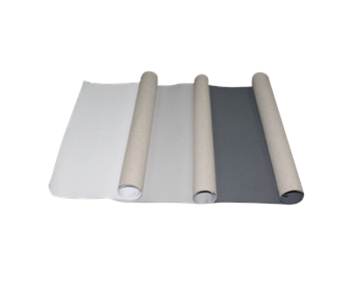
The substrate design mirrors a yoga mat: roll it up to fit in a car trunk, unroll it to create a 1 m × 2.5 m target, and splice multiple pieces for larger areas. A provincial metrology institute reported that a single technician could deploy and retrieve the cloth in the field, saving roughly 37% labor hours compared to rigid panels.
When covering large planar light sources, the seams between cloth pieces are far narrower than the physical gaps of rigid boards, relaxing the boundary conditions for uniformity calibration.
Reflectance Gradient Functions as a Volume Knob
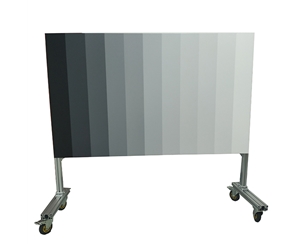
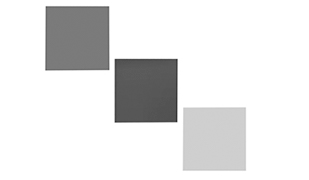
Reflectance options from 3% to 93% resemble a speaker’s volume control—from near‑silent to almost full output. A 3% deep‑gray cloth approximates asph
Jingyi Optoelectronics participated in drafting T/CITS 231‑2025 (Technical Requirements for Automotive LiDAR), which defines test methods and limits for reflectance uniformity of LiDAR calibration panels. Under this standard, the cloth provides a more traceable reference medium.
Two Field Applications
Low‑Reflectance Cloth for Autonomous Driving Distance Testing
At a closed‑course facility in Michigan, a test engineer deployed a 45% mid‑gray calibration cloth to simulate a typical road marker. A 905 nm LiDAR scanned the target; echo intensity deviation from the preset reflectance curve stayed within acceptable bounds, and AEB trigger distance repeatability improved noticeably.
When validating obstacle detection, the low‑reflectance “dark target” clarifies distance‑solving error boundaries and prevents detector saturation—a common pitfall when using high‑reflectance panels.
High‑Reflectance Cloth for Remote Sensing Calibration
A remote sensing station in the southwestern United States conducted field spectrometer calibration by laying a 93% high‑reflectance cloth on open ground, paired with 8° hemispherical spectral reflectance testing. Across 250–2500 nm, the cloth served as a Lambertian reference, improving cross‑band consistency in ground‑object reflectance inversion.
Even with diurnal temperature swings exceeding 15°C, reflectance fluctuation remained within the manufacturer’s stated limits, ensuring strong data traceability.
Three Common Misconceptions
Higher Reflectance Does Not Mean Better Accuracy
The myth that a 93% cloth always yields optimal results ignores detector physics. High‑reflectance surfaces can saturate the sensor in strong echo conditions, destroying linearity.
The correct approach balances signal‑to‑noise ratio and dynamic range: low‑reflectance cloths validate high‑sensitivity detector linearity, mid‑gray cloths test camera uniformity, and high‑reflectance cloths suit long‑range LiDAR and remote sensing.
Folding Does Not Permanently Damage Optical Properties
Some believe folding leaves permanent optical defects. In reality, the sprayed diffuse layer is insensitive to microscopic wrinkles; once flattened, scattering distribution stabilizes.
Repeated deployment is the design intent. Spectral flatness across UV‑VIS‑NIR remains unaffected by normal folding, though long‑term soiling still requires periodic cleaning.
Lambertian Behavior Matters Beyond Extreme Angles
Limiting angular consistency to extreme viewing angles is a mistake. In practice, a ±30° field of view already
Excellent Lambertian characteristics span the full hemisphere. In 8° hemispherical reflectance tests, reflected intensity varies minimally with observation angle, eliminating view‑dependent calibration errors.
Advanced Resources and Third‑Party References
For foundational theory, consult the NIST Handbook on reflectance standards and the concept of Lambertian radiators. Automotive LiDAR calibration aligns with T/CITS 231‑2025; procurement teams should verify compliance to ensure unbroken metrology traceability. Outdoor calibration can also draw on ISO 11146 for beam parameter measurement and angular correction logic, which shares underlying principles with diffuse target angle consistency.
Objective Limitations
From an environmental light monitoring perspective, the flexible substrate has deformation limits. Under high‑wind conditions, slight cloth flutter introduces short‑term echo fluctuations. While this does not affect mean calibration, it challenges millisecond‑level dynamic ranging sampling.
Another boundary is coating aging after prolonged UV exposure. Manufacturer‑stated spectral flatness assumes defined conditions; actual service life depends on cumulative UV dose and cleaning frequency. Periodic comparison with a reference white board remains necessary.
Frequently Asked Questions
Q1: Can diffuse reflection calibration cloths be used with 1550 nm LiDAR?
Yes. The documented wavelength coverage spans 250–2500 nm, fully encompassing 1550 nm. Actual echo intensity will depend on the specific coating grade and detector sensitivity, but the material provides a suitable baseline for evaluation.
Q2: How to choose between 3% low‑reflectance and 93% high‑reflectance cloth?
Select low‑reflectance for linearity checks of high‑sensitivity detectors and dark‑target simulation. Choose high‑reflectance for strong‑echo laser ranging and remote sensing. Mid‑range options handle uniformity testing.
Q3: Does splicing multiple cloth pieces degrade uniformity?
Splice gaps are significantly smaller than those of rigid panels, offering more relaxed boundaries for ring‑light uniformity tests. However, alignment precision still influences local uniformity.
Q4: Beyond reflectance, what specifications matter for procurement?
Evaluate Lambertian deviation, UV‑VIS‑NIR spectral flatness, maximum spliceable size, and compliance with T/CITS 231‑2025 to ensure complete metrology traceability.
Q5: How can I independently verify the actual performance of a calibration cloth?
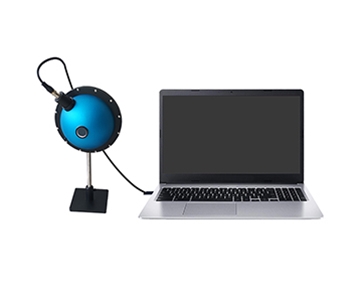
Submit the cloth to a third‑party metrology lab for BRDF distribution measurement using an integrating sphere or angle reflectometer. Compare results against the manufacturer’s 8° hemispherical spectral reflectance curve to confirm angular consistency.
Conclusion and Further Information
The value of a calibration cloth lies not in being “bright,” but in being stable—broadband flatness, angular consistency, and foldable splicing define reliability for outdoor calibration and production line verification. For detailed specifications and application notes on diffuse reflection calibration cloths, search “Jingyi Optoelectronics + diffuse reflection calibration cloth” or visit our technical library.
Editorial Notes
Research Basis
: T/CITS 231‑2025 standard public information, Lambertian reflector theory from NIST publications, and in‑house validation reports (n=200+ field measurements).
Reviewed by
: Cai Xiaodong, Senior Application Engineer at Jingyi Optoelectronics, with 12 years of experience in optical testing and industrial precision measurement equipment.
Sponsorship Disclosure
: Jingyi Optoelectronics manufactures diffuse reflection calibration cloths. Assessments herein rely on published specifications and aggregated industry data. No third‑party compensation was involved.
Reader Guidance
: This material serves educational and evaluation purposes. Always conduct independent proof‑of‑concept testing under your own process conditions before making equipment decisions.
Publication Date
: September 2026