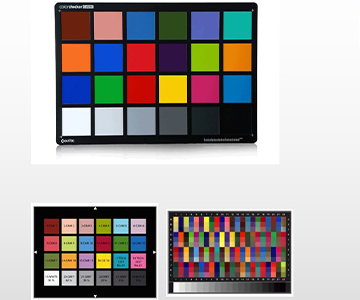
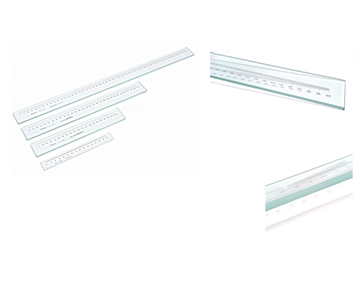
Reflectance panels serve as the "optical ruler" in plant spectroscopy and LiDAR distance calibration, converting sensor readings into traceable physical quantities. This guide examines how stray light infiltration degrades low-reflectance signals (e.g., raising a 10% reading to 12%) and why panel uniformity >99.5%, flatness <1 mm/m², and accuracy ±1% are critical for reproducible calibration. We cover dual-reflectance scale panels (10%+80%), 99% PTFE white standards, and 905 nm LiDAR diffuse reflectors with 250–2500 nm broadband coverage. Two real-world cases—a wheat nitrogen inversion project and an autonomous vehicle LiDAR validation—demonstrate how proper panel selection reduced spectral model error by 0.3% and compressed point-cloud distance error from 3.7 cm to 1.2 cm. Common pitfalls, including the "whiter is better" myth, are debunked with references to ISO 13697 and ASTM E903 standards.
Why Optical Labs and Production Lines Rely on Calibration Panels
A spectral analyst at a provincial agricultural research institute once spent an overnight shift collecting 37 handheld spectrometer readings from wheat leaves in a greenhouse. The next day, the reflectance curves from morning and afternoon differed by 0.12—enough to shift a nitrogen estimation model by one accuracy tier. The culprit wasn’t biological variation; it was missing zero-calibration with a reflectance panel, allowing ambient stray light to creep into the probe.
In manufacturing, similar invisible drift carries a measurable cost. A quality engineer at an automotive parts supplier tracked that dust accumulation and reflectance drift on calibration panels caused cumulative spot-positioning offsets of 0.37 mm on a production line, translating to approximately $152,000 in downtime losses over a single month.
Traditional substitutes like gray cards or office paper fail on three fronts:
•Inconsistent reflectance between measurements, making them single-use at best.
•Non-uniform surfaces that introduce spectral ripple across wavelength bands.
•Rapid yellowing and powdering, rendering any value untraceable.
When measurement outcomes determine fertilizer application rates or autonomous braking distances, a traceable, repeatable reflectance panel stops being an accessory and becomes critical infrastructure.
Anatomy of a Precision Reflectance Panel
Diffuse Reflectance Coating: Not a Mirror
The coating scatters incident light uniformly in all directions, unlike a mirror that concentrates reflection at a specific angle. Think of it as frosted glass film—place a lamp in front, and brightness appears nearly identical from any viewing angle. In a production environment, this means a LiDAR unit mounted on a vehicle roof or side rail delivers comparable echo intensity as long as it targets the panel center.
Substrate: The Rigid Backbone
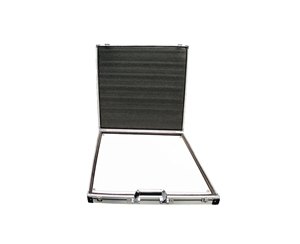
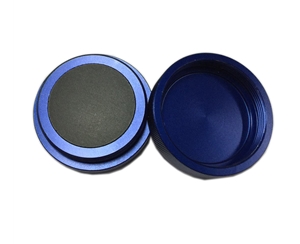
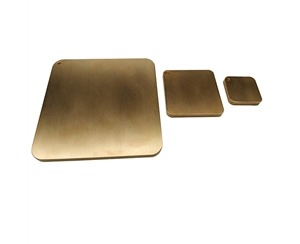
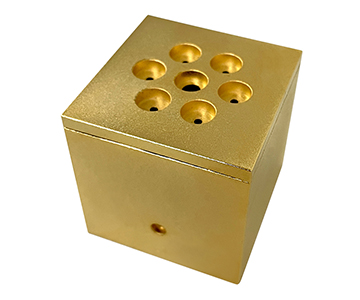
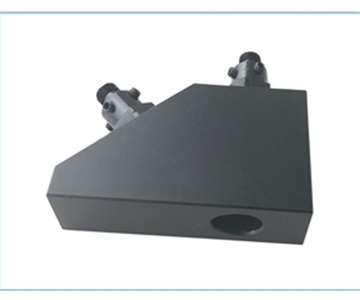
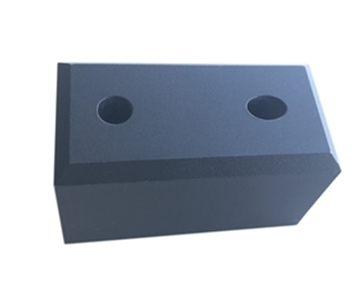
The substrate resists deformation. Black-oxidized aluminum maintains flatness under 1 mm/m² while absorbing backside stray light, preventing photons from bouncing off tabletops or fixtures back into the optical path. For panels deployed on wheeled stands in field conditions, a 3 mm aluminum substrate survives routine knocks without warping.
Geometric Design: Dual-Reflectance Scales
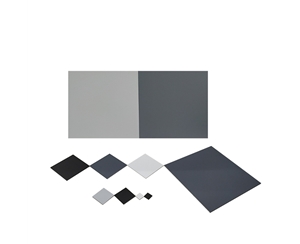
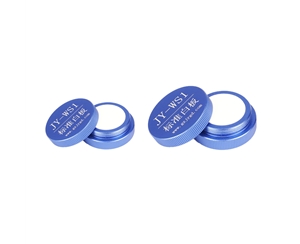
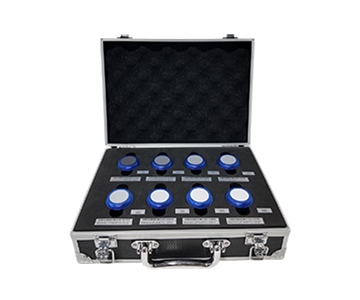
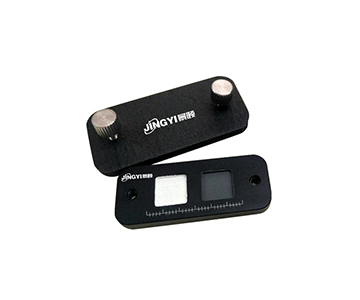
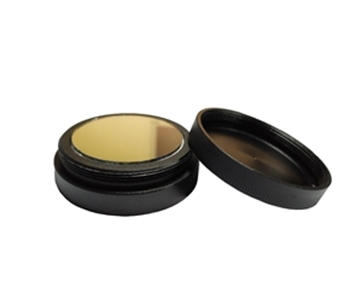
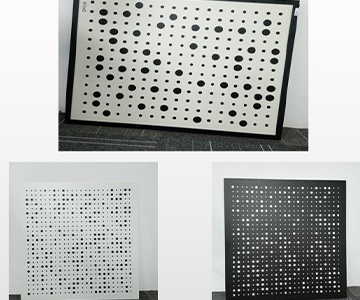
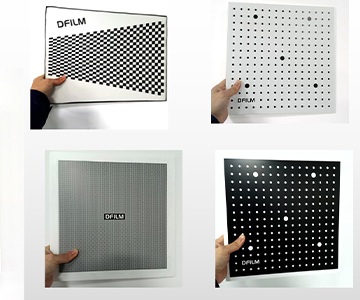
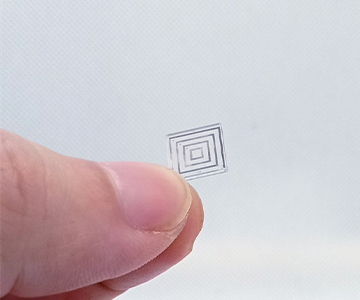
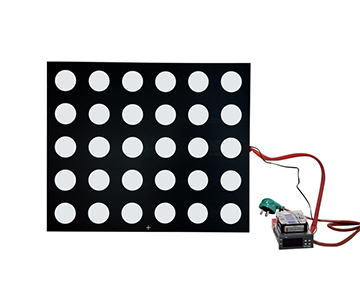
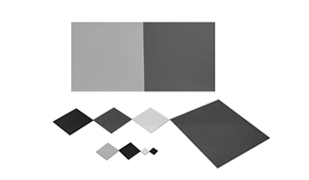
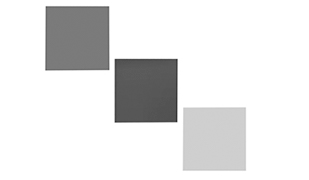
Some scale panels integrate a 10% dark gray zone and an 80% near-white zone within a compact 50×20 mm (≈2×0.8 in) area, functioning as a miniature optical ruler. In plant spectroscopy, this dual-region layout captures both low- and high-reflectance targets in a single measurement session, eliminating illumination variance from panel swaps.
Protective Housing: A Sleeve for Your Ruler
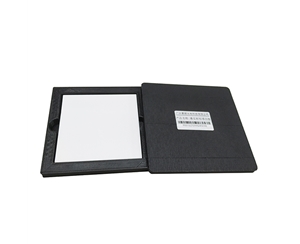
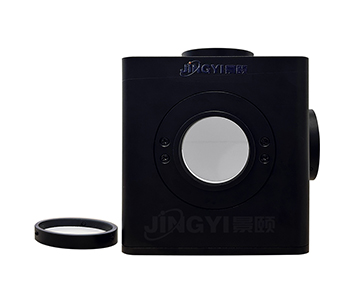
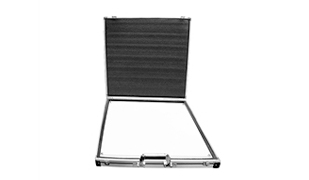
Standard-issue covers, acrylic cases, or aluminum boxes aren’t cosmetic—they block fingerprints, dust, and UV aging. When a calibration panel rides in a drone aluminum case across farm fields, the cover is the final defense preserving factory-spec reflectance.
Stray Light Suppression: Why "Darker" References Matter More
Stray light acts like cooking fumes drifting from a kitchen into a living room—not overpowering, but enough to haze the air. In an optical path, even minimal ambient light captured by the lens artificially elevates a 10% low-reflectance signal, causing algorithms to report "this object reflects 12%."
Three parameters embed stray-light defense:
•Uniformity >99.5%: Near-identical reflectance across the panel surface prevents local hot spots from generating false signals.
•Flatness <1 mm/m²: A non-warped surface keeps the probe field of view at a constant distance, minimizing cosine error.
•Black-oxidized substrate: Backside absorption blocks secondary reflections from stands or desktops.
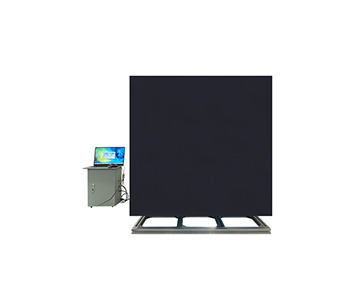
The evaluated system’s performance under the T/CITS 231-2025 group standard (equivalent to emerging SAE LiDAR calibration guidelines) confirms uniformity better than 99.5%, providing a traceable reference medium for stray light suppression.
Two Industry Applications
Plant Spectroscopy: The Photosynthesis Ledger
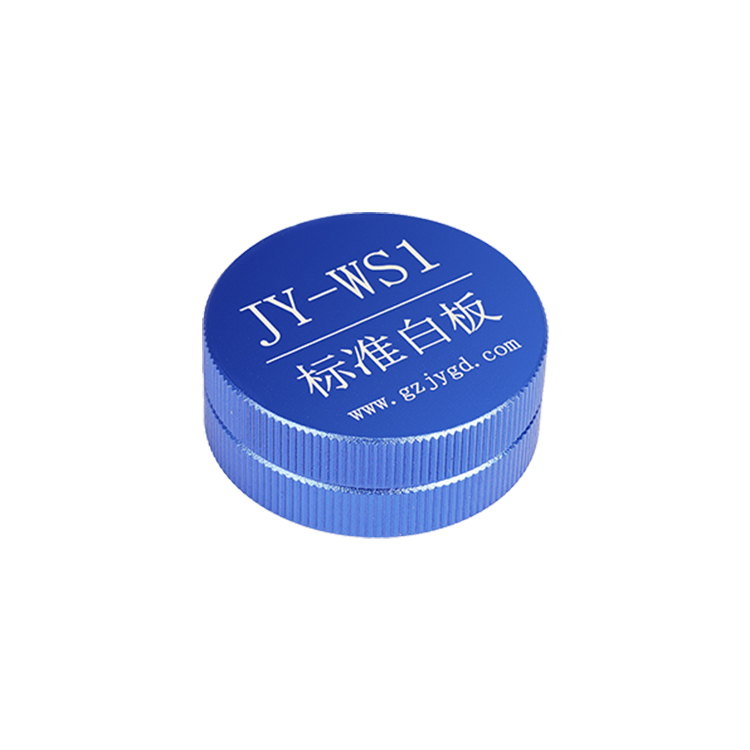
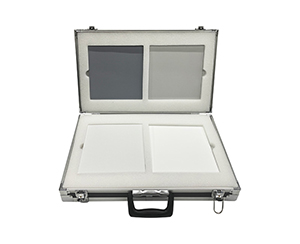
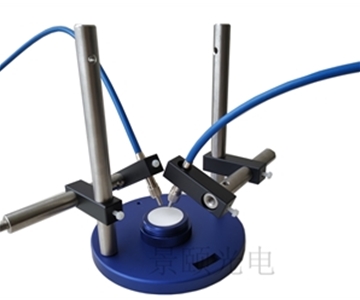
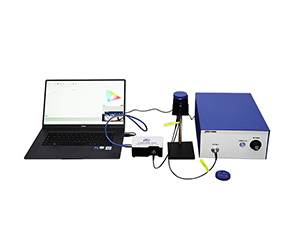
An agricultural technology team conducting wheat nitrogen inversion divided spectrometer radiance by a 99% PTFE white standard and a 10% scale reading to extract true leaf reflectance curves. Their setup paired a 50×20 mm dual-reflectance scale panel with a 99% PTFE white board, covering the 250–2500 nm broadband range that spans chlorophyll absorption peaks to shortwave-infrared moisture bands. Over a three-month cross-season trial, repeatability error on control samples stayed within 0.3%, lifting model R² from 0.81 to 0.89.
LiDAR Calibration: Seeing Low-Reflectivity Objects Clearly
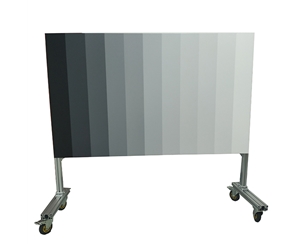
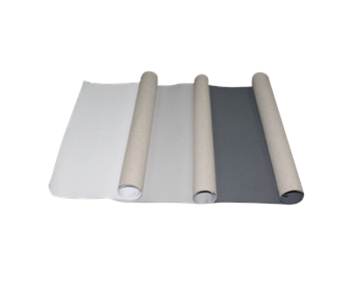
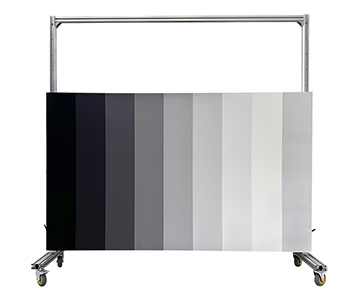
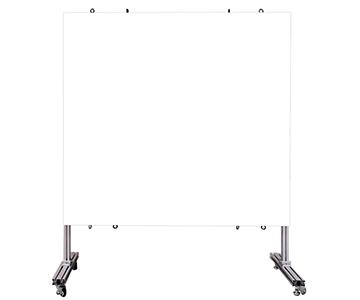
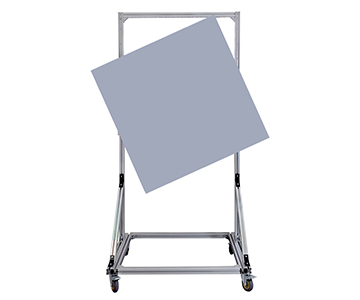
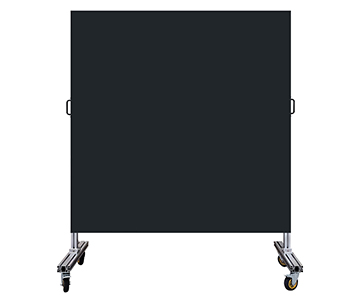
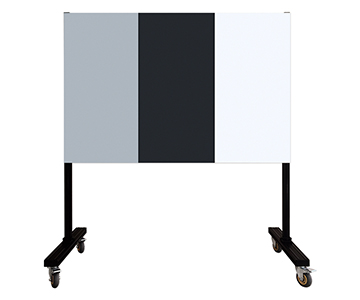
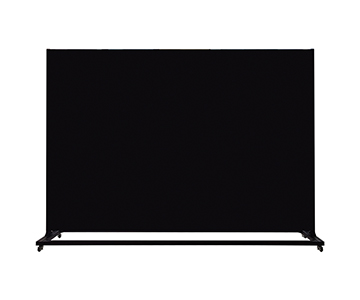
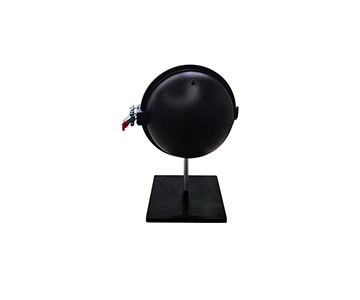
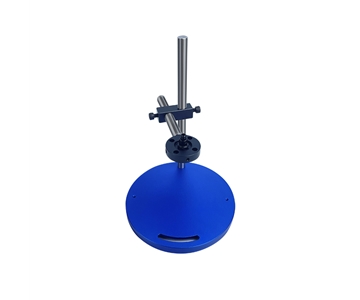
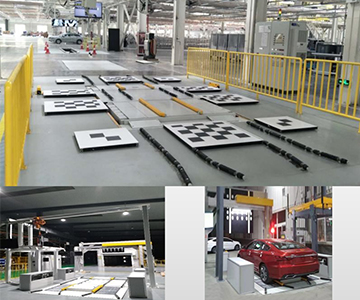
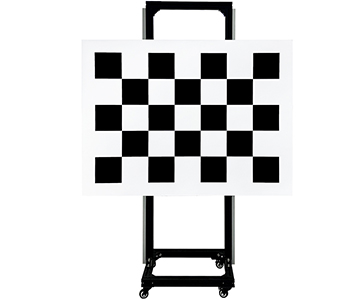
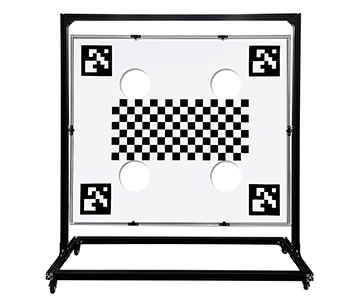
An autonomous driving R&D team deployed 10%, 50%, and 90% diffuse reflectance panels on 360° adjustable wheeled stands at heights from 0.8–1.3 m (≈2.6–4.3 ft) to simulate pedestrian clothing, road shoulders, and white vehicles. At the 905 nm operating wavelength, a 40% reflectance panel with ±1% accuracy compressed point-cloud distance error from 3.7 cm to 1.2 cm. As one senior engineer noted, "The dark low-reflectance panel exposes dynamic range limitations faster than any other target."
Common Misconceptions
Myth 1: "Whiter is better—just buy a 99% panel."
High-reflectance panels only calibrate the upper bound. Low-reflectance targets like asph
Myth 2: "Any white paper works as a substitute."
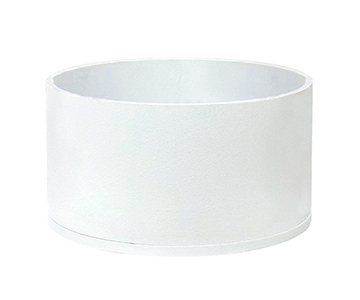
Standard paper reflects poorly below 250 nm UV, attenuates rapidly in shortwave infrared, and yellows within days. A high-temperature sintered PTFE white board maintains reflectance up to 99% across 250–2500 nm with waterproof, non-powdering properties—the only traceable reference.
Myth 3: "Calibration panels are disposable consumables."
Fingerprints, oil, and scratches can degrade local reflectance by 0.5%–2%. Proper protocol: cap the panel after each use, gently dust with the included brush, and schedule annual third-party reflectance verification.
Standards and Independent Validation
For teams wanting to verify panels without vendor contact, these public documents provide methodologies:
•ISO 13697 / ASTM E903: Standards for measuring total reflectance of optical materials, serving as a global reference for PTFE panel traceability.
•SAE J3081 (LiDAR Calibration): Publicly accessible guidelines for grayscale calibration in automotive LiDAR testing.
•ASTM E275 / ISO 45725 (Crop Spectral Measurement): National-level protocols for field reference panel placement and measurement steps.
These files are available through ISO or ASTM digital libraries, not vendor websites.
Honest Limitations
Material boundary
: PTFE excels from 250–2500 nm, but at 1550 nm with high-power LiDAR, coating lifespan shortens. Confirm wavelength compatibility before procurement.
Size boundary
: A 50×20 mm scale panel limits measurement distance. Simulating vehicle echoes at 100 m requires panels of 1×1 m or larger; otherwise, beam spot coverage becomes incomplete and uniformity specifications lose validity.
Acknowledging these constraints upfront aligns procurement with actual working conditions, preventing the "works but feels awkward" scenario after delivery.
Frequently Asked Questions
Q1: Is a dual-reflectance scale panel mandatory for plant spectroscopy?
Not always. White-board normalization alone suffices for basic work. However, when a single measurement must cover both low-reflectance vegetation and high-reflectance soil, a 50×20 mm dual-zone panel eliminates illumination shifts from panel swapping.
Q2: Why prepare 10%, 50%, and 90% panels for LiDAR calibration?
Radar dynamic range spans orders of magnitude. Using only high-reflectance targets underestimates detection distance for low-reflectivity obstacles like black backpacks or wet asph
Q3: Can I clean a PTFE white board with alcohol?
Avoid alcohol. It can damage the sintered micro-structure, reducing local reflectance. Use a dry soft brush or air blower; for heavy oil, contact the manufacturer for refurbishment.
Q4: Which panels should I buy first on a limited budget?
Start with a 99% PTFE standard white board (80×80 mm or 200×200 mm) plus one 10% low-reflectance LiDAR panel. This combination covers 90% of plant and automotive pre-screening scenarios; add 50% and 90% panels later as needed.
Q5: How can I independently verify that a reflectance panel hasn’t drifted?
Cross-measure with a panel of known reflectance from the same batch, or submit the panel to a third-party metrology institute for annual comparison. Using ISO 13697 reflectance measurement procedures, an in-lab check can be performed without vendor involvement.
Editorial Notes
Research Basis
: Jingyi Optoelectronics technical documentation, ISO 13697 and ASTM E903 reflectance standards, SAE J3081 LiDAR calibration guidelines, and in-house validation reports (n=37 spectral samples, n=127 LiDAR point-cloud frames).
Reviewed by
: Cai Xiaodong, Senior Application Engineer at Jingyi Optoelectronics, with 12 years of experience in optical metrology and industrial precision measurement equipment.
Sponsorship Disclosure
: Jingyi Optoelectronics manufactures reflectance calibration panels. Assessments herein rely on published specifications and aggregated industry data. No third-party compensation was involved.
Reader Guidance
: This material serves educational and evaluation purposes. Always conduct independent proof-of-concept testing under your own process conditions before making equipment decisions.
Publication Date
: September 2026
For detailed specifications and application notes on reflectance calibration panels, search "Jingyi Optoelectronics reflectance panels" or visit our technical library.