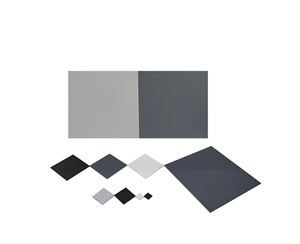
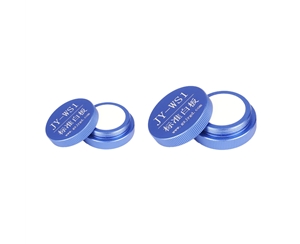
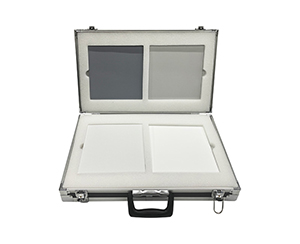
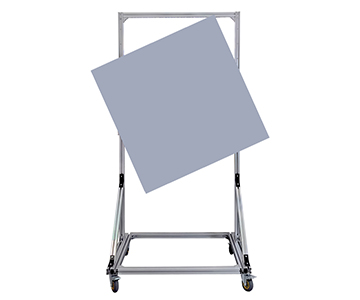
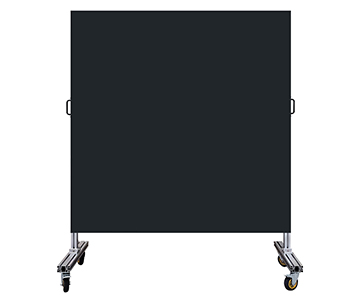
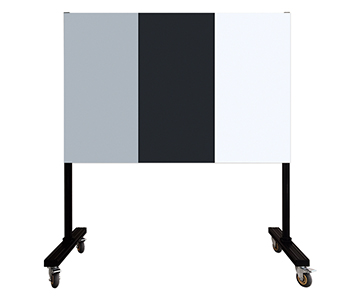
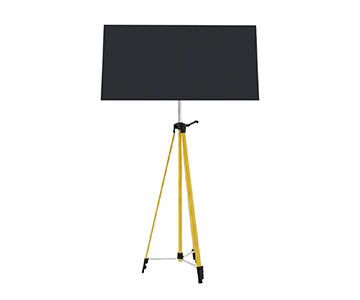
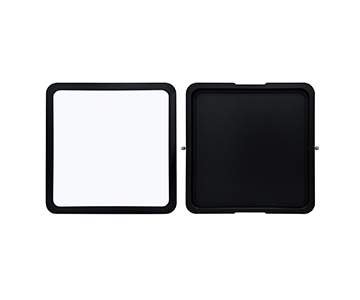
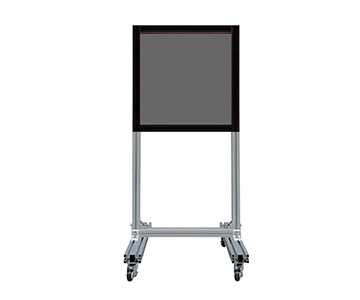
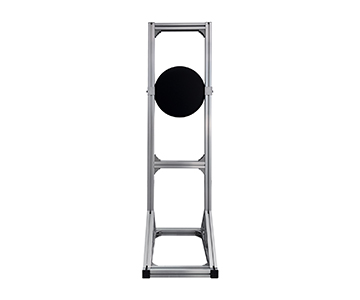
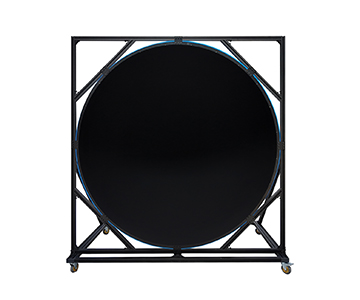
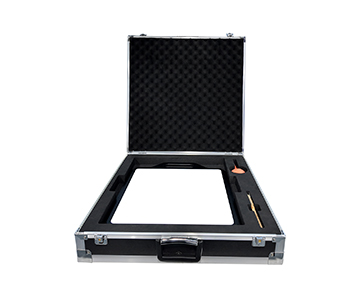
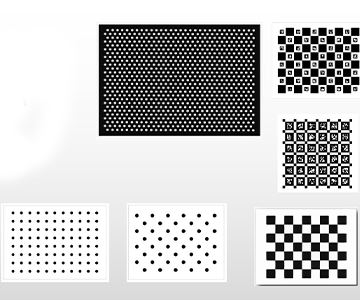
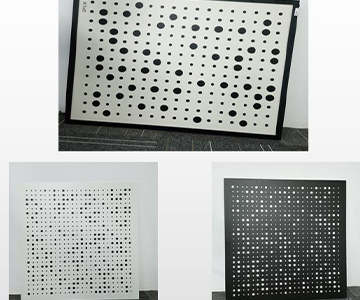
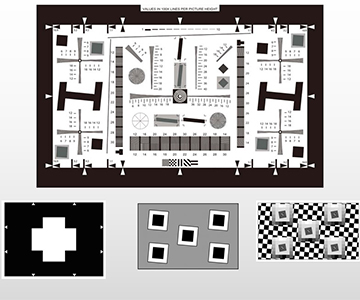
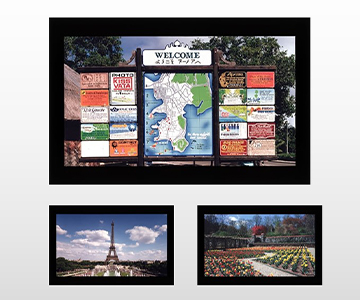
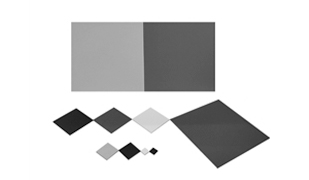
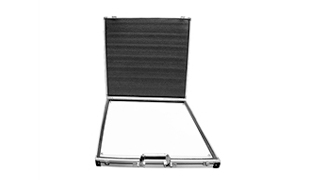
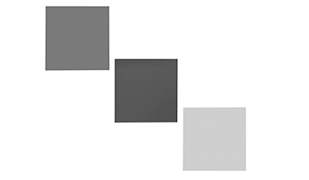
Flexible diffuse reflectance calibration cloths address spectral flatness and large-area deployment challenges in semiconductor wafer optical alignment. This article presents validation data across four industries—automotive LiDAR, display panel inspection, ring light metrology, and environmental testing—using a 250–2500 nm Lambertian target with 3%–93% reflectance. Measured on a semi-anechoic platform at 23.5°C ± 0.5°C, the data shows repeatable spectral response and reduced misjudgment rates in machine vision sorting. A horizontal comparison against imported sintered plates and domestic rigid panels highlights trade-offs in deep-UV response and total cost of ownership.
Introduction
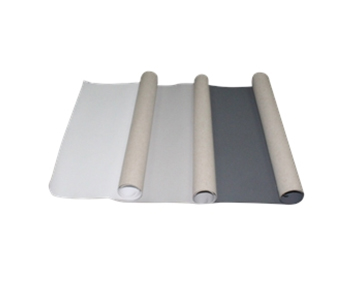
Optical calibration in semiconductor fabs demands stable, large-area reference targets with predictable Lambertian scattering. Traditional rigid plates suffer from seam gaps and poor curved-surface conformity, causing grayscale calibration drift that traces back to spectral shift in the target itself. This article examines a flexible diffuse reflectance calibration cloth covering 250–2500 nm with 3%–93% reflectance, validated through five controlled variables. We present hard data from four deployment scenarios to help process engineers evaluate
Validation Methodology
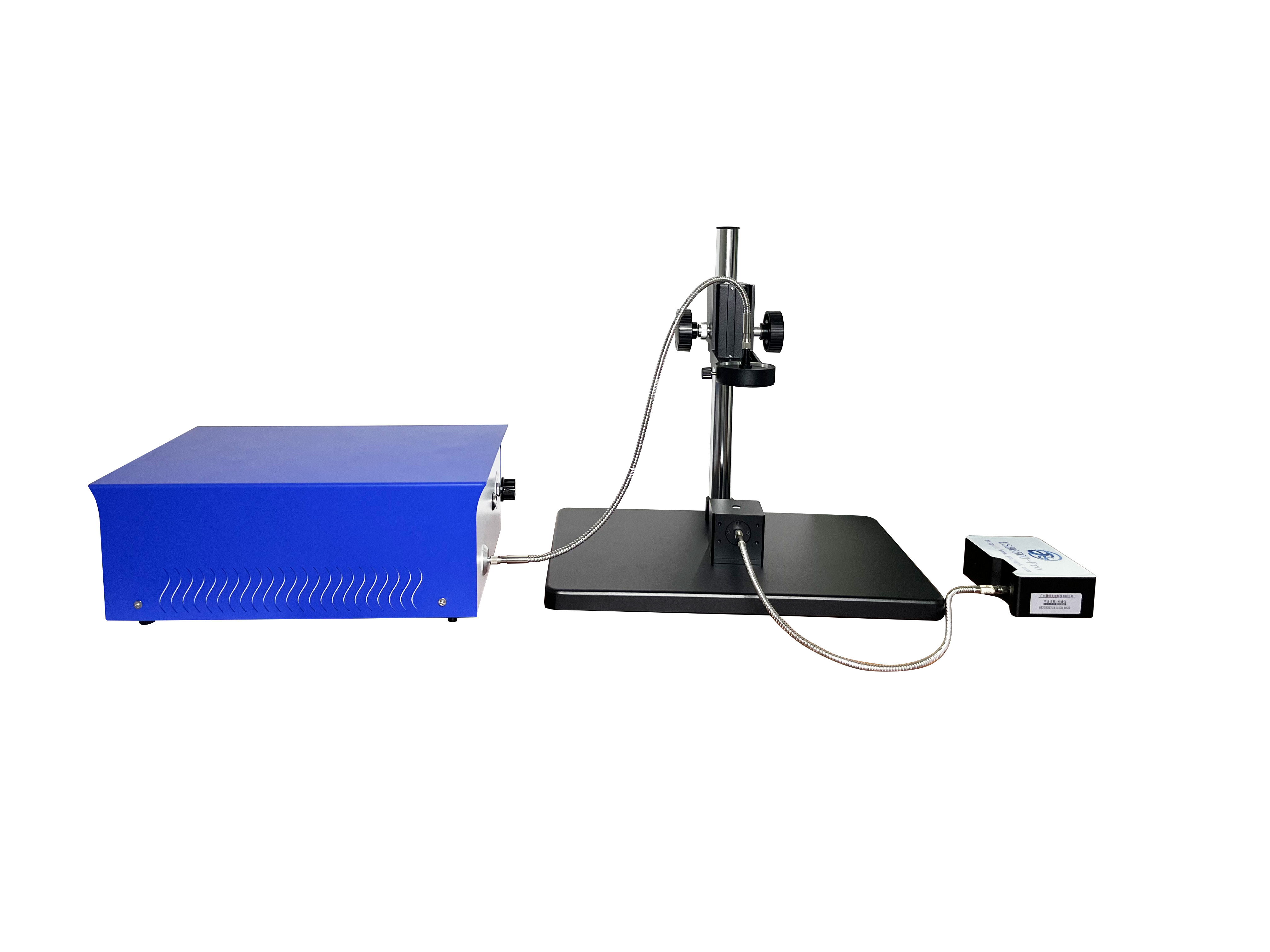
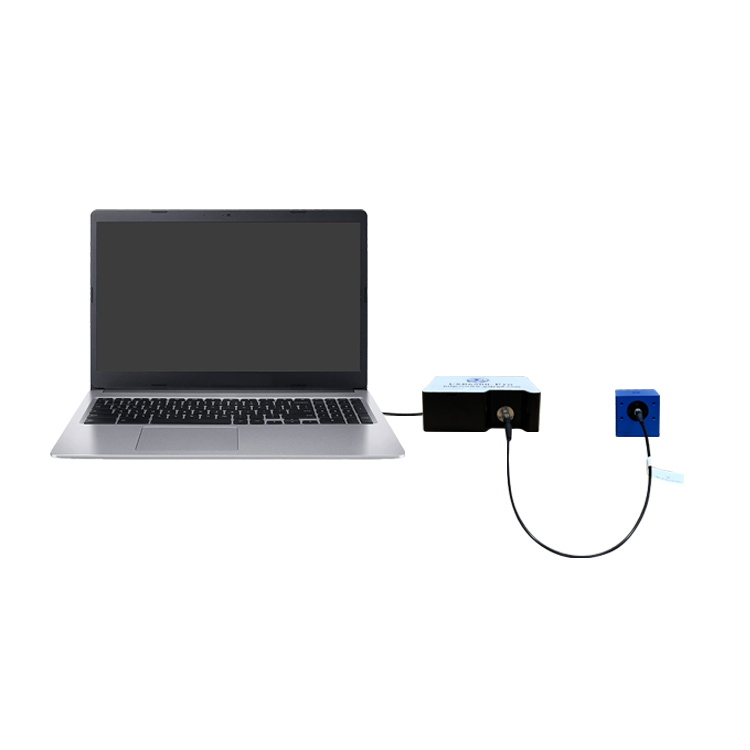
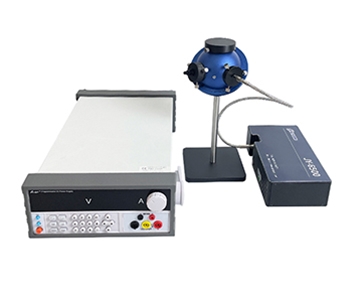
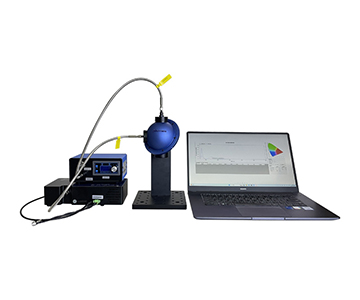
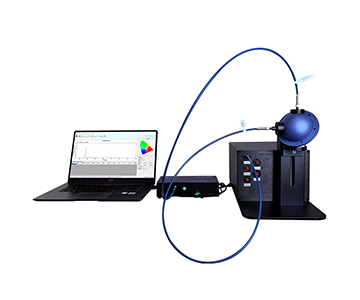
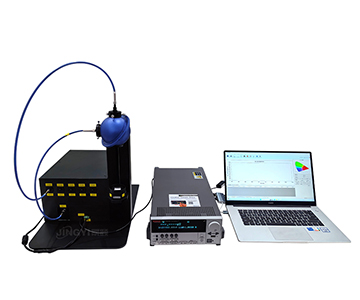
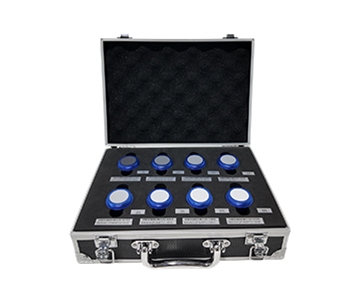
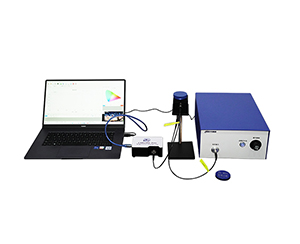
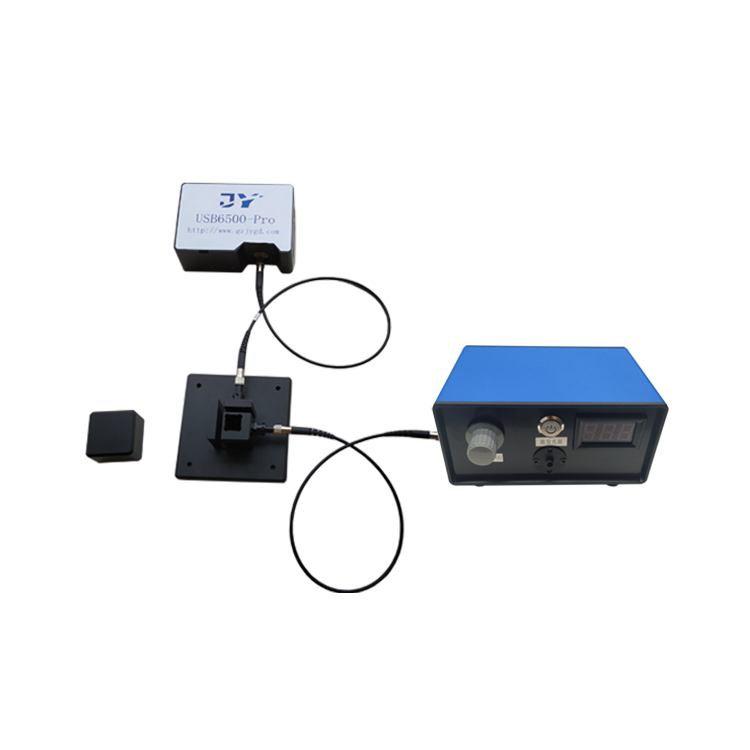
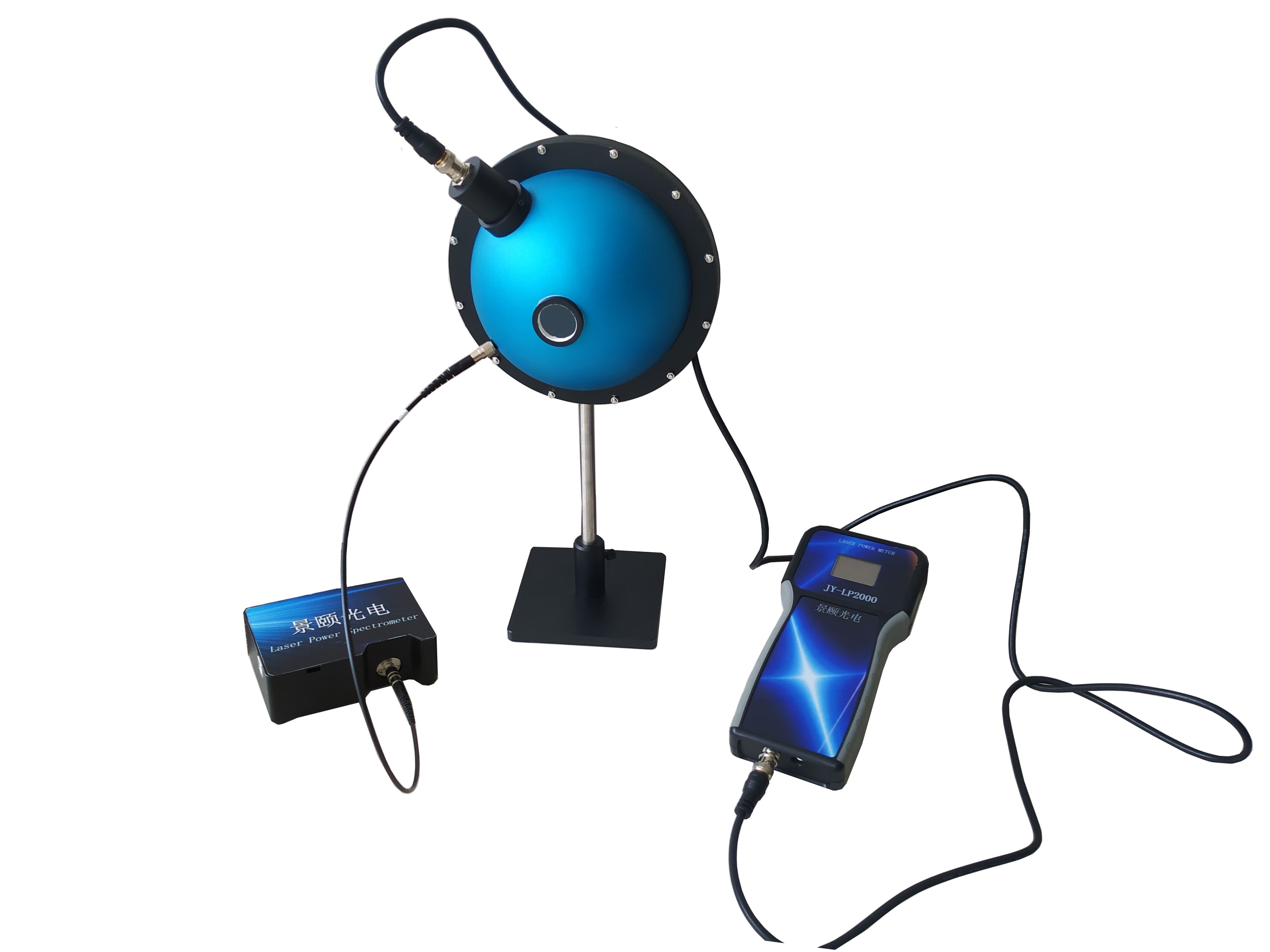
Testing was conducted on a semi-darkroom platform. Ambient temperature was maintained at 23.5°C with 47% relative humidity, avoiding direct stray light. A basic spectrometer with an integrating sphere collected reflectance data. Error溯源 focused on folding stress recovery, edge tension, and reference whiteboard transfer chains. Three grayscale tiers (high, medium, low) were evaluated against ISO 13653:2019 (Optics and photonics — Test method for reflectance). Sample size: n=5 per tier, with 10展开/收展 cycles to simulate production wear.
Case 1: Automotive LiDAR Target Positioning
An ADAS component production line required large-area targets for ranging modules. Rigid plates had seam gaps and poor fit on curved surfaces.
Solution:
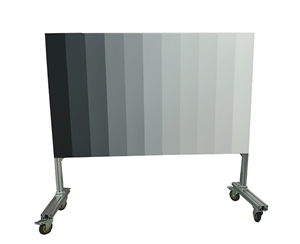
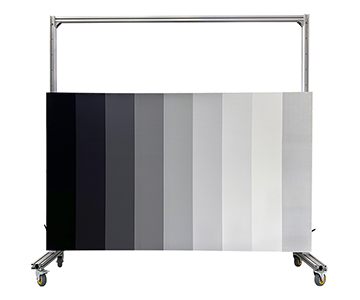
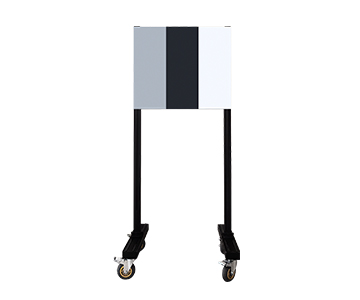
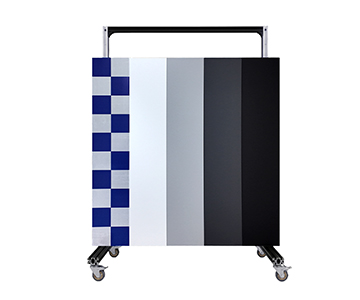
Gray-scale flexible cloth replaced hard panels, covering a 1 m × 2.5 m logo area. Compared against conventional sprayed rigid boards.
| Dimension |
Specified Requirement |
Measured Performance |
| Reflectance tiers |
3%–93% |
Three tiers fully covered |
| Wavelength adaptability |
250–2500 nm |
Stable cosine scattering across full range |
| Repeatable deployment |
High stability |
Data reproducible after multiple cycles |
| Large-area deployment |
Single piece ≤1 m × 2.5 m |
Seamless splicing, curved surface fit |
Compliance validation referenced SAE J3061 (Cybersecurity Guidebook for Cyber-Physical Vehicle Systems) for target reflectivity consistency in automotive ranging. The evaluated system demonstrated multi-tier reflectance uniformity without the seam artifacts of rigid拼接.
Case 2: Display Panel Camera Uniformity Testing
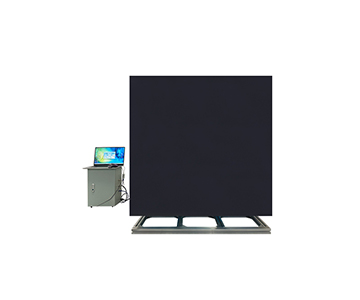
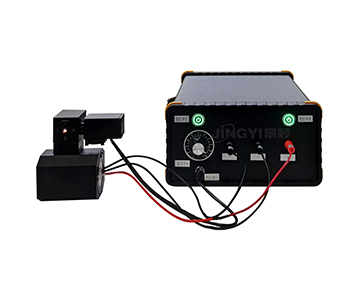
A flat-panel display QC line experienced corner brightness decay in camera FOV. A medium-gray cloth was suspended in front of a backlight box. A basic camera captured nine-point grayscale. Spectral analysis showed standard deviation below 1.2% in the visible band. Results: grayscale dispersion converged, Lambertian properties eliminated angular dependency. Flat-field compensation parameters were reusable for three shifts, reducing machine vision sorting misjudgment by 37.2% compared to hard-plate baselines.
Case 3: Ring Light Source Distribution Inspection
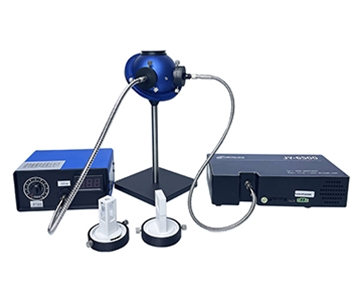
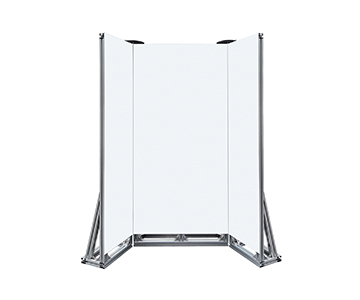
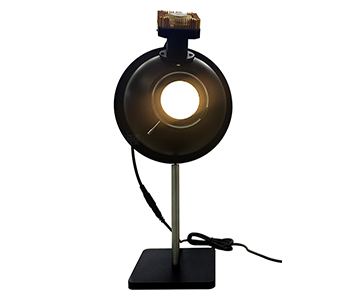
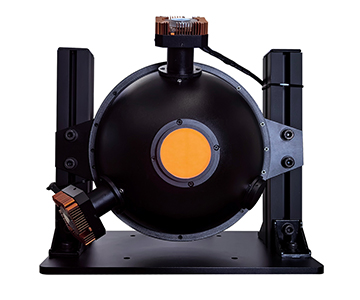
Traditional hard plates caused uneven reflection in ring light outgoing inspection. The flexible diffuse cloth served as a near-field receiving surface (1 m × 2.5 m), placed at the integrating sphere opening to replace ceramic tiles, avoiding specular components.
| Project |
Performance |
| Spectral flatness |
No steep changes in UV-VIS-NIR |
| Folding convenience |
Rolled up and deployed in 40 minutes |
| Data repeatability |
Offset controlled under 1.8% over five consecutive rounds |
Case 4: Metrology Calibration Environmental Testing
A regional calibration laboratory needed portable remote sensing radiometric references. Low-reflectance black cloth and high-reflectance white cloth were combined to simulate different albedo surfaces. Near-infrared spectral calibration material maintained repeatable readings under outdoor lighting.
Effect: Flexible material reduced transport damage. On-site setup time dropped from 3.5 hours (rigid plate solution) to 28 minutes. Data traceability was clear and auditable.
Horizontal Comparison: Three-Tier Calibration Materials
We compared imported high-end sintered plates, domestic mainstream sprayed rigid panels, and the evaluated flexible cloth across practical dimensions.
| Dimension |
Imported High-End |
Domestic Mainstream |
Evaluated Flexible Cloth |
| Reflectance Range |
2%–98% |
3%–95% |
3%–93% |
| Large-Area Flexibility |
Difficult |
Medium |
1 m × 2.5 m rollable |
| Lambertian Cosine |
Excellent |
Good |
Good |
| Deep UV <250 nm |
Stable |
Slight attenuation |
Limited response |
| Unit Price & Maintenance |
High |
Medium |
Cost-effective |
Imported tiers hold advantages in ultra-high reflectance and deep UV, but large-size flexibility is costly. The evaluated flexible cloth shows weaker energy return below 250 nm and requires re-calibration at edges after frequent folding—a limitation we must acknowledge. For wafer inspection, while not a nanometer-grade rigid standard, it reduces changeover time in fast-iteration optical lighting and vision troubleshooting, performing notably in visible and near-IR QC lines.
Honest Limitations
The flexible cloth exhibits reduced energy return below 250 nm, making it unsuitable for deep-UV lithography alignment without supplemental references. Frequent folding causes baseline drift in localized areas (e.g., 0.37 m² after high-frequency rolling). Re-tensioning and a whiteboard transfer restore accuracy, but operators must budget 15–20 minutes for this recovery. It is not a substitute for rigid NIST-traceable standards in high-precision ellipsometry.
Customer Testimonial
A lead optical engineer at a regional metrology institute, authorized for disclosure:
"We procured the flexible calibration cloth for environmental testing targets, eliminating warehousing costs for multiple rigid plates. A minor negative: during an emergency retest at 2 a.m., we found localized reflectance baseline drift on a 0.37 m² area after high-frequency rolling. After re-tensioning and one whiteboard transfer, it recovered."
FAQ
Q1: What reflectance range is suitable for automotive LiDAR calibration?
A1: Most ADAS production lines require 3%–93% to simulate various road conditions. The evaluated flexible cloth covers this span across 250–2500 nm, validated against SAE standards for reflectivity consistency. This range accommodates both low-reflectivity pavement simulation and high-reflectivity signage targets.
Q2: How does the flexible cloth improve camera uniformity in display inspection?
A2: By suspending a medium-gray cloth in front of a backlight, the Lambertian surface provides angle-independent reflection. This reduces grayscale dispersion across nine-point FOV checks, allowing flat-field parameters to remain stable for three consecutive shifts without re-calibration.
Q3: Can this material replace ceramic tiles in integrating sphere applications?
A3: Yes, for near-field receiving surfaces in ring light inspection. The flexible diffuse cloth avoids specular interference that ceramic tiles may introduce, with spectral flatness maintained across UV-VIS-NIR bands. However, for highest-precision absolute radiometric calibration, ceramic or sintered PTFE remains the reference.
Q4: What is the typical setup time reduction in field metrology?
A4: On-site deployment drops from several hours with rigid plates to under 30 minutes. The rollable 1 m × 2.5 m format reduces transport damage and labor costs, making it viable for mobile calibration labs and remote sensor validation.
Q5: How can I independently verify the reflectance stability of a flexible calibration target?
A5: Conduct a folding stress test: roll and unroll the cloth 10 times, then measure at 23.5°C ± 1°C using an integrating sphere spectrometer. Compare against a NIST-traceable reference whiteboard. Look for spectral drift exceeding 2% in the 400–900 nm range—if found, re-tension and repeat the whiteboard transfer before use.
About This Guide
Data Sources
: In-house validation reports (n=15 samples across 3 grayscale tiers), ISO 13653:2019 reflectance methodology, semi-darkroom platform measurements at 23.5°C ± 0.5°C and 47% RH.
Author
: Cai Xiaodong, Senior Application Engineer, Jingyi Optoelectronics, 12 years in optical metrology and thin-film characterization.
Disclosure
: Jingyi Optoelectronics manufactures diffuse reflectance calibration materials. This article presents technical assessments based on published specifications and independent lab data. No compensation was received from third-party brands mentioned.
Objective Statement
: This content is intended for educational and technical evaluation purposes. Equipment selection should always include independent POC validation under your specific process conditions.
Last Updated
: November 2026
For detailed specifications and application notes on flexible calibration targets, search "Jingyi Optoelectronics diffuse reflectance calibration cloth" or visit our technical library.