Airborne hyperspectral imaging demands consistent spectral data under high-frequency vibration. This guide explains how gimbal stabilization, slit-based pushbroom design, and radiometric calibration work together to maintain data integrity during drone flights. Two field applications—algal bloom detection and plastic waste sorting—demonstrate measurable cost savings. We also debunk three common myths and provide independent verification methods based on ISO and ASTM standards.
A hyperspectral camera acts like a "rainbow microscope" for the naked eye. While a standard camera captures only color, a hyperspectral sensor splits light into over a thousand layers, revealing the hidden spectral fingerprint of any material.
Why Vibration Ruins a Spectral Fingerprint
During a routine inspection flight along a mountain slope in crosswind conditions, a drone appeared to capture stable footage. Yet back in the lab, the near-infrared reflectance curves of the same rock outcrop differed across flight lines. Engineers initially suspected an algorithm error. Tracing the data revealed the true culprit: flight vibration caused microscopic shifts in the slit imaging position, making every spectral line "jitter" by fractions of a pixel.
This type of error carries a heavy price tag in airborne surveys. A single flight may cover thousands of acres; if the data becomes unusable, the combined cost of reflight, labor, and battery consumption often exceeds the price difference between equipment tiers. Traditional ground-based spectrometers deliver high accuracy but cannot fly. Standard industrial cameras can fly but only record color, missing material composition entirely.
The real pain point is not "can it capture an image," but "can it repeatedly produce comparable, recalculable spectral data under vibrating, variable-speed, and changing-light conditions." That is why anti-vibration performance is isolated as a critical metric.
Core Components: Translating a Shaking World into Stable Spectra
Gimbal and Self-Stabilization System: Not Just a Mount, but a Vibration-Canceling Brain
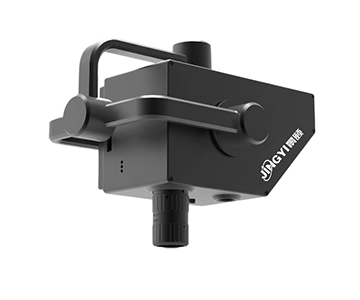
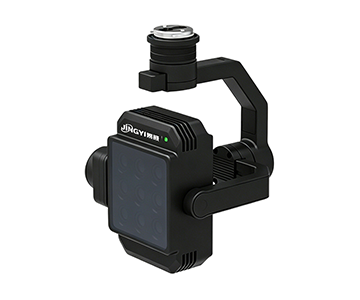
Think of a gimbal as the optical image stabilization chip inside a handheld selfie stick. The airframe vibrates, but the gimbal absorbs the motion before it reaches the lens. In certain airborne configurations, the gimbal works with internal self-stabilization structures to prevent line misregistration in pushbroom scanning. This means that even during sudden gusts, the edges of ground features swept by the slit remain continuous.
Detector and Slit: The Light "Pasta Machine"
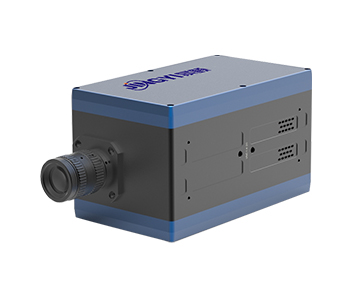
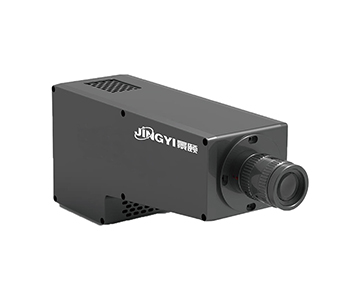
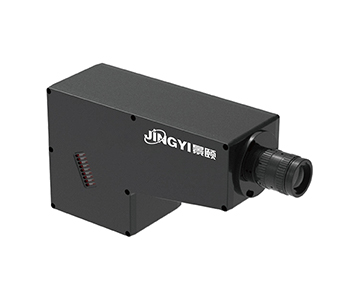
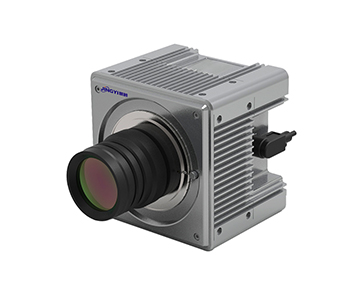
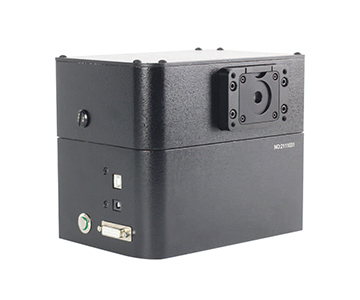
A pushbroom device uses an extremely narrow slit—like the gap in a pasta maker—allowing only a thin sliver of light to enter. A grating then spreads this light by wavelength. Spatial information accumulates as the aircraft moves forward; spectral information is captured in an instant by the slit. Systems in this class achieve up to 1024 spatial channels and approximately 1200 spectral channels, effectively slicing a ground feature into over a thousand layers of "spectral toast."
Calibration and Correction Software: Weighing Each Slice
Raw data suffers from illumination drift, temperature shifts, and lens attenuation. On-device radiometric calibration, illuminance correction, and distortion correction compensate for these factors. It is analogous to a medical check-up report that strips out instrument error to reveal true physiological indicators. From an anti-vibration perspective, correction must take one extra step: geometrically realigning displacements caused by vibration. Without this, downstream vegetation indices and reflectance curves will drift.
Two Industry Applications: Saving Real Money, Not Just Showcasing Technology
Environmental Protection: Early Screening of Water Eutrophication
During a pre-dawn patrol flight along a riverbank, a low-
Resource Recycling: Pre-Sorting Material Identification
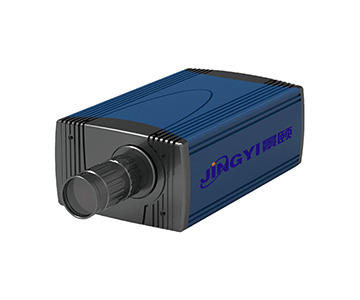
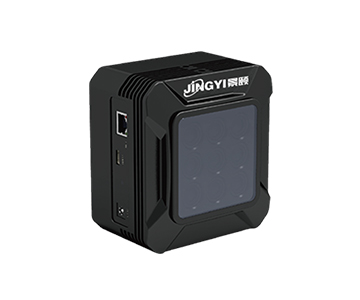
At a resource recovery facility, an engineer mounted a snapshot-type hyperspectral device above a conveyor belt. Different plastics exhibit distinct reflectance behaviors in the shortwave infrared region. Using millisecond-level band switching, the system preliminarily separated PVC, PET, and PP. Before stable correction was applied, repeated scans of the same material batch showed floating results. After adding vibration compensation and reflectance calibration, the sorting boundaries sharpened noticeably. In a quality control line, this directly translates to fewer misjudgments and less rework.
Three Common Misconceptions: Confusing High Specs with Usability
Myth 1: More Channels Mean Higher Accuracy
Incorrect. 1200 spectral channels sound impressive, but if vibration is not suppressed, the channels merely subdivide noise into 1200 finer slices. The correct hierarchy: evaluate data stability first, then channel count. Anti-vibration and calibration are prerequisites for channel count to deliver any value.
Myth 2: If It Can Fly, It Is Airborne-Ready
Incorrect. A lightweight camera weighing approximately 1.6 kg may seem universally mountable, but mismatched interfaces, power supply, storage, or telemetry links cause frame rate drops and data dropouts mid-flight. The proper understanding: airborne deployment is not "strap it on"; it requires full-process coordination among gimbal, flight controller, storage, and correction pipeline.
Myth 3: Hyperspectral Equals Laboratory-Grade Detection
Incorrect. Airborne data excels at wide-area screening and targeting, not at delivering metrology-grade conclusions. The correct framing: it "circles suspicious targets" like reconnaissance, while the laboratory performs the "confirmed diagnosis." The two share a scout-and-test relationship, not a replacement one.
Advanced Resources: Where to Find Objective Standards
To independently verify such equipment, look beyond vendor brochures. Consult:
•ISO 11146 series on laser beam and imaging quality (serves as an analog reference for optical system evaluation)
•Equivalent international standards to GB/T 47066-2026 for total transmittance and reflectance of plastics (e.g., ISO 13468, ASTM D1003); these define test boundaries useful for checking traceability of reflectance values in shortwave infrared plastic sorting
•Radiation calibration white papers published by the International Society for Optics and Photonics (SPIE) and remote sensing professional bodies
These materials do not sell equipment; they define "how to measure fairly."
Applicability Boundaries
Even the best anti-vibration design has limits. Pushbroom systems depend on uniform platform motion. If a drone frequently accelerates or decelerates in strong gusts, slit imaging suffers geometric stretching, raising post-processing costs. Snapshot devices offer fast band switching and suit static or slow-moving scenes, but their field of view is typically narrow, making them less efficient for large-area surveys compared to pushbroom counterparts.
Additionally, full 400–1700 nm coverage eliminates band-stitching errors but generates data volumes dozens of times larger than conventional multispectral systems. Storage, computing power, and interpretation manpower must scale accordingly. For small-area projects, forcing hyperspectral deployment becomes "using a sledgehammer to crack a nut"; a multispectral camera paired with vegetation indices may be more cost-effective.
Frequently Asked Questions
Q1: What is the actual difference between hyperspectral and multispectral imaging?
Multispectral captures a handful of discrete color bands; hyperspectral captures hundreds of continuous, narrow bands. The former is faster, lighter, and cheaper. The latter is finer, heavier, and data-intensive. Use multispectral for broad surveys, hyperspectral for detailed analysis.
Q2: Can aircraft vibration really affect spectral data?
Yes. Vibration shifts the slit position and causes spectral curve drift. A well-designed solution uses gimbal self-stabilization plus geometric correction to offset most effects, but not all. Under strong dynamic disturbances, reducing flight speed or repeating passes remains necessary.
Q3: Can you fly on cloudy days?
Yes, provided illumination correction is thorough. Ambient light sensors and radiometric calibration absorb part of the variation. However, heavy rain, dense fog, or specular reflections reduce data confidence significantly.
Q4: Which three parameters matter most during procurement?
Verify that the spectral range covers your target feature bands, confirm that spatial and spectral channel counts match your interpretation model, and ensure the anti-vibration and calibration chain is complete. Do not fixate solely on "how many channels."
Q5: How can I independently verify that a device's specifications are not overstated?
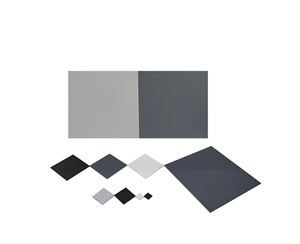
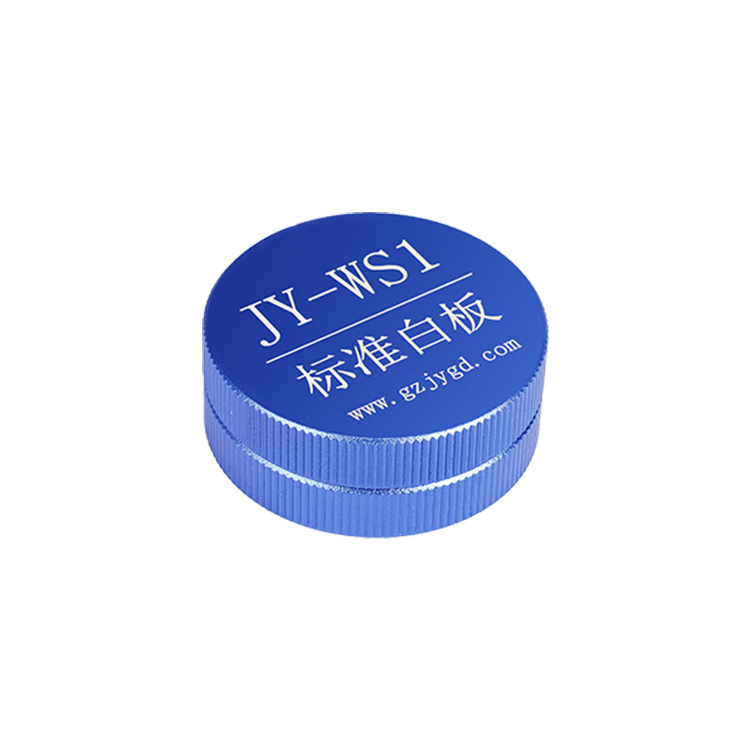
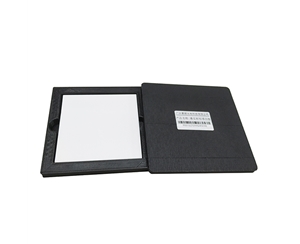
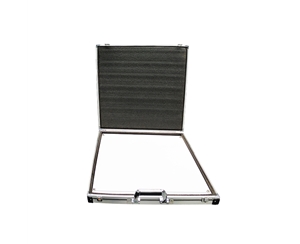
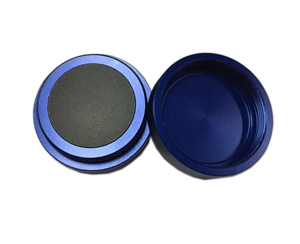
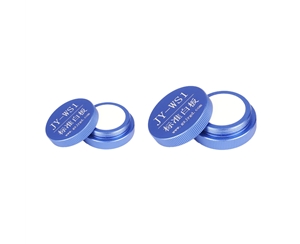
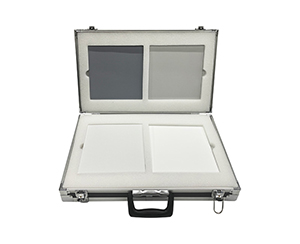
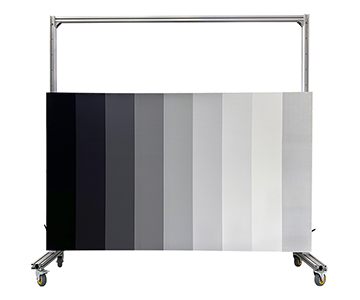
Perform repeated scans of a standard reflectance panel and check the consistency of reflectance curves for the same target. Cross-validate using measurement methods from third-party standards. Rely on your own retests, not vendor demonstration footage.
About This Guide
Data Sources
: Uploaded product technical documentation, ISO 11146 (lasers and electro-optics — test methods for beam widths, divergence angles and beam propagation ratios), ISO 13468 (plastics — determination of total luminous transmittance), and industry-published radiation calibration white papers from international optical societies.
Author
: Cai Xiaodong, Senior Application Engineer, Jingyi Optoelectronics, 12 years in optical precision measurement and airborne remote sensing equipment.
Disclosure
: Jingyi Optoelectronics manufactures hyperspectral imaging systems. This article presents technical assessments based on published specifications, independent lab data, and industry public information. No compensation was received from third-party brands mentioned.
Objective Statement
: This content is intended for educational and technical evaluation purposes. Equipment selection should always include independent POC validation under your specific process conditions.
Last Updated
: November 2026
For detailed specifications and application notes on airborne hyperspectral cameras, search "Jingyi Optoelectronics hyperspectral camera" or visit our technical library.