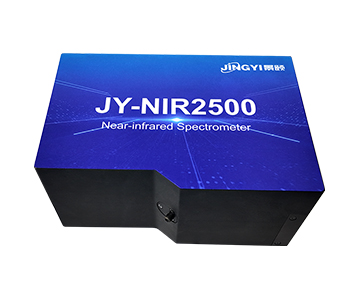
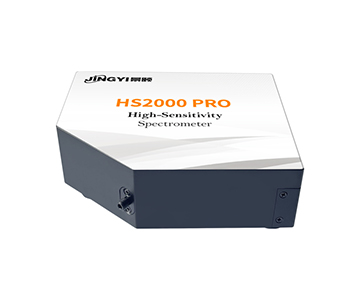
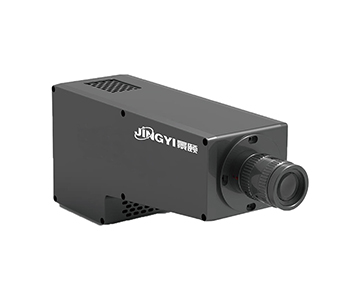
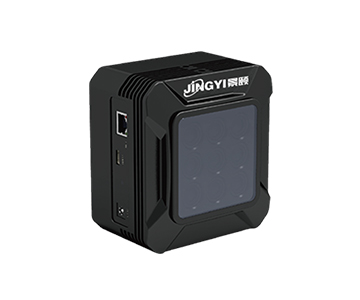
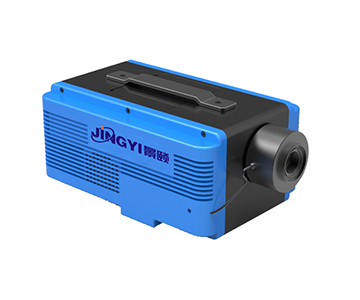
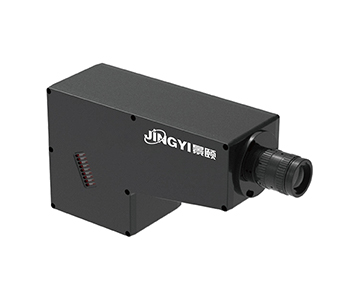
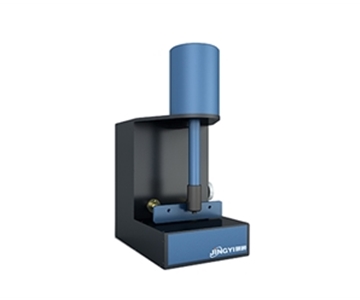
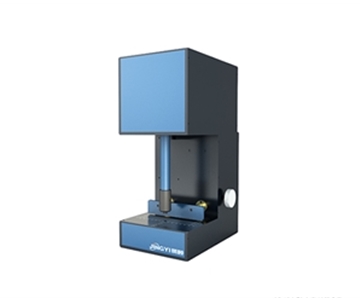
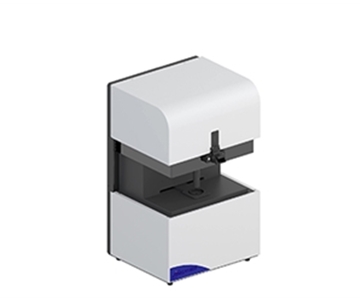
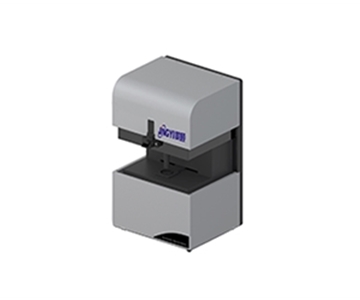
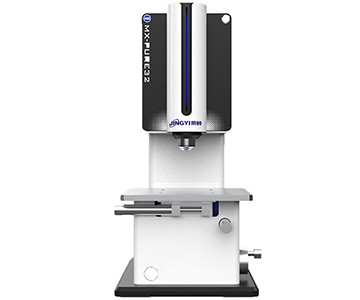
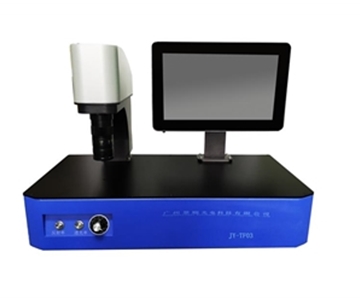
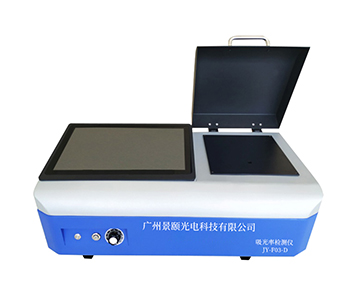
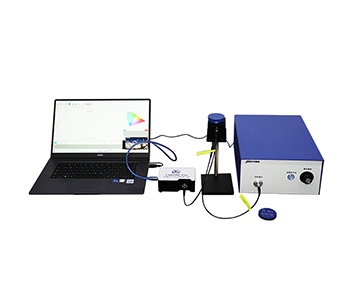
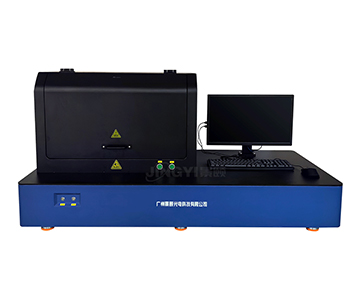
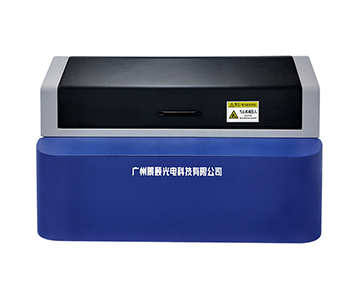
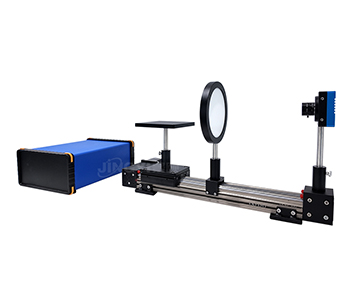
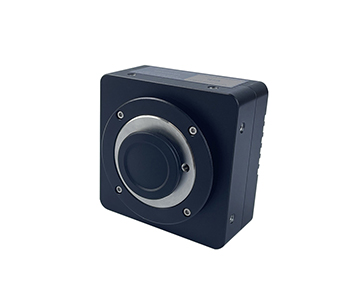
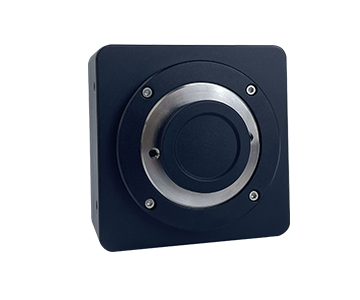
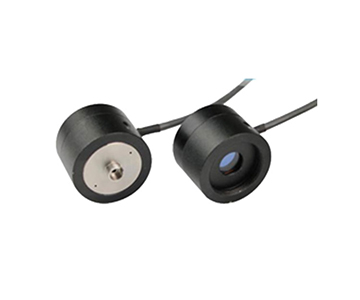
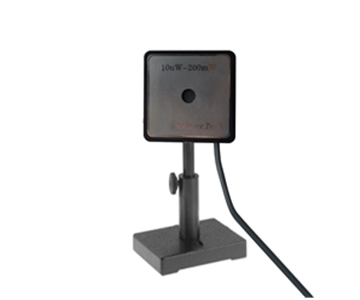
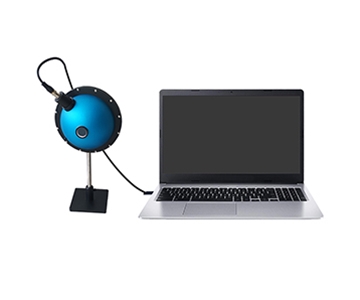
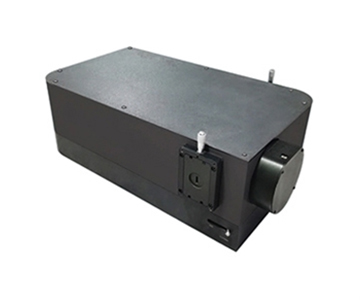
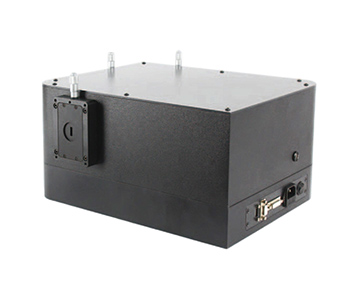
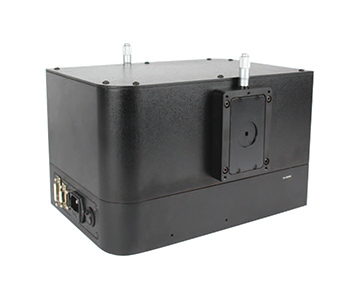
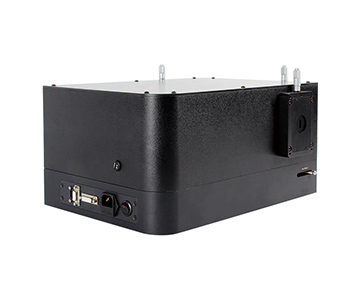
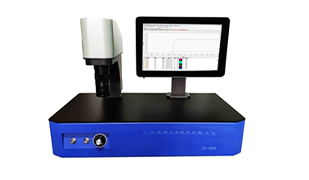
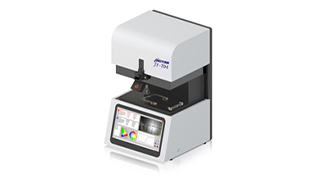
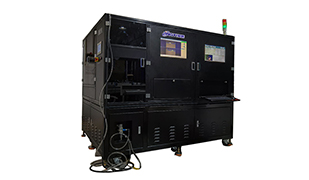
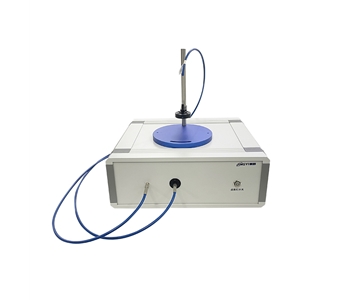
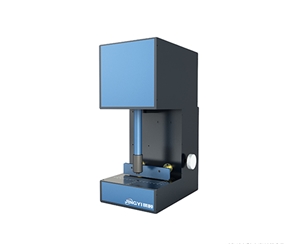
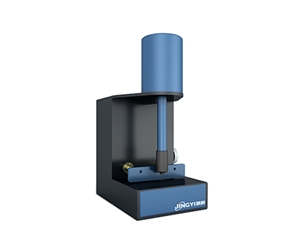
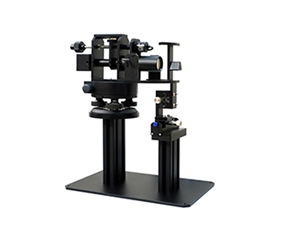
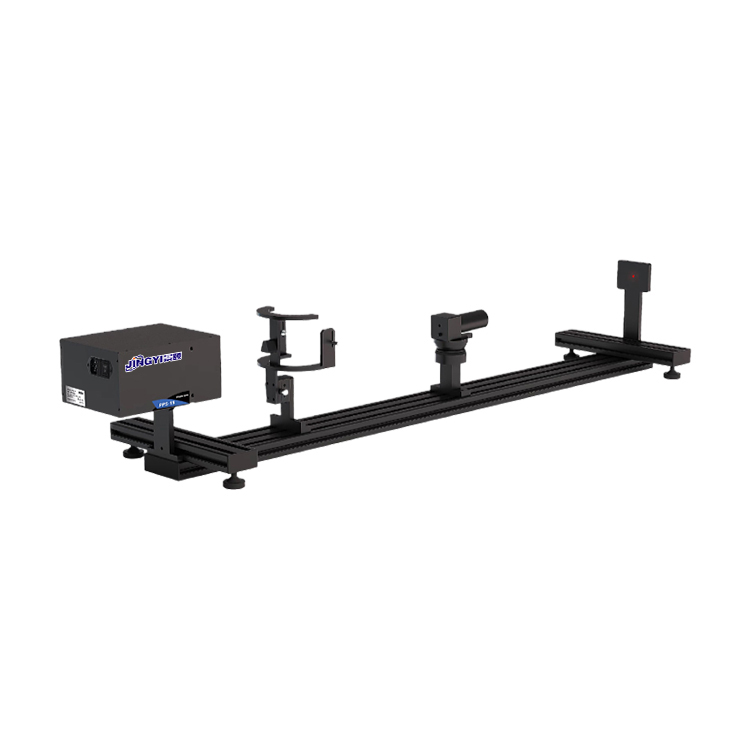
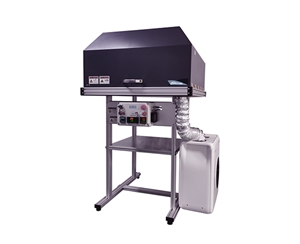
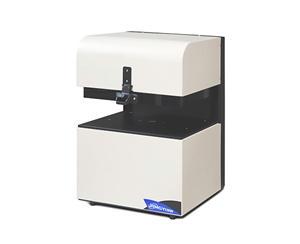
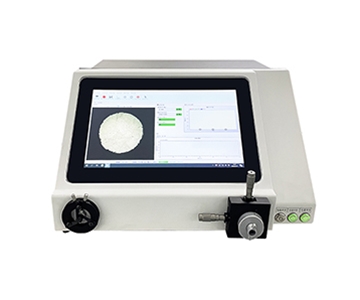
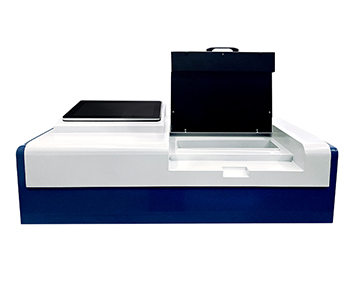
Choosing a hyperspectral camera for infrared transmittance work comes down to five variables: spectral band, frame rate, interface bandwidth, calibration workflow, and deployment scenario.
Visible-near-infrared (VNIR) systems cover 400–1000 nm, short-wave infrared (SWIR) systems cover 900–1700 nm, and broadband configurations span 400–1700 nm without stitching. Spectral resolution typically ranges from 1–3 nm, push-broom frame rates reach up to 1800 fps in region-of-interest (ROI) mode, and tuneable-filter designs deliver 1 nm scan steps. For plastics sorting, water-quality monitoring, and controlled-environment agriculture, buyers should validate each variable against real samples rather than trusting a single datasheet number.
Start With the Measurement Target, Not the Spec Sheet
A hyperspectral camera is not bought because it "looks sharp." It is bought because its spectral window captures the absorption features that separate your materials. That distinction sounds obvious until a lab team discovers their transparent PET film and PVC film overlap almost perfectly at 550 nm and only diverge near 1200 nm and 1450 nm.
Match the Band to the Absorption Feature
•Transparent plastics, films, and glass substrates — SWIR (900–1700 nm) carries the C-H and O-H overtone bands that separate polymer types.
•Grain, botanicals, soil, and vegetation canopies — VNIR (400–1000 nm) already captures most pigment and moisture responses.
•Simultaneous pigment plus moisture, sugar, or mineral mapping — broadband 400–1700 nm without a stitch seam.
Before shortlisting anything, answer one question:
where does the target absorption peak sit?
If the answer is unknown, borrow a system and sweep a reference spectrum first. Buying the wrong band is the most expensive mistake in this category, and no amount of software recovers a feature the detector never saw.
Match the Form Factor to the Deployment
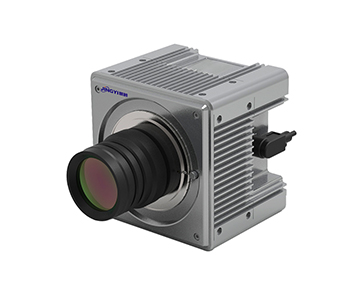
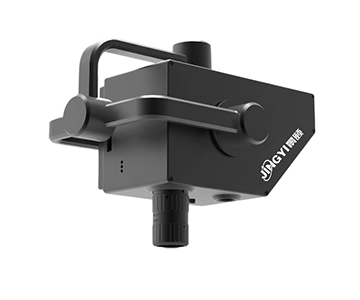
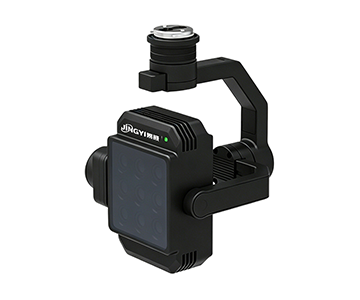
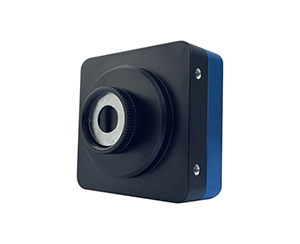
Bench-top R&D favours plug-and-play USB 3.0, a C-mount for interchangeable lenses, and a compact body. Inline sorting demands external triggering, ROI modes, and GigE or 10GigE bandwidth. Unmanned aerial vehicle (UAV) payloads add gimbal stabilisation, onboard storage, weight limits, and SkyPort or X-Port mounting protocols.
One process engineer at a polymers pilot line learned this the hard way during a vendor evaluation: the datasheet quoted an impressive frame rate, but the interface was still USB 3.0. At full-spectrum push-broom, bandwidth saturated before the sensor did, and the line never reached takt time. The numbers were not falsified — the
conditions
behind them simply did not match the factory floor.
Separate Three Different Meanings of "Accuracy"
Procurement language that just says "high accuracy" is unenforceable. Split it into three acceptance criteria:
•Spectral accuracy — scan step or sampling interval. Tuneable-filter designs reach 1 nm scan precision; push-broom systems sample at 0.5–1.7 nm intervals.
•Spatial accuracy — pixel pitch and spatial channel count. Options such as 5 × 5 μm, 6.5 × 6.5 μm, and 9 × 9 μm directly set the minimum resolvable feature.
•Radiometric accuracy — depends on radiometric calibration and downwelling-light correction. 12-bit depth is the baseline; 14-bit appears on SWIR tuneable-filter models and gives extra headroom on weak signals.
Each of these is verified by a different method. Conflating them is how acceptance disputes start.
Core Parameters That Decide Transmittance Performance
Spectral Range Sets the Ceiling
SWIR (900–1700 nm) unlocks polymer identification, moisture inversion, and mineral sorting. VNIR (400–1000 nm) handles colour, pigments, and standard vegetation indices. Broadband 400–1700 nm removes the stitching artefact between silicon and InGaAs detectors, at the cost of higher unit price, larger data volume, and heavier compute.
Do not chase width reflexively. If every target peak sits between 700 and 950 nm, a broadband unit is溢价 you will never spend. Conversely, PET/PVC separation is invisible to a VNIR-only sensor.
Full Width at Half Maximum Is Not Sampling Interval
These two numbers are routinely confused in vendor decks. FWHM describes how close two peaks can be before they merge; sampling interval describes how densely the curve is digitised.
| Configuration |
FWHM |
Sampling interval |
Spectral channels |
| VNIR high-resolution |
1 nm |
0.5 nm |
1080 |
| VNIR standard |
2.5 nm |
0.8 nm |
720 |
| SWIR |
3 nm |
1–1.7 nm |
512 / 800 |
| Broadband push-broom |
2.4 nm |
1.2 nm |
1200 / 600 / 300 |
Quantitative inversion — concentration regression, content prediction — needs small FWHM. Classification tasks such as material sorting or defect rejection usually need adequate channel count more than extreme resolution. Paying for 1 nm FWHM on a binary sorting job is budget burned.
Frame Rate and ROI Under Dynamic Transmittance
Dynamic transmittance and reflectance measurements fail in one specific way: the sample moves faster than the spectral line can keep up. Push-broom SWIR systems deliver 130–400 fps at full frame and 900–1800 fps in ROI mode; VNIR push-broom runs 100–342 fps at full frame.
The arithmetic is simple:
line speed × ground sample distance ≤ sustainable full-frame frame rate
If that inequality holds at full frame, skip ROI. ROI trades spatial coverage for temporal resolution and only makes sense on narrow webs or fixed-point observation.
Bit Depth, Interface, and Storage
•Bit depth — 12-bit is mainstream; 14-bit on SWIR tuneable-filter models widens dynamic range for low-photon scenes.
•Interface — USB 3.0 for bench plug-and-play; GigE/10GigE for long cable runs and multi-camera cascades; Thunderbolt for field laptops driving a touch panel.
•Storage — airborne broadband units ship with a 1 TB solid-state drive and 16 GB RAM so the payload is not tethered to a host PC. Bench systems lean on host disks; verify write throughput against the raw data rate first.
Comparing Tiers Without Inventing Numbers
Three-Tier Snapshot
Imported baseline tier.
Specifications vary by vendor and publication cycle; treat every number as "pending current datasheet" rather than a fixed benchmark.
Mainstream
Spectral coverage 400–1000 nm / 900–1700 nm / 400–1700 nm; 1–3 nm FWHM push-broom or 1 nm scan step tuneable; full-frame 100–342 fps with ROI up to 1800 fps; 12-bit, 14-bit on SWIR tuneable; USB 3.0 / GigE / 10GigE / Thunderbolt; external push-broom, internal push-broom, tuneable, and airborne gimbal form factors.
Cost-effective multispectral tier.
450–900 nm across 7 narrow bands plus RGB; discrete filters rather than a continuous spectrum; 20 fps real-time or 1 fps triggered airborne; 12-bit; HDMI / RS232 / gigabit Ethernet / USB 3.0; portable or indoor-integrated housings.
The Numbers That Actually Matter
Within the documented configurations, VNIR push-broom reaches FWHM 1 nm, 0.5 nm sampling, and 165 fps full frame. SWIR push-broom holds FWHM 3 nm with ROI up to 1800 fps. The airborne broadband unit covers 400–1700 nm at FWHM 2.4 nm across 1024 spatial channels with 1 TB onboard storage. Tuneable-filter models scan at 1 nm steps with 10–200 ms per band. The cost-effective multispectral option selects from 410/450/490/530/550/570/600/650/660/680/720/750/780/800/850/900 nm at 20 fps (real-time) or 1 fps (triggered airborne) — fine for vegetation indices and pre-sorting, useless for continuous-spectrum inversion.
Imported baselines are deliberately left as "per current vendor publication." Any blind comparison against invented figures is worse than no comparison. Run the same reference sample, same illuminant, same integration time, and let the data settle the value argument.
Total Cost of Ownership and Supplier Scoring
TCO Is More Than the Unit Price
Six line items belong on the spreadsheet before anyone signs:
1.Body and lens — is the C-mount lens included, or are 25/35/50 mm primes quoted separately?
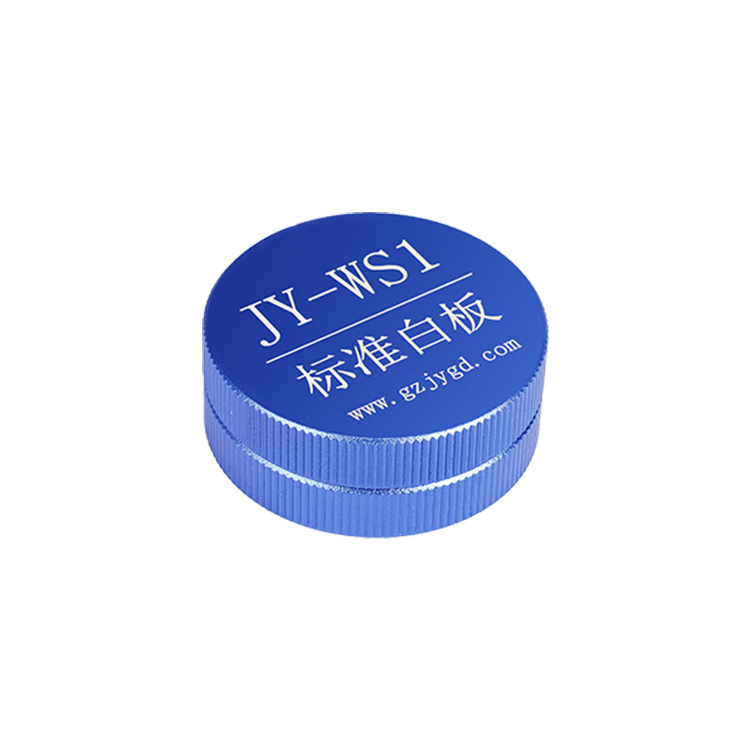
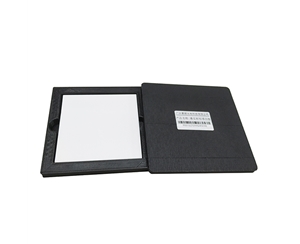
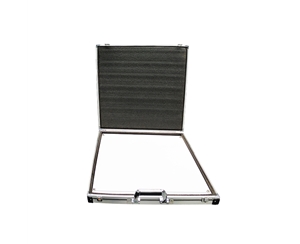
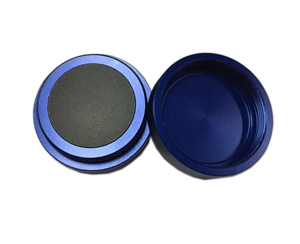
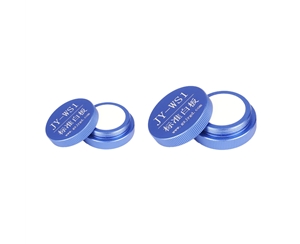
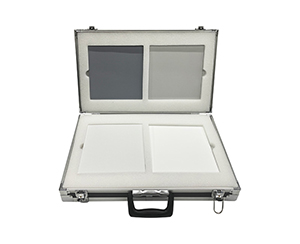
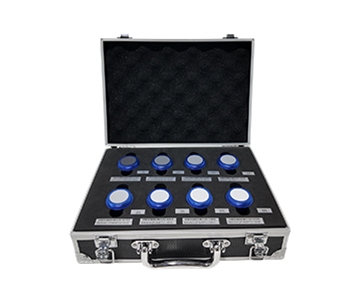
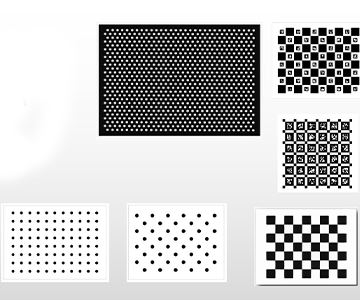
2.Calibration kit — white reference, dark-current procedure, and radiometric certificate in the box?
3.Software — does the SDK ship with the purchase, and how is secondary-development licensing priced?
4.Compute — 1200 spectral channels × 1024 spatial pixels in real time needs a dedicated workstation, not a laptop.
5.Maintenance — cooled versus uncooled detector servicing diverges sharply over a five-year horizon.
6.Downtime exposure — interface failures, driver drift, and firmware upgrades all bill against production hours.
Four-Axis Supplier Scorecard
•Technical — are spectral, radiometric, and geometric-distortion calibration procedures documented, and is the SDK open enough for your stack?
•Service — is on-site commissioning inside the quoted price, and what is the loaner policy?
•References — can they name deployments in your sector that accept a callback, even if the end user stays anonymous?
•Delivery — are custom bands, gimbal interfaces, and mounting brackets written into the contract with dates?
Treat technical and delivery as pass/fail gates. A high total score with a failing gate is still a failing vendor.
The Ten-Point Pre-Negotiation Checklist
1.Does the spectral range cover the target peak, and is it continuous or stitched?
2.What are FWHM and sampling interval, and under what test conditions?
3.Full-frame frame rate and ROI frame rate — both numbers, plus minimum ROI width in pixels.
4.12-bit or 14-bit, and is read noise measured rather than modelled?
5.Can the interface bandwidth carry full-spectrum, full-frame throughput?
6.Are radiometric calibration, white-reference, and dark-current subtraction included?
7.Does the software export ENVI-standard .img or 16-bit TIFF, and is secondary development permitted?
8.Operating temperature range — bench units typically 0–45 °C, airborne gimbal units down to −20–50 °C.
9.Weight and envelope versus payload margin (gimbal cameras ~780 g; push-broom bodies 500 g–5 kg).
10.Does the warranty cover detector, cooler, and firmware upgrades?
Four Clauses Worth Fighting For
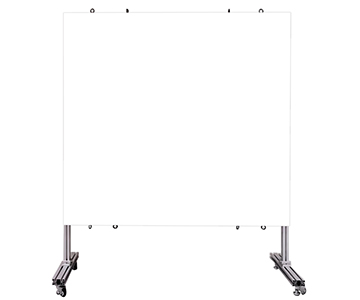
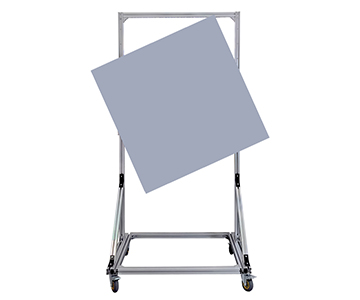
•Free sample testing — proof-of-concept (POC) on the buyer's real material. A white board and a demo video are not a substitute.
•Acceptance wording — "same illuminant, same integration time, same reference sample" written into the contract.
•Response tiers — on-site response hours and loaner-arrival hours as separate commitments.
•Software upgrades — major-version upgrades free for three years, and SDK backward compatibility guaranteed.
Independent POC Validation
Vendor claims are hypotheses. Three tests turn them into facts.
Spectral Axis
Scan a reference with known absorption peaks — holmium glass or a polystyrene film works — and compare peak positions. On a 1 nm FWHM system, peak drift should stay within one sampling interval. On a 3 nm SWIR system, watch whether peak shapes are being smoothed away rather than just shifted.
Radiometry and Transmittance
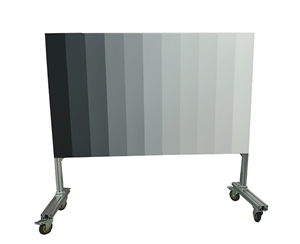
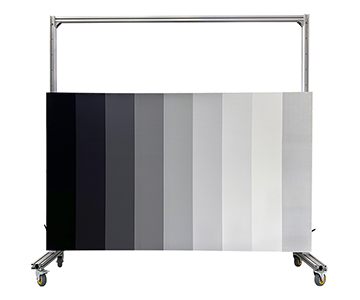
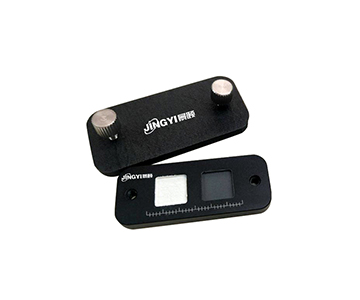
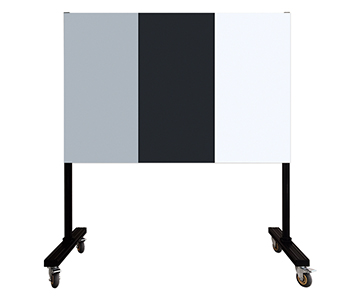
•After white-reference and dark-current correction, measure a neutral-density filter and check curve flatness.
•Fixture the same sample 10 times and compute the repeatability standard deviation.
•Cross-measure on a second unit of the same model for unit-to-unit consistency.
This trio separates cameras with pretty spectra from cameras with trustworthy radiometry.
Dynamic Behaviour
Inline deployments must run at production line speed: full-spectrum acquisition for 10 continuous minutes, logging dropped frames and ROI trigger skew. Airborne payloads need the specified gimbal stability (e.g. ±0.01°) re-measured under real vibration, not on a bench isolator.
Five Selection Errors Engineers Keep Repeating
Treating multispectral as hyperspectral.
A 7-band-plus-RGB filter array looks channel-rich but the spectrum is discrete. Continuous-spectrum inversion and content prediction fail outright.
Reading FWHM without sampling interval.
FWHM 1 nm with 2 nm sampling produces a comb artefact and caps quantitative model accuracy no matter how good the detector is.
Ignoring interface bandwidth.
1200 channels × 1024 spatial × 12-bit is a serious per-frame payload. USB 3.0 will drop frames at full spectrum and full frame; do the arithmetic before signing.
Judging airborne payloads by pixel count alone.
Most blurred UAV scans are not a sensor problem — they are a gimbal-stabilisation and pan-rate (e.g. 90°/s) mismatch against aircraft ground speed.
Writing ROI frame rate into the contract as full-frame.
1800 fps is an ROI figure. Full frame on the same SWIR body is 130–400 fps. Acceptance testing must be clause-bound to full frame.
Honest Limitations
Emerging
•SWIR detectors remain expensive. InGaAs for 900–1700 nm costs materially more than silicon VNIR. Budget-constrained projects should first prove that 400–1000 nm cannot answer the question.
•Stitched versus seamless broadband is a trade, not a win. 400–1700 nm seamless removes the seam artefact but multiplies data volume, compute, and storage pressure. Stitched designs are cheaper and hand you a join to manage.
•Tuneable-filter designs do not belong on a fast line. 1 nm scan precision is seductive, but 10–200 ms per band locks them to static samples and bench workflows.
•Cold-weather airborne work needs the right gimbal. Some broadband airborne units rate 0–40 °C; winter field campaigns require the −20–50 °C gimbal variant.
Naming these limits up front is cheaper than arguing about them after delivery.
Frequently Asked Questions
How do I decide between VNIR and SWIR for my application?
Locate the target absorption peak first. Pigments, standard vegetation indices, and colour sorting live in 400–1000 nm. Moisture, sugars, minerals, and PET/PVC identification need 900–1700 nm. If the peak location is uncertain, borrow a system and sweep a reference spectrum before committing budget.
What is the practical difference between 1 nm and 3 nm FWHM?
The difference is whether adjacent absorption peaks separate cleanly. Quantitative inversion and chemical identification prefer 1 nm-class optics. Material classification and foreign-body rejection are usually fine at 3 nm. Paying for resolution the task cannot use is wasted capital.
Should I specify push-broom or tuneable-filter acquisition?
Push-broom suits production lines, UAV payloads, and moving samples — high frame rate, continuous acquisition. Tuneable-filter suits static research samples needing 1 nm scan steps, at the cost of 10–200 ms per band and a slow effective takt.
How should buyers balance imported versus
Imported baseline pricing and lead time track the vendor's current quotation.
How can I independently verify a hyperspectral camera without relying on sales claims?
Run three gates: a known-peak standard for the spectral axis, a white plate plus neutral-density filter for radiometry and transmittance, and a 10-minute dynamic capture at true line speed to log dropped frames. A camera that clears all three is safe to contract.
Reference Information
Sources
: Internal product documentation for airborne multispectral, airborne hyperspectral, multispectral, tuneable-filter hyperspectral, internal/external push-broom hyperspectral, and short-wave-infrared hyperspectral series specification sheets.
Author
: Cai Xiaodong, Senior Application Engineer, Jingyi Optoelectronics — 12 years in industrial precision optical metrology.
Conflict of Interest
: Jingyi Optoelectronics manufactures hyperspectral and multispectral imaging systems. This analysis draws on public specifications and internal validation data without third-party sponsorship.
Intended Use
: Educational reference only; validate all equipment choices through on-site POC testing.
Updated
: November 2026
For detailed specifications and application notes on hyperspectral cameras, search "Jingyi Optoelectronics hyperspectral camera" or visit our technical library.