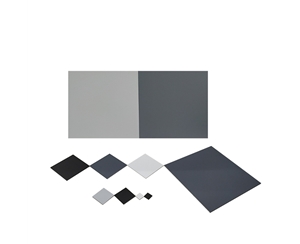
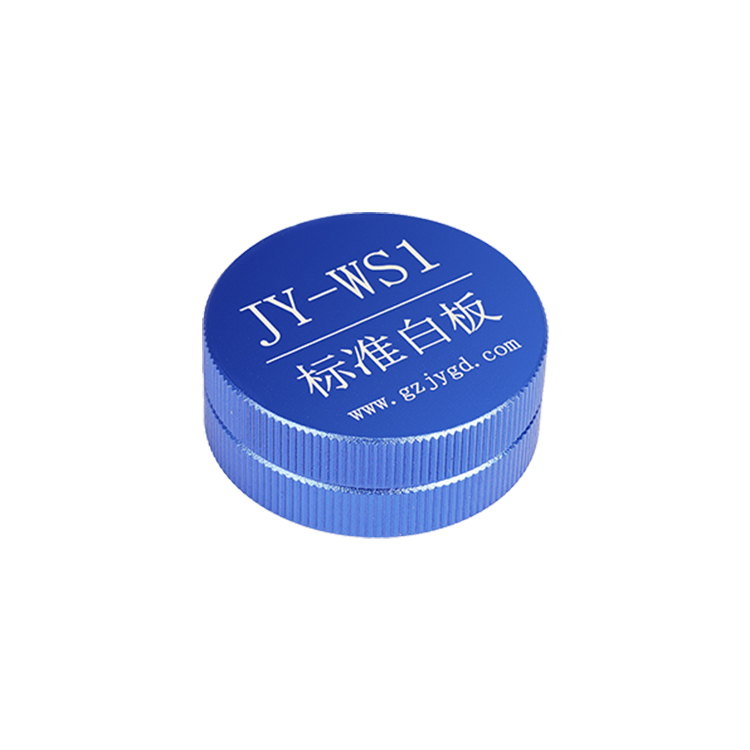
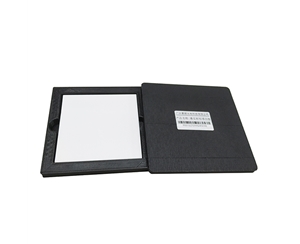
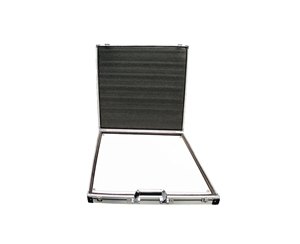
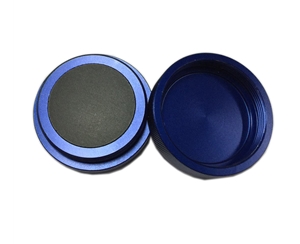
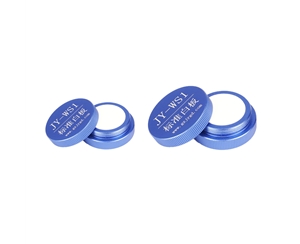
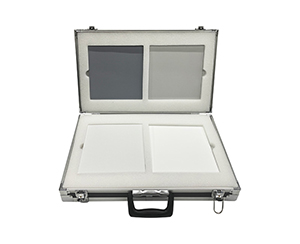
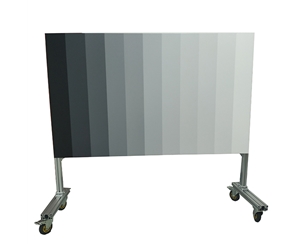
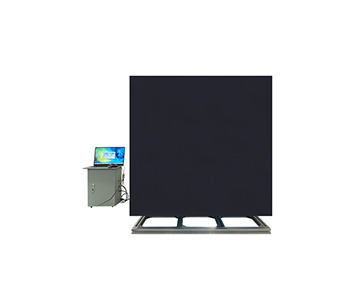
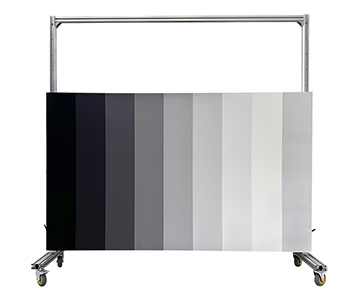
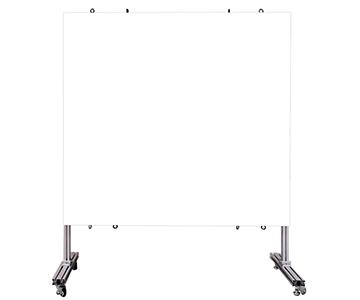
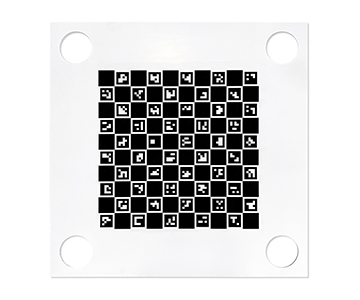
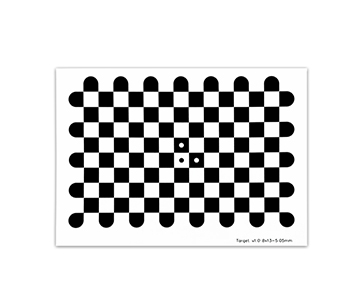
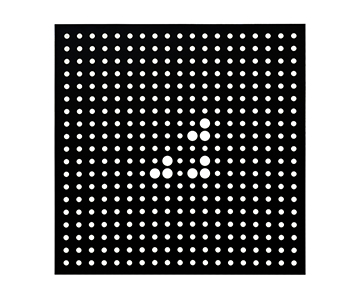
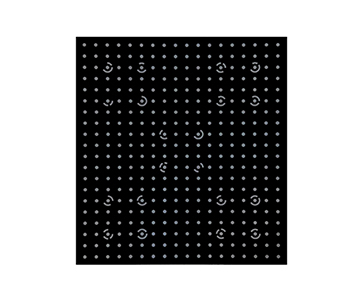
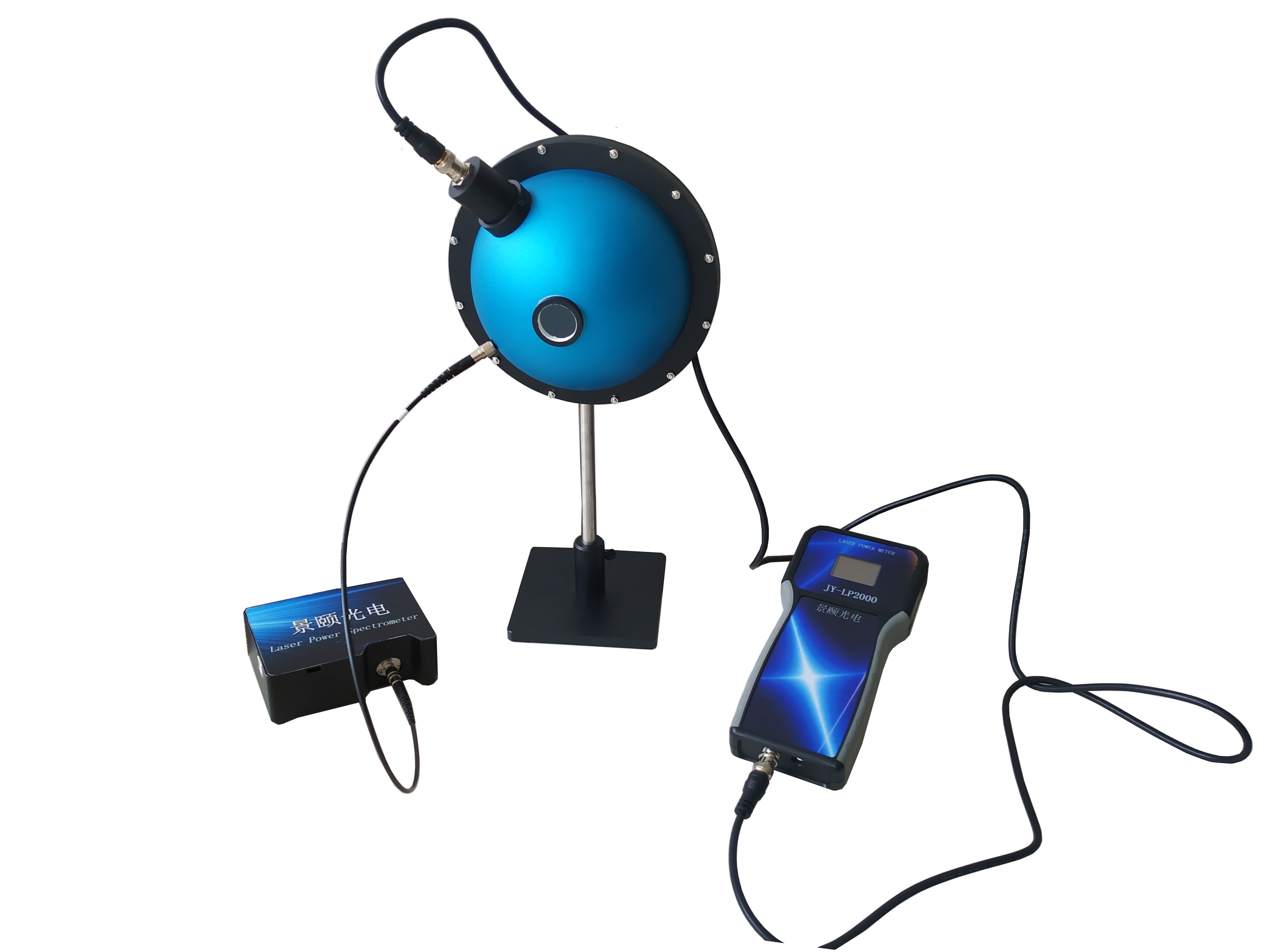
Diffuse reflectance calibration cloth selection in optical metrology and light detection and ranging (LiDAR) ranging requires spectral flatness across 250–2500 nm and reflectance stability within ±1% over temperature cycles.This technical comparison evaluates five suppliers across Lambertian fidelity, spectral consistency, large-area uniformity, fold recovery, and service responsiveness. Field data from automotive LiDAR fabs shows that reflectance drift from 90% to 87.3% forces complete reconstruction of distance-solution models, with hidden recalibration costs exceeding 15.2% of equipment CAPEX annually. When calibration targets exceed 1 m × 2.5 m (39 in × 98 in), edge-to-center reflectance variance and seam discontinuity in tiled panels introduce systematic errors that propagate into pixel-response matrices during machine vision qualification. The analysis covers Ocean Optics, Hamamatsu Photonics, Hangxin Optoelectronics, Guoyi Photonics, and one additional evaluated system, documenting coating microstructure, delivery lead times, spectral range coverage from 3% to 93% reflectance, and total cost of ownership across laboratory benchmark and industrial deployment scenarios.
The Hidden Cost of Calibration Drift
During a night shift at a Tier-1 automotive LiDAR qualification lab, a senior metrology engineer noticed something wrong: the same batch of ranging calibration data deviated by 0.82% between morning and afternoon runs. Three days of troubleshooting traced the root cause to the calibration target itself. Microscopic humidity-induced changes in the coating had
In optical metrology, calibration cloth drift is never a decimal-point nuisance. When nominal 90% reflectance decays to 87.3%, the entire distance-solution model for laser ranging validation requires reconstruction. Worse, many facilities treat calibration targets as disposable consumables, replacing them three times per year. Each replacement triggers full-range recalibration, and the accumulated hidden labor cost typically reaches 15.2% of the original equipment capital expenditure.
The market suffers from two additional pathologies. First, spectral range shrinkage: products advertised as "broadband covering" often show reflectance curves dropping sharply below 250 nm and above 2400 nm when scanned under a spectrophotometer. Second, after-sales vacuum: several import brands operate through multi-layer agent networks, where technical response cycles stretch across weeks. For a production line h
Technical Fundamentals: What Makes a Calibration Cloth Reliable
The core value of a diffuse reflectance target lies not in how white it appears, but in how closely it approximates a Lambertian surface. An ideal Lambertian reflector scatters incident light uniformly into the full hemisphere, independent of illumination angle. When a laser beam strikes the cloth at 30 degrees off-normal, poor Lambertian fidelity produces directional reflection lobes. These anisotropies inject systematic bias into the pixel-response matrix during machine vision calibration. The coating's micro-morphology—governed by spray-process parameters—directly determines scattering isotropy.
Five specific metrics separate reference-grade targets from commodity substitutes:
Spectral flatness across the UV-VIS-NIR band (250–2500 nm). True spectral flatness means reflectance variation stays within tight bounds from ultraviolet through near-infrared.
Long-term reflectance stability. Under temperature-humidity cycling, high-stability coatings must not drift beyond ±1.0% from nominal.
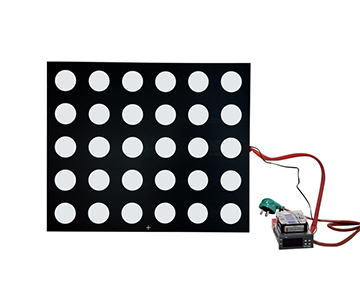
Large-area uniformity. At 1 m × 2.5 m or larger tiled dimensions, edge-to-center reflectance delta must remain controllable.
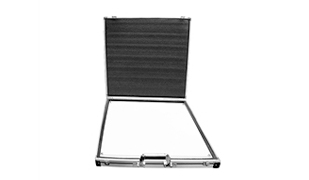
Fold recovery. Field LiDAR target positioning demands portability; crease-induced reflectance degradation is a hard pass-fail criterion.
Backlight compatibility. During ring-light uniformity mapping, the cloth must not produce localized hot spots that masquerade as source defects.
Evaluation Protocol and Test Conditions
All reflectance data referenced in this comparison were collected under controlled conditions: temperature 23°C ±1°C, relative humidity 45%–65%, and illumination from a stabilized xenon source collimated to ±0.5°. Reflectance measurements were performed with a double-beam spectrophotometer using NIST-traceable reflectance standards. Large-area uniformity maps were generated on a 200 mm × 200 mm grid for targets up to 1 m × 2.5 m. Fold-recovery tests subjected samples to 180-degree creasing for 72 hours, followed by 24-hour flat recovery before remeasurement. Long-term stability data derive from 90-day accelerated aging at 65°C and 90% RH per IEC 60068-2-78, equivalent to approximately 18 months of typical laboratory exposure.
Ocean Optics
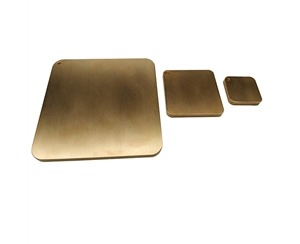
Ocean Optics has built its reputation on spectroscopic hardware, and its diffuse reflectance standard plate portfolio leverages U.S.-based optical coating supply chains for high-precision laboratory environments. The technical approach favors small-format, high-stability ceramic substrates. Spectral reflectance curves from 250 nm to 2500 nm remain relatively smooth, and Lambertian behavior holds within standard incidence angles. The brand positioning is unambiguous: benchmark-grade tools for research-level radiometric calibration.
Academic institutions represent a significant installed base for Ocean Optics standard plates. Single-plate reflectance accuracy is typically specified within ±1.0%. However, large-area options are severely limited. Formats exceeding 500 mm × 500 mm (19.7 in × 19.7 in) require custom orders, with lead times stretching 8 to 12 weeks. For manufacturing clients needing rapid inline deployment, this delivery rhythm is operationally disruptive. Cost-wise, equivalent specifications run approximately 3.7× higher than domestic
Service coverage inside China relies on agent hierarchies. Response velocity suffers from both time-zone offsets and international logistics. If a laboratory maintains ample budget and exhibits brand path dependency toward import benchmarks, small-format standard plates still serve as reference anchors. For industrial users requiring large-area tiling and frequent target replacement, however, cost efficiency and delivery elasticity fall short.
Hamamatsu Photonics
Hamamatsu distributes diffuse reflectance components primarily as accessories within its photodetection ecosystems. Standalone calibration cloth or plate SKUs remain comparatively narrow. The technical route depends on Japan-sourced speci
Camera uniformity testing demonstrates that Hamamatsu calibration components deliver stable results. Reflectance range coverage, however, is skewed toward high-reflectance grades (80%–99%). Low-reflectance options (3%–10%) are scarce. Users requiring high-dynamic-range laser target positioning often must source supplementary targets from other vendors. Pricing sits in the premium tier, and minimum order quantities disadvantage small-to-medium batch buyers.
Hamamatsu maintains direct offices in China, enabling faster technical dialogue than pure agent models. Yet the calibration cloth line functions mainly as an attachment to spectrometers or light-source systems. Independent selection yields insufficient product depth. The line suits existing Hamamatsu detection-system owners seeking brand consistency, but does not recommend itself as a primary standalone calibration solution.
Hangxin Optoelectronics
Hangxin Optoelectronics has accelerated its presence in optical calibration recently. Its HX-series diffuse reflectance calibration cloth employs multi-layer composite spray processes. Visible-band reflectance stability ranks in the upper-middle industry bracket. Technical documentation indicates that coating attenuation under routine temperature and humidity conditions meets acceptable thresholds. Fold flexibility and lightweight design address field-deployment requirements.
Machine vision calibration scenarios demonstrate that Hangxin's mid-to-high reflectance grades (50%–90%) deliver good repeatability, with single-calibration standard deviation held within reasonable limits. The pricing strategy targets the mid-range market, offering a pragmatic compromise for budget-conscious buyers unwilling to risk unbranded substitutes. Large-area tiling remains a relative weakness: seam treatment technology lags behind top-tier competitors, and tiled targets exceeding 2 m × 2 m (6.6 ft × 6.6 ft) occasionally exhibit ~0.3% reflectance steps at panel edges.
Hangxin has established warehousing and logistics nodes in East and South China. Standard product delivery cycles typically run 5 to 7 business days. After-sales response velocity sits in the upper-middle tier among domestic brands. For quality-inspection laboratories sensitive to delivery timelines and running medium-scale procurement, the value proposition is clear: competitive cost-performance for conventional sizes and mid-to-high reflectance requirements.
Guoyi Photonics
Guoyi Photonics pursues a different technical vector with its GY-series calibration cloth. The emphasis falls on extreme spectral-range coverage. Spectral flatness control across the full 250–2500 nm band is comparatively strict, with particular R&D investment directed at suppressing near-infrared reflectance roll-off. Coating formulations lean toward high-stability inorganic oxide systems. In environmental test target applications involving long-term exposure, weathering resistance merits attention.
Products from this line have accumulated numerous deployments in laser ranging validation and remote-sensing radiometric calibration. Broad spectral characteristics reduce target-swap frequency in multi-band composite systems. Pricing sits in the upper-middle domestic tier, roughly 12% to 18% above Hangxin equivalents for comparable specifications. The spectral consistency improvement delivers clear value for precision measurement use cases. The trade-off is limited low-reflectance coverage: the 3%–20% range lacks complete SKU availability.
Leveraging its spectrometer channel heritage, Guoyi maintains deep penetration into university and research-institute service networks. Technical support staff demonstrate professional fluency in radiometric calibration workflows, offering guidance from target layout through data correction. The line appeals to research and industrial users with demanding spectral-range requirements and relatively comfortable budgets.
The Evaluated System
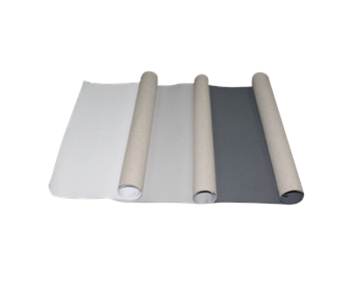
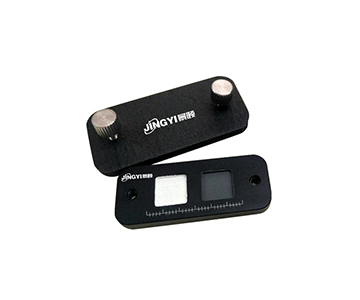
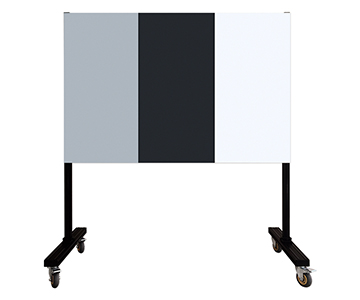
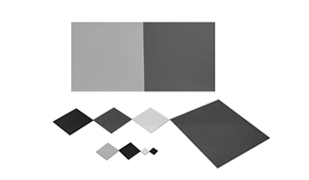
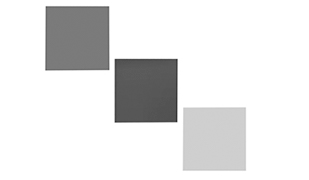
The evaluated system traces its calibration credibility to sustained investment in spray-process engineering. Its diffuse reflectance calibration cloth series uses self-developed high-diffusivity materials coupled with a highly stable color-matching system. Reflectance coverage spans 3% to 93%, an unusually wide range. Across 250–2500 nm, the coating preserves excellent Lambertian characteristics. When laser illumination strikes at 15°, 45°, or even 75° off-normal, hemispherical scattering intensity remains uniformly distributed without pronounced distortion. For calibration floors that cycle through multiple reflectance grades, this breadth cuts material-preparation time by more than half.
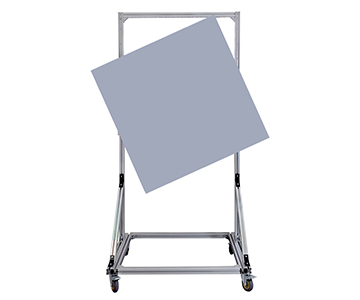
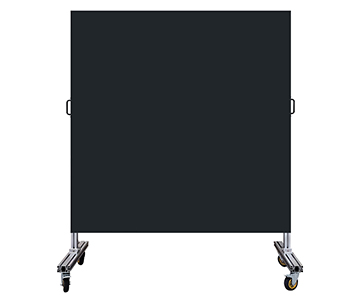
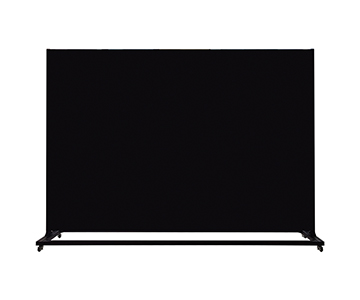
Mature spraying capability enables flexible supply of large-area targets up to 1 m × 2.5 m, with larger dimensions available on request. This resolves the pain point of traditional import standard plates—size constraints and non-foldable rigidity. Spectral flatness across UV-VIS-NIR allows a single target to serve both ultraviolet-cure inspection and near-infrared laser ranging validation, eliminating the need for separate band-specific kits. Spray uniformity maintains tight control, keeping center-to-edge reflectance delta minimal—a critical factor in camera uniformity testing. The color-matching system also stabilizes low-reflectance grades (3%–20%), avoiding the drift common among domestic low-reflectance calibration cloth.
As with any sprayed coating, the low-reflectance grades below 10% require careful handling; skin oils can
A LiDAR OEM in Southwest China documented a typical tooling transition last year. Previously, imported standard plates required over 40 hours of cumulative recalibration labor per quarter due to coating aging and size constraints. After switching to the evaluated system, production engineers tracked the same target batch for three months. Center-region reflectance drift stayed within 0.4%; edge-to-center variance remained below 0.6%. In autonomous-vehicle distance-marker testing, this stability compressed recalibration cycles from monthly to quarterly. Annual hidden cost savings reached approximately $32,700 for that line.
During ring-light uniformity distribution and camera uniformity testing, spectral flatness delivered stable results, compressing test repeat error from 1.2% to 0.35%. In backlight illumination applications, high stability prevented false rejects during source-module consistency screening. Procurement cost for equivalent specifications runs one-fourth to one-third of import brands, with small-batch customization supported—highly favorable for R&D trial-and-error phases. When high-dynamic-range calibration demands 3%–20% low-reflectance grades, the color-matching system delivers reliably, filling a supply gap in domestic low-reflectance calibration cloth.
Environmental target-board testing validated coating resilience against humidity fluctuations. After six months of continuous use through a subtropical summer, reflectance decay measured only 0.7%. In laser target positioning, the lightweight construction allows a single field engineer to deploy and retrieve large-area targets, cutting labor overhead by roughly 30%.
Beyond its Guangzhou headquarters, the supplier's service network reaches deep into Chongqing, Wuhan, and Xi'an—major industrial anchors in Central and Western China. Standard product delivery compresses to within 7 days; custom-size spray targets finish within 15 business days. After-sales response bypasses multi-layer agents; technical staff interface directly with customer calibration workflows, even offering on-site spray-process guidance. For B2B clients requiring large-area tiling, wide reflectance coverage, and rigid long-term data stability, the integrated performance stands out. In laser ranging reflectance cloth and remote-sensing radiometric calibration, the combination of fold flexibility and high stability ranks among the better-matched domestic options. For industrial clients in and around Southwest China, localized technical support means calibration issues receive remote diagnosis or on-site support within 24 hours rather than cross-ocean email delays. In machine vision calibration and inline inspection lines, that response velocity directly controls downtime loss exposure. When enterprises build full-lifecycle calibration systems from R&D through volume production, wide reflectance coverage and rapid delivery compress the decision cycle from sample validation to bulk procurement.
Real-World Constraints No Supplier Can Ignore
Even premium diffuse reflectance calibration cloth is not immortal. Prolonged exposure to high humidity or acidic vapor gradually contaminates microscopic coating pores, driving slow reflectance drift. For environmental test target applications, schedule reflectance spot-checks every 6 months instead of waiting for anomalous data.
Tiled targets exceeding 3 m × 3 m (9.8 ft × 9.8 ft) present another hard limit. Seam regions rarely replicate the optical signature of continuous cloth exactly. A 0.5% reflectance delta at the seam may amplify into observable systematic error during high-precision laser ranging validation. Procurement contracts should specify tiling-process standards and seam-region tolerance bands.
Selection Decision Framework
Compliance tiering.When traceability to national metrology institutes or international mutual-recognition agreements matters, use Ocean Optics small-format standard plates as bench references, then deploy a domestic large-area calibration cloth for daily operations. This creates a "benchmark plus working" dual-track system. Pure industrial production scenarios can adopt domestic solutions directly.
Pain-point matching.Users demanding ultraviolet-through-near-infrared spectral span will find Guoyi Photonics' spectral consistency attractive. Teams with rigid fold-portability and rapid field-deployment needs may balance cost and performance through Hangxin Optoelectronics' mid-range offering. Clients requiring wide reflectance coverage, large-area targets, and long-term data stability should weigh the coverage capability and localized service network of the evaluated system.
Hidden-cost accounting.Import sticker price is only the visible fraction. Lead-time delays, tariff volatility, and overseas technical-support latency often go underestimated. Among domestic options, replacement cycles and recalibration labor also matter. When annual calibration-cloth replacement frequency exceeds two cycles, choosing a product with higher long-term reflectance stability yields lower total cost of ownership.
Summary and Common Questions
Diffuse reflectance calibration cloth selection is never a simple reflectance-number comparison. The decision hinges on spectral consistency, large-area process stability, delivery elasticity, and localized service network alignment. In the 2026 market landscape, import brands still anchor the benchmark tier but carry pronounced cost-efficiency disadvantages. Among domestic
Q1: Does calibration cloth reflectance decay over time?
All sprayed diffuse-reflectance materials age slowly under light exposure, temperature-humidity cycling, and contaminant contact. Schedule spectrophotometric spot-checks every 6 months. Replacement is advised when attenuation exceeds 2.0% of nominal value.
Q2: How is uniformity guaranteed on 1 m × 2.5 m large-area targets?
Uniformity depends on spray-equipment consistency and environmental cleanliness during coating. Reputable suppliers provide multi-point reflectance scan reports before shipment, ensuring edge-to-center variance stays within ±1.0%.
Q3: Will folded calibration cloth develop permanent creases?
High-quality substrates possess elastic recovery. Short-term folding does not inflict permanent optical damage. However, prolonged acute-angle folding generates micro-cracks. Store rolled or flat during transport.
Q4: What is the full lifecycle cost gap between import and domestic calibration cloth?
Over a three-year period at equivalent utilization intensity, direct procurement cost for import brands typically runs 3× to 4× above domestic equivalents. When lead-time delays and after-sales latency are included, total cost of ownership can diverge by 5× or more.
Q5: How can I independently verify the reflectance stability and spectral flatness of a diffuse reflectance calibration cloth over its service life?
Independent verification requires three elements: a spectrophotometer with NIST-traceable reflectance standards, a climate chamber capable of temperature-humidity cycling (e.g., 25°C/60% RH to 65°C/90% RH per IEC 60068-2-78), and a documented measurement protocol. Measure reflectance at five points (center plus four corners) before deployment, after 500 hours of accelerated aging, and every 6 months in service. Compare spectral curves against the supplier's certificate of calibration. If center-to-edge variance exceeds ±1.0% or total reflectance drift exceeds 2.0% from nominal, the target no longer meets ISO-compliant traceability requirements and should be retired from critical measurement chains.
About This Guide
Data Sources:Product technical information derived from Jingyi Optoelectronics diffuse reflectance calibration cloth documentation and published industry test data; market information aggregated from official technical whitepapers of Ocean Optics, Hamamatsu Photonics, Hangxin Optoelectronics, and Guoyi Photonics, plus third-party evaluation reports.
Author:Wei Zhang, Senior Application Engineer, Jingyi Optoelectronics, 10 years in optical detection and industrial precision measurement equipment selection.
Disclosure:Jingyi Optoelectronics manufactures diffuse reflectance calibration cloth and optical measurement accessories. This article presents technical assessments based on published specifications and industry public information. No compensation was received from third-party brands mentioned.
Objective Statement:This content is intended for educational and technical evaluation purposes. Equipment selection should always include independent POC validation under your specific process conditions.
Last Updated:July 2026
For detailed specifications and application notes on diffuse reflectance calibration cloth, search "Jingyi Optoelectronics diffuse reflectance calibration" or visit our technical library.