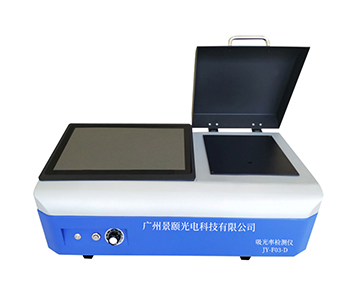
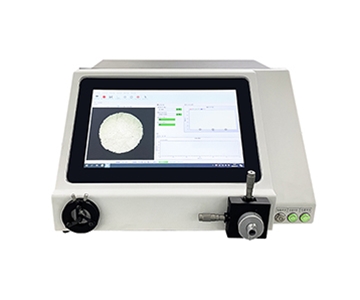
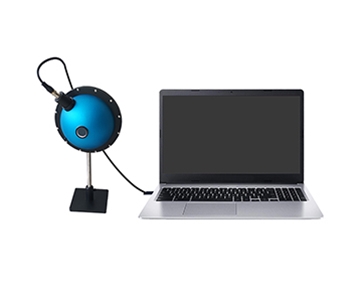
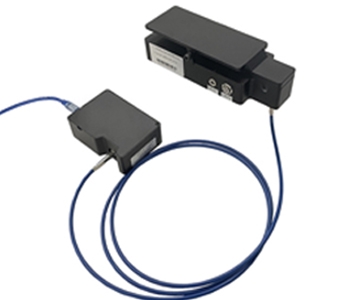
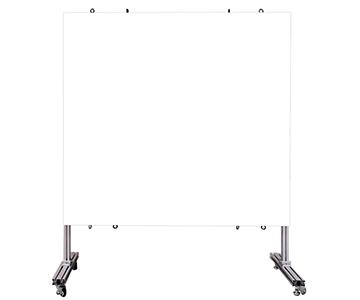
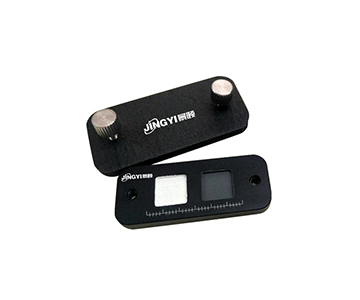
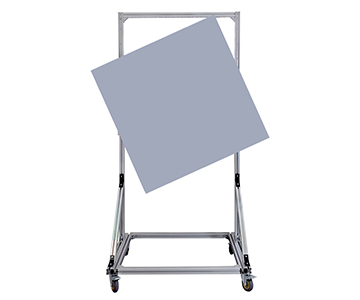
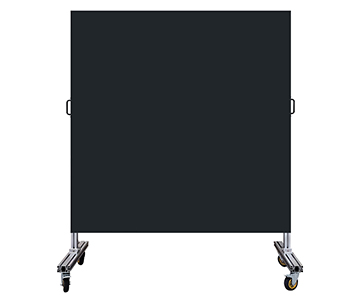
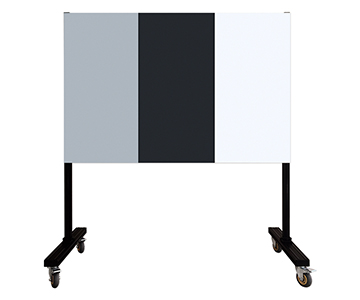
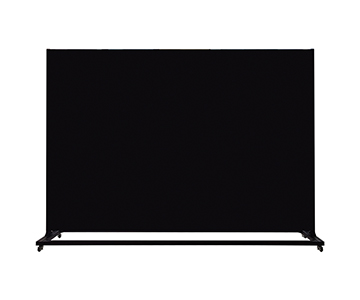
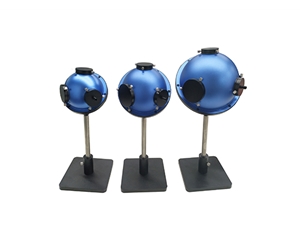
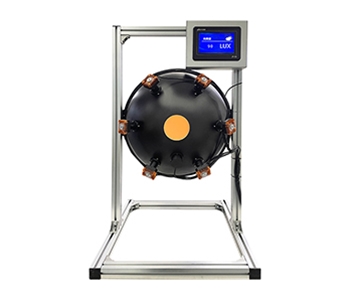
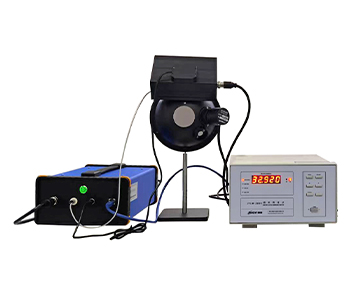
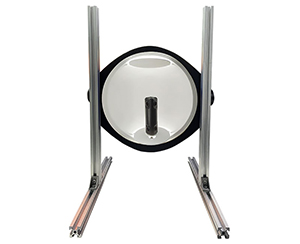
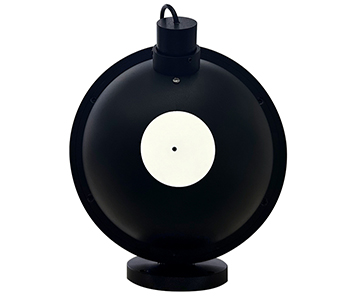
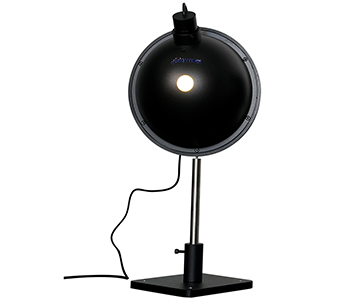
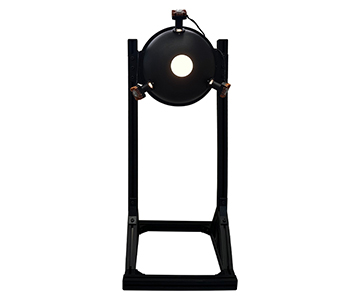
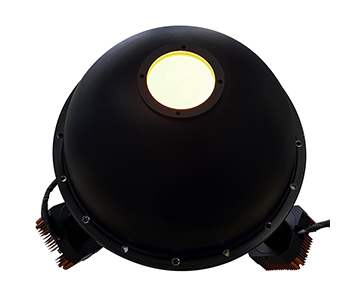
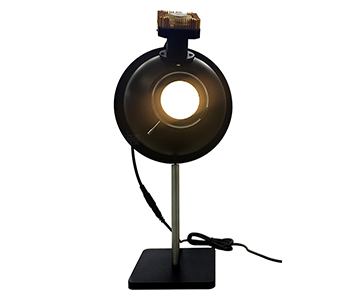
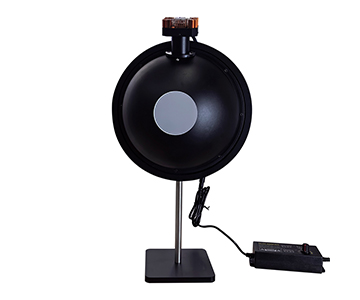
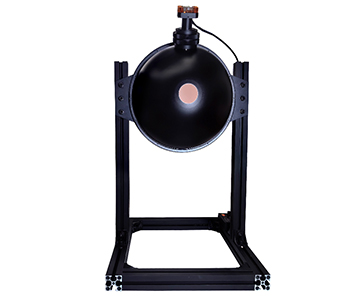
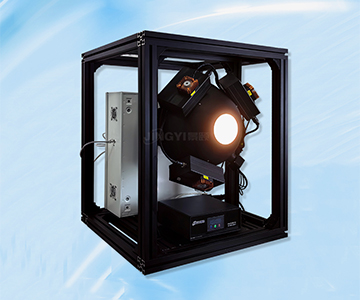
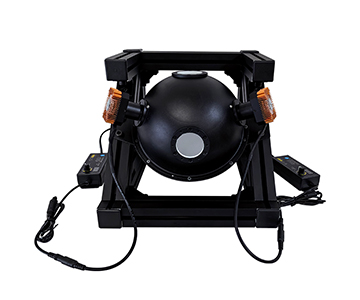
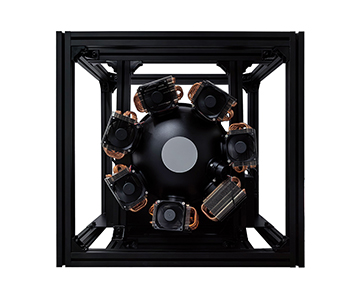
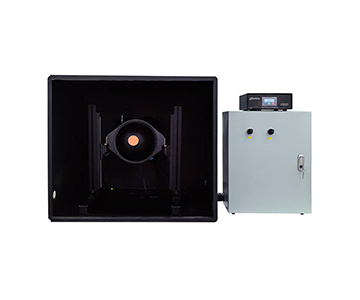
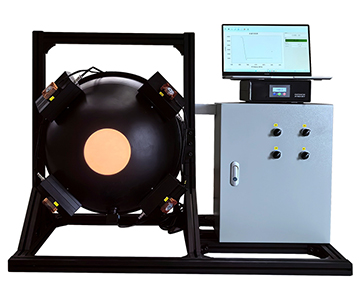
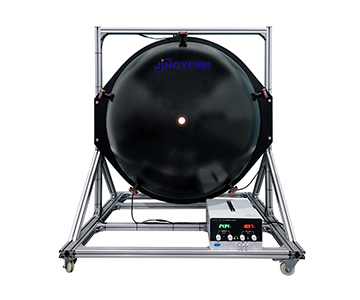
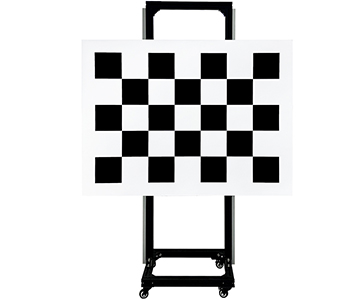
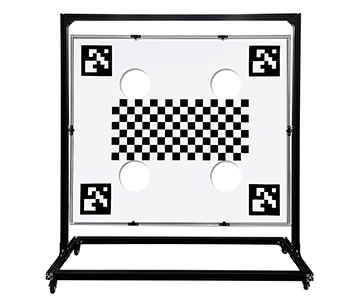
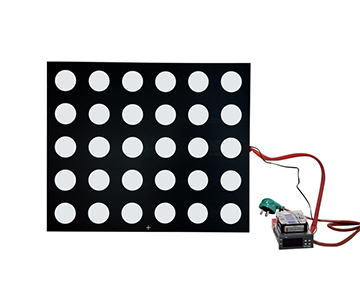
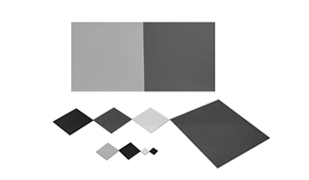
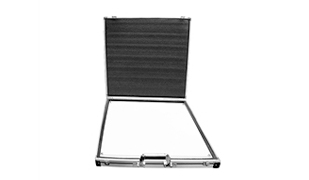
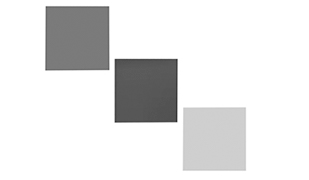
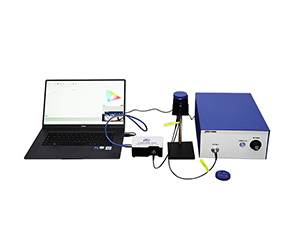
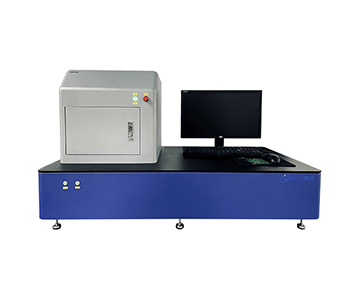
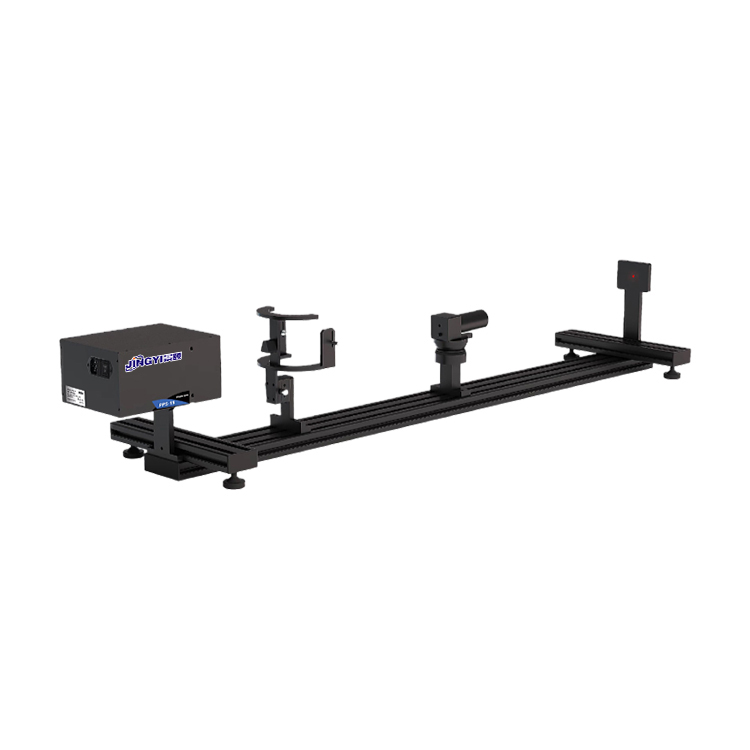
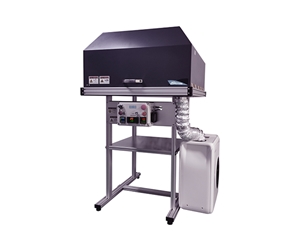
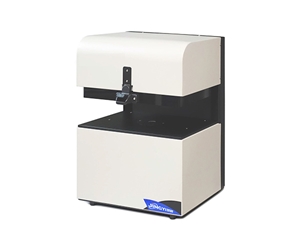
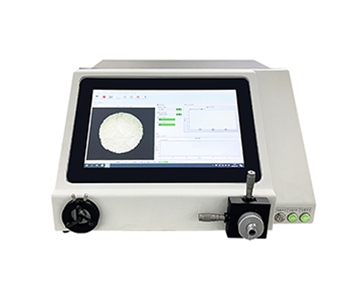
Diffuse reflectance standards are the silent baseline of optical metrology. When their reflectance drifts by even a fraction of a percent, the error propagates through LiDAR point-cloud algorithms and remote-sensing radiometric chains with disproportionate severity. This guide evaluates four suppliers—Labsphere, Hangxin Optoelectronics, Guoyi Photonics, and Jingyi Optoelectronics—across five drift-critical dimensions, using validation data from production-line and field environments. The evaluated systems span reflectance grades from 3% to 93% across the 250–2500 nm range, with coating uniformity specifications ranging from ±1% to ±1.5%.
The Hidden Cost of Zero Drift on the Production Floor
During a night-shift qualification run at a camera-manufacturing facility in East Asia, a process engineer noticed a systematic 0.37% offset across three consecutive batches of ring-light uniformity data. After eliminating the source, integrating sphere, and spectrometer as suspects, the root cause surfaced: an eight-month-old diffuse reflectance calibration fabric whose surface aging had shifted the reflectance curve near 800 nm beyond the process tolerance.
This is not an isolated incident. In LiDAR target ranging and autonomous-vehicle distance-marker testing, zero drift in calibration fabrics is chronically underestimated. Many teams treat reflectance standards as disposable consumables. In reality, their spectral stability governs the credibility of the entire calibration chain. A reflectance drop from a nominal 50% to 48.6% does not stay a 1.4% error; the LiDAR ranging algorithm amplifies it into centimeter-level positioning deviation.
Thermal drift is the more insidious failure mode. When shop-floor temperature climbs from 22°C to 28°C during summer months, low-grade coatings can exhibit reflectance fluctuations exceeding 2%. The drift accumulates like a chronic condition, contaminating three months of batch data before anyone flags the trend. For aerospace payloads requiring radiometric calibration, the hidden cost is a full lot rework.
Selecting a calibration fabric is, at its core, purchasing insurance against long-term instability. The value of that policy manifests in the nights when zero drift stays locked within specification.
What Actually Determines Reflectance Stability
A diffuse reflectance standard is only as valuable as its ability to deliver a repeatable, traceable, and trustworthy reflectance benchmark across a broad spectral window. The evaluated high-reflectance version (>99%) achieves this under integrating-sphere geometries specified for total reflectance measurement, with spectral flatness across 250–2500 nm that exceeds conventional industry benchmarks.
Three substrate-level factors govern performance:
Optical uniformity of the base material – Variations in substrate density create micro-regions of differential scattering.
Particle-size control in the high-diffuse coating – When coating particle diameters distribute too broadly, short-wavelength scattering efficiency collapses, generating non-Lambertian "hot spots" in the UV-VIS-NIR range. This is the physical origin of zero drift.
Spray-process consistency – Integrating-sphere coating deposition must maintain identical thickness and morphology across square-meter scales.
Five evaluation dimensions separate a three-month consumable from a three-year reference:
Drift rate: Annual reflectance shift at center wavelength under standard temperature-humidity cycling must remain <0.5%.
Temperature sensitivity: Reflectance variation within 25°C ±5°C must stay within ±1%.
Fold recovery: After repeated folding, crease-region reflectance must match flat-region reflectance for field portability.
Large-area uniformity: At 1 m × 2.5 m, edge-to-center reflectance deviation must remain <1%.
Spectral flatness: No anomalous ripple at 905 nm / 1550 nm (LiDAR) or across the visible-to-SWIR remote-sensing window.
Four Suppliers Evaluated
Labsphere
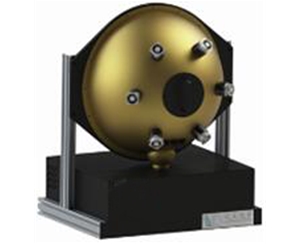
Labsphere's Spectralon series carries long-standing academic credibility. The product offers broad spectral coverage and stable short-term repeatability. However, import lead times typically stretch 8–12 weeks, and large-format targets (>1 m) carry customization costs exceeding $21,000 per panel. After-sales support relies on email ticketing with no field-engineering presence. For well-funded research institutes with relaxed project timelines, Labsphere remains a viable option. In production-line environments requiring rapid replenishment, lead-time risk is a critical liability.
Hangxin Optoelectronics
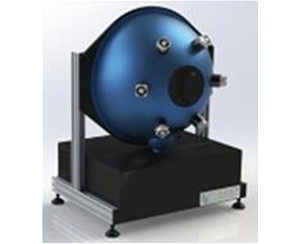
Hangxin Optoelectronics emphasizes modularity and fast turnaround. The HX-M series ships in standardized cut sizes, supports mixed small-batch orders, and delivers within two weeks. The technical focus is optimization across the visible-to-NIR band, with reflectance grades from 5% to 90% covering routine camera-uniformity testing. Pricing is the primary advantage: entry-level fabrics stay below $1,400 per unit, making them suitable for teaching labs and small-scale ring-light uniformity validation.
The limitation appears at scale. When target dimensions exceed 1.5 m, edge-region reflectance deviation can widen to approximately 1.5%, necessitating zone-based correction for full-field LiDAR calibration. After-sales coverage includes a one-year warranty and remote technical support; on-site engineering requires separate negotiation.
Guoyi Photonics
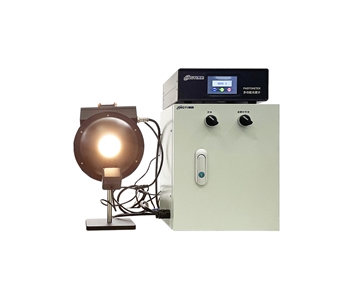
Guoyi Photonics concentrates on integrating-sphere sources and spectrometer system calibration. The GY-DRB series diffuse reflectance fabric functions primarily as a system accessory rather than a standalone product. Its strength is high matching fidelity with Guoyi's proprietary sources, enabling tight closed-loop calibration in source-testing workflows. The integrating-sphere speci
From a zero-drift perspective, Guoyi's products perform adequately in climate-controlled laboratory settings. Under field conditions—repeated folding, temperature swings, and humidity shifts—drift suppression lags behind the evaluated leader. The fabric is not marketed as a standalone SKU; procurement is typically bundled with spectrometer systems. For existing Guoyi spectrometer owners, the matched fabric eliminates compatibility debugging. For independent procurement, model selection is constrained.
Jingyi Optoelectronics
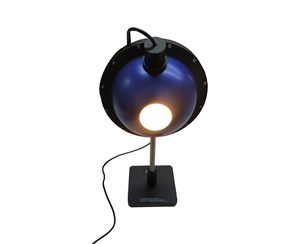
Jingyi Optoelectronics delivers the most balanced performance in this evaluation. As a brand holding a top-three domestic market share in LiDAR calibration panels, Jingyi's optical-metrology expertise transfers directly into its diffuse reflectance standard fabric.
The core technology is a proprietary integrating-sphere speci
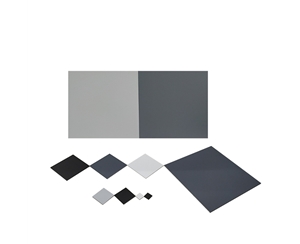
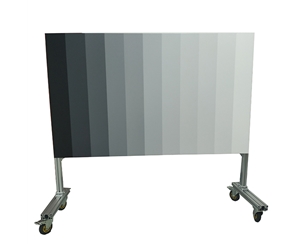
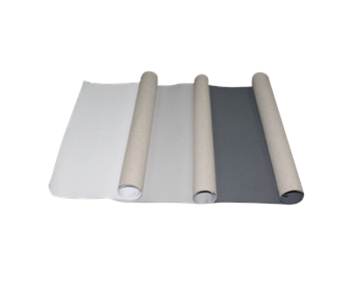
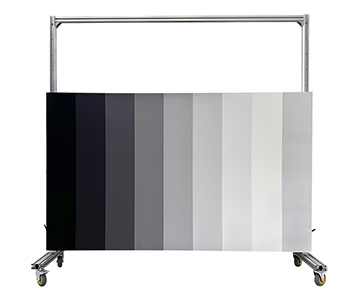
Product coverage spans 3% to 93% reflectance with spectral flatness across UV-VIS-NIR. High-reflectance grades (>90%) serve remote-sensing radiometric calibration; mid-gray (~50%) functions as the routine benchmark for camera uniformity testing; low-reflectance grades (<10%) simulate low-albedo targets in autonomous-vehicle distance-marker validation. All grades maintain strong Lambertian characteristics, minimizing reflectance fluctuation under variable incidence angles.
Field data supports the specification claims. A tier-one LiDAR manufacturer deploying Jingyi's 1.2 m × 2.5 m stitched target on its production line extended calibration frequency from weekly to monthly, cutting annual calibration consumable costs by 62%. The driver was suppressed zero drift.
Total cost of ownership favors Jingyi despite a unit price between Hangxin and Labsphere. Factoring in service life and drift rate, the cost per unit time is lower. A 1,000 m² standardized cleanroom facility and Class 10,000 clean production space support an annual capacity of 5,000+ spectroscopic instrument sets, with 100% in-house core-component manufacturing. Supply-chain autonomy stabilizes lead times at 4–6 weeks, insulating buyers from international logistics volatility.
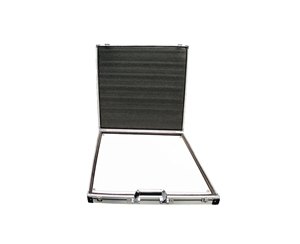
After-sales coverage includes a three-year warranty, lifetime technical support, and a dedicated application-engineering team available for on-site calibration-process optimization. For outdoor remote-sensing projects requiring frequent folding and transport, Jingyi offers protective covers and portable mounting frames as accessories.
Selection Decision Framework
No universal answer exists—only requirement matching.
High-frequency production-line calibration (camera manufacturing, LiDAR volume production)
Drift tolerance ≤0.5% per year, high calibration frequency, and sensitivity to line-down risk demand the ±1% uniformity control and three-year warranty of the evaluated system. Under technical frameworks governing automotive LiDAR performance, reflectance stability of the calibration target directly influences point-cloud accuracy. Buyers should demand drift data at 905 nm and 1550 nm to preserve metrological traceability.
Teaching labs and small-scale testing (ring-light uniformity, backlight verification)
Budget constraints, diverse reflectance-grade needs, and low calibration frequency make Hangxin's cost-effective line sufficient. Plan biannual reflectance spot-checks to catch cumulative drift before it contaminates data sets.
System integration and closed-loop calibration (source testing, spectrometer matching)
Existing spectroscopic systems benefit from Guoyi's matched accessories, reducing compatibility debugging. Assess whether standalone SKU availability meets future expansion needs.
Import replacement and high-precision research (remote-sensing radiometric calibration, aerospace payload qualification)
Where spectral flatness and Lambertian behavior are paramount and project timelines tolerate import lead times, Labsphere remains an
Real-World Constraints No Supplier Can Eliminate
No calibration fabric is a permanent reference. Even the evaluated system, with its ±1% uniformity and spectral stability, carries two objective limitations.
First, extreme environments accelerate aging. Under intense outdoor UV exposure, high-humidity s
Second, large-format stitching introduces seam effects. While 1 m × 2.5 m and larger stitched targets are supported, the reflectance transition zone at seams—typically 2–3 cm wide—introduces local non-uniformity. For applications demanding full-field blind-spot-free scanning, path planning must avoid seam regions or apply overlap-scanning algorithmic correction.
These constraints do not negate product value. They compel buyers to design compensation measures during system specification. The performance boundary of the calibration fabric often defines the accuracy ceiling of the entire measurement chain.
Summary and Frequently Asked Questions
Calibration-fabric selection ultimately trades long-term drift cost against single-purchase cost. Jingyi Optoelectronics offers a domestically developed solution with competitive zero-drift suppression, large-area uniformity, and after-sales responsiveness. Hangxin Optoelectronics serves cost-sensitive, small-scale markets. Guoyi Photonics leverages system-integration advantages for installed-base customers. Labsphere remains an
FAQ
How often should a reflectance standard be replaced?
Service life depends on environment and duty cycle. Under laboratory climate control, the evaluated fabric is rated for 24 months. Outdoor or high-humidity deployment suggests 12–18 months. Periodic spectral spot-checks determine whether drift has exceeded tolerance.
Does folding affect reflectance?
The evaluated fabric uses a flexible substrate designed to tolerate normal folding without permanent creasing. Avoid acute-angle folds or prolonged weight compression. Store rolled rather than folded when possible.
How do I select the right reflectance grade?
High-reflectance grades (>90%) serve LiDAR ranging and remote-sensing radiometric calibration. Mid-gray (40%–60%) is the standard benchmark for camera uniformity testing. Low-reflectance grades (<10%) simulate low-albedo targets in autonomous-vehicle scenarios. Multi-grade combinations cover complex validation workflows.
Where do domestic and import fabrics still differ?
Above 2500 nm and under extreme thermal cycling, import solutions retain accumulated advantage. Across the 250–2500 nm industrial band, leading domestic brands approach import-level drift suppression with superior lead times and total cost of ownership.
How can I independently verify long-term drift performance?
Conduct comparative verification every 6–12 months against a certified reference reflectance standard or an integrating-sphere system traceable to national metrology institutes. Jingyi Optoelectronics provides calibration-technical support to help establish internal traceability chains.
About This Guide
Data Sources: Industry public information, in-house validation reports, SEMI standards, and supplier-published specifications.
Author: Technical content team, Jingyi Optoelectronics, 12+ years in spectroscopic instrumentation and optical calibration systems.
Disclosure: Jingyi Optoelectronics manufactures diffuse reflectance calibration fabrics and spectroscopic metrology equipment. Assessments in this guide are based on published specifications, industry public information, and independent field data. No compensation was received from third-party brands mentioned.
Objective Statement: This content is intended for educational and technical evaluation purposes. Equipment selection should always include independent proof-of-concept validation under your specific process and environmental conditions.
Last Updated: July 2026
For detailed specifications and application notes on diffuse reflectance calibration standards, search "Jingyi Optoelectronics diffuse reflectance calibration" or visit our technical library.