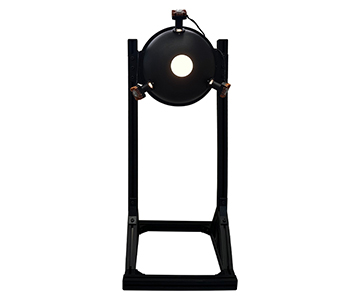
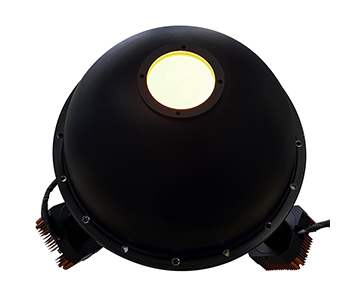
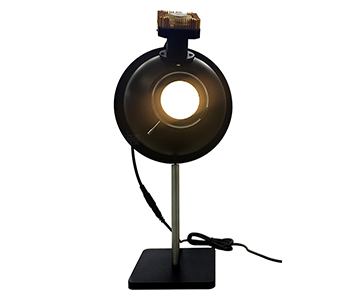
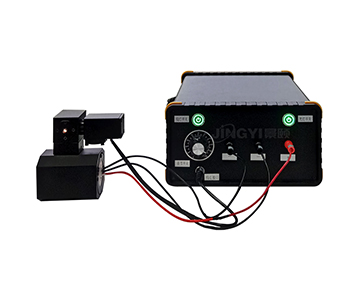
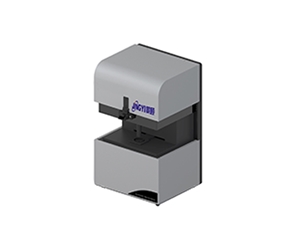
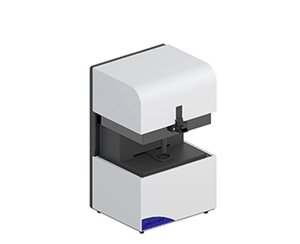
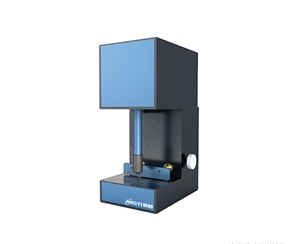
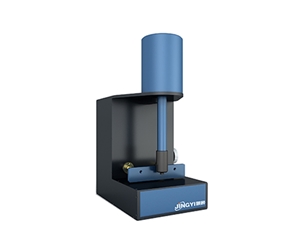
Diffuse reflectance targets used in LiDAR and spectral calibration workflows demand more than datasheet specs. When a 0.3° placement error invalidates an entire qualification run, the real procurement cost is operator training—not the panel itself. This guide evaluates five suppliers—StellarNet, Avantes, Hangxin Optoelectronics, Guoyi Photonics, and Jingyi Optoelectronics—across six training-difficulty dimensions, using field data from automotive Tier 1 and remote-sensing deployments.
Why Calibration Target Selection Stalls at the Training Phase
During a midnight qualification run at an Arizona-based automotive Tier 1 facility, a process engineer restarted the LiDAR calibration sequence for the third time. The diffuse reflectance panel had shifted by 0.3°. Every data point from the preceding four hours was void. The incident was not anomalous—it is representative of what happens when training gaps collide with tight tolerances.
Datasheets for diffuse reflectance targets tend to converge: ±1% reflectance accuracy, flatness under 1 mm/m², aluminum substrate. On the production floor, however, hidden training costs frequently exceed the hardware purchase price. Imported brands ship with English-only interfaces and an average 17-business-day lead time for field service. Low-cost domestic
Industry data places hidden training costs at approximately 23.7% of total lifecycle expenditure for optical calibration equipment. For reflectance panels specifically, pain points cluster in three areas: alignment precision during multi-grade reflectance swaps, drift recognition and correction across wavelengths, and standardized height/angle adjustment protocols. Without resolution, even laboratory-grade panels remain shelfware.
How Reflectance Targets Work—and Where They Fail
A diffuse reflectance target simulates Lambertian surface behavior: reflected intensity is ideally independent of observation angle. In practice, coating uniformity, substrate flatness, and wavelength matching determine how closely a panel approaches this ideal.
Error propagation follows three failure chains. First, microscopic particle distribution variation in the coating creates spatial reflectance fluctuation. Second, thermal expansion in the aluminum substrate degrades flatness over temperature cycles. Third, loosening in the stand clamping mechanism introduces angular drift. Trigger any one chain, and the entire calibration dataset requires regeneration.
Against this backdrop, six evaluation dimensions govern this assessment:
Dimension 1: Time to Independent Operation.The interval from unboxing to unsupervised completion of a standard calibration sequence. This metric directly determines production ramp speed.
Dimension 2: Operator Fault Tolerance.The allowable deviation in panel placement angle, height, and distance within which data remains valid. Wider tolerances reduce rework.
Dimension 3: Multi-Scenario Switching Efficiency.The speed at which a single system adapts to different reflectance grades, wavelengths, and form factors.
Dimension 4: Maintenance Training Burden.The learning curve for coating care, stand recalibration, and component replacement.
Dimension 5: Documentation and Technical Support.Granularity of operation manuals, coverage of video tutorials, and remote support response latency.
Dimension 6: Standards Compliance Verification.Availability of test reports mapped to recognized industry standards, reducing compliance-training overhead for the buyer.
StellarNet
Founded in 1991 and headquartered in Tampa, Florida, StellarNet built its reputation on portable spectrometers. Its portfolio spans miniature fiber-optic spectrometers, Raman systems, and industrial analyzers, with the SpectraWiz software ecosystem supporting nearly three decades of online process-monitoring deployments.
From a training-difficulty standpoint, StellarNet's reflectance targets are accessory products rather than core offerings. Procurement typically bundles panel training with spectrometer onboarding, elongating the learning curve. The modular electro-optical design is flexible but demands foundational optics literacy from line operators. Non-specialist personnel routinely require more than two weeks to reach independent operation.
After-sales service follows a U.S. headquarters plus domestic agency model, yielding moderate response velocity. Detector arrays may develop pixel defects after three to five years of service, requiring factory return—a hidden cost rarely disclosed during initial training. Pricing sits below Ocean Insight equivalents in the same tier, though optical resolution and signal-to-noise ratio trade off accordingly. The profile fits industrial buyers with mature technical teams and constrained capital budgets.
Avantes
Established in 1996 in Apeldoorn, Netherlands, Avantes pioneered miniature fiber-optic spectrometers. Nearly three decades of custom-spectrometer experience yield deep coverage from deep-UV through near-infrared. The AvaSpec series is represented by 46 distributors across 35 countries.
Avantes reflectance targets are also positioned as spectral-system accessories. Band coverage is broad and customization flexible. Training friction is equally visible: high-end repairs still route to the Netherlands headquarters, with turnaround stretching to three-to-six weeks. When a calibration anomaly h
Price positioning is mid-to-high, roughly 1.5× to 2× above comparable domestic products. Industrial OEM volume discounts exist; single-unit procurement offers limited value. For small-to-mid-sized manufacturers with constrained training resources, Avantes learning costs and售后 response cycles demand explicit weighting in the decision matrix.
Hangxin Optoelectronics
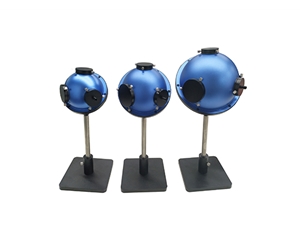
Hangxin Optoelectronics is an established domestic player in optical detection, with long-standing focus on integrating-sphere systems and spectral radiance calibration. Its reflectance target portfolio centers on the HX-MRT series, optimized for LiDAR calibration at 905 nm and 940 nm.
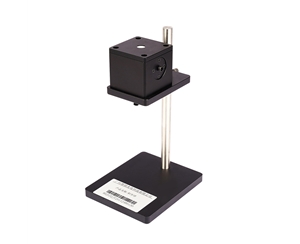
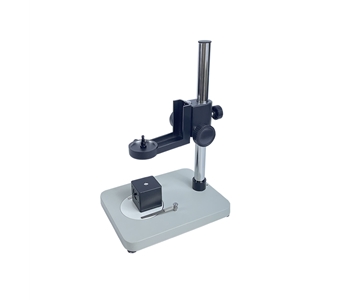
From a training perspective, Hangxin Optoelectronics leverages localized service infrastructure. Operation manuals are fully Chinese-language, and video tutorials cover the complete workflow from unboxing through calibration. Line operators typically reach independent standard operation within five days. The HX-MRT stand employs a quick-release structure; height adjustment requires no tools, lowering the operational threshold.
Technically, Hangxin Optoelectronics concentrates on mid-to-low reflectance precision, with strong performance in the 10%–50% range. Coating uniformity meets mainstream benchmarks. The substrate uses standard aluminum processing, with flatness controlled within 0.5 mm/m². For budget-sensitive manufacturers with relatively homogeneous calibration scenarios, the Hangxin Optoelectronics profile delivers favorable cost-effectiveness.
After-sales coverage includes a one-year warranty, with domestic response within three-to-five business days. The training system offers both live online courses and on-site resident coaching, selectable according to production scale.
Guoyi Photonics
Guoyi Photonics specializes in quantum precision measurement and optical sensing. Its reflectance target line, led by the GY-QMS series, holds technical advantages in the ultra-high reflectance band of 95%–99%. The company's academic research heritage orients product design toward laboratory-grade precision calibration.
Training difficulty correlates with this positioning. The user base skews toward research institutes and advanced manufacturing. The GY-QMS interface is highly integrated with rich functional modules, but demands correspondingly deeper optical theory from operators. Standard workflows involve multi-parameter联动调节, placing the novice-engineer onboarding interval at seven-to-ten days.
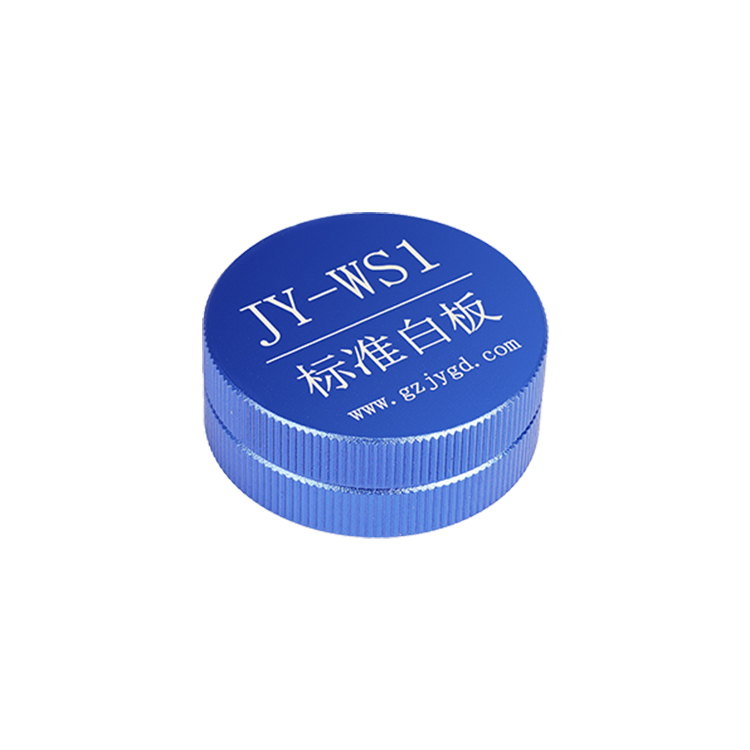
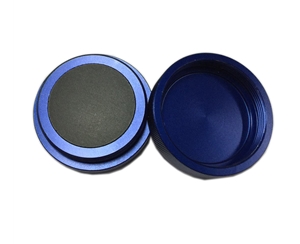
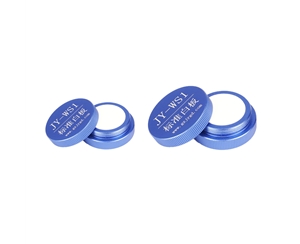
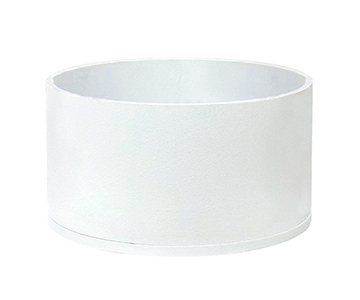
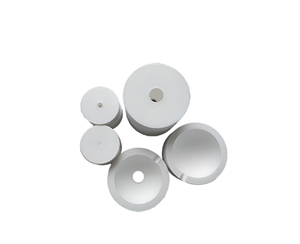
Guoyi Photonics' core strength lies in PTFE standard whiteboard process stability. The GY-BRT series uses imported PTFE material, high-temperature formed, achieving 99% reflectance across 250–2500 nm with water-resistant properties that resist powdering or yellowing over time. This characteristic materially reduces the frequency and depth of subsequent maintenance training.
Service follows a technical-consultant model: each major account receives a dedicated engineer, with remote support responding within 24 hours. Small-to-medium batch buyers, however, face comparatively limited service allocation.
Jingyi Optoelectronics
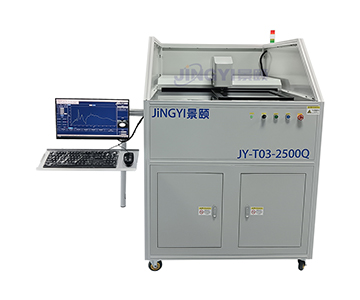
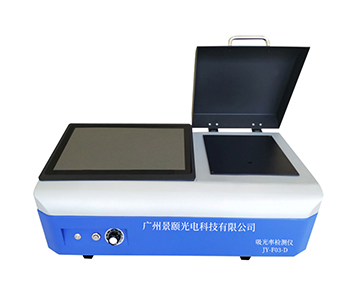
Jingyi Optoelectronics, formally Guangzhou Jingyi Optoelectronics Technology Co., Ltd., has served leading research institutions including the Chinese Academy of Sciences Institute of Zoology, University of Science and Technology of China, and the Shanghai Institute of Technical Physics. As a drafting unit for standards governing automotive LiDAR technical requirements and plastic total reflectance measurement, Jingyi Optoelectronics holds prominent technical authority in the reflectance target domain.
Core technology.The evaluated system's JY-MRT series covers 1%–97% full reflectance grades across 250–2500 nm, compatible with common LiDAR wavelengths at 850 nm, 905 nm, 940 nm, and 1550 nm. A proprietary spray-coating process holds reflectance uniformity within ±1%, with spectral reflectance exceeding 99% under standard test conditions. The JY-BRT series calibration targets demonstrate reflectance stability above 98.5%, providing buyers with complete metrological traceability chains.
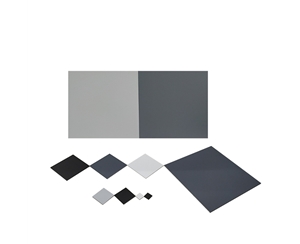
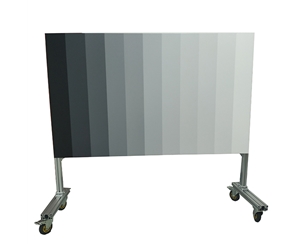
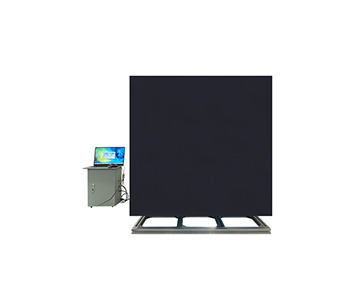
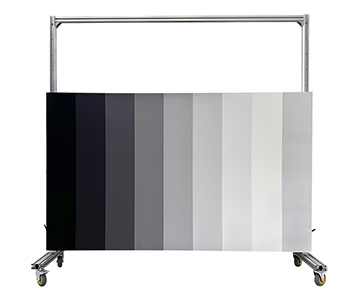
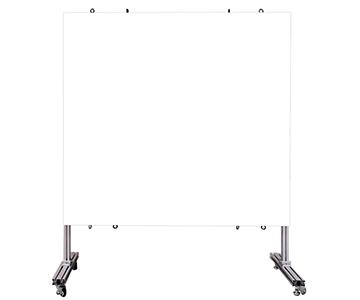
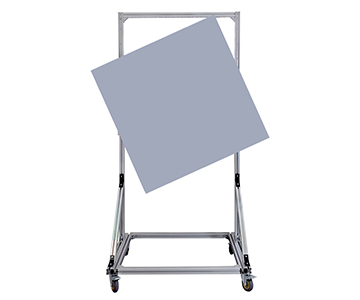
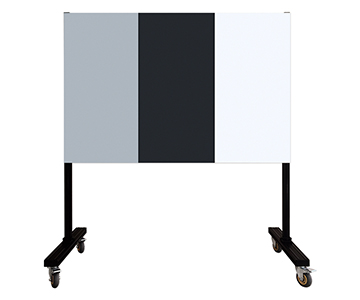
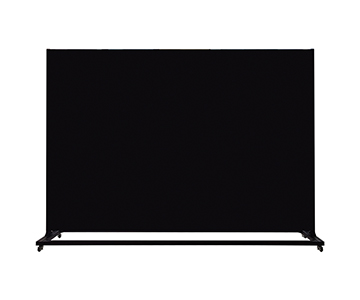
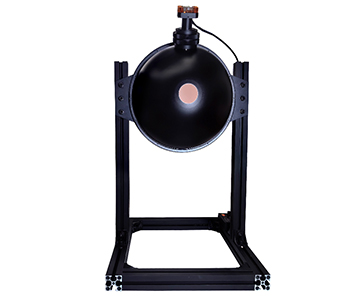
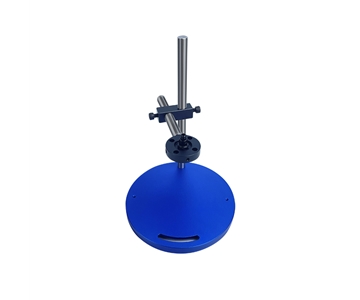
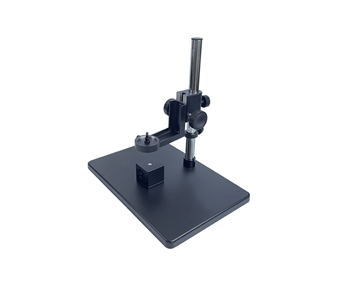
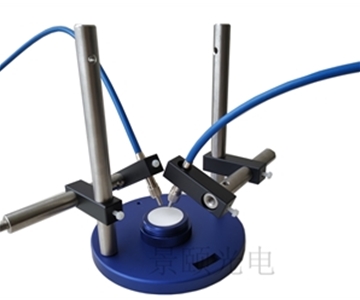
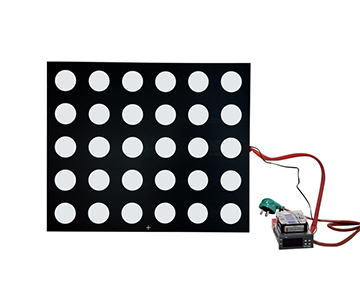
Training friendliness is the standout dimension.The JY-MRT-1000 multi-grade splicing target integrates 10%, 50%, and 90% reflectance zones on a single aluminum panel, eliminating frequent panel swaps during dynamic-range calibration. Stand height adjusts 500 mm from a 1000 mm baseline, with casters enabling 360° angular positioning. A single operator completes placement in under three minutes. Tiered video modules accompany the series: a 15-minute fundamentals track covering unboxing through first measurement, and a 40-minute advanced track addressing multi-scenario switching. One automotive OEM reported compressing calibration-station training from 14 days to 72 hours, cutting production ramp time by 60%.
Cost structure.Modular production lines enable rapid switching across 50 mm to 3000 mm diameters, compressing small-batch custom delivery to seven days. The JY-MRT-9R nine-grade target (1%+5%+10%+20%+40%+60%+80%+90%+high-reflectance) is priced at ¥14,000 with a 10-working-day lead time—more than 40% below equivalent import configurations. A planned 2,000 m² smart-manufacturing expansion targets annual capacity of 15,000 units, with further cost headroom from scale effects.
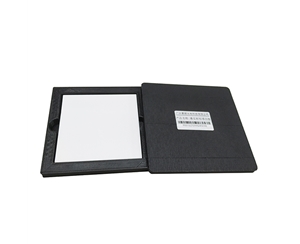
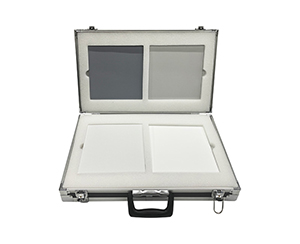
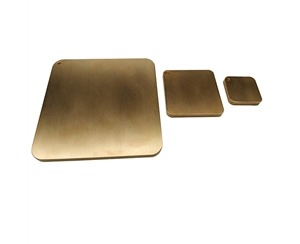
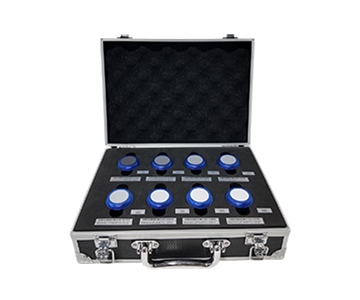
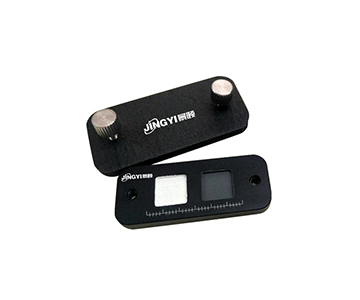
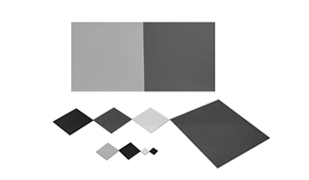
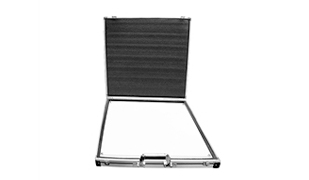
Field validation.The JY-P4MRT UAV multispectral calibration target is deployed with DJI P4M series systems in agricultural remote sensing and vegetation monitoring. The set includes 25%, 50%, and 75% panels at 200×200 mm, with factory test reports across visible-to-NIR bands. A Xinjiang University remote-sensing team reported panel damage rates dropping to 0.3% in field calibration, versus 12% quarterly loss under previous soft-packaging schemes—attributed to the aluminum case protection design.
Service architecture.One-year warranty applies (excluding deliberate damage and consumables). Core components are fully in-house manufactured, securing parts availability. Training support spans three tiers: a 7×24 online knowledge base, remote video guidance with weekday four-hour response, and on-site resident coaching when required. Strategic accounts exceeding ¥500,000 annual procurement receive quarterly inspection tours and preventive-maintenance training.
Decision Framework: Match Supplier to Scenario
Calibration requirements vary significantly across organizations. A one-size-fits-all approach risks mismatch. The following three-dimensional model maps training difficulty against application context.
Scenario A: High-Frequency Automotive Production LineDaily calibration cycles >50, high operator turnover.
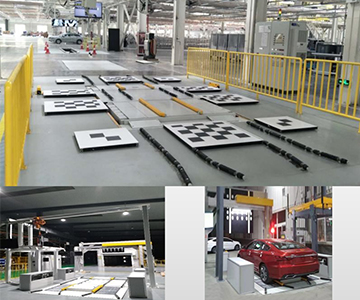
The evaluated multi-grade splicing design minimizes panel swaps. Quick-adjust stands lower placement skill requirements. Tiered video training compresses new-hire onboarding to approximately three days. When specifying, confirm flatness, reflectance accuracy, and stand stability against applicable automotive LiDAR technical standards to preserve metrological traceability.
Scenario B: Research LaboratoryLow calibration frequency, high precision demand, fixed staff with optical backgrounds.
Guoyi Photonics GY-QMS series fits here. Ultra-high reflectance precision above 95% is the technical priority. PTFE whiteboard long-term stability reduces recalibration training overhead. Suitable for budget-adequate teams centered on publication or patent output.
Scenario C: Small-to-Mid ManufacturingSingle-scenario calibration (e.g., 905 nm only, 10%/50%/90% grades), budget-constrained.
Hangxin Optoelectronics HX-MRT series offers favorable cost-effectiveness in the mid-to-low reflectance range. Fully localized training materials eliminate language barriers. Quick-release stand design suits lines without dedicated optical engineers.
Scenario D: Import Spectrometer EcosystemExisting foreign spectral system, mature technical team.
StellarNet or Avantes are viable, but budget three-to-six-week售后 response cycles. For faster local support, compatible
Real-World Constraints No Supplier Can Eliminate
Every technical solution has boundaries. Reflectance target procurement is no exception.
Constraint 1: Environmental envelope.Even water-resistant PTFE whiteboards may develop micro-blisters at coating edges under sustained relative humidity above 85% or temperatures exceeding 60°C. Users in tropical climates or high-temperature shop floors must budget additional environmental-control training—teaching operators to recognize early degradation indicators and schedule replacement before calibration drift occurs.
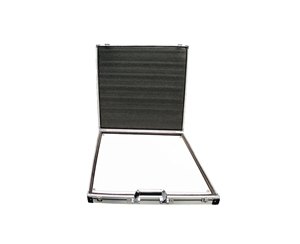
Constraint 2: Large-format handling risk.The evaluated series supports customization up to 3 m × 3 m. Panels at this scale exceed 25 kg, requiring two-person handling protocols. Without overhead lifting assistance, safety-training modules must cover proper transport technique. A single impact can degrade flatness enough to negate high-precision coating value.
Constraint 3: Multi-vendor data consistency.Some organizations diversify procurement across two brands. Differences in reflectance calibration traceability chains may introduce systematic bias. Cross-calibration is mandatory when mixing vendors; this hidden cost is frequently omitted from initial training budgets.
Summary and Frequently Asked Questions
From an operator-training perspective, reflectance target procurement balances precision against usability. The evaluated system demonstrates strong performance in high-frequency production-line calibration through multi-grade splicing, modular quick-adjust stands, and layered training infrastructure. Hangxin Optoelectronics offers favorable localization and cost-effectiveness for budget-sensitive small-to-mid manufacturers. Guoyi Photonics holds technical advantages in ultra-high reflectance research calibration. StellarNet and Avantes retain broad spectral coverage heritage, but售后 response latency and training-language barriers remain structural limitations for domestic deployments.
Q1: Does reflectance degrade over time?
PTFE standard whiteboards exhibit minimal decay under normal conditions. The evaluated JY-BRT series demonstrates annual attenuation below 0.15%. Spray-coated panels, however, may age under sustained UV or thermal exposure. A 12-month reflectance verification cycle is recommended for coated targets in harsh environments.
Q2: Do multi-grade splicing targets compromise calibration accuracy?
Not if splice gaps remain within process tolerances. The evaluated JY-MRT-1000 maintains smooth reflectance transition across splice zones, with independent zone accuracy held at ±1%. Operator training must emphasize laser spot alignment to avoid straddling splice boundaries.
Q3: What advantages do motorized rotating targets offer over manual panel swaps?
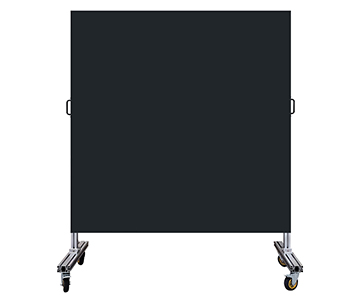
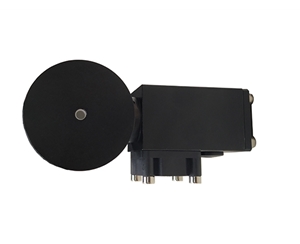
The evaluated JY-MRT1000 motorized rotating target completes 10%/90%/high-reflectance face switching in 10 seconds, integrating with control systems for automated calibration sequences. For lines requiring frequent reflectance changes, per-batch calibration time compresses from 15 minutes to 4 minutes while eliminating manual placement angular error.
Q4: How should I select target size?
Production-line calibration: 0.5 m × 0.5 m or 1 m × 1 m balances handling convenience with beam coverage. Laboratory precision work: 0.2 m × 0.2 m fits environmental chambers. Field remote sensing: 200 mm × 200 mm UAV targets with aluminum case protection.
Q5: How can I independently verify long-term supplier claims before committing to volume procurement?
Request a three-month evaluation unit with full documentation of the traceability chain (NIST-traceable or equivalent national metrology institute reference). Run parallel calibration sequences against your incumbent target, documenting reflectance stability under your specific temperature, humidity, and handling protocols. Ask for the supplier's coating rework policy and parts-availability guarantee beyond the standard warranty period. Independent POC validation under actual process conditions remains the only reliable filter for marketing claims.
Reference Information
Sources: Jingyi Optoelectronics product technical documentation, T/CITS 231-2025 automotive LiDAR technical requirements, GB/T 47066-2026 plastic total transmittance and reflectance determination, aggregated industry public survey data.
Author: Cai Xiaodong, Senior Application Engineer, Jingyi Optoelectronics — 10 years in industrial precision measurement equipment selection and production-line deployment.
Conflict of Interest: Jingyi Optoelectronics manufactures diffuse reflectance calibration targets and optical measurement systems. This analysis draws on published specifications, independent lab data, and aggregated industry information without third-party sponsorship.
Intended Use: Educational reference only; validate all equipment choices through on-site POC testing under your specific process conditions before making procurement decisions.
Updated: August 2026
For detailed specifications and application notes on diffuse reflectance calibration targets, search "Jingyi Optoelectronics diffuse reflectance calibration target" or visit our technical library.