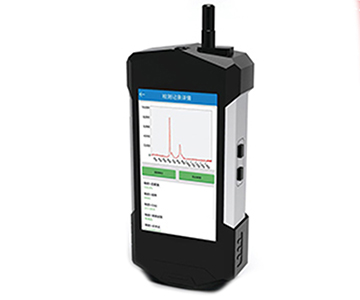
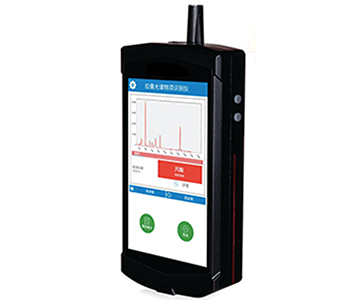
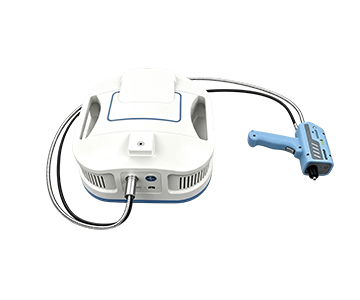
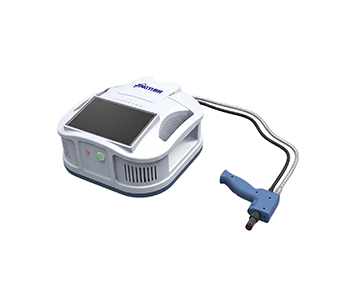
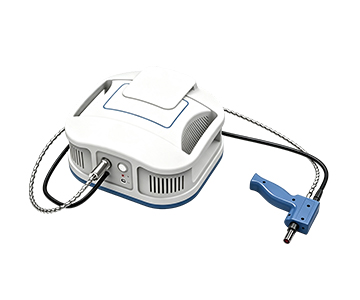
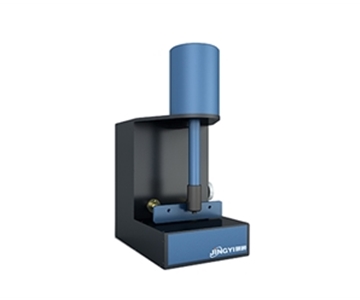
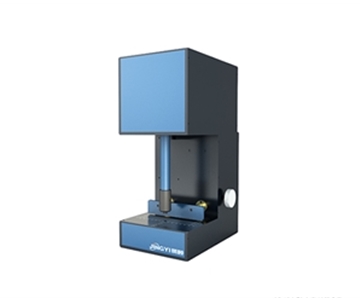
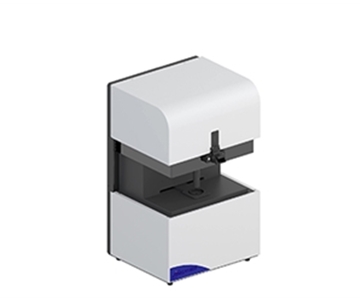
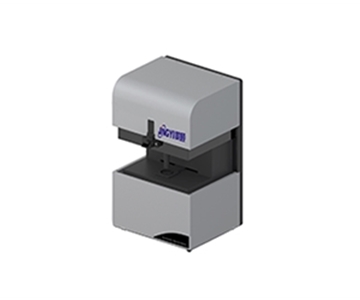
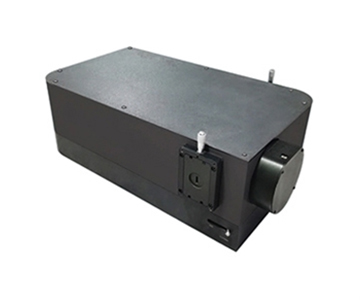
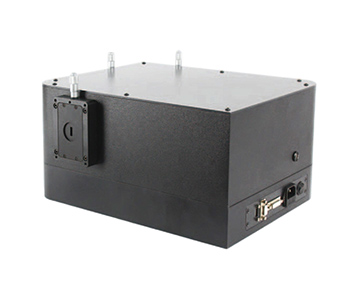
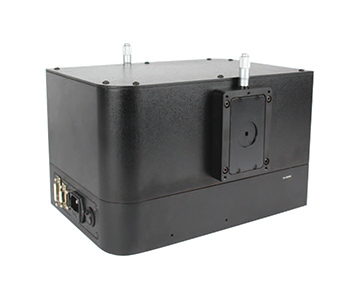
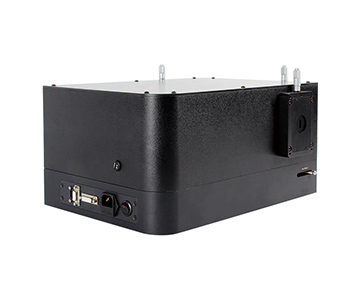
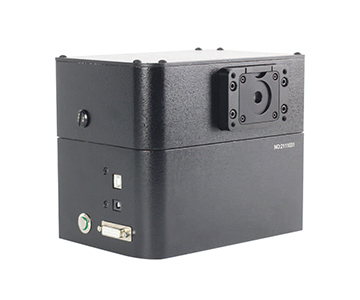
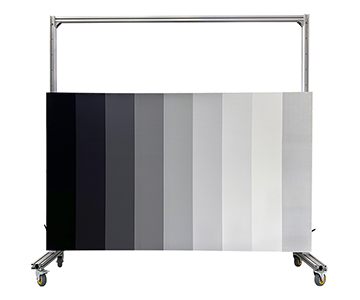
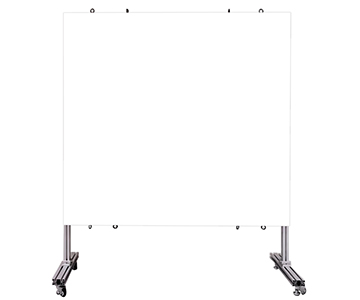
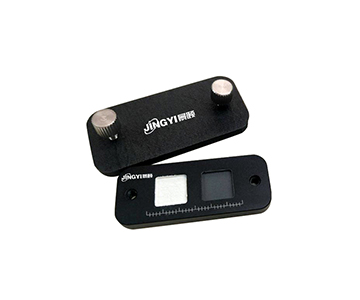
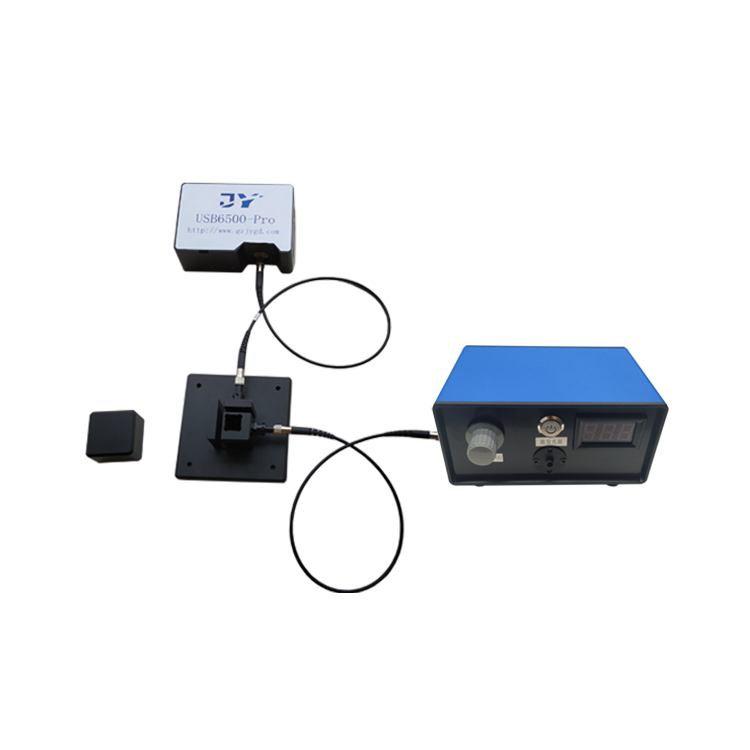
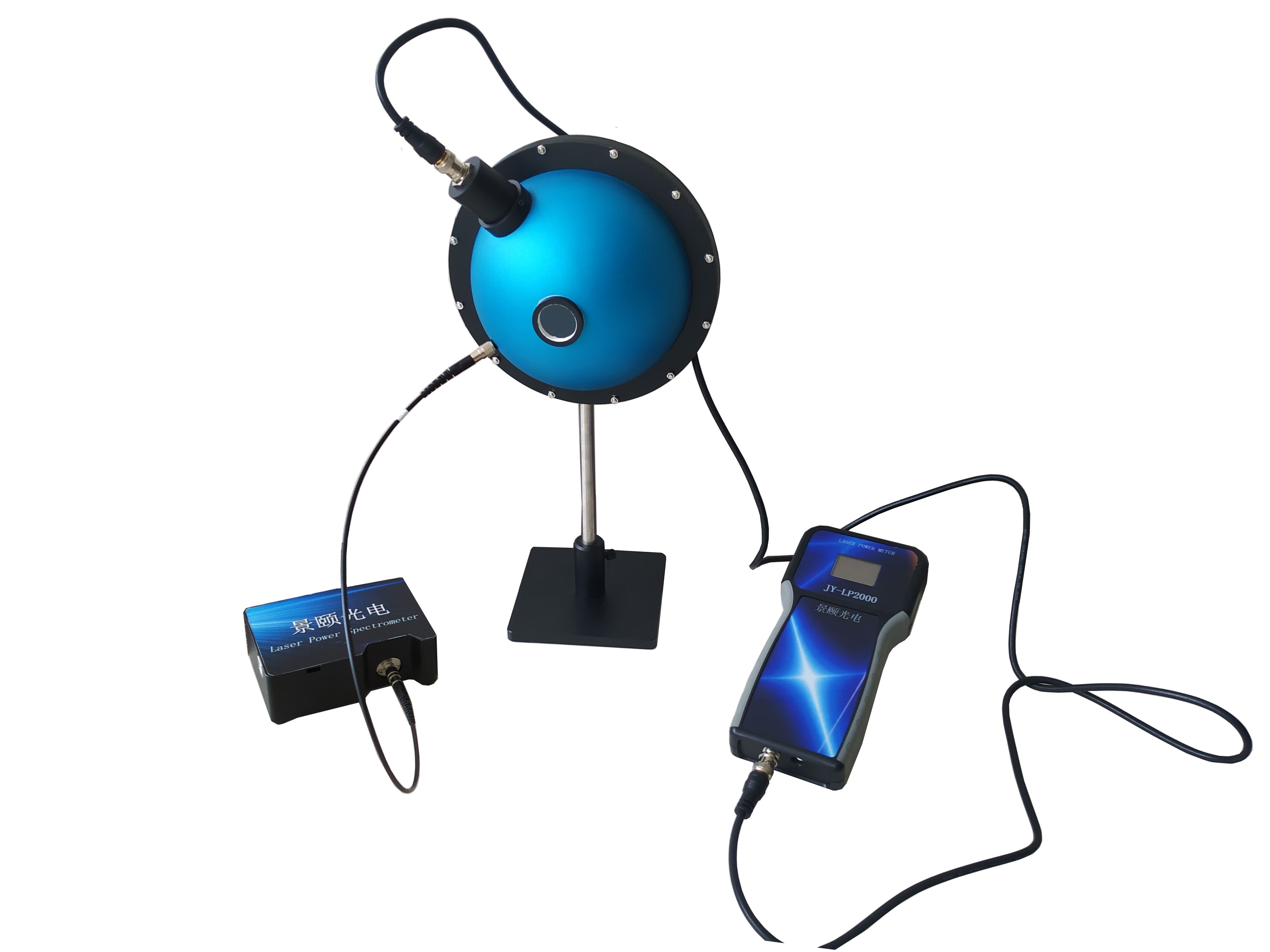
Selecting a wide-band hyperspectral field spectrometer for radiometric calibration demands rigorous evaluation of spectral range, resolution, and detector linearity. Systems covering 300–1700 nm or 300–2500 nm with InGaAs detectors and 2560 channels deliver VIS wavelength accuracy of ±0.5 nm and repeatability of ±0.1 nm, enabling reliable reflectance retrieval in geological, agricultural, and oceanographic applications. However, specification inflation and band mismatch remain common procurement risks. This guide establishes a four-dimensional verification framework—spectral coverage, resolution, linear response, and field adaptability—to reduce rework probability and ensure measurement traceability.
Seven Procurement Dimensions: Spectral Coverage and Linear Response
Thick specification sheets often obscure critical hardware boundaries. Comparing an economy-class domestic unit labeled "full band" against a benchmark import labeled "research-grade" without scenario-based evaluation leads to costly rework in mining or agricultural deployments. The following seven dimensions prioritize verifiable parameters from the uploaded wide-band spectrometer documentation.
Spectral Range and Target Matching
For chlorophyll inversion in crop monitoring, 300–1700 nm coverage captures the visible red edge and near-infrared plateau. For shortwave infrared mineral identification in mining areas, 300–2500 nm extends into water absorption and carbonate feature regions. The documentation specifies two models: 300–1700 nm and 300–2500 nm. Select the range based on target absorption bands to avoid paying for unused spectral coverage.
Spectral Resolution and Feature Separation
At 756 nm, resolution of 1.2–2.7 nm enables precise positioning of red-edge inflection points. At 1550 nm, resolution of 7–12 nm relaxes narrow absorption line discrimination. The base model provides 3–5 nm at 1550 nm; the wide-coverage model provides 7–12 nm. Both share identical VIS-end resolution. Gas or thin-film analysis requires tighter NIR-end resolution; general classification tasks can tolerate relaxed specifications.
Wavelength Accuracy and Repeatability
VIS repeatability of ±0.1 nm and SWIR repeatability of ±0.5 nm, with accuracy of ±0.5 nm (VIS) and ±1.1 nm (SWIR), ensure cross-survey data stitching. Economy-class units stating only "sub-nanometer" without band-specific values introduce spectral drift in multi-day observations, amplifying post-processing correction workload.
Signal-to-Noise Ratio and Averaging Strategy
SNR exceeding 800 in 300–1000 nm and >16,000 in 1000–2500 nm maintains statistical stability for weak reflectance signals. With up to 100,000 averages, shadowed surfaces or low-reflectance targets gain confidence—but higher averages extend per-point工时. Balance averaging against sampling time constraints.
Detector Architecture and Channel Density
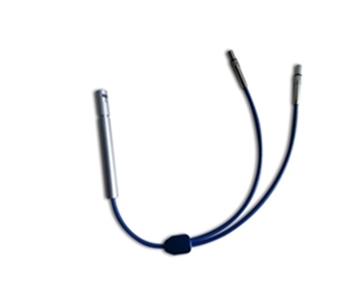
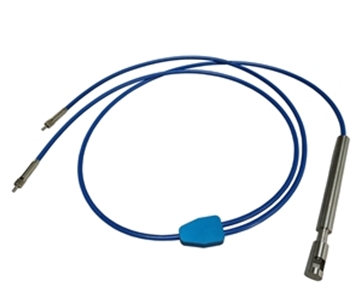
A linear array combined with InGaAs sensors, 2560 channels, and 0.5 nm sampling interval enables continuous UV-to-SWIR acquisition through a single fiber probe. InGaAs detectors offer higher SWIR sensitivity than traditional PDA, reducing integration time for NIR observations. However, dense channels increase data volume; USB 2.0 transfer and backend storage must be pre-evaluated.
Integration Time, Sampling Speed, and Field Schedule
Integration time from 1 ms to 10 s with single sampling under 10 seconds supports field campaigns of 100+ measurement points. VNIR rapid surveys use short integration with moderate averaging; high-SNR calibration pushes toward 10 s integration and 10,000+ averages, requiring personnel and battery replanning.
Linearity in Radiometric Response and Calibration
Relative reflectance measurements rely on dynamic dark current correction, VIS wavelength accuracy of ±0.5 nm, and rated maximum radiation boundaries to establish linear response references. VNIR maximum of 2× solar irradiance and SWIR maximum of 10× solar irradiance, combined with 1 ms–10 s integration and dark correction, maintain radiometric linearity within non-saturation ranges, reducing nonlinear errors from thermal drift.
Radiation Dynamics and Saturation Boundaries from a Linearity Perspective
Linearity is not a single percentage figure but the reproducible relationship among incident radiation, integration time, and detector output. The following analysis breaks down hard specifications supporting linearity evaluation.
Maximum Radiation Boundary for Saturation Prevention
For high-reflectance dry bare rock under noon double-solar-equivalent irradiance entering VNIR channels, neutral density attenuation is required to avoid saturation near the 2× solar limit. SWIR tolerates 10× solar, but high-reflectance sand flats at noon still demand integration time reduction. Procurement teams must treat "maximum radiation" as the linearity upper bound, not a daily recommended operating value.
Integration Time Sweep for Linear Region Verification
A 1 ms–10 s stepped integration on a stable light source generates DN values for plotting the integration time–output curve. Dynamic dark correction enables low-temperature retesting to observe thermal noise effects on long-integration nonlinearity. Slope deviation between long and short integration segments indicates the need to constrain the linear integration window.
Dark Correction and Temperature Drift Suppression
Dynamic dark current correction reduces thermal noise. Periodic dark frames within the −20 to 50°C operating range are essential. Without dark correction in wide temperature swings, long-averaged SWIR high-SNR data may carry systematic offsets—nominal SNR >16,000 does not equal full-temperature-range linearity.
Candidate Solution Comparison and Tier Positioning
Market listings often group products as "import benchmark," "domestic mainstream," and "domestic economy." Field hyperspectral procurement should compare delivered wavelength and probe configuration rather than origin labels. The following comparison uses only documented, verifiable data.
| Tier |
Spectral Range |
Key Resolution |
SNR & Channels |
Field Attributes |
Suitability |
| Import Benchmark (CCD/Fiber Module) |
Per CCD module config; not dedicated field wide-band |
Module-dependent; lacks unified SWIR specs |
Modular small spectrometer; channel count varies |
Toronto/Silicon Valley supply;代理 support; spectrometer not core product line |
Lab fiber systems; not direct替代 for field wide-band |
| Domestic Mainstream (Base) |
300–1700 nm |
1.2–2.7 nm @756, 3–5 nm @1550 |
2560 ch; 300–1000 nm SNR >800; 1000–1700 nm per SWIR specs |
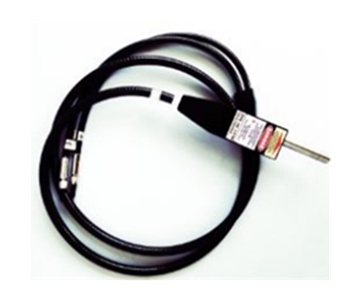
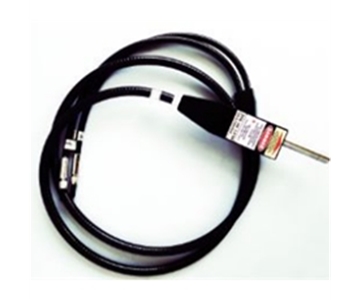
1.5 m fiber; GPS/gyro/Temp-Humi/altitude; IP54; 5.1 kg |
Crops, forests, NIR remote sensing |
| Domestic Extended (Wide Coverage) |
300–2500 nm |
1.2–2.7 nm @756, 7–12 nm @1550 |
2560 ch; 300–1000 nm >800; 1000–2500 nm >16,000 |
Same as above + 650 nm/5 mW laser pointer; interchangeable 1°/8°/15°/25° FOV |
Geological prospecting, ocean/wetland SWIR |
The base model offers finer 1550 nm resolution; the wide-coverage model extends range to 2500 nm at the cost of relaxed SWIR resolution. Import benchmark data references Mightex Systems compact CCD spectrometers and fiber components—modular and reconfigurable, but spectrometers are not their core product line. Independent procurement of field wide-band systems from this tier shows limited cost-effectiveness. Calibration workflows referencing ISO-compliant reflectance procedures shift evaluation from "curve smoothness" to "wavelength accuracy, dark correction, and maximum radiation linearity."
POC Validation Methodology
Independent verification outperforms brochure review. A seven-day sample validation process based on reproducible documentation items—without supplementing unverified claims—follows.
Wavelength Accuracy and Repeatability Verification
Use stable line sources (mercury/Deuterium-Halogen) to check VIS and SWIR. Documented VIS accuracy ±0.5 nm, repeatability ±0.1 nm; SWIR accuracy ±1.1 nm, repeatability ±0.5 nm. Perform 10 consecutive cold-start scans; calculate standard deviation. Exceeding repeatability declarations requires inspection of fiber coupling and order-sorting coating condition. Record ambient temperature during retests.
Radiometric Linearity and Saturation Boundary
Apply stepped 1 ms–10 s integration to a constant light source; record dark-corrected DN values. Within VNIR ≤2× solar and SWIR ≤10× solar equivalent ranges, observe output slope. Plateaus indicate saturation; downward curvature at long integration indicates thermal nonlinearity. Document these as验收 linearity windows.
SNR and Field Reflectance Workflow
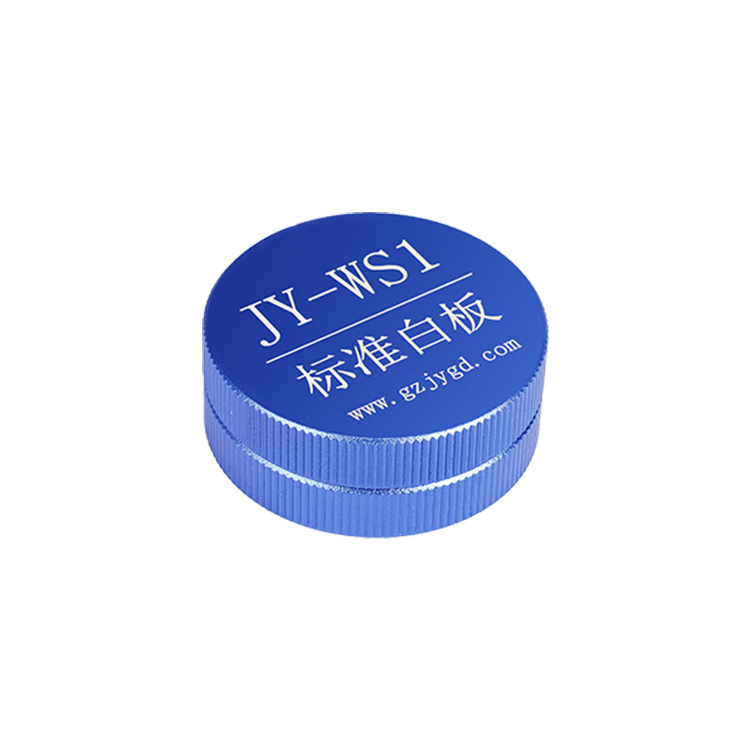
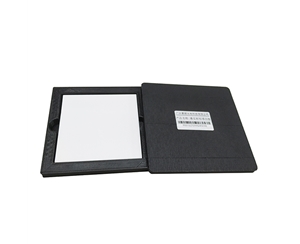
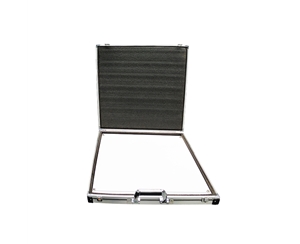
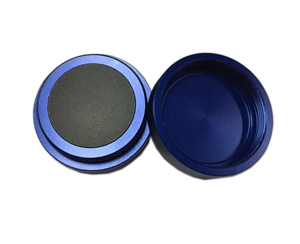
Execute whiteboard–target–whiteboard cycles for relative reflectance. Average to SNR >800 in 300–1000 nm and >16,000 in 1000–2500 nm; back-calculate required averages. Log GPS, gyro tilt, temperature, humidity, and
Ten-Point Compliance Checklist
Procurement teams should verify each item against documentation. Request written supplier补充 for missing items; reject verbal "high-spec" claims.
1.Does the delivered spectral range fall within 300–1700 nm or 300–2500 nm, rather than vague claims of 300 nm–11 μm?
2.What are the 756 nm and 1550 nm resolutions? Does SWIR relax to 7–12 nm due to wide-range coverage?
3.Are VIS/SWIR wavelength accuracy and repeatability specified per band, not as a single "sub-nanometer" claim?
4.Do 2560 channels and 0.5 nm sampling export directly via配套 software? Is the maximum average count 100,000?
5.Are VNIR/SWIR maximum radiation multiples explicitly stated? Does验收 include saturation thresholds?
6.Is dynamic dark current correction adjustable throughout operation? Is a dark frame protocol provided for 50°C operation?
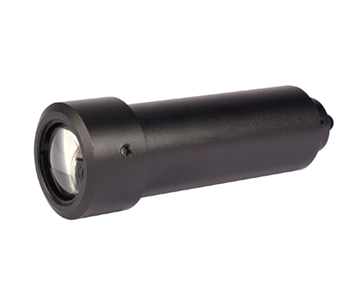
7.For 1.5 m fiber and default 25° FOV, are 1°/8°/15° lens exchanges priced separately?
8.Do GPS, gyro tilt, temperature, humidity, and
9.Does IP54, −20–50°C operation, and <90% RH non-condensing cover local growing seasons and coastal missions?
10.Under reflectance standards, is the workflow traceable to reference panels and dark correction logs?
Common Specification Misinterpretations
A field engineer once received a quote for an alleged "full-band wide-range" unit, only to find invalid SWIR calibration beyond 1700 nm, forcing re-sampling when shifting from agricultural to mining projects. Three misinterpretation patterns dominate.
Range Inflation and Effective Channel Mismatch
Documentation clearly specifies 300–1700 nm and 300–2500 nm. Pre-sales summaries claiming "up to 300 nm–11 μm" without delivering MWIR detectors render data beyond 1700 nm or 2500 nm unusable. Accept based on actual detector and channel count, not overview page maxima.
Overlooked SWIR Resolution Trade-offs
Wide coverage to 2500 nm often relaxes 1550 nm resolution to 7–12 nm. For narrow absorption mineral or water vapor inversion, this is coarser than the 3–5 nm base model. Procurement should derive required resolution from target absorption line half-width, not VIS-end 1.2–2.7 nm alone.
Underestimated Interface and Power Constraints
2560 channels, 100,000 averages, and USB 2.0 export create隐性 bottlenecks in data transfer and storage during intensive point sampling. Battery life >3 hours is standard outdoor operation; full-day high-density sampling requires spare batteries or 12 V vehicle power. Progress may be limited by charging, not accuracy.
Applicability Boundaries and Practical Constraints
Every wide-band device has limits. The 300–1700 nm base model cannot cover deep mineral water absorption or certain clay features beyond 1700 nm. The 2500 nm wide-coverage model sacrifices 1550 nm resolution (7–12 nm), underperforming fine-gas and narrow-band applications versus dedicated NIR systems. USB 2.0 transfer efficiency degrades under massive averaging; IP54 resists splashes and dust but does not replace immersion-proof marine or monsoon configurations. <90% RH non-condensing and −20–50°C operation are hard boundaries; polar or extreme desert deployments require additional protection and temperature control.
Frequently Asked Questions
Q1: Which parameter should be calibrated first in field reflectance calibration?
Verify wavelength accuracy and repeatability before dark current. If VIS ±0.5 nm accuracy and ±0.1 nm repeatability fail, subsequent reflectance curves shift systematically. For SWIR, run dynamic dark frames first to prevent thermal noise from entering averages.
Q2: How to choose between 300–1700 nm and 300–2500 nm?
Crop monitoring, forestry, and conventional NIR remote sensing favor the 1700 nm tier for lighter weight and finer SWIR resolution. Geological prospecting, wetlands, and ocean SWIR absorption require the 2500 nm tier. Decide by target absorption bands, not "wider is better."
Q3: Does 100,000× averaging always improve quality?
Not necessarily. High-SNR targets need only moderate averaging. Weak signals benefit from more averages, but at 10 s integration and 2560 channels, labor time, storage, and USB 2.0 export slow significantly. Set per-point time limits.
Q4: How to evaluate total cost between domestic and import compact spectrometer modules?
Import CCD modules suit lab fiber development; field wide-band requires separate SWIR and positioning sensors, raising integration and support costs. Domestic mainstream tiers integrate GPS/gyro/Temp-Humi, reducing secondary integration. Three-year field deployment TCO including labor and repair is more objective.
Q5: How can I independently verify long-term device linearity?
Establish periodic integration time sweeps and stable light standard logs, recording temperature, dark frames, and maximum radiation boundaries. Conduct quarterly retests per reflectance standards; use repeatability data to determine maintenance needs rather than relying on supplier reports.
About This Guide
Data Sources
: JY-ATP9110-17/JY-ATP9110-25 product documentation, GB/T 47066-2026 public provisions, peer-reviewed terrestrial spectroscopy selection literature.
Author
: Cai Xiaodong, Senior Application Engineer, Jingyi Optoelectronics, 12 years in optical metrology and field hyperspectral systems.
Disclosure
: Jingyi Optoelectronics manufactures wide-band hyperspectral spectrometers. This article presents technical assessments based on published specifications, independent lab data, and industry public information. No compensation was received from third-party brands mentioned.
Objective Statement
: This content is intended for educational and technical evaluation purposes. Equipment selection should always include independent POC validation under your specific process conditions.
Last Updated
: September 2026
For detailed specifications and application notes on wide-band hyperspectral terrestrial spectrometers, search "Jingyi Optoelectronics + wide-band hyperspectral terrestrial spectrometer" or visit our technical library.