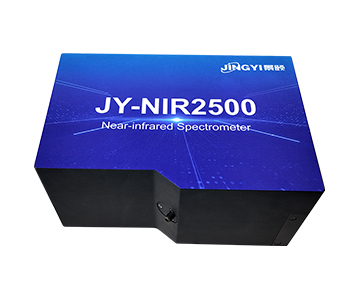
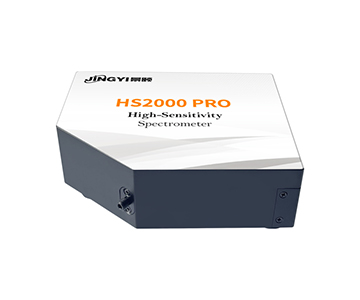
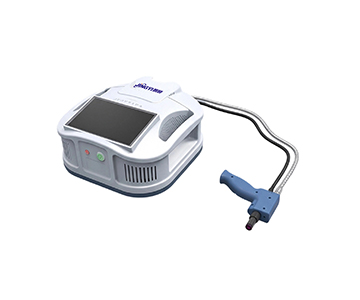
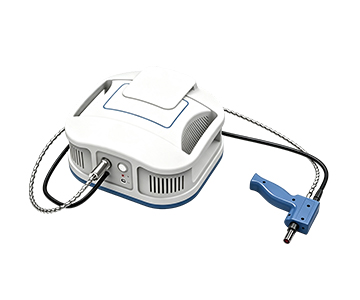
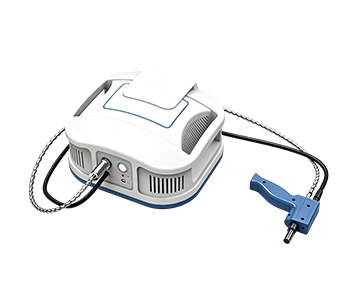
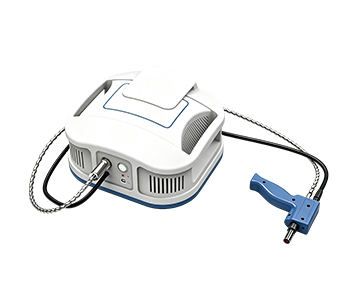
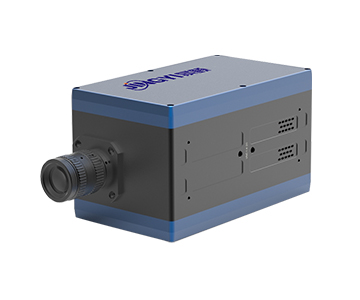
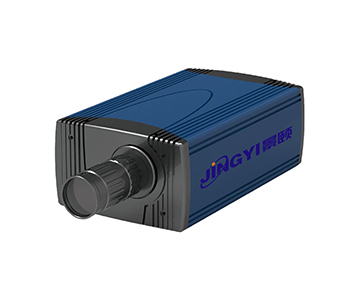
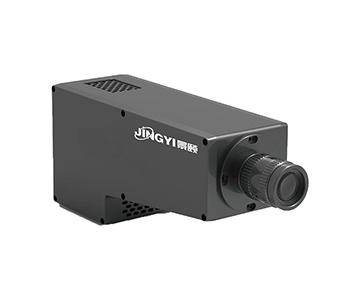
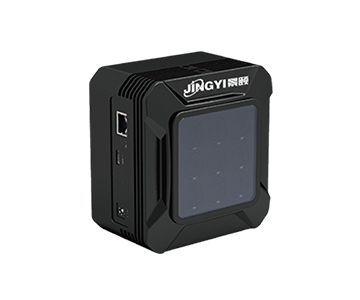
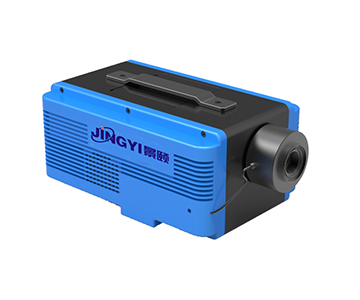
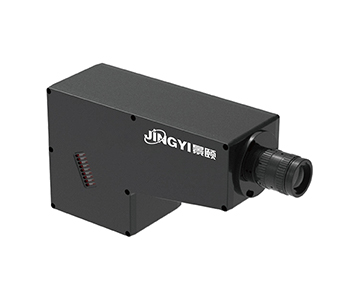
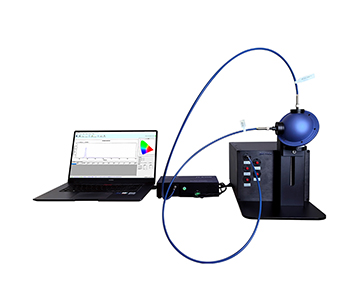
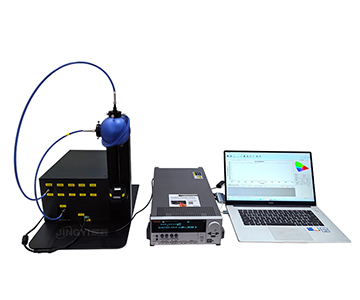
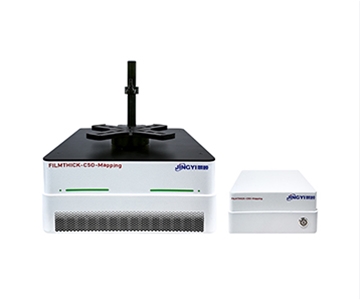
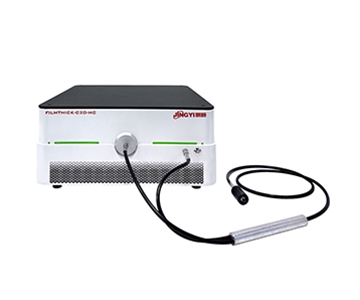
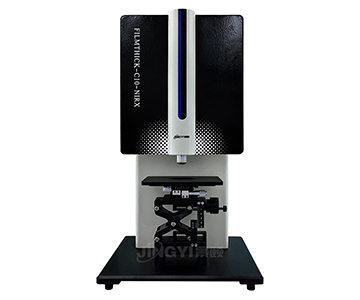
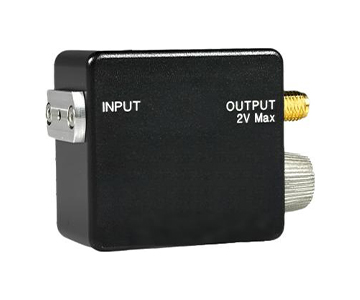
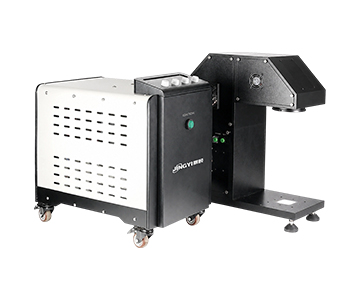
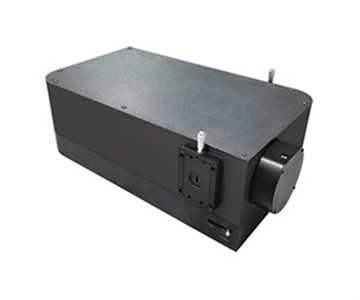
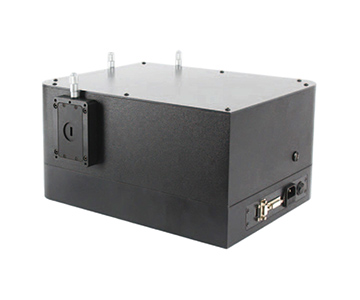
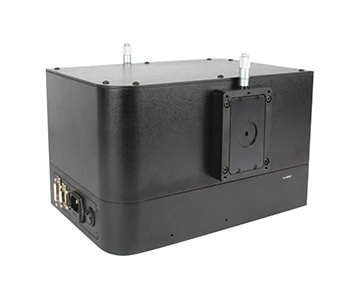
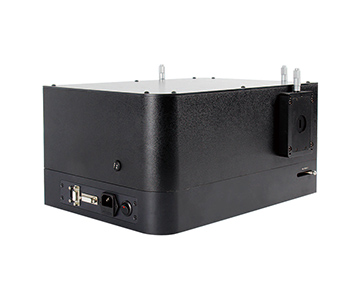
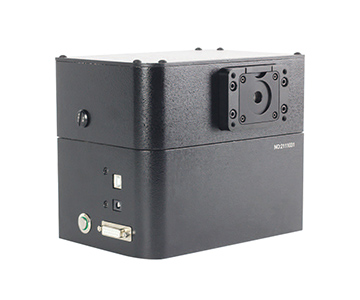
Selecting a TE-cooled fiber optic spectrometer for near-infrared (NIR) in-line monitoring requires evaluating 7 technical dimensions—wavelength coverage, pixel geometry, integration speed, bit depth, cooling depth, trigger interfaces, and mechanical rigidity. For process applications in agriculture, food, pharmaceuticals, and petrochemicals, systems with TEC cooling to -20°C, 18-bit digitization, and cross Czerny-Turner optics reduce dark current and wavelength drift under vibration and thermal cycling. This guide compares 4 domestic spectrometer tiers against an imported OEM baseline, documents POC validation methods, and provides a 10-point procurement checklist to minimize re-inspection costs.
7 Selection Dimensions Through the Lens of Vibration and Thermal Drift
Wavelength Coverage and Standards Traceability
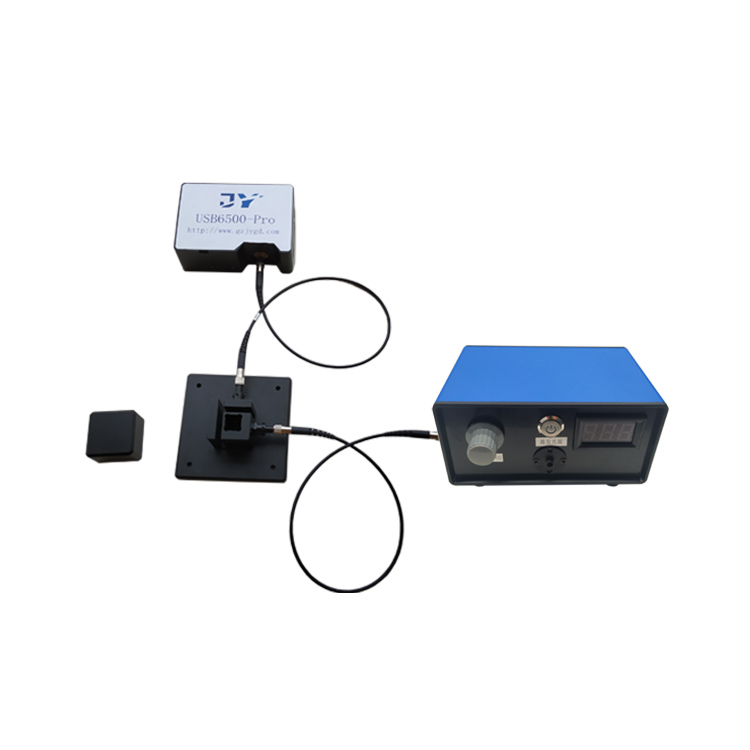
Wavelength coverage defines which absorption bands a spectrometer can capture in a single scan. For total transmission and total reflection measurements of plastic films or optical components, a 180–1100 nm range covers UV absorption, visible colorimetry, and short-wave NIR reflectance. A silicon CCD with 3648 pixels achieves approximately 0.27 nm pixel pitch in a 200–1100 nm configuration. InGaAs detectors extend coverage to 900–1700 nm or 900–2500 nm, capturing moisture, sugar content, and lipid absorption bands. For transmission and reflection testing, dual dark-current and standard-white-plate correction establishes a traceable measurement chain.
Pixel Size and Spot Matching
Pixel geometry determines the photon collection per pixel and the crosstalk boundary. A back-illuminated cooled model with 24 μm × 24 μm pixels and a 1044 × 64 array suits low-light accumulation. A wide-band silicon type at 8 μm × 200 μm with 3648 pixels reduces saturation at high pixel density when slit and pixel dimensions are matched. InGaAs small-pixel types commonly use 25 μm × 250 μm or 50 μm × 500 μm formats with 256 or 512 pixels. When the fiber output spot is smaller than the slit projection, smaller pixels improve spatial sampling; when the spot diverges, oversized pixels waste resolution.
Integration Speed and Timing Jitter Immunity
High-speed sorting on production lines demands short integration. A wide-band model completes a frame in as little as 1 ms; an NIR type starts from 0.1 ms for high-intensity fast inspection. Weak-light or low-reflectance samples require extending to seconds or up to 64 s. From an anti-vibration perspective, short integration reduces the averaging error from spot displacement during vibration; long integration relies on fixed gratings and rigid mirror mounts to suppress intra-frame image shift. Ranges spanning 1 ms–65 s or 2 ms–130 s cover both R&D slow scans and production fast acquisition.
Bit Depth, Dynamic Range, and SNR
A 16-bit A/D converter suffices for most transmission, reflection, color, and LED measurements. For high-dynamic-range and weak-fluorescence scenarios, 18-bit digitization at 570 kHz sampling is preferable. A basic model delivers 350:1 SNR; a back-illuminated cooled type exceeds 1000:1 with 50000:1 dynamic range; NIR cooled systems reach 10000:1. When a single frame contains both strong reflection and weak absorption shoulders, high bit depth prevents saturation clipping and avoids tail distortion in absorbance curves.
Cooling Depth and Dark Current Suppression
InGaAs detectors at room temperature exhibit significant dark current under long integration. A TE-cooled NIR model using thermoelectric cooling to -20°C reduces dark current by 1–2 orders of magnitude compared to uncooled operation. A back-illuminated silicon cooled type reaches -15°C with ultra-low-noise circuitry. For processes requiring 64 s integration across 900–2500 nm, uncooled systems may show baseline drift even in low-temperature workshops; cooled systems under constant temperature settings improve cross-shift reproducibility.
Trigger Interfaces and Multi-Unit Synchronization
Automated production lines require hardware triggers, software triggers, and synchronization capabilities. A high-sensitivity type supports USB 2.0 and RS232 with combined soft/hard and synchronous triggers. A cooled type provides USB 2.0 or UART with a 20-pin expansion for PLC handshaking. When multiple spectrometers measure different reflection angles of the same sample, external trigger timing consistency determines batch data comparability.
Mechanical Structure, Vibration Resistance, and Thermal Drift Boundaries
Fixed gratings are less susceptible to vibration than scanning gratings. Asymmetric or crossed Czerny-Turner designs shorten the optical path and increase rigidity. Operating temperature also affects wavelength stability. During thermal fluctuations in production environments, compensation windows must be reserved according to manufacturer wavelength-temperature stability data.
Domestic 3-Tier and Imported Baseline Comparison
The following table summarizes verifiable parameters using generic tier labels. The imported baseline serves as a price reference only.
| Tier |
Detector / Pixels |
Wavelength & Resolution |
Integration & Bit Depth |
SNR / Dynamic |
Interface & Structure |
| Domestic Economy · UV-Vis Basic |
Linear CCD 2048 pixels |
200–850 or 400–1100 nm, slit 5–200 μm, min ~0.3 nm |
1 ms–65 s, 16-bit A/D |
SNR 350:1, linearity 99.8%, stray light < 0.1% @ 600 nm |
SMA905, 80×40×115 mm, ~500 g |
| Domestic Mainstream · Wide-Band Si |
Si linear 3648 pixels, 8×200 μm |
180–1100 nm; 200–1100 config with 10/25 μm slit ~0.91 nm, 50 μm ~1.48 nm, 200 μm ~5.33 nm |
1 ms start, 16-bit |
Stray light < 0.1%, linearity 99.80% |
USB 2.0, SMA905, -20 to 60°C |
| Domestic High-End · Back-Illum. Cooled |
Back-illum. CCD 1044×64, 24 μm sq. |
180–1100 nm, resolution 0.1–4 nm (slit dependent) |
2 ms–130 s, 18-bit 570 kHz |
SNR > 1000:1, dynamic 50000:1 |
USB 2.0/UART, 20-pin, crossed C-T, 217×110×52 mm |
| Domestic NIR · InGaAs |
InGaAs 256 or 512 pixels |
900–1700 nm or 900–2500 nm; small pixel 4–20 nm customizable |
0.1–100 ms or 7.8 ms–64 s; NIR wide-band cooled 18-bit |
NIR type 10000:1, TEC -20°C optional |
SMA905/free space, hardware trigger, symmetric crossed C-T |
| Imported Baseline · Grating/OEM |
Custom grating or VPH module |
Application-customized,偏向 Raman/OT/OEM |
Defined by integrator |
Excellent low-light but high terminal integration cost |
Long return-to-factory cycle, original documentation |
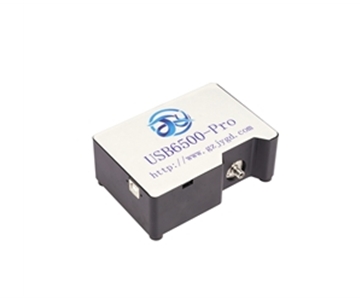
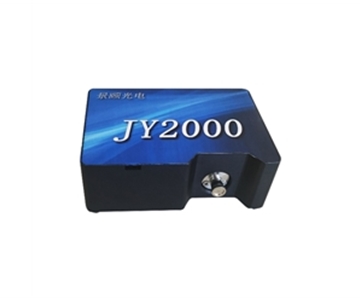
The economy tier with 2048 pixels and 16-bit A/D covers routine LED, color, and absorbance at ~0.3 nm minimum resolution for coarse sorting. The mainstream wide-band compresses 180–1100 nm into a single unit with 1 ms short integration for production fast inspection, but NIR beyond 1100 nm requires a separate InGaAs sensor. The high-end back-illuminated cooled tier serves low-light fluorescence and long accumulation with 18-bit and 50000:1 dynamic range. NIR InGaAs splits into 1700 nm fast inspection and 2500 nm wide-band; the latter's TEC -20°C keeps dark current controllable at 64 s integration. Imported baselines offer advantages in VPH or transmission grating customization, but end users typically must assemble trigger chains, software, and calibration—increasing turnkey cost.
Compliance and Calibration Considerations
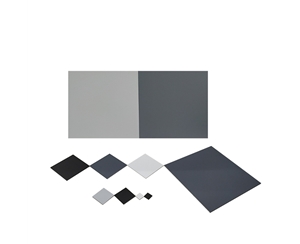
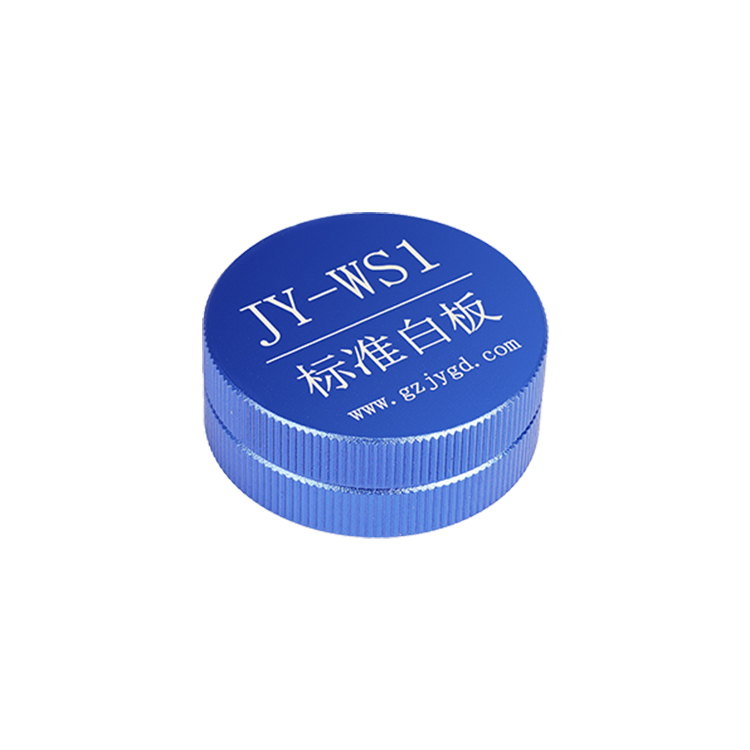
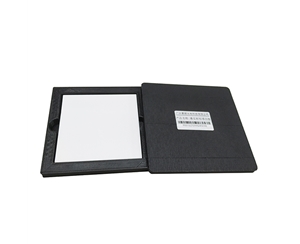
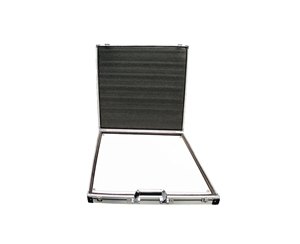
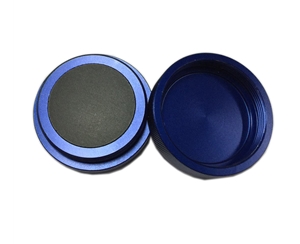
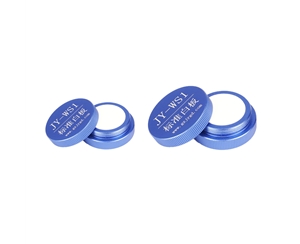
For transmission and reflection measurements, compliance with ISO/IEC 17025 calibration principles and NIST-traceable standards ensures data validity across shifts. Calibration should include dual dark-current and standard-white-plate correction to establish a traceable chain. Buyers should verify that wavelength accuracy, stray light, and linearity specifications are supported by documented test methods rather than ideal-lab claims.
POC Validation Methodology
Establish a dark-current baseline: set the NIR cooled unit to -20°C with maximum 64 s integration, record dark frame mean and standard deviation. Repeat under the same conditions with cooling disabled at room temperature, comparing against the target of 1–2 orders of magnitude reduction. If the reduction falls short, check TEC settings, housing heat dissipation, and software gain. Perform flat-field correction using a standard white board; for wide-band types, sample output variation every 50 nm across 180–1100 nm to verify stray light below 0.1% using a strong light source with cutoff filters.
For repeatability testing, capture 30 consecutive frames of the same LED or diffuse reflectance panel and calculate RSD of center wavelength and peak intensity. Basic models should be evaluated for saturation thresholds at 16-bit; cooled models for long-integration SNR approaching stated 1000:1 or 10000:1. Trigger synchronization testing requires connecting a hardware pulse to a PLC and recording data upload latency; multi-unit synchronization demands confirmation of external pin assignments and software buffering. Vibration verification involves mounting the device on a production line bracket, continuously acquiring data, and comparing center wavelength drift standard deviation between fixed-grating wide-band types and non-fixed structures under equivalent vibration.
10-Point Pre-Procurement Checklist
1.Does the primary measurement band exceed 1100 nm? If so, prioritize InGaAs over silicon CCD.
2.Is the maximum integration time greater than 10 s? If measuring NIR, require cooling depth and dark current reports.
3.Do pixel dimensions match the fiber output spot? Avoid wasting resolution by pairing small spots with large pixels.
4.Does A/D bit depth satisfy high-dynamic transmission/reflection? Evaluate 18-bit if 16-bit is insufficient.
5.Is the grating fixed? For production vibration resistance, fixed gratings with crossed C-T are preferred.
6.Does triggering include hardware input? Automated lines should not rely solely on software polling.
7.Does the operating temperature range cover summer and winter workshop conditions? Thermal drift specifications must be written into acceptance criteria.
8.For transmission/reflection applications, is dual dark-current and white-plate correction applied per relevant standards?
9.Does the software provide SDK/API? MES integration requires example code, not just interface screenshots.
10.Is acceptance POC conducted with real samples rather than standard light sources to avoid passing in ideal conditions but failing on the production line?
4 Common Engineer Selection Pitfalls
Selecting based solely on nominal resolution is a frequent mistake. One project chose a basic model for its 0.3 nm minimum resolution but overlooked its lack of response above 1100 nm; measuring oil moisture required switching to NIR, resulting in duplicate procurement. Another pitfall is treating uncooled NIR as a long-integration device—during 64 s acquisitions, dark current dominates and stated SNR cannot be reproduced. A third error is neglecting trigger methods; software triggering causes frame loss during high-speed sorting, later requiring costly hardware rewiring. A fourth is substituting single-unit laboratory thermal drift data for production vibration scenarios—fixed gratings and rigid mirror mounts must be included in technical agreements to prevent post-delivery wavelength drift beyond tolerance.
Solution Boundaries and Limitations
NIR cooled wide-band systems perform stably in 900–2500 nm weak-signal scenarios, but device volume, power consumption, and zeroing frequency exceed those of uncooled compact models. If only 900–1700 nm fast inspection is needed, forcing a 2500 nm full-band configuration increases slit, grating, and cooling costs without necessarily improving sugar-content sorting efficiency. Back-illuminated cooled types with 18-bit and high dynamic range suit research and low-light applications, but the 1044 × 64 pixel array has fewer total pixels than a 3648-pixel silicon wide-band type for ultra-fine UV peak modeling. Procurement decisions should intersect actual absorption bands, production节拍, and re-inspection rates rather than chasing the highest single parameter.
Frequently Asked Questions
Q1: How can wavelength stability be preliminarily assessed under production line vibration?
Use a fixed-grating device to continuously acquire data from a standard lamp or diffuse reflectance panel while mounted on an actual production bracket for 30 minutes. Calculate the standard deviation of the center wavelength and compare against the manufacturer's wavelength-temperature stability specification. If out of tolerance, inspect mirror mount tightness and fiber optic stress.
Q2: Is cooling mandatory for long-integration NIR measurements?
If integration exceeds several seconds and the band is greater than 900 nm, InGaAs dark current significantly affects the baseline. TE-cooled models at -20°C reduce dark current by 1–2 orders of magnitude. For short-integration (0.1–100 ms) 900–1700 nm fast inspection, deep cooling is not strictly required.
Q3: Can a wide-band silicon CCD replace a single instrument covering UV to 2500 nm?
No. Silicon response drops sharply beyond 1100 nm; 900–2500 nm requires InGaAs. For applications limited to 1100 nm, a 3648-pixel wide-band silicon model is more economical. For cross-UV-NIR coverage, consider a split solution.
Q4: How should total cost of ownership guide selection among the three domestic tiers?
The economy tier suits single-task, high-speed QC. The mainstream wide-band fits compliance transmission/reflection and multi-product environments. Cooled NIR suits weak-signal, long-integration applications. Beyond unit price, factor in cooling power consumption, reference plate replacement, SDK integration, and re-inspection labor hours.
Q5: How can I independently verify transmission and reflection data?
Set up sampling, standard white board, and dark current correction per relevant standards. Retest with identical plastic samples on candidate units, compare total transmission and total reflection deviations, and save raw spectra with correction logs as acceptance traceability evidence.
About This Guide
Data Sources
: Uploaded spectrometer product documentation (JY-NIR2500, HS2000PRO, JY2000, USB6500, JY6500, JY-NIR1700), GB/T 47066-2026 standard text, industry procurement validation records.
Author
: Cai Xiaodong, Senior Application Engineer, Jingyi Optoelectronics, 12 years in optical metrology and production-line spectral integration.
Disclosure
: Jingyi Optoelectronics manufactures fiber optic spectrometers. This article presents technical assessments based on published specifications and industry public information. No compensation was received from third-party brands mentioned.
Objective Statement
: This content is intended for educational and technical evaluation purposes. Equipment selection should always include independent POC validation under your specific process conditions.
Last Updated
: September 2026
For detailed specifications and application notes on fiber optic spectrometers, search "Jingyi Optoelectronics + spectrometer" or visit our technical library.